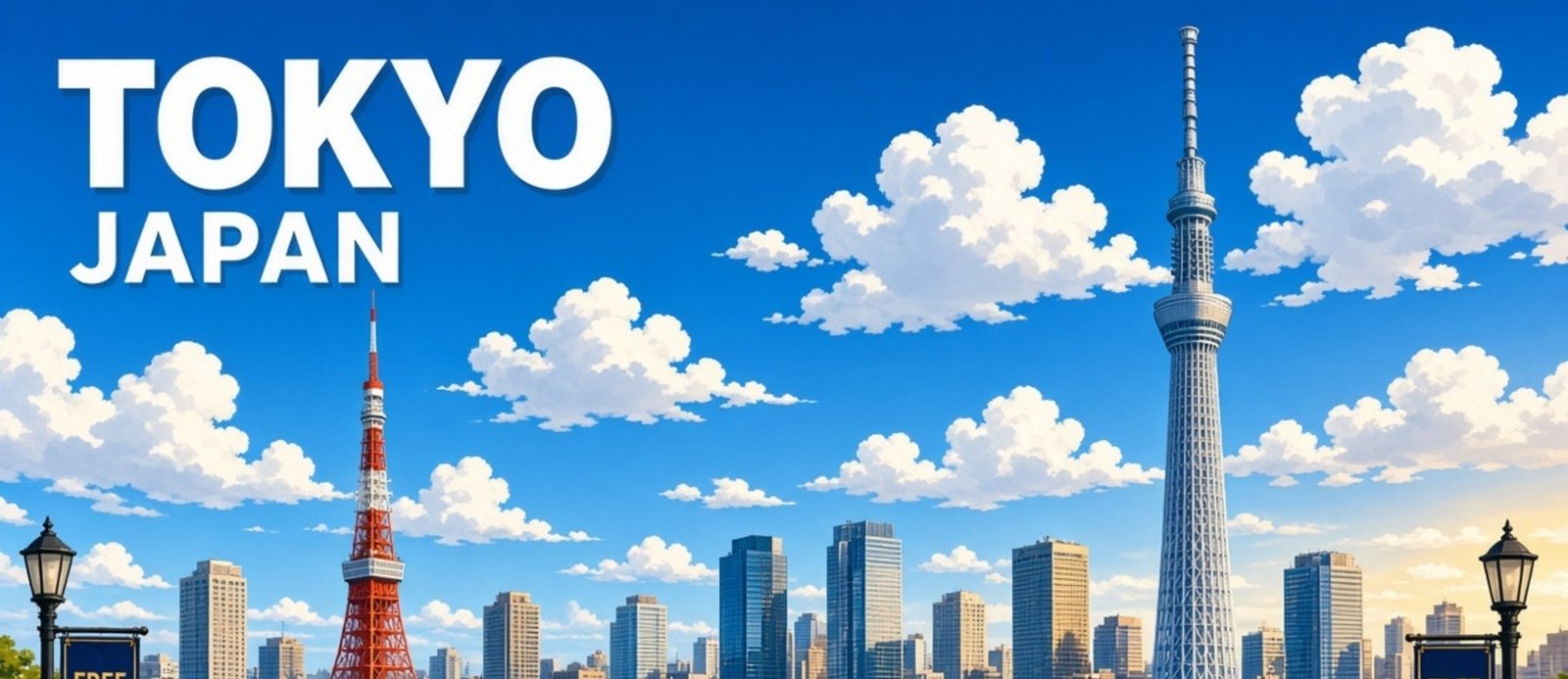
Tokyo walking tour banner: the city of Tokyo, Japan

Free Self-Guided Walking Tour of Tokyo

Free City Tours
Free City ToursTokyo walking tour · freecitytours.org

How to tour Tokyo

Listen to the city overview, pick an attraction, press map to get there, play the attraction videos

This is a free self-guided walking tour of Tokyo that you play on your phone as you walk. There’s no app to download, no sign-up and no guide to tip. Open the page, tap a stop, and a short narrated video tells you what you’re looking at, with a map link to get you to the next one.

The route starts at Sensō-ji and follows Ueno, the Imperial Palace, Shibuya and Shinjuku, with 10 sights and 50 video stops. Go at your own pace, in any order, on any day. Tokyo is the capital of Japan, a city of many centres linked by train, and it rewards a slow pace on foot.

The city has many centres rather than one. Asakusa, Ueno and Akihabara lie to the north east, the Imperial Palace and Ginza sit in the middle, and Shibuya, Meiji Shrine and Shinjuku spread out to the west, all linked by the trains of the Yamanote Line.

On this walk you visit Sensoji, the Tokyo Skytree, Ueno Park, Akihabara, the Imperial Palace, Ginza, the Shibuya Crossing, Meiji Shrine and Shinjuku, and finish at teamLab Planets.

1. Tokyo walking tour: Sensō-ji

Asakusa · start here · 60–90 minutes

Map
Sponsored · Places to eat near Sensō-ji, Tokyo

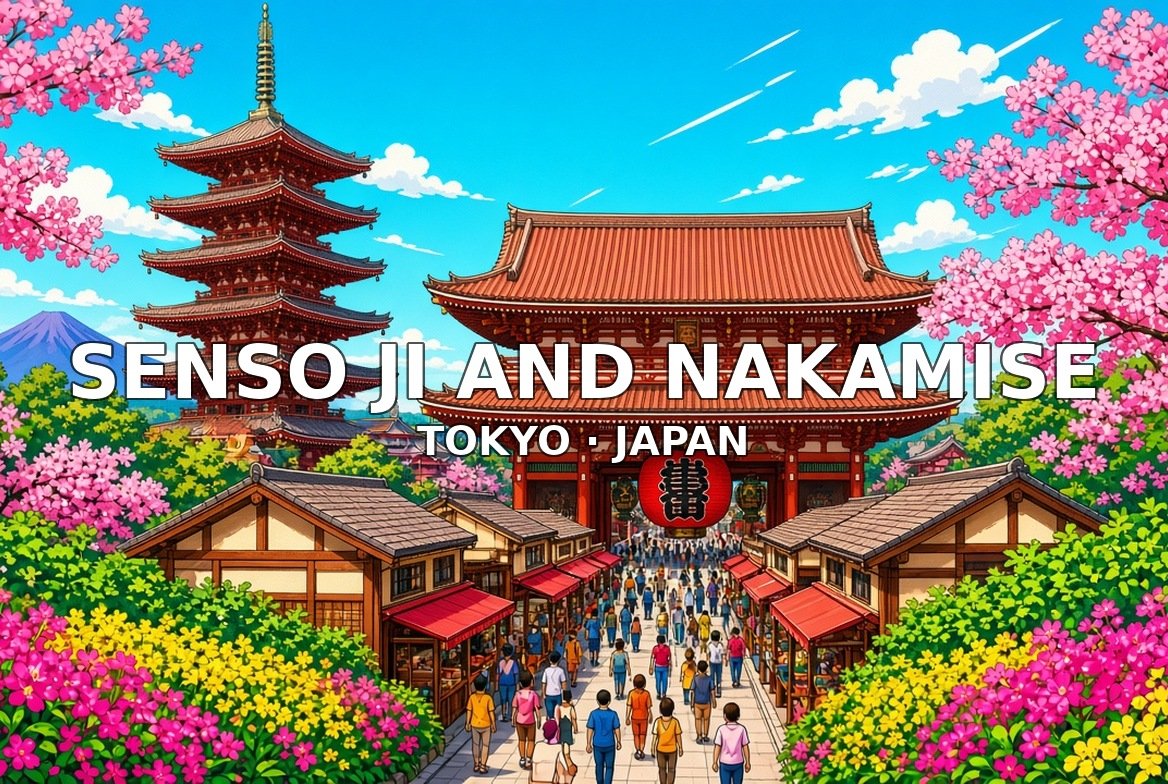
On this Tokyo walking tour, Sensō-ji in Asakusa is Tokyo’s oldest temple. Tradition says two fishermen pulled a small statue of Kannon, the goddess of mercy, out of the Sumida River in 628, and the temple was founded to house it. You enter through Kaminarimon, the Thunder Gate, with its giant red paper lantern, then walk up Nakamise-dori, a lane of snack and souvenir stalls, to the Hozomon gate and the five-storied pagoda.

The Main Hall was destroyed in the air raids of 1945 and rebuilt in 1958. Just to its right stands Asakusa Shrine, built in 1649, which survived the war; it hosts the Sanja Matsuri, one of Tokyo’s biggest festivals, every May. The temple grounds are free and always open; early morning is quieter.

Walk this order. Kaminarimon, the Thunder Gate → Nakamise-dori → Hozomon and the five-storied pagoda → the Main Hall → Asakusa Shrine.
Sensō-ji
03 · Tour · videos inside this sight
Kaminarimon, the Thunder Gate
Hozomon and the Five-storied Pagoda
Asakusa Shrine and the Sanja Matsuri
Advertisement
Ad slot

2. Tokyo walking tour: Tokyo Skytree

From stop 1 · 15 min walk or Tobu Skytree Line 1 stop

Map

Tokyo Skytree is 634 metres high and is the tallest tower in the world. Building began in 2008, and the broadcasting tower opened in May 2012. On this Tokyo walking tour, lifts take you to the Tembo Deck at 350 metres, and a second ticket adds the Tembo Galleria, a glass ramp that spirals up to 450 metres. At the foot of the tower, Tokyo Skytree Town with the Solamachi shopping centre sits beside the Kitajukken River. After dark the tower is lit in two styles, Iki in pale blue and Miyabi in purple. The decks need tickets; book ahead, because sunset slots sell first.

Walk this order. The tower from below → the story of its construction → the Tembo Deck and the Galleria → Skytree Town and the Kitajukken River → the tower lit at night.

Tokyo Skytree
03 · Tour · videos inside this sight
The Tallest Tower in the World
Building the Skytree
Tembo Deck and Galleria
Skytree Town and the Kitajukken River
Iki and Miyabi by Night
Advertisement
Ad slot

3. Tokyo walking tour: Ueno Park

From stop 2 · Tokyo Metro Hanzomon to Oshiage then Ginza Line to Ueno · ~25 min

Map

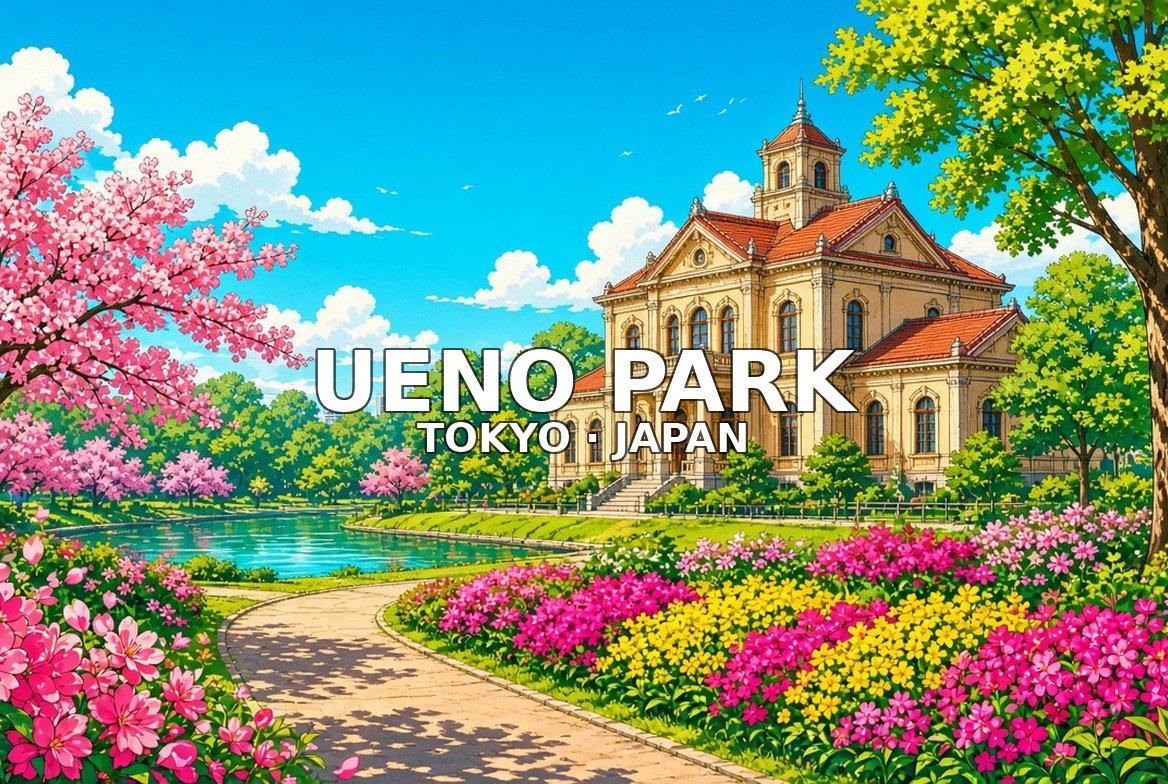
Ueno Park began as the grounds of Kan’ei-ji, a great temple founded in 1625 to protect the shoguns’ capital. Most of the temple burned in the Battle of Ueno in 1868, when samurai loyal to the last shogun made a stand here against the new imperial government, and in 1873 the land became one of Japan’s first public parks. The Kiyomizu Kannon-do, built in 1631, survived.

A bronze statue of Saigo Takamori, a leader of the Meiji Restoration, was unveiled at the south entrance in 1898. Shinobazu Pond, with the Benten-do hall on its island, lies below the hill, and the gilded Tosho-gu shrine honours Tokugawa Ieyasu. The Tokyo National Museum and Ueno Zoo, Japan’s oldest zoo, are also in the park. The park is free; the museums, the zoo and the Tosho-gu inner shrine need tickets.

Walk this order. From temple grounds to public park → Kan’ei-ji and the Kiyomizu Kannon-do → the Battle of Ueno and the Saigo Takamori statue → Shinobazu Pond and Benten-do → Tosho-gu, the museum garden and the zoo.
Ueno Park
03 · Tour · videos inside this sight
From Temple Grounds to Public Park
Kan’ei-ji and the Kiyomizu Kannon-do
The Battle of Ueno and Saigo Takamori
Shinobazu Pond and Benten-do
Tosho-gu, the Museum Garden and the Zoo
Advertisement
Ad slot

4. Tokyo walking tour: Akihabara

From stop 3 · JR Yamanote 1 stop south · 5 min

Map

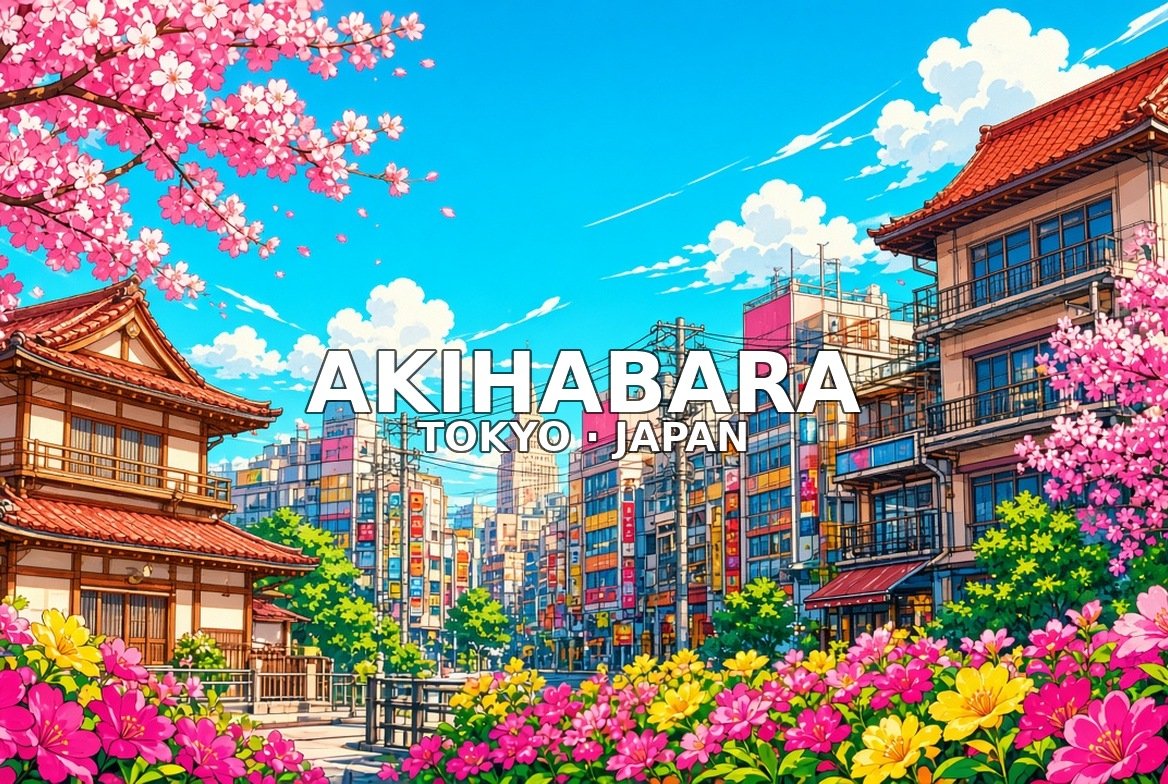
Akihabara grew out of a black market for radio parts that sprang up under the railway tracks after the Second World War, and it became Electric Town, Tokyo’s district for electronics. From the 1990s anime, manga, video games and maid cafés moved in, and today it is the centre of otaku culture. On Sunday afternoons the main street, Chuo-dori, is closed to cars and becomes a pedestrian zone.

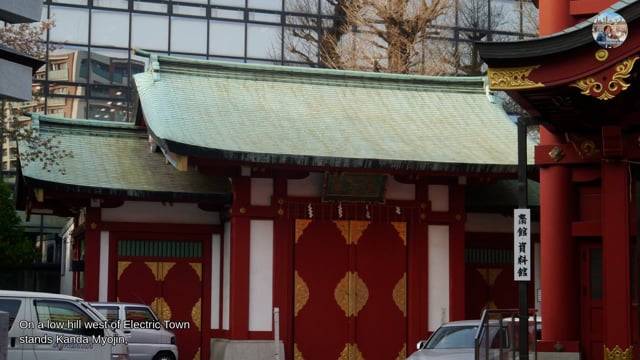
To the south, the red-brick railway viaduct of the old Manseibashi Station now holds the shops and cafés of mAAch ecute beside the Kanda River. Up the hill, Kanda Myojin is a shrine more than 1,000 years old; it moved to this site in 1616 and it even sells good-luck charms for computers and phones. Night is the look you came for.

Walk this order. How Electric Town began → Chuo-dori and the Sunday pedestrian zone → anime, games and maid cafés → Manseibashi and mAAch ecute → Kanda Myojin.
Akihabara
03 · Tour · videos inside this sight
How Electric Town Began
Chuo-dori and the Sunday Pedestrian Zone
Anime, Games and Maid Cafés
Manseibashi and mAAch ecute
Advertisement
Ad slot

5. Tokyo walking tour: Imperial Palace East Gardens

From stop 4 · JR to Tokyo Station then 10 min walk · ~20 min

Map

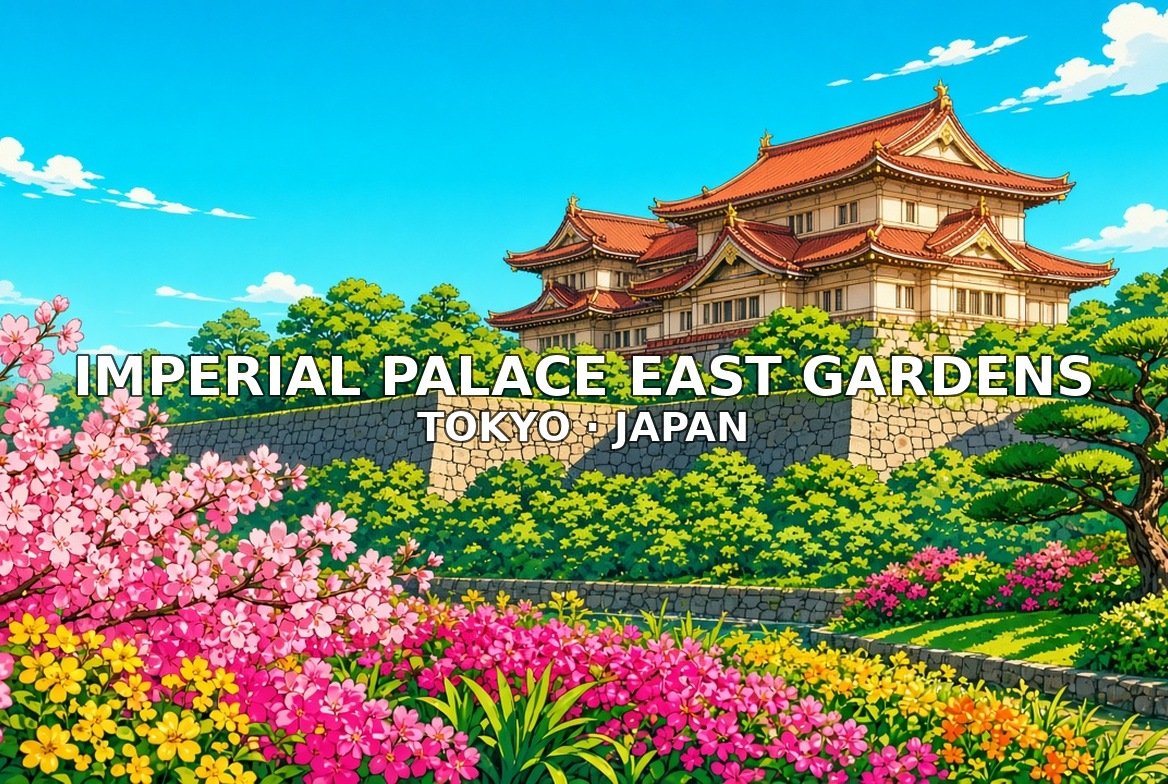
The East Gardens of the Imperial Palace stand on the inner circles of Edo Castle, the seat of the Tokugawa shoguns, and they have been open to the public since 1968. You enter through Ote-mon, the castle’s main gate, and pass the Hyakunin-bansho, a guardhouse once manned by 100 samurai. The Ninomaru Garden is a traditional strolling garden with a pond and seasonal flowers.

Higher up, on the Honmaru, the great stone base of the main keep remains; the keep burned in 1657 and was never rebuilt. Wide moats and stone walls still ring the castle. South of the gardens, across the Palace Plaza, the Nijubashi bridge leads to the main gate of the palace where the Emperor lives. Free entry; closed Mondays and Fridays; last entry is 30 minutes before closing.

Walk this order. Ote-mon and the guardhouses → the Ninomaru Garden → the Honmaru and the keep base → the moats of Edo Castle → Nijubashi and the Palace Plaza.
Imperial Palace
03 · Tour · videos inside this sight
Ote-mon and the Guardhouses
The Ninomaru Garden
Honmaru and the Keep Base
The Moats of Edo Castle
Nijubashi and the Palace Plaza
Advertisement
Ad slot

6. Tokyo walking tour: Ginza

From stop 5 · 15 min walk or Ginza Line 1 stop

Map

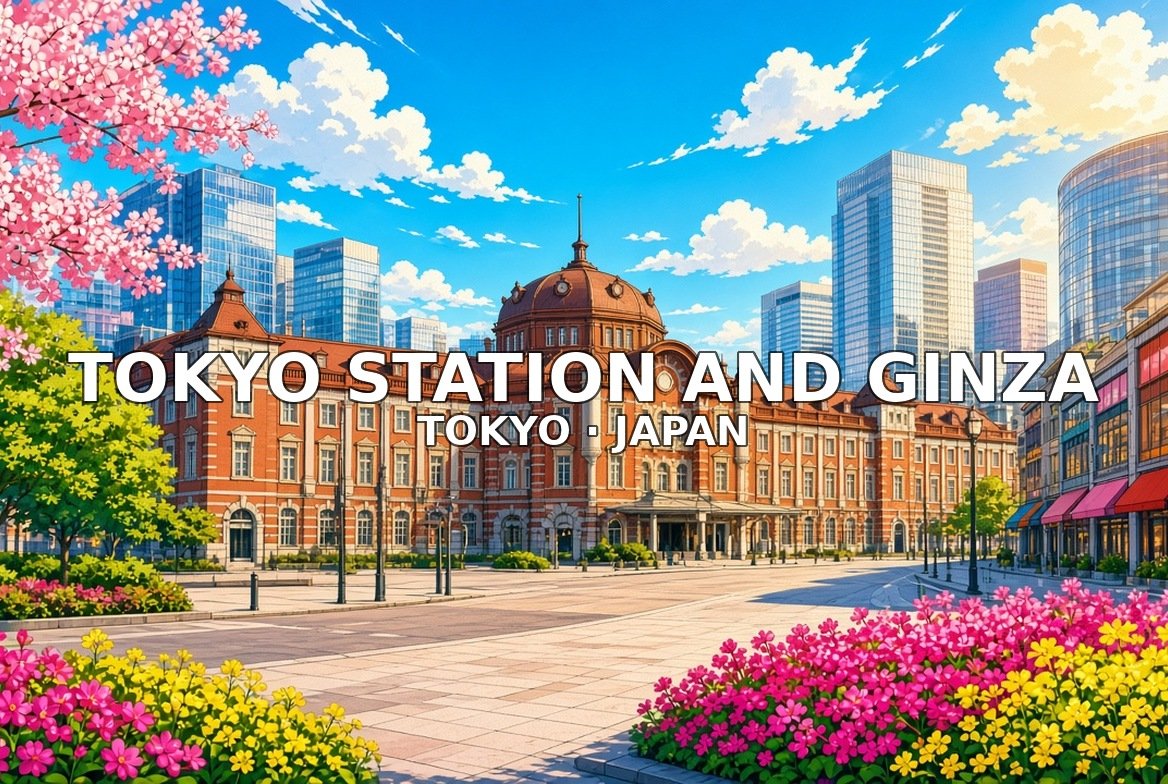
Ginza takes its name from the silver mint that was set up here in 1612. After a fire in 1872 the district was rebuilt as Ginza Brick Town, Tokyo’s first Western-style street, and in 1874 the Kimuraya bakery here created anpan, a sweet bean-paste bun. At the Ginza 4-chome crossing the clock tower of the Wako building, finished in 1932, is the symbol of the district.

Department stores such as Mitsukoshi and Matsuya and the flagship shops of the world’s luxury brands line Chuo-dori, which becomes a car-free pedestrian paradise on weekend afternoons. Ginza Six opened in 2017, and Ginza Sony Park sits at the Sukiyabashi crossing. At the east end of the walk stands the Kabuki-za, the home of kabuki theatre since 1889, rebuilt in 2013.

Walk this order. Ginza 4-chome and the Wako clock → the silver mint, Brick Town and anpan → department stores and luxury houses → the pedestrian paradise, Ginza Six and Sony Park → the Kabuki-za.
Ginza
03 · Tour · videos inside this sight
Ginza 4-chome and the Wako Clock
Silver Mint, Brick Town and Anpan
Department Stores and Luxury Houses
Pedestrian Paradise, Ginza Six and Sony Park
Advertisement
Ad slot

7. Tokyo walking tour: Shibuya Crossing

From stop 6 · Ginza Line to Shibuya · ~20 min

Map

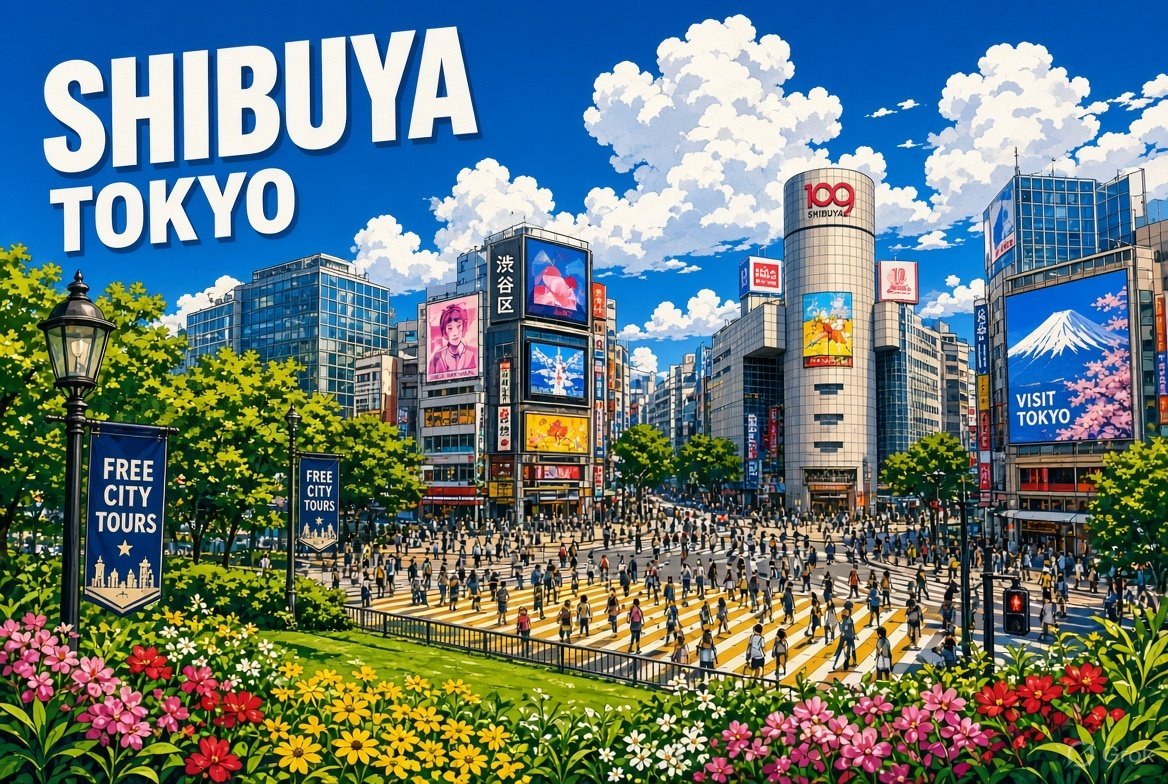
Outside Shibuya Station stands the bronze statue of Hachiko, the Akita dog who came to the station every day for almost ten years after his owner, Professor Ueno, died in 1925; it is the most famous meeting point in Tokyo. Next to it is the Scramble Crossing, where the traffic lights stop all cars at once and thousands of people cross in every direction.

Center Gai and the Shibuya 109 building, opened in 1979, are the heart of Tokyo’s youth fashion. Shibuya Scramble Square, a 230-metre tower opened in 2019, has the Shibuya Sky open-air rooftop deck on top. The crossing is free to watch at any time; Shibuya Sky needs a timed ticket. Come back after dark, when the giant screens light up the crossing.

Walk this order. Hachiko, the faithful dog → the Scramble Crossing → Center Gai and youth fashion → Shibuya Scramble Square and Shibuya Sky → Shibuya after dark.
Shibuya Crossing
03 · Tour · videos inside this sight
Hachiko, the Faithful Dog
The Scramble Crossing
Center Gai and Youth Fashion
Shibuya Scramble Square and Shibuya Sky
Shibuya After Dark
Advertisement
Ad slot

8. Tokyo walking tour: Meiji Jingū

From stop 7 · 15 min walk through Yoyogi or JR Yamanote 1 stop to Harajuku

Map

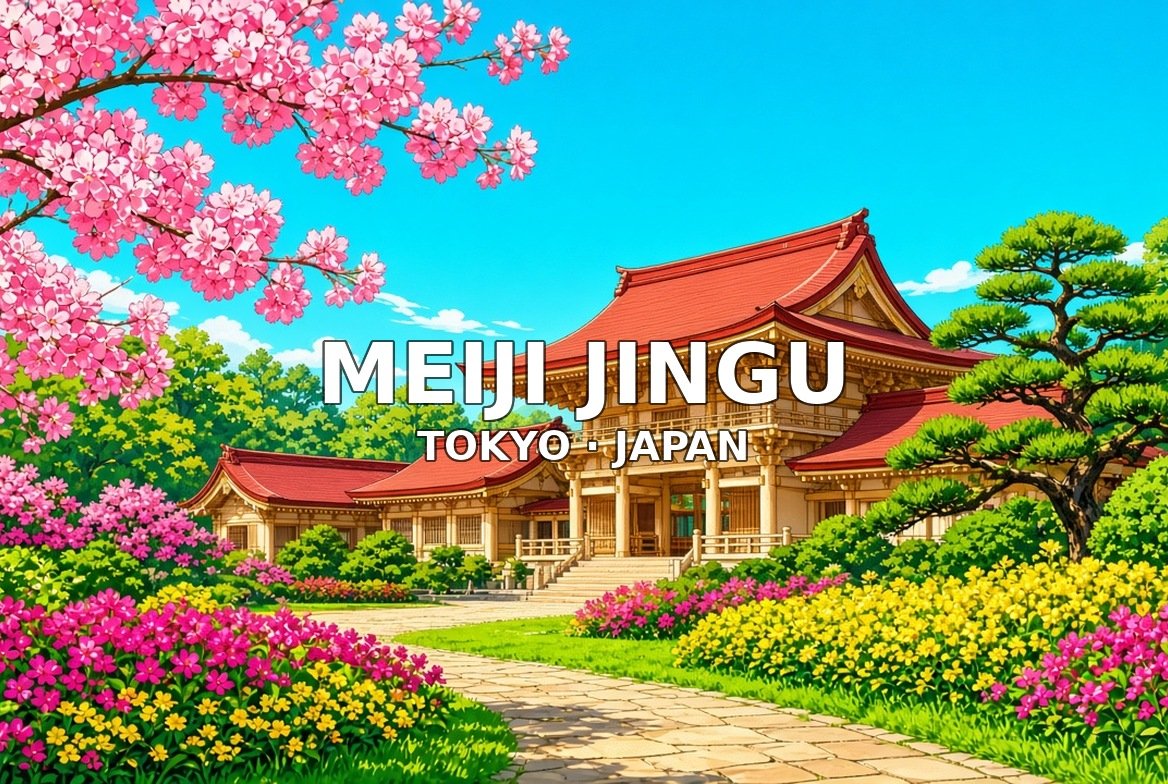
Meiji Jingu is a Shinto shrine dedicated to Emperor Meiji and Empress Shoken. It was completed in 1920, destroyed in the air raids of 1945 and rebuilt in 1958. Its forest of about 100,000 trees was planted by volunteers with trees sent from all over Japan. The path from Harajuku passes under the great wooden torii and a wall of sake barrels given by brewers, facing a row of wine barrels from Burgundy that honour the emperor’s interest in the West.

In front of the Main Hall stand two camphor trees joined by a rope, a symbol of a happy marriage, and on many days you can see a Shinto wedding procession cross the courtyard. The Inner Garden, with its iris field and Kiyomasa’s Well, has a small entry fee. The shrine is free and open from sunrise to sunset.

Walk this order. The great torii and the planted forest → sake and wine barrels → the Main Hall and the camphor trees → a Shinto wedding → the Inner Garden and Kiyomasa’s Well.
Meiji Jingū
03 · Tour · videos inside this sight
The Great Torii and the Planted Forest
Sake and Wine Barrels
The Main Hall and the Camphor Trees
The Inner Garden and Kiyomasa’s Well
Advertisement
Ad slot

9. Tokyo walking tour: Shinjuku

From stop 8 · JR Yamanote Harajuku to Shinjuku · 5 min

Map

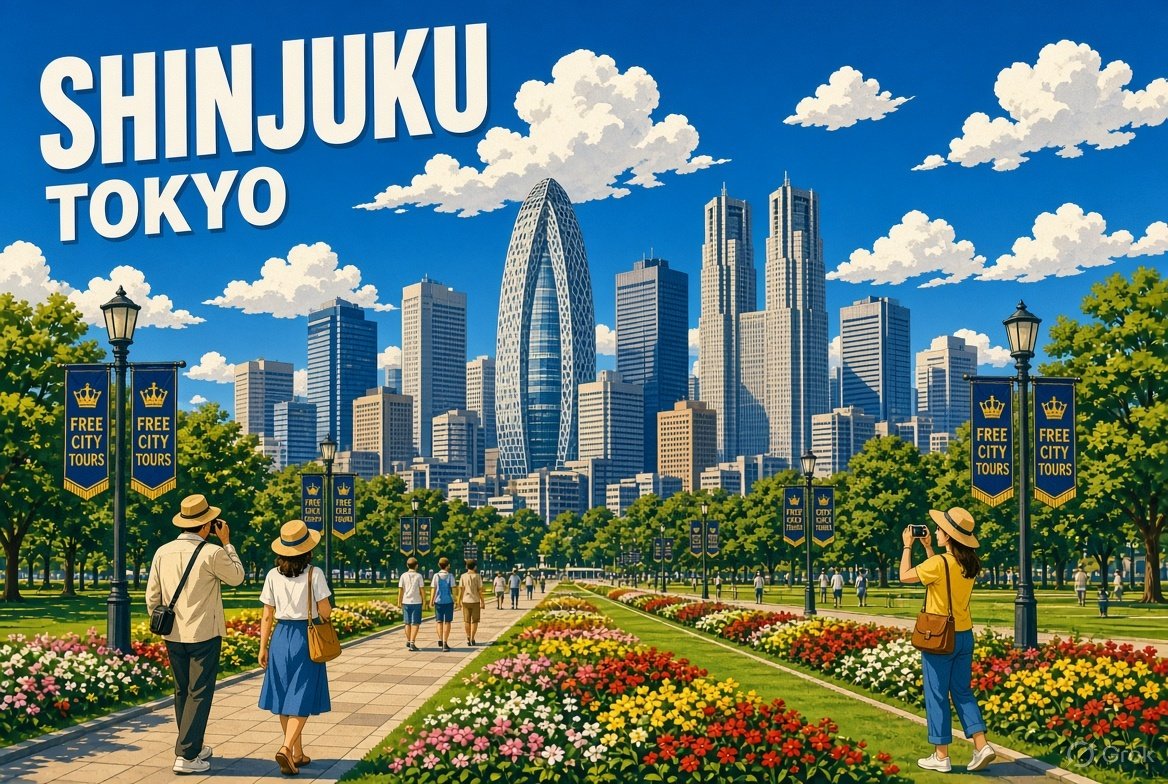
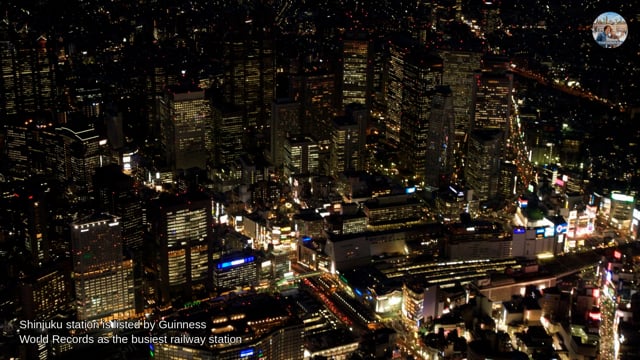
Shinjuku Station is the busiest railway station in the world, used by more than three million people a day. To the west rise the skyscrapers of the business district, and among them the Tokyo Metropolitan Government Building, designed by Kenzo Tange and opened in 1991; its two observation decks, 202 metres up, are free.

East of the station, Kabukicho is Tokyo’s biggest nightlife district, watched over by a giant Godzilla head on top of a hotel. Beside the tracks, the narrow lanes of Omoide Yokocho are full of tiny grill bars, and Golden Gai packs about 200 small bars into a few alleys. Shinjuku Gyoen, a former imperial garden, has Japanese, English and French gardens; it needs a ticket and is closed on Mondays.

Walk this order. The station and the skyscraper district → the Tokyo Metropolitan Government Building → Kabukicho and Godzilla → Omoide Yokocho and Golden Gai → Shinjuku Gyoen.
Shinjuku
03 · Tour · videos inside this sight
The Station and the Skyscraper District
Tokyo Metropolitan Government Building
Kabukicho and Godzilla
Omoide Yokocho and Golden Gai
Advertisement
Ad slot

10. Tokyo walking tour: teamLab Planets

From stop 9 · Tokyo Metro Yurakucho Line to Toyosu, then 10 min walk · last stop · book timed tickets

Map

On this Tokyo walking tour, teamLab Planets in Toyosu is a digital art museum that you walk through barefoot, sometimes knee-deep in water, among light, mirrors and flowers. It is not next to Shinjuku, so treat it as a booked evening or a separate half-day. Its sister museum, teamLab Borderless, reopened at Azabudai Hills in 2024. Next door in Toyosu is Toyosu Market, which replaced the famous inner market at Tsukiji in 2018; early in the morning you can watch the tuna auction from the visitor gallery.

Book first. Timed tickets sell out. Official site only. Check opening days before you go.

Walk this order. Toyosu and the way to Planets → barefoot through water and light → teamLab Borderless at Azabudai Hills → Toyosu Market → the tuna auction.

teamLab Planets
03 · Tour · videos inside this sight
Toyosu and the Way to Planets
Barefoot Through Water and Light
teamLab Borderless at Azabudai Hills

Tokyo Walking Tour Overview Detail

This Tokyo walking tour links 10 sights and 50 short video stops narrated by Clarissa, from Sensō-ji in Asakusa to Tokyo Skytree, Ueno Park, Akihabara, the Imperial Palace East Gardens, Ginza, Shibuya, Meiji Jingū, Shinjuku and teamLab Planets. Tokyo is huge, so the notes below group the stops into walkable neighbourhoods linked by train, and add the timing, transport, etiquette and free-entry details that make the city easier to explore. For official events and visitor information, also check GO TOKYO, the official travel guide of Tokyo.

Best routes around Tokyo using the 50 stops

Route 1, old Tokyo in the east (stops 1 to 4). Start early at Sensō-ji, entering through Kaminarimon, the Thunder Gate, and walking Nakamise-dori to the Hozomon gate, the five-storied pagoda and the Main Hall, with Asakusa Shrine beside it. Walk or ride one stop to Tokyo Skytree for the views from the Tembo Deck. Take the metro to Ueno Park for the temple halls, Shinobazu Pond and the statue of Saigo Takamori, then ride the JR Yamanote Line one stop to Akihabara for Electric Town, the anime shops and the red-brick arches of mAAch ecute.

Route 2, the palace and Ginza (stops 5 and 6). From Tokyo Station, walk to the Imperial Palace East Gardens, entering by Ote-mon, the main gate of Edo Castle, past the Hyakunin-bansho guardhouse, the Ninomaru Garden and the stone base of the old keep. Walk on to Ginza, where the videos cover the Wako clock tower at the 4-chome crossing, the department stores and flagship shops, and Chuo-dori, which becomes a car-free street on weekend afternoons.

Route 3, the west side (stops 7 to 9). Ride the Ginza Line to Shibuya for the Hachiko statue, the Scramble Crossing, Center Gai and the Shibuya Sky deck. Walk through Harajuku to Meiji Jingū, under the great wooden torii and past the sake barrels to the Main Hall, then take the Yamanote Line to Shinjuku for the free observation decks of the Metropolitan Government Building, the lanes of Omoide Yokocho and Golden Gai, and Kabukicho with its Godzilla head.

Route 4, Toyosu (stop 10). Book a timed slot at teamLab Planets in Toyosu, where you walk barefoot through water, light and mirrors, and pair it with an early morning at Toyosu Market. It is not near Shinjuku, so treat it as an evening or a separate half day. If you only have one day, Routes 1 and 3 make the best free route Tokyo offers, from the temples of Asakusa to the lights of Shibuya.

Between the stops, Tokyo rewards a wander off the main streets. Yanaka, just north of Ueno Park, is an old neighbourhood of temples, wooden houses and small shops, Harajuku’s Takeshita Street is the heart of youth street fashion, and Omotesando, the tree-lined avenue that leads away from Meiji Jingū, is lined with striking modern architecture. Each one makes an easy detour without losing your place on the route.

For photos, the best free viewpoints on this Tokyo route are the observation decks of the Tokyo Metropolitan Government Building in Shinjuku, the Sumida River bridges looking at Skytree, the Shibuya Scramble Crossing from the station walkways and Nakamise-dori early in the morning, before the stalls open and the crowds arrive.

A three-day plan in Tokyo works well as Route 1 on day one, Routes 2 and 3 on day two, and Toyosu with a slower Shinjuku evening on day three. If it rains, move teamLab, the museums of Ueno and the department stores of Ginza forward and save the gardens and Meiji Jingū for a dry spell.

Best times and transport for a Tokyo walk

Spring and autumn are the best seasons for a Tokyo walk. Cherry blossom season, usually from late March to early April, fills Ueno Park and the palace moats with pink, and autumn brings golden ginkgo trees and crisp, clear days. June is the rainy season, July and August are hot and humid, and late summer can bring typhoons. Winter is cold but often sunny, with clear views of Mount Fuji from the high decks.

Start early at Sensō-ji and Meiji Jingū, which are calm at dawn, and save Shibuya and Shinjuku for the evening, when the neon lights come on. Check the opening days of the Imperial Palace East Gardens, which close on some weekdays, and book Tokyo Skytree, Shibuya Sky and teamLab Planets ahead for sunset slots. Check each official website before you plan each day of your Tokyo route.

Tokyo’s trains and metro are fast, clean and punctual. A rechargeable IC card such as Suica or PASMO, on a card or in your phone, works on almost every train, metro line and bus, and visitors can also buy a 24, 48 or 72-hour Tokyo Subway Ticket for the metro. The JR Yamanote Line loops around the centre and links Ueno, Akihabara, Tokyo, Shibuya, Harajuku and Shinjuku. Avoid the morning and evening rush hours if you can.

From Narita Airport, the Narita Express and the Keisei Skyliner run into the city; from Haneda, the Keikyu Line and the Tokyo Monorail are quickest. Within each neighbourhood, walking is the best way to explore. Every stop on this Tokyo route has its own map link, so you can link the routes in any order from your hotel.

Etiquette, food and safety on the Tokyo route

Japan has gentle customs that visitors are expected to follow. Queue in line for trains, keep your voice down and avoid phone calls on board, and stand on the left of escalators in Tokyo. At shrines, bow at the torii and rinse your hands at the water basin before you approach; at temples, follow the signs about photography. Eating while walking is frowned upon in some places, such as Nakamise-dori. Tipping is not expected, and can even cause confusion.

Food is a highlight of any Tokyo walk. Try ramen, sushi, tempura and yakitori, and snack on melon bread and rice crackers in Asakusa or sweet bean anpan in Ginza, where the bun was invented. Department store food halls are great for a picnic, and convenience stores sell good, cheap meals. Omoide Yokocho and Golden Gai are small and cosy, so be patient, and note that some bars charge a seating fee.

Tokyo is one of the safest big cities in the world, but crowds at Shibuya, Shinjuku and Asakusa are intense, so keep your bag closed and your group together. In Kabukicho, ignore touts who try to lead you into bars. Public bins are rare, so carry a small bag for rubbish. Carry some cash as well as a card, as small shops may not take cards. In an emergency, dial 110 for the police or 119 for an ambulance or fire.

Free sights, tickets and accessibility in Tokyo

Tokyo can be enjoyed in budget, because many stops on this Tokyo are free. Sensō-ji and Asakusa Shrine, Ueno Park, Akihabara, the Imperial Palace East Gardens, Ginza, the Shibuya Scramble Crossing, Meiji Jingū and the observation decks of the Tokyo Metropolitan Government Building cost nothing to visit.

Several stops charge. Tokyo Skytree, Shibuya Sky and teamLab Planets all need timed tickets, and the museums and zoo in Ueno Park have their own entry fees. Book online, because sunset slots and weekend tickets sell out, and buy teamLab tickets only on the official site. Check each official website for current prices and opening times.

For accessibility, Tokyo is well prepared. Most train and metro stations have lifts, tactile paving and accessible toilets, and station staff will help with ramps for boarding if you ask. The palace gardens and Ueno Park have wide paths, though some are gravel, and Meiji Jingū’s main approach is a long gravel path. teamLab Planets involves walking through water and soft floors, so check its access guide first. Plan for crowds at rush hour on the Tokyo route.

After this Tokyo route, carry on with more free walks in Japan: the Kyoto self-guided walk and the Osaka self-guided walk, a fast bullet train ride west, the Fukuoka self-guided walk and the Sapporo stroll. You can browse every city on the Free City Tours home page.

Asakusa to Toyosu: ten stops on the Tokyo route

This Tokyo route follows the ten stops on the Free City Tours Tokyo page, each with a map link and five short films, plus a city overview. It starts at Sensō-ji in Asakusa and finishes at teamLab Planets on the Toyosu waterfront.

The stops, in route order, are:

  1. Sensō-ji, Asakusa
  2. Tokyo Skytree
  3. Ueno Park
  4. Akihabara
  5. Imperial Palace East Gardens
  6. Ginza
  7. Shibuya Crossing
  8. Meiji Jingū
  9. Shinjuku
  10. teamLab Planets, Toyosu — the finish

Tokyo is too big to walk in one line, so this Tokyo route works best as four neighbourhood walks joined by train. The east side groups Sensō-ji, Skytree, Ueno and Akihabara. The centre pairs the East Gardens of the old Edo Castle with Ginza. The west side links Shibuya, Meiji Jingū and Shinjuku, and teamLab Planets in Toyosu is a separate, ticketed visit.

Walking distances between Tokyo’s neighbourhood stops

All figures are estimates from pedestrian routing on OpenStreetMap data between the stop coordinates on the Free City Tours page, and exclude time at each sight:

  • Sensō-ji to Tokyo Skytree: about 1.8 km across the Sumida River, roughly 25 minutes.
  • Ueno Park to Akihabara: about 2.4 km, roughly 30 minutes.
  • Imperial Palace East Gardens to Ginza: about 2.9 km, roughly 40 minutes.
  • Shibuya Crossing to Meiji Jingū to Shinjuku: about 4.1 km in total, roughly 55 minutes.
  • Ginza to teamLab Planets: about 3.6 km, roughly 50 minutes, if you want to walk out to Toyosu.

Leaving out the optional walk out to Toyosu, those walkable sections add up to roughly 11 km and about 2.5 hours on foot. Walked in full, every leg included, the Tokyo route would be approximately 35 km and nearly 8 hours of walking, which is why the longer links (Skytree to Ueno, Akihabara to the palace, Ginza to Shibuya and Shinjuku to Toyosu) are best done by metro or JR train. Plan two to three days for a full walk of Tokyo.

Opening hours that shape a day in Tokyo, and the best seasons

Start the Tokyo route early on the east side. Sensō-ji’s Main Hall opens at 6:30 a.m. from October to March (6 a.m. from April to September) and closes at 5 p.m., and the temple is lit up every evening from sunset until around 11 p.m. Meiji Jingū opens at sunrise and closes at sunset, so its hours change monthly — in November, 6:10 a.m. to 4:10 p.m.; in December, 6:40 a.m. to 4 p.m. The Imperial Palace East Gardens open at 9 a.m. and, from November to February, close at 4 p.m. (last entry 3:30 p.m.); they are closed every Monday and Friday.

Save the evening for the west side and the views. The south observatory of the Tokyo Metropolitan Government Building in Shinjuku is open until 10 p.m. (entry until 9:30 p.m.), and Tokyo Skytree’s Tembo Deck runs into the evening, with last admission at 9 p.m. On Saturdays, Sundays and public holidays, Ginza’s Chuo-dori becomes a car-free pedestrian zone from noon to 5 p.m. between October and March (noon to 6 p.m. from April to September). Spring and autumn are generally the most comfortable seasons for a long walk in Tokyo; summer is hot and humid.

Free gardens, shrines and observation decks in Tokyo

Several stops on this Tokyo route cost nothing to enter. These were verified with official or reputable sources:

  • Imperial Palace East Gardens. Free, with no ticket or reservation needed. Closed every Monday and Friday (except on national holidays other than the Emperor’s Birthday; if a Monday holiday opens, the following Tuesday closes), from 28 December to 3 January, and on days of Imperial Court events.
  • Meiji Jingū. Open every day of the year, free of charge, from sunrise to sunset. Some facilities inside keep shorter hours, mainly 9 a.m. to 4 p.m.
  • Tokyo Metropolitan Government Building observation decks (Shinjuku). Free. The south deck closes on the first and third Tuesday of each month and the north deck on the second and fourth Monday; both close over the New Year period.
  • Ginza pedestrian zone. Free to stroll on weekend and holiday afternoons, as above.

Tokyo Skytree and teamLab Planets are ticketed. teamLab Planets sells date-and-time tickets in advance only (not on site), is open 8 a.m. to 10 p.m. with last entry an hour before closing, and has announced closed days on 3 December 2026 and 14 January 2027. Its published run ends at the end of 2027.

Tokyo references for the palace, shrines, decks and routing

Tokyo walking tour FAQ

Is this Tokyo walking tour really free?

Yes. All 50 video stops on this Tokyo walking tour are free to watch, and many sights are free too, including Sensō-ji, Ueno Park, the Imperial Palace East Gardens, Meiji Jingū, the Shibuya crossing and the Shinjuku government building decks. Skytree, Shibuya Sky and teamLab Planets charge, so this is a free walking tour Tokyo visitors can shape to any budget.

How long does the Tokyo walking tour take?

Allow three days. Asakusa, Skytree, Ueno and Akihabara fill one day, the palace gardens, Ginza and the west side fill another, and teamLab Planets with Toyosu makes a good half day.

Where does the Tokyo walking tour start?

It starts at Sensō-ji in Asakusa, next to Asakusa station. You can join at any stop, because each one has its own map link and five short videos.

Is the Tokyo walking tour suitable for children and wheelchair users?

Yes. Children love Akihabara, Skytree, Ueno Zoo and teamLab Planets. Most stations have lifts, so wheelchair users can ride between stops easily, though some garden and shrine paths are gravel.

Do I need an app or mobile data for the Tokyo walking tour?

You don’t need an app for the videos. Open this page in your phone’s browser and play them as you walk. The videos stream, so use mobile data, a pocket Wi-Fi or the free Wi-Fi in many stations, and keep a transit app handy for the trains.

Which days are the Imperial Palace East Gardens closed?

Every Monday and Friday, from 28 December to 3 January, and on days of Imperial Court events. They open on most national holidays that fall on a Monday or Friday. Entry is free and needs no booking.

What time does Meiji Jingū open and close?

It opens at sunrise and closes at sunset, every day of the year, with no admission charge. In November that is 6:10 a.m. to 4:10 p.m.; in December, 6:40 a.m. to 4 p.m.

Is teamLab Planets in Toyosu closing?

teamLab lists its run as 7 July 2018 to the end of 2027, with no exact last day announced. Tickets are date- and time-specific and are not sold at the door.

Where is the free observation deck on the Shinjuku stop?

At the Tokyo Metropolitan Government Building, a short walk west of Shinjuku Station. Both 202-metre-high observatories are free; the south deck stays open until 10 p.m. except on its first- and third-Tuesday closing days.

How far is it from Sensō-ji to Tokyo Skytree on foot?

About 1.8 km, or roughly 25 minutes, across the Sumida River — an estimate from pedestrian routing. It is the easiest walking leg of the whole route.