Sapporo Walking Tour: 50 Free Video Stops

How to tour Sapporo

Use this free self-guided walking tour of Sapporo on your phone as you walk. There’s no app to download, no sign-up and no guide to tip. Begin at Sapporo Clock Tower, tap a stop for a short narrated video of what you’re looking at, and follow the map link until you reach Hitsujigaoka Observation Hill.
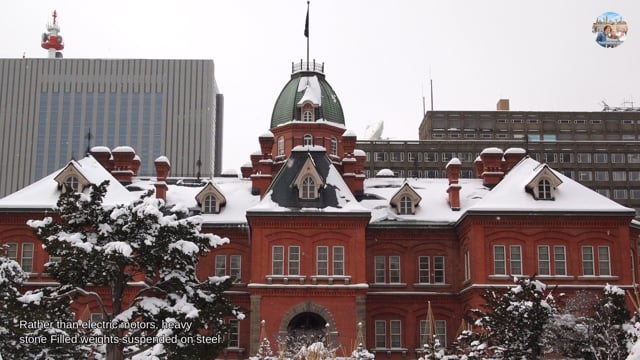
This Sapporo walking tour explores the capital of Hokkaido across the Ishikari Plain, tracing its transformation from a planned 1870s Meiji frontier grid with American-influenced timber architecture into a vibrant northern metropolis famed for snow festivals, Olympic winter sports, parks and culinary traditions.
Starting downtown at the 1878 wooden Sapporo Clock Tower, the route strolls down the 1.5-kilometre green boulevard of Odori Park and climbs the observation deck of the 1957 Sapporo TV Tower before riding west to the forested precincts of Hokkaido Shrine in Maruyama Park and returning after dusk to the neon arcades and Miso Ramen Alley of Susukino.
Expanding to the city’s mountain viewpoints and cultural landmarks, the itinerary visits the 1972 Olympic ski jump at Okurayama, the red-brick 1890 factory halls of the Sapporo Beer Museum, Isamu Noguchi’s monumental land-art landscape at Moerenuma Park, the summit ropeway of Mt. Moiwa and the pastoral statue of Dr. William S. Clark on Hitsujigaoka Observation Hill.
1. Sapporo walking tour: Sapporo Clock Tower
Chuo Ward · 5-minute walk south of Sapporo Station or 2 minutes north of Odori · start here · 35 minutes
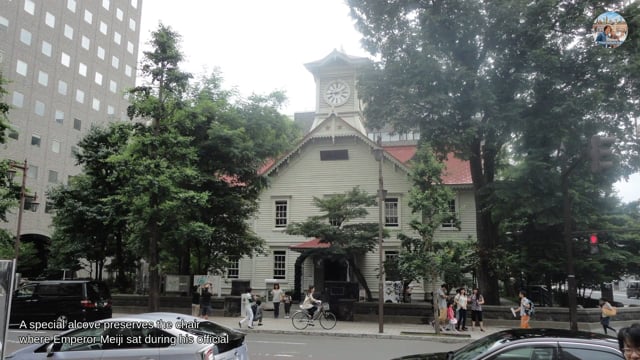
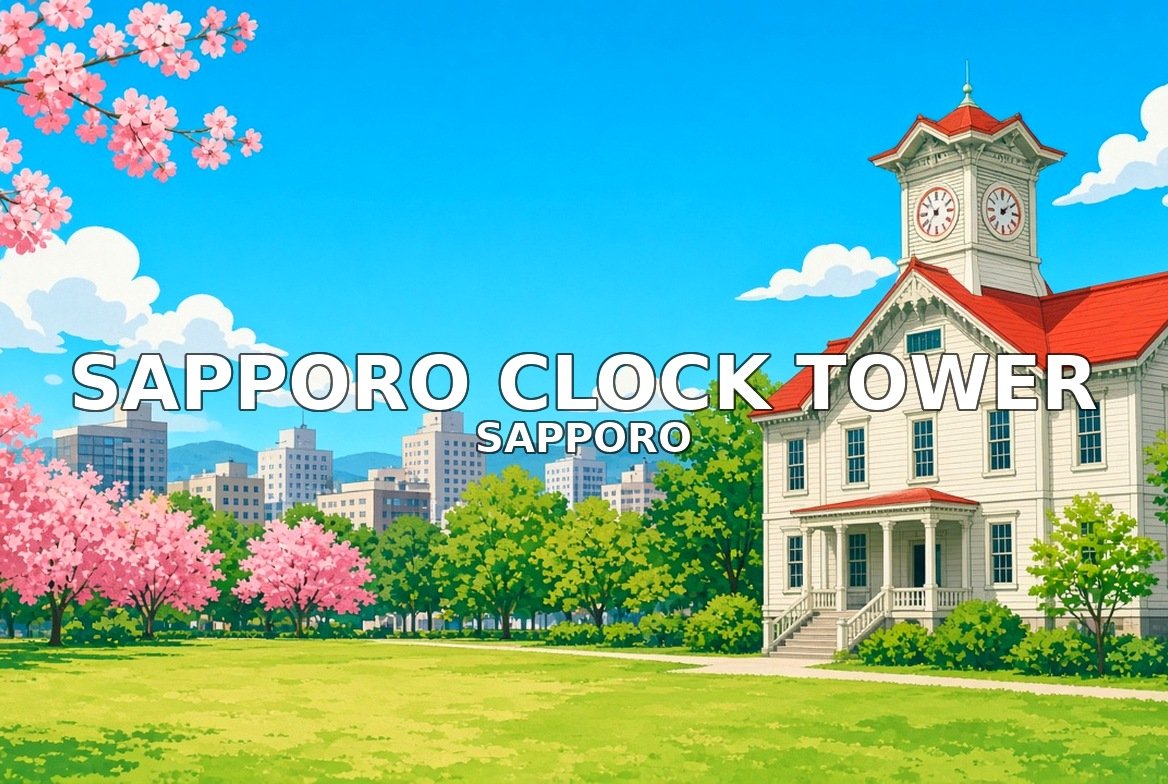
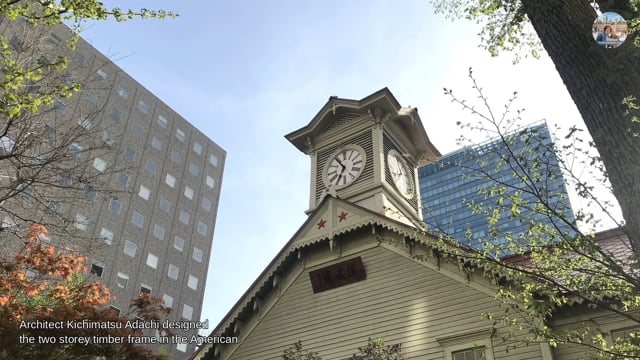
On this Sapporo walking tour, Built in October 1878 as the drill hall (Enbujo) of the Sapporo Agricultural College under the guidance of American educator Dr. William S. Clark and professor William Wheeler, the Sapporo Clock Tower (Tokeidai) is the oldest surviving frontier building in the city and an Important Cultural Property of Japan. Its white clapboard American balloon-frame walls and red-starred gable house a weight-driven pendulum mechanical clock fabricated by E. Howard & Co. of Boston in 1881 that still chimes every hour.
Walk this order. Wooden Beacon of Frontier Sapporo → The Howard Pendulum Clock of 1881 → Agricultural College Exhibits on the Ground Floor → Upstairs Ceremony Hall and Emperor Meiji Visit → Red Star of the Kaitakushi and Photo Terrace.
2. Odori Park
From stop 1 · 2-minute walk south across Kita 1-jo Dori · 45 minutes
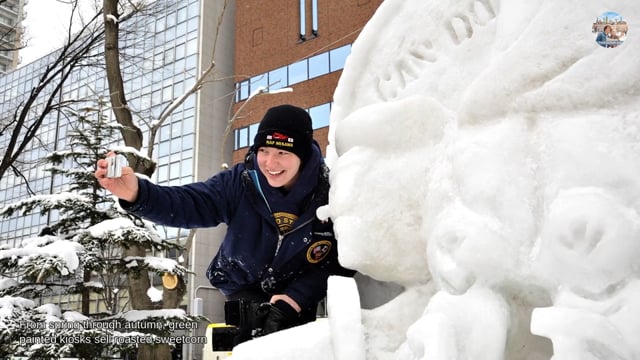
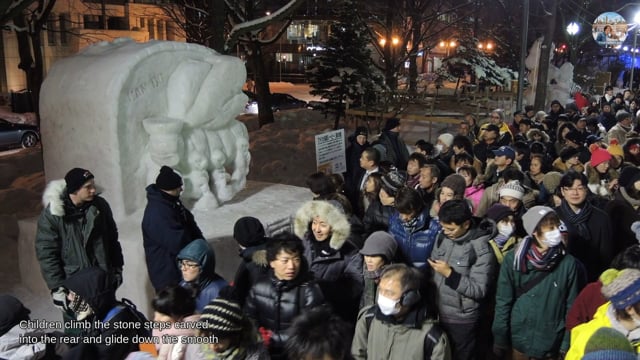
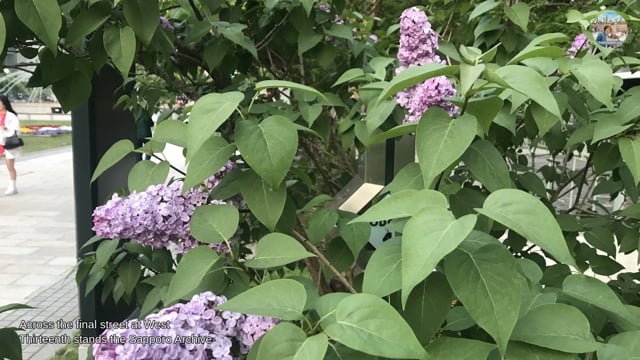
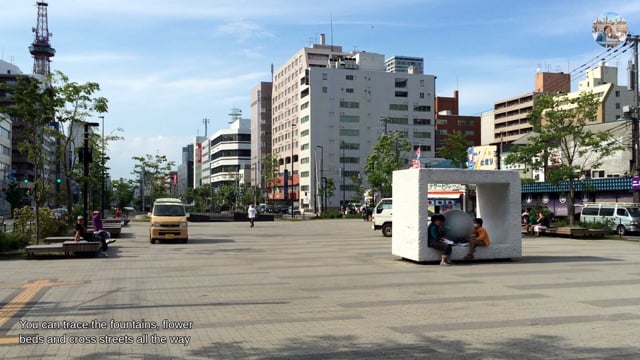
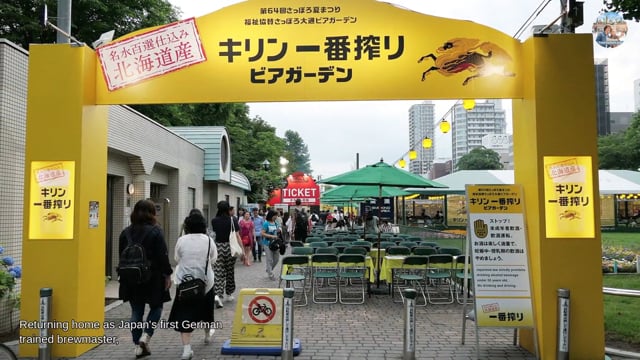
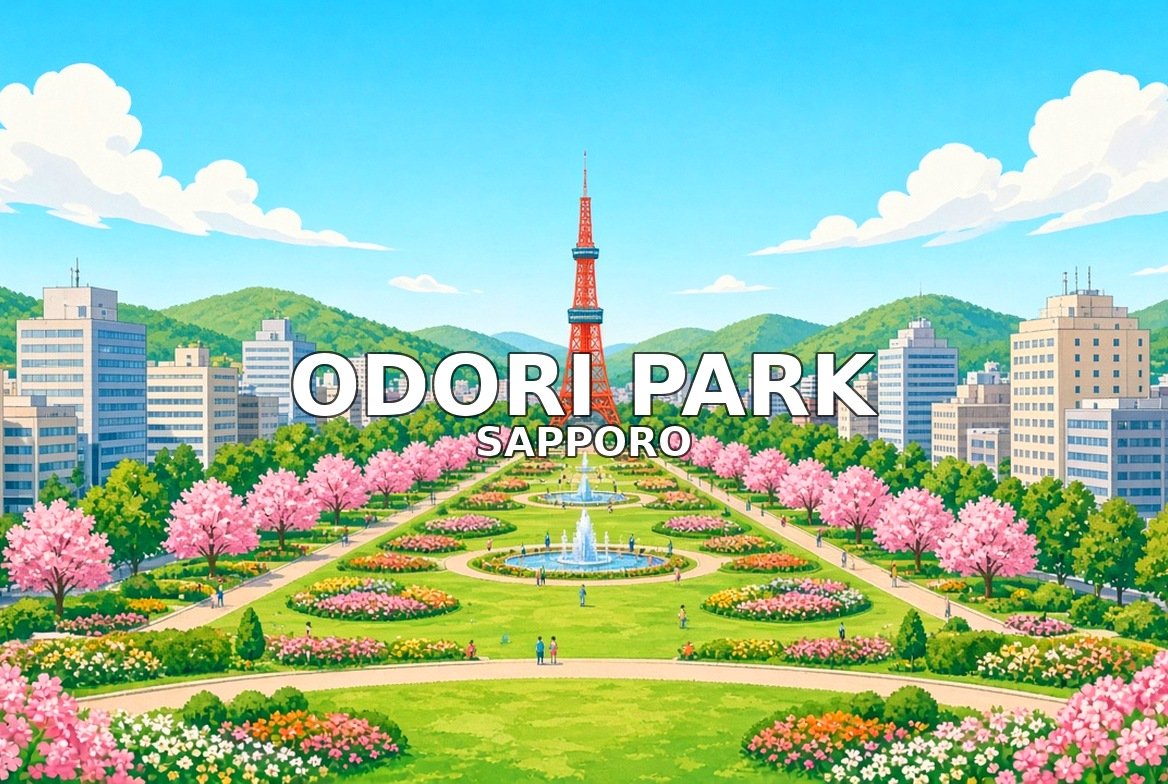
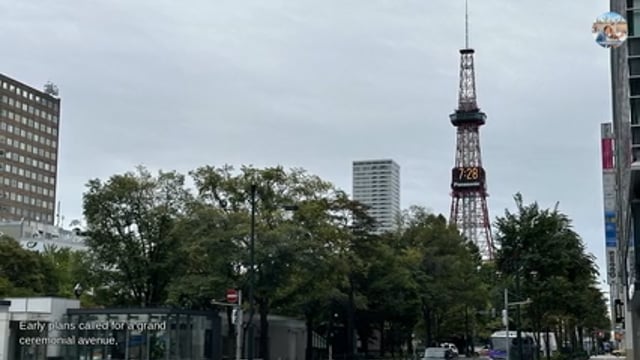
Along this Sapporo walking tour, Laid out in 1871 as a 105-metre-wide firebreak dividing northern governmental Sapporo from the southern merchant quarters and landscaped in 1909 by Meiji garden designer Yasuhei Nagaoka, Odori Park stretches 1.5 kilometres across thirteen city blocks from Nishi 1-chome to Nishi 13-chome. Lined with 4,700 lilac, elm and cherry trees, fountains, Isamu Noguchi’s Black Slide Mantra sculpture and roasted sweet-corn wagons, it serves as the main stage of the February Sapporo Snow Festival and the summer Beer Garden.
Walk this order. The Green Boulevard Dividing North and South → Fountains, Lilac Groves and Corn Wagons → Isamu Noguchi’s Black Slide Mantra → Stage of the Sapporo Snow Festival and Autumn Fest → Sankichi Shrine and the Sunken Rose Garden.
3. Sapporo TV Tower
From stop 2 · eastern anchor of Odori Park at Nishi 1-chome · 40 minutes
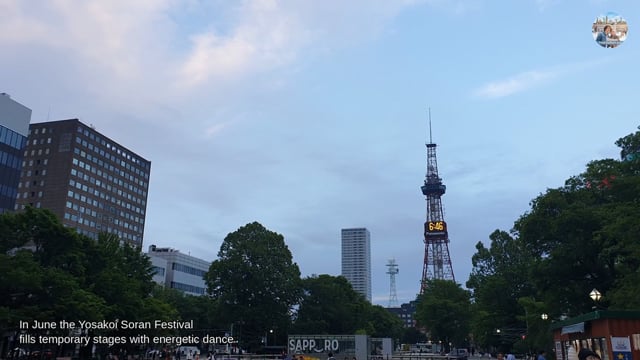
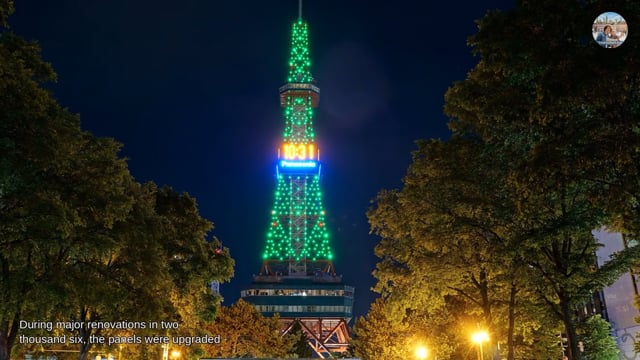
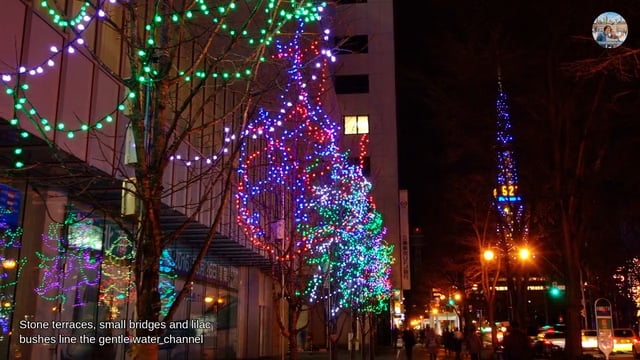
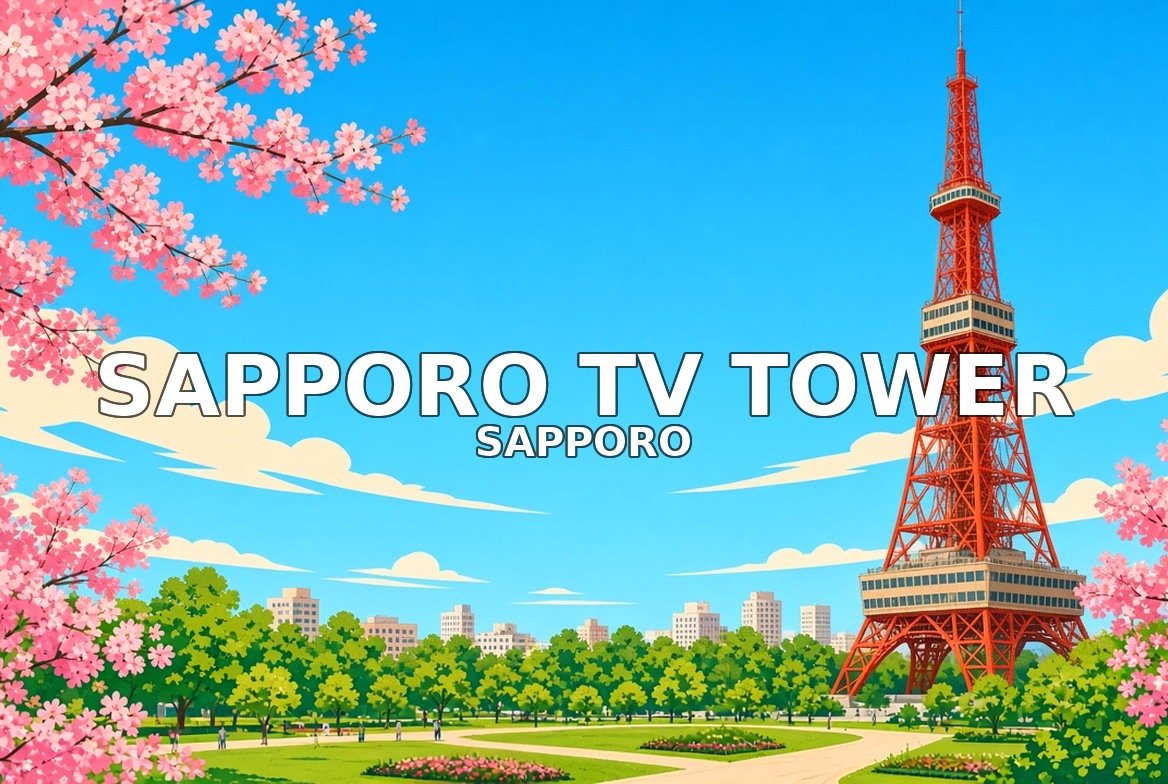
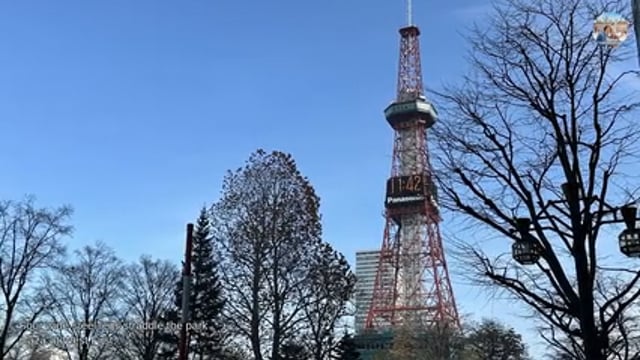
On this Sapporo walking tour, Designed by structural engineer Tachu Naito — the celebrated “Father of Japanese Towers” who also engineered Tokyo Tower and Nagoya TV Tower — the 147.2-metre Sapporo TV Tower opened in August 1957 at the eastern head of Odori Park above the Sosei River. Equipped since 1961 with four large digital Matsushita Electric clocks on its steel lattice waist, its 90.38-metre enclosed Sky Lounge observation deck frames a straight axial view down the entire length of Odori Park toward Mount Okura.
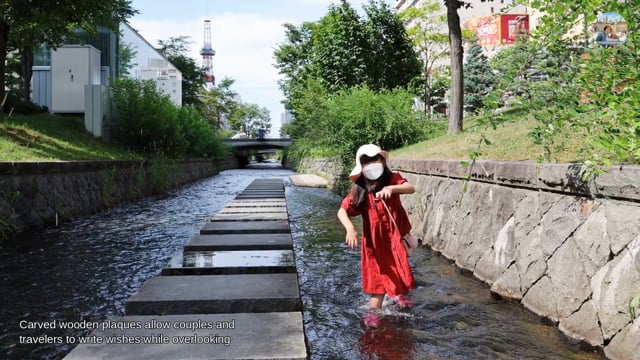
Walk this order. Tachu Naito’s Red Lattice Landmark at West First → Giant Digital Clocks on All Four Sides → Ninety Metre Sky Lounge Over Odori → Kowaso View Window and Sky TV Tower Shrine → Sosei River Park and Evening Illuminations.
4. Hokkaido Shrine
From stop 3 · Tozai Subway Line 3 stops west to Maruyama Koen Station · 60 minutes
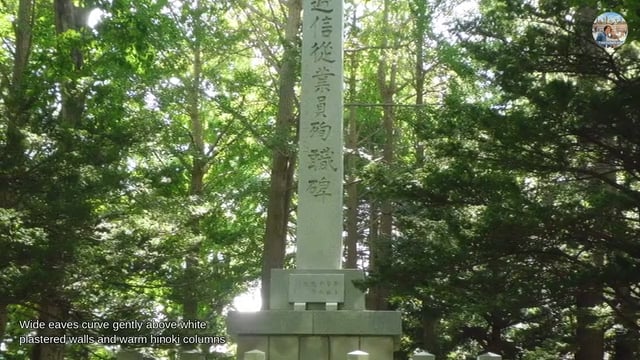
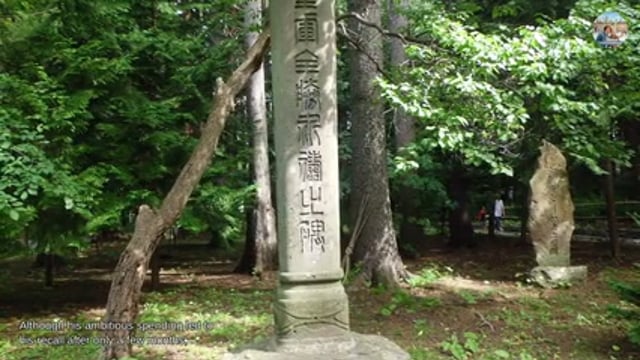
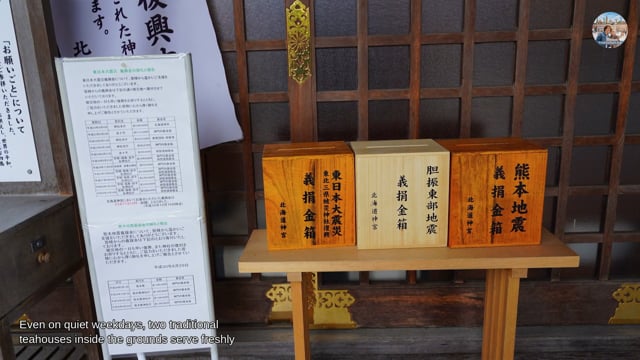
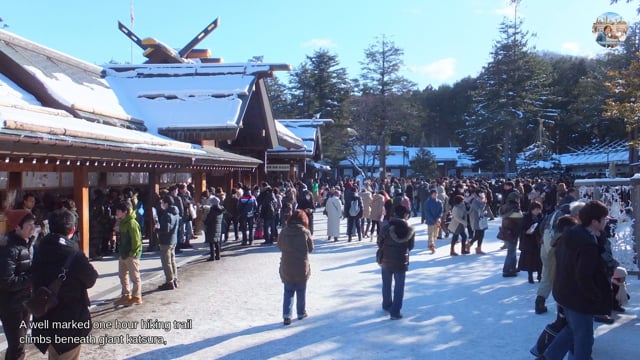
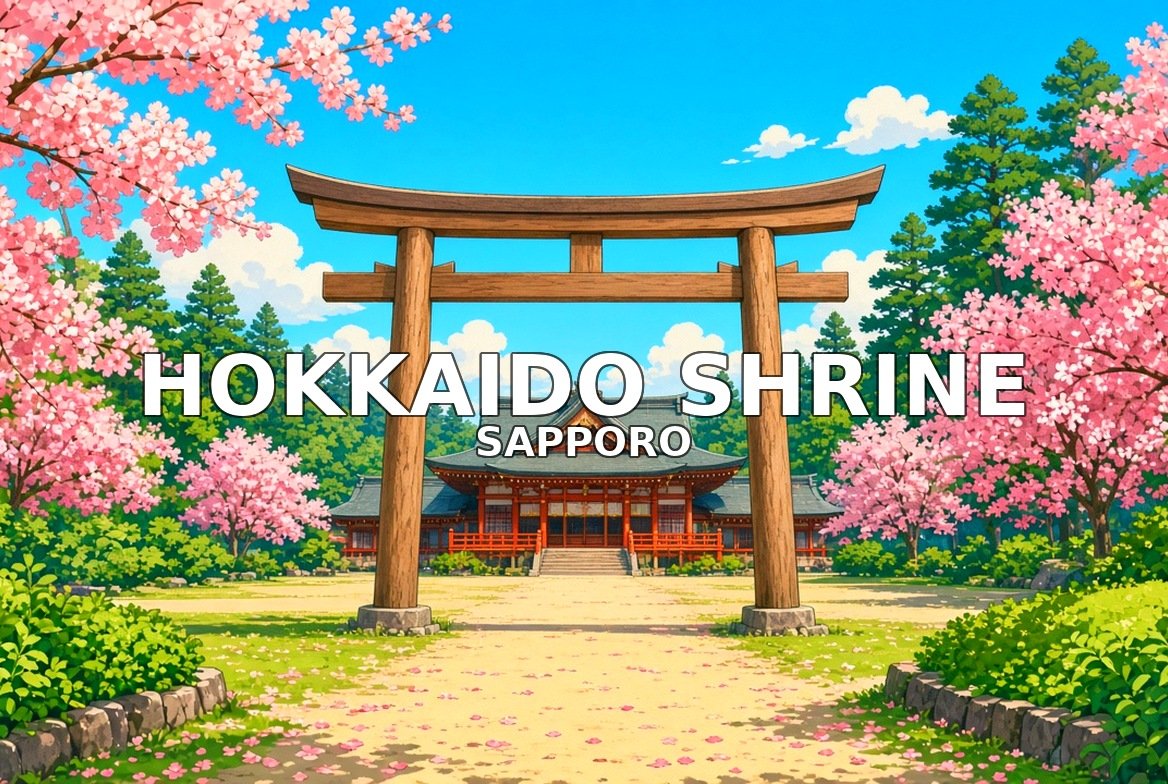
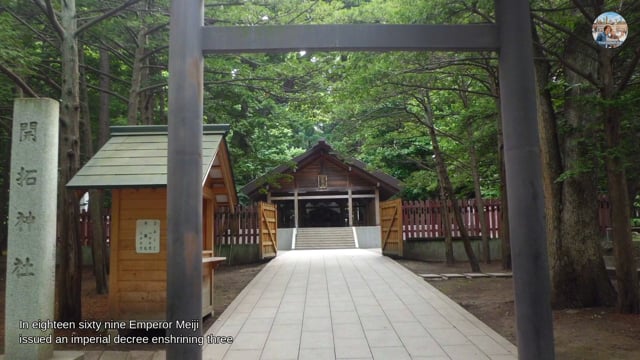
Along this Sapporo walking tour, Set amid the ancient cedar, elm and katsura forest of Maruyama Park at the foot of Mount Maruyama, Hokkaido Shrine (Hokkaido Jingu) was established by decree of Emperor Meiji in 1869 to enshrine the three Kaitaku Sanjin pioneer deities guarding the development of Hokkaido, with Emperor Meiji himself enshrined in 1964. Approached beneath towering torii gates and an avenue of 1,400 Ezo-yamazakura cherry and plum trees that bloom together each May, its copper-roofed shinmei-zukuri main sanctuary welcomes quiet forest strolls and traditional tea stops.
Walk this order. Sacred Cedar Avenues of Maruyama Park → Shinmei Architecture of the Main Sanctuary → Bronze Statue of Pioneer Shima Yoshitake → Hokkaido Festival and Traditional Shrine Sweets → Maruyama Primeval Forest and Park Trails.
5. Susukino District
From stop 4 · Tozai and Namboku Subway Lines back to Susukino Station · 60 minutes
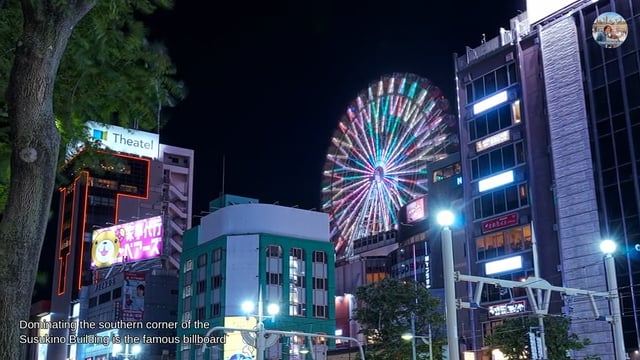
On this Sapporo walking tour, Extending south of Odori Park and the covered Tanukikoji Shopping Arcade around the busy Ekimae-dori intersection, Susukino is the largest entertainment and dining district in Japan north of Tokyo, encompassing more than 3,500 restaurants, izakayas and bars. Beneath the iconic illuminated King of Blenders Nikka Whisky billboard and the rooftop NORBESA Ferris wheel, narrow laneways like Ganso Sapporo Ramen Yokocho (Original Ramen Alley, born in 1951) steam with rich butter-corn miso ramen and charcoal-grilled Genghis Khan (Jingisukan) lamb.
Walk this order. Sapporo’s Neon Crossroads and the Nikka Sign → Ganso Ramen Yokocho and Miso Ramen Heritage → Tanukikoji Covered Shopping Arcade → Nijo Market and Hokkaido Seafood Tables → Toyohiraikan Villa and Nakajima Park.

6. Okurayama Ski Jump
From stop 5 · Subway to Maruyama Koen then 10-minute shuttle bus to Mount Okura · 60 minutes
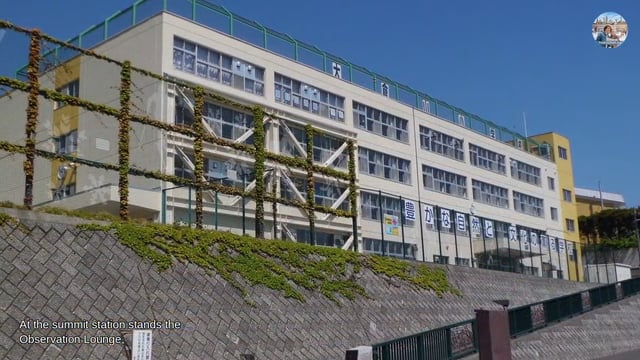
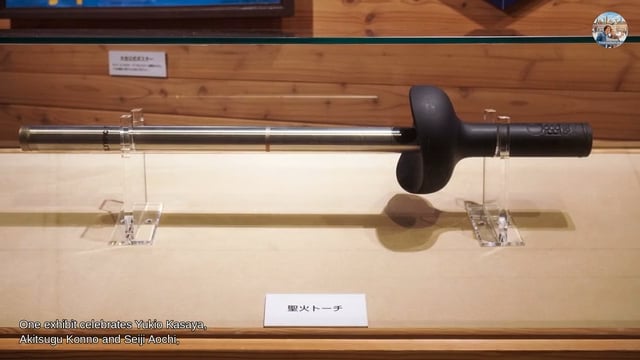
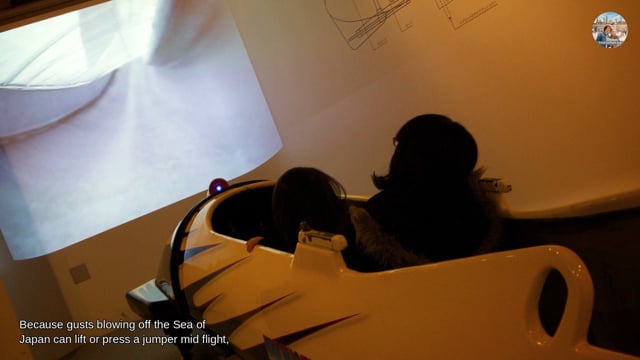
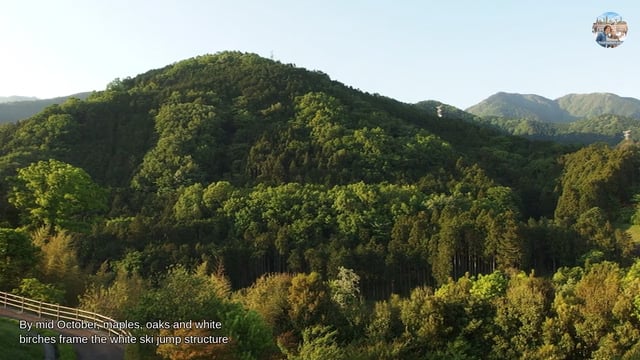
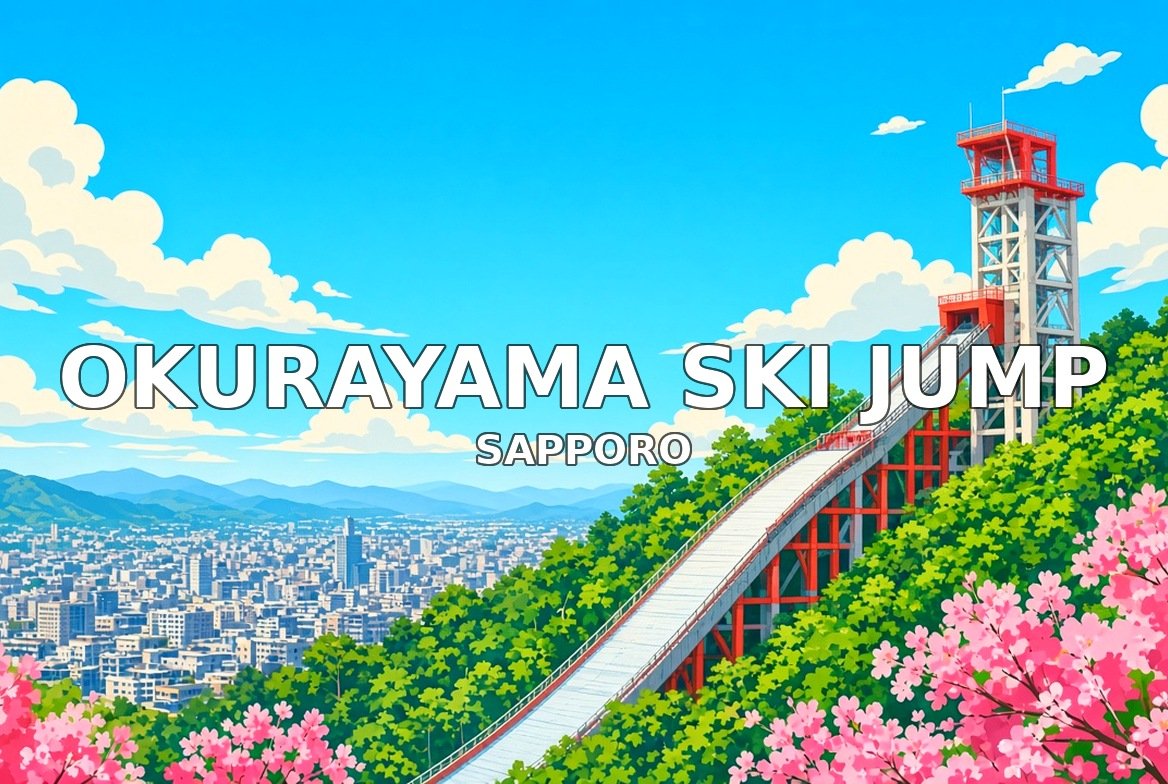
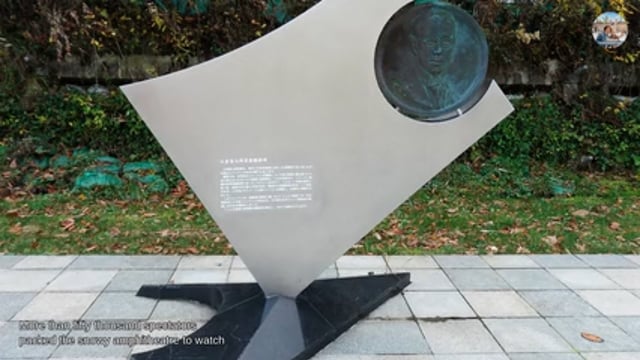
Along this Sapporo walking tour, Carved into the eastern slope of 307-metre Mount Okura in 1931 with patronage from Baron Kishichiro Okura and engineered by Norwegian ski-jump designer Olaf Helset before being rebuilt for the 1972 Sapporo Winter Olympics, the Okurayama Ski Jump Stadium (HS137 large hill) remains an active FIS World Cup venue. Visitors ride a dual chairlift alongside the steep inrun track to the rooftop observation lounge at 307 metres for a ski-jumper’s view directly down the ramp into the street grid of Odori Park, and explore the interactive Sapporo Olympic Museum at the base.
Walk this order. Olympic Hill of the 1972 Winter Games → Riding the Chairlift to the Start Gate → Sapporo Olympic Museum and the Wings of Okurayama → Summer Jumps and Winter World Cup Contests → Forest Trails of Mount Sankaku and Maruyama.
7. Sapporo Beer Museum
From stop 6 · bus or taxi east across Sapporo Station to Sapporo Garden Park · 60 minutes
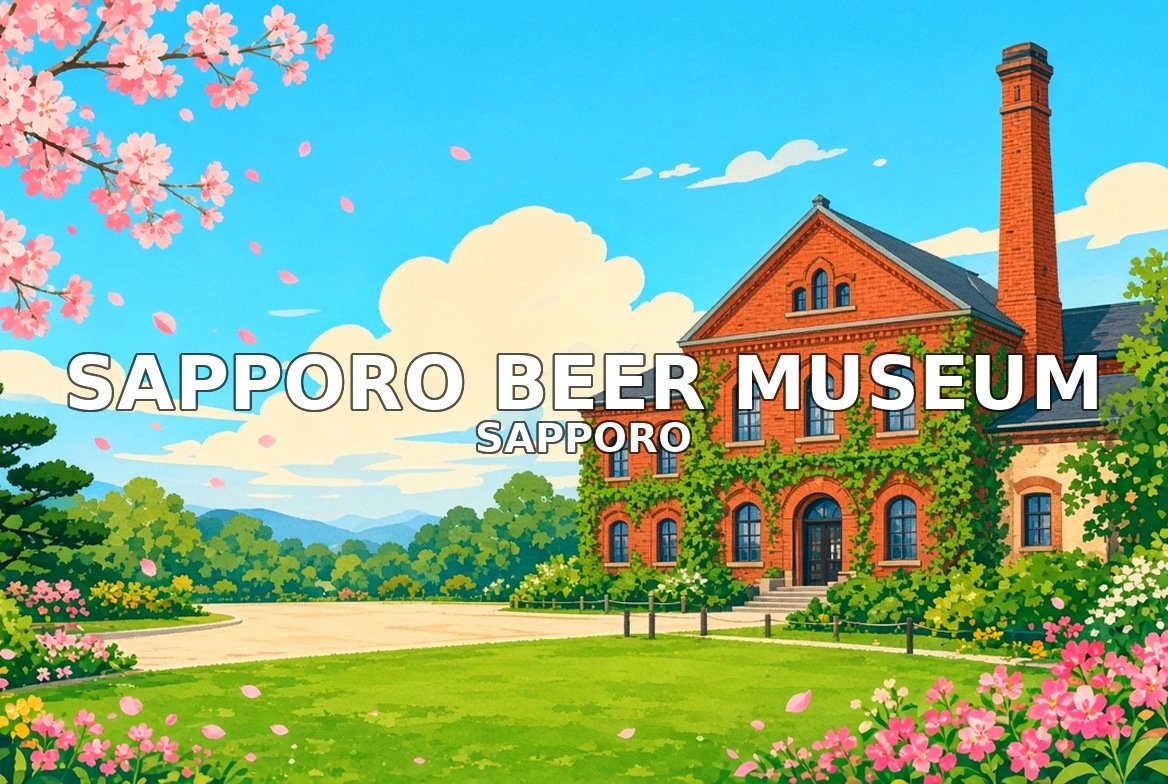
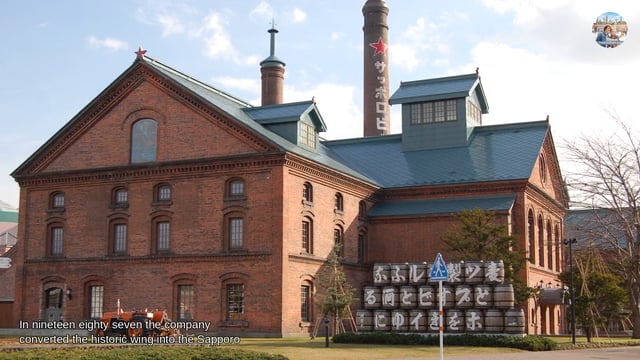
On this Sapporo walking tour, Housed inside the red-brick 1890 Meiji-era Sapporo Sugar Company factory that became the malting plant of the Kaitakushi Brewery (founded in 1876 by German-trained brewmaster Seibei Nakagawa with the red five-pointed star of the Hokkaido Development Commission), the Sapporo Beer Museum is Japan’s only museum dedicated to beer heritage. Beneath towering copper mash kettles and brick smokestacks, galleries trace 150 years of Hokkaido brewing history and conclude in the Star Hall tasting room with flights of revival Kaitakushi Beer and Black Label draft alongside the Kessel Hall beer halls.
Walk this order. Meiji Red Brick Heritage at Sapporo Garden Park → Kaitakushi Brewery and Seibei Nakagawa → The Giant Copper Kettle of 1912 → Vintage Posters and the Star Hall Tasting Counter → Kessel Hall and Jingisukan Lamb Feasts.
8. Moerenuma Park
From stop 7 · Toho Subway Line to Kanjodori-Higashi then bus to Moerenuma · 90 minutes
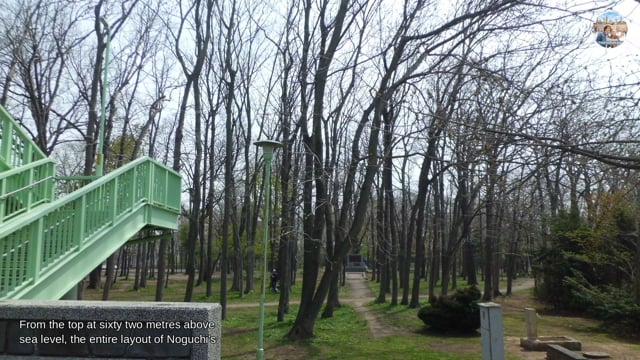
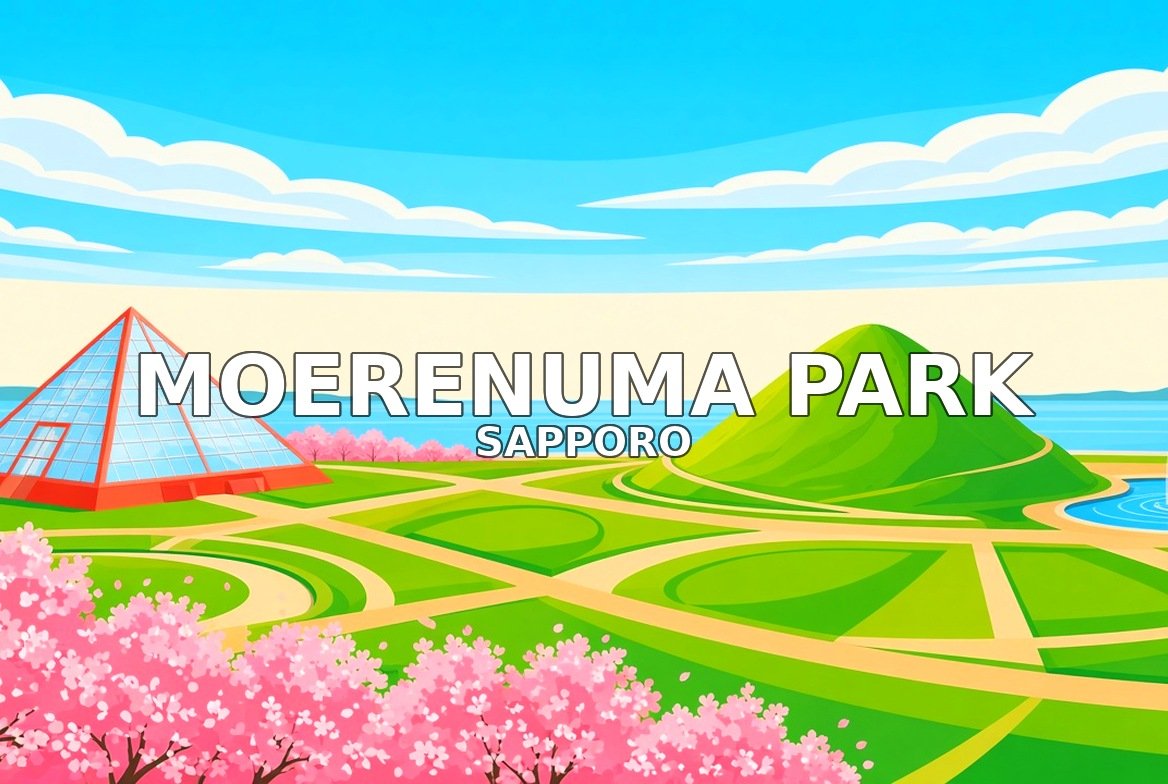
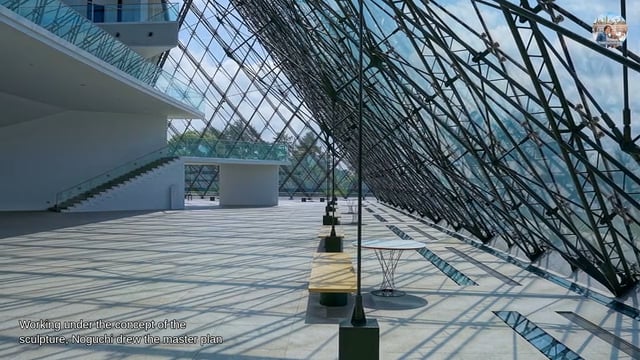
Along this Sapporo walking tour, Constructed between 1982 and 2005 across 188 hectares of reclaimed waste ground ringed by an oxbow marsh in northeastern Sapporo, Moerenuma Park is the masterwork of Japanese-American sculptor Isamu Noguchi, conceived under the philosophy that “the entire park is a single sculpture”. Geometric earthworks — the 62-metre terraced pyramid of Mount Moere, the erupting 25-metre Play Mountain, the Sea Fountain, Tetra Mound and the climate-cooled Glass Pyramid “HIDAMARI” — invite cycling in summer and cross-country skiing in winter.
Walk this order. Isamu Noguchi’s Earthwork Masterpiece → Hidamari Glass Pyramid and Snow Cooling → Climbing Mount Moere and the Tetra Mound → The Sea Fountain and Music Shell → Sakura Forest Playgrounds and Moere Beach.
9. Mt. Moiwa
From stop 8 · return downtown and ride the Sapporo Streetcar to Ropeway Iriguchi · 75 minutes
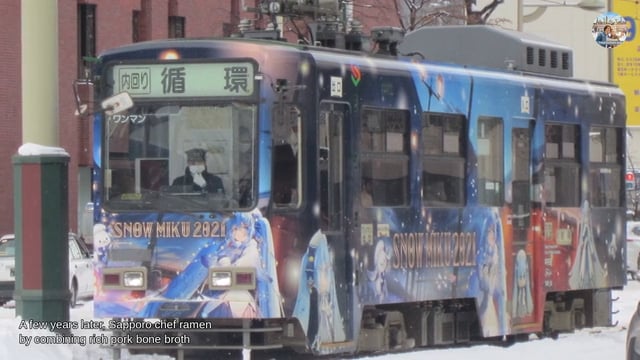
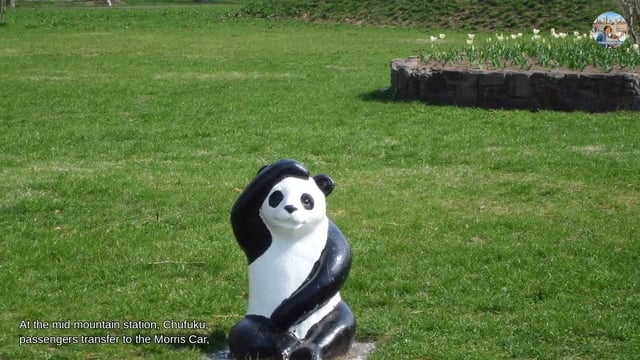
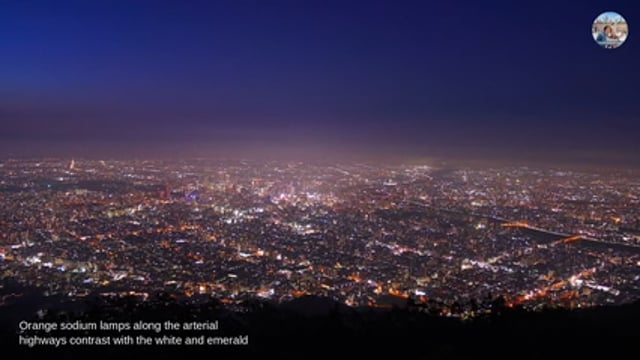
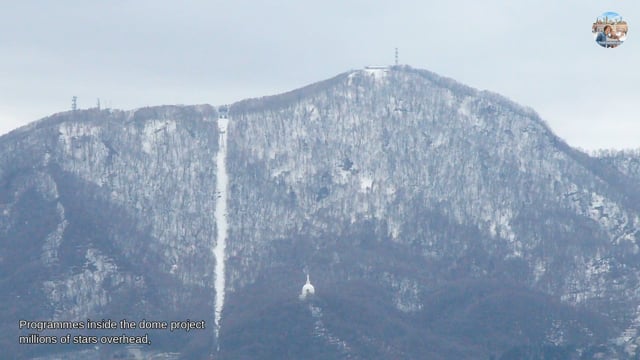
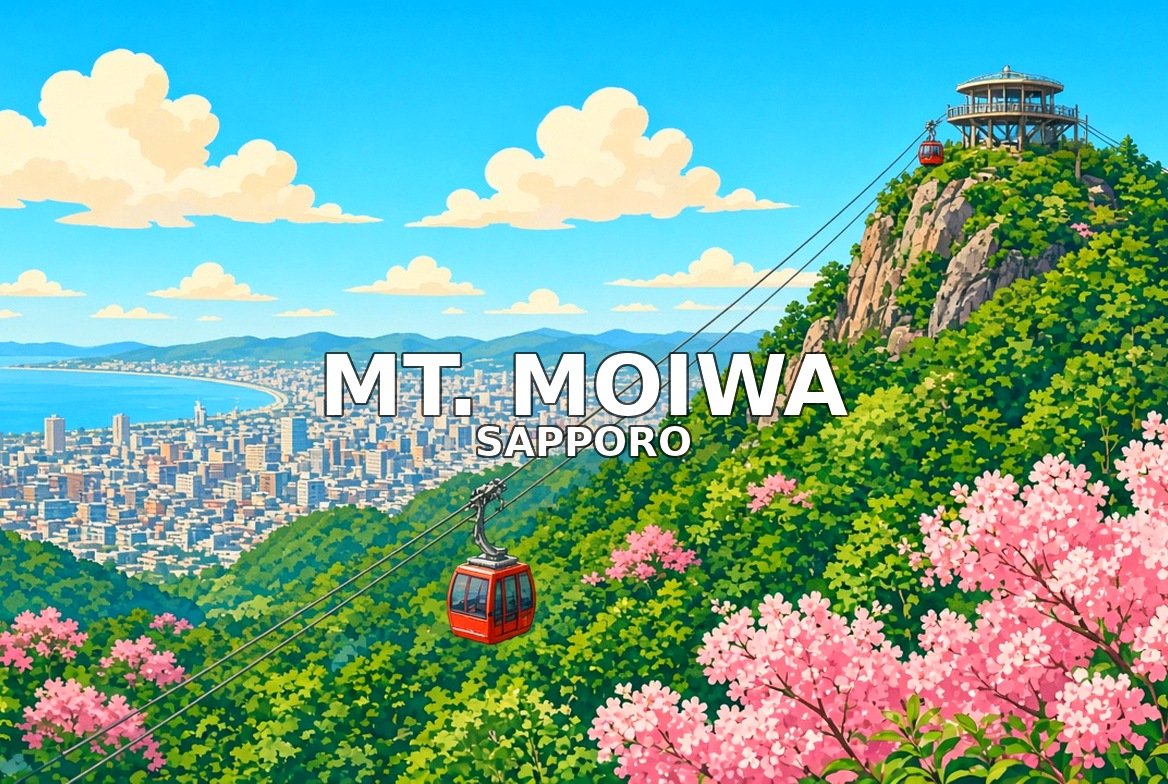
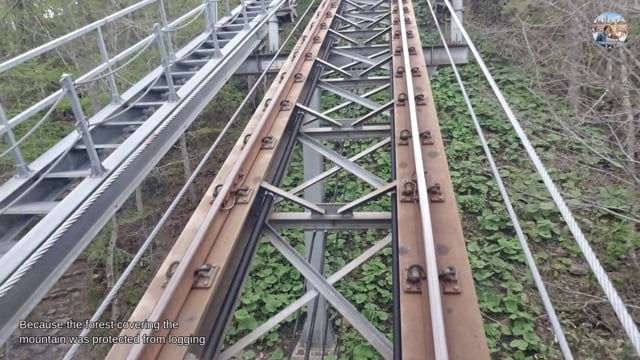
On this Sapporo walking tour, Rising 531 metres immediately southwest of central Sapporo and cloaked in a protected primeval forest of giant katsura, magnolia and linden trees known to the Ainu people as Inkarushibe (“the lookout place”), Mount Moiwa is ascended via the two-stage Mount Moiwa Ropeway and the world’s first MorisCar mini-cable car. Its summit terrace frames a glittering 360-degree view over the two-million-resident Ishikari Plain and the Sea of Japan — celebrated as one of Japan’s New Three Major Night Views — centered on the white Bell of Happiness.
Walk this order. Sacred Forest Peak Overlooking Sapporo → Ropeway and Mini Cable Car to the Summit → One of Japan’s New Three Major Night Views → The Jewels Restaurant and Summit Planetarium → Riding the Sapporo Streetcar Back to Town.
10. Hitsujigaoka Observation Hill
From stop 9 · taxi or Toho Subway Line to Fukuzumi Station then 10-minute bus · 60 minutes
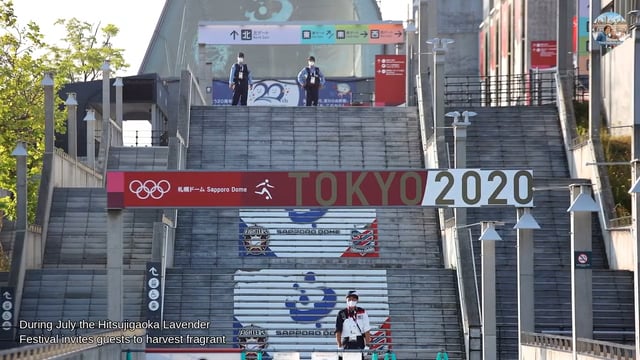
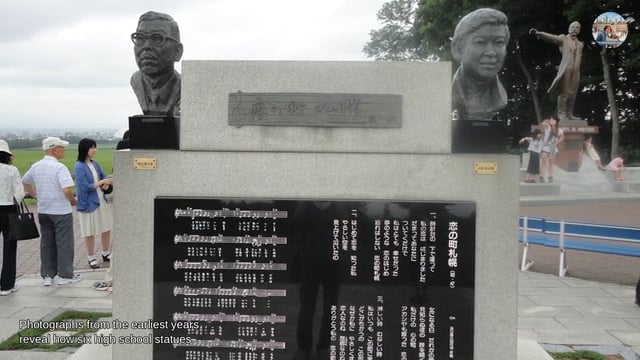
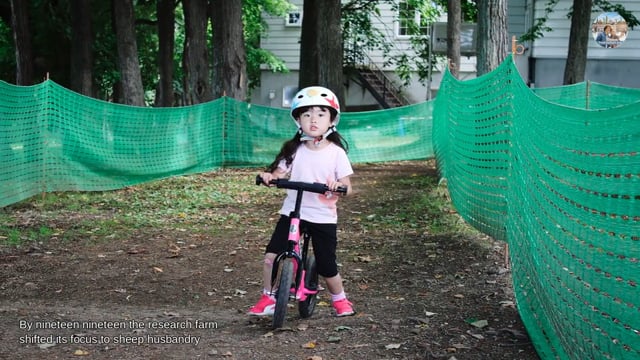
Along this Sapporo walking tour, Rolling across the green pastoral meadows of the Hokkaido Agricultural Research Center in southeastern Toyohira Ward, Hitsujigaoka Observation Hill looks out over grazing Suffolk sheep, summer fields of purple lavender and the silver dome of the Sapporo Dome against the downtown skyline. At the crest stands sculptor Kato Kensei’s 1976 bronze monument of Dr. William Smith Clark with his right arm raised toward the horizon and the famous 1877 parting inscription on its pedestal: “Boys, be ambitious!”
Walk this order. Rolling Pastures Over the Ishikari Plain → Dr. William S. Clark and Boys, Be Ambitious → Grazing Sheep and the Purple Lavender Field → Sapporo Snow Festival Museum → Sapporo Blanc Birch Chapel and Ishihara Yujiro Memorial.

Sapporo Walking Tour Overview Detail
This Sapporo walking tour links 10 sights and 50 short video stops narrated by Clarissa, from the 1878 Sapporo Clock Tower, Odori Park and the Sapporo TV Tower in the Meiji-era downtown grid to Hokkaido Shrine, Susukino District, the Okurayama Ski Jump, the Sapporo Beer Museum, Isamu Noguchi’s Moerenuma Park, Mt. Moiwa and Hitsujigaoka Observation Hill. The notes below group the stops into practical half-day and full-day routes and add the seasonal Hokkaido climate, Subway and streetcar tips, miso ramen and Jingisukan food classics, and ticket details that make Japan’s northern capital rewarding to explore on foot. For official visitor updates and seasonal festival calendars, also check Visit Sapporo, the official tourism portal for Sapporo.
Best routes through Sapporo using the 50 stops
Sapporo sits on the alluvial Ishikari Plain in southwestern Hokkaido, laid out from 1869 by the Kaitakushi (Hokkaido Development Commission) on a clean rectangular street grid inspired by New England cities and bisected by the 105-metre-wide Odori Park boulevard. Surrounded by forested volcanic foothills that hosted the 1972 Winter Olympics—the first Winter Games held in Asia—the city pairs a compact, flat downtown walking core with rapid Subway and streetcar links to its mountain lookouts and sprawling sculpture parks.
Route 1, the Meiji frontier grid and Odori boulevard: Sapporo Clock Tower, Odori Park, Sapporo TV Tower and Susukino District (stops 1, 2, 3 and 5). Start at the 1878 Sapporo Clock Tower (Tokeidai), the white wooden drill hall of the historic Sapporo Agricultural College where an 1881 E. Howard pendulum clock from Boston still chimes on the hour. Walk two blocks south into Odori Park to stroll beneath 4,700 lilac, elm and cherry trees past fountains and Isamu Noguchi’s Black Slide Mantra sculpture, then ride the lift up the 147.2-metre Sapporo TV Tower designed by Tachu Naito at Nishi 1-chome for an axial panorama down the entire 1.5-kilometre park toward Mount Okura. Return after dusk a few blocks south through the covered Tanukikoji Shopping Arcade into Susukino District to see the illuminated Nikka Whisky billboard, the rooftop NORBESA Ferris wheel and the steaming ten-seat counters of Ganso Sapporo Ramen Yokocho.
Route 2, sacred cedar forest and Olympic ski jump: Hokkaido Shrine and Okurayama Ski Jump (stops 4 and 6). Ride the Tozai Subway Line three stops west from Odori to Maruyama Koen Station and walk beneath towering torii gates and 1,400 cherry and plum trees into Hokkaido Shrine (Hokkaido Jingu), consecrated in 1869 amid the primeval forest of Maruyama Park. From the shrine or Maruyama Koen bus terminal, take the ten-minute shuttle up Mount Okura to the 1972 Winter Olympic Okurayama Ski Jump Stadium (HS137 large hill), ride the dual chairlift alongside the steep inrun ramp to the 307-metre rooftop observation lounge looking straight back into Odori Park, and test winter-sports simulators inside the Sapporo Olympic Museum.
Route 3, Meiji red-brick brewing and Noguchi land art: Sapporo Beer Museum and Moerenuma Park (stops 7 and 8). Head east of JR Sapporo Station to Sapporo Garden Park to tour the 1890 red-brick Sapporo Beer Museum—Japan’s only beer heritage museum, crowned by the red five-pointed pioneer star of the Kaitakushi—and sample revival Kaitakushi Beer and Black Label draft in the Star Hall. Continue northeast by bus or Toho Subway Line plus bus to the 188-hectare Moerenuma Park, where sculptor Isamu Noguchi transformed a former reclamation ring into a single monumental landscape of geometric grass pyramids, the 62-metre Mount Moere, the erupting Sea Fountain and the glass pyramid Hidamari.
Route 4, pastoral pioneer hill and night summit: Mt. Moiwa and Hitsujigaoka Observation Hill (stops 9 and 10). Spend mid-afternoon on Hitsujigaoka Observation Hill in southeastern Sapporo, where Kato Kensei’s 1976 bronze statue of Dr. William Smith Clark points across grazing Suffolk sheep and lavender fields with the inscription “Boys, be ambitious!” Then ride the vintage Sapporo Streetcar to Ropeway Iriguchi and ascend 531-metre Mt. Moiwa via the two-stage ropeway and MorisCar mini-funicular in time for twilight, when the two-million-person Ishikari Plain lights up in one of Japan’s New Three Major Night Views.
A two-day plan works best for this Sapporo walking tour: dedicate Day 1 to the flat downtown grid, Maruyama forest and Mount Okura before finishing with ramen and neon in Susukino (Routes 1 and 2, stops 1 to 6), and spend Day 2 pairing the Sapporo Beer Museum and Moerenuma Park with afternoon views at Hitsujigaoka Observation Hill and sunset atop Mt. Moiwa (Routes 3 and 4, stops 7 to 10).
Hokkaido seasons, underground walkways and getting around Sapporo
Because Sapporo lies at 43 degrees north latitude in Hokkaido, its four seasons are crisp and distinct: summer (June to August, daytime highs around 24°C to 27°C / 75°F to 81°F) is pleasantly dry and free of the humid rainy season (tsuyu) that blankets southern Japan; autumn (September to October) turns the ginkgo avenues and Maruyama forest gold and crimson; winter (December to February, averaging five metres of cumulative snowfall) transforms Odori Park and Susukino into the world-famous Sapporo Snow Festival; and spring (late April to May) brings simultaneous cherry and plum blossoms to Hokkaido Shrine and Odori Park.
Sapporo’s street addresses follow a simple compass grid measured from the intersection of Odori Park and the Sosei River: blocks are numbered Kita (North) or Minami (South) of Odori, and Higashi (East) or Nishi (West) of the river, so Kita 1-jo Nishi 2-chome (the Sapporo Clock Tower, stop 1) sits just one block north and two blocks west of the origin.
Beneath the central avenue of Ekimae-dori, the heated and air-conditioned Chi-Ka-Ho pedestrian walkway and Pole Town underground shopping concourse run continuously for nearly two kilometres from JR Sapporo Station through Odori to Susukino (stops 1, 2, 3 and 5), allowing you to walk between downtown landmarks in complete comfort even during January blizzards or autumn showers.
For the outer stops on this Sapporo walking tour, the three rubber-tyred Sapporo Municipal Subway lines (Namboku, Tozai and Toho) and the loop Streetcar accept nationwide IC cards (Kitaca, Suica, PASMO and ICOCA), and the economical One-Day Subway Pass (830 yen on weekdays, or the 520-yen Donichika Ticket on Saturdays, Sundays and holidays) covers unlimited rides across the network. Every stop on this Sapporo walking tour includes a direct map link so you can navigate effortlessly on foot and by transit.
Miso ramen, Jingisukan, soup curry and seasonal festivals in Sapporo
Sapporo is celebrated across Japan for its hearty northern cuisine born from Hokkaido’s rich dairy, wheat, seafood and lamb pastures. In Susukino District (stop 5), Ganso Sapporo Ramen Yokocho and Shin-Ramen Yokocho ladle steaming bowls of rich pork-and-miso broth—invented in Sapporo in the mid-1950s—topped with sweet Hokkaido corn, a pat of local butter, wok-seared bean sprouts and curly yellow egg noodles.
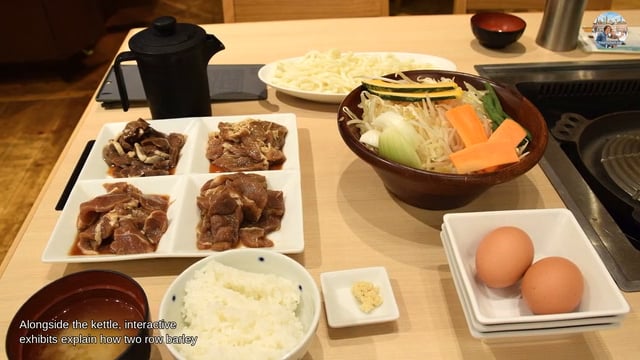
At the red-brick Kaitakushi-kan halls beside the Sapporo Beer Museum (stop 7) or in Susukino, diners gather around dome-shaped cast-iron skillets for Jingisukan (Genghis Khan), grilling tender slices of mutton and lamb on the raised crown while cabbage, onions and pumpkin caramelise in the juices along the rim, paired with cold tank-fresh Sapporo draft beer.
During a daytime stroll through Odori Park (stop 2), stop at the seasonal outdoor wagons for char-grilled shoyu sweet corn and hot buttered Hokkaido potatoes (jagabata), try Sapporo’s aromatic spiced soup curry in the side streets around Odori and Tanukikoji, and finish an evening in Susukino with a late-night shime-parfait layered with fresh Hokkaido milk soft-serve and seasonal fruit.
Sapporo is one of the safest, cleanest and most welcoming large cities in the world at any hour of the day or night; in winter from December through March, simply attach clip-on non-slip cleats to your boots or pick up winter treads at a convenience store when walking across packed snow at Hokkaido Shrine, Okurayama or Mt. Moiwa.
Tickets, opening hours and accessibility in Sapporo
Five of the ten stops on this Sapporo walking tour are free to enter: Odori Park (stop 2), the forested precincts and main sanctuary of Hokkaido Shrine (stop 4), Susukino District and Ramen Yokocho (stop 5), the self-guided exhibition galleries of the Sapporo Beer Museum (stop 7), and the 188-hectare grounds and Hidamari glass pyramid of Moerenuma Park (stop 8).
Modest admission or lift tickets apply at the historic interior of the Sapporo Clock Tower (stop 1, 200 yen), the 90-metre Sky Lounge observation deck of the Sapporo TV Tower (stop 3), the chairlift and Olympic Museum at the Okurayama Ski Jump (stop 6), the two-stage ropeway and MorisCar up Mt. Moiwa (stop 9), and the pastoral grounds and Clark monument on Hitsujigaoka Observation Hill (stop 10).
Most Sapporo museums and observation decks open daily from 9:00 a.m., though the Sapporo Beer Museum is closed on Mondays (or Tuesday if Monday is a holiday) and Moerenuma Park’s glass pyramid takes occasional monthly maintenance days; always check the Mt. Moiwa Ropeway live wind status on breezy evenings before heading to the base station.
After this Sapporo walking tour, continue exploring Japan and East Asia with the Tokyo walking tour, the Kyoto walking tour, the Osaka walking tour or the Fukuoka walking tour. You can browse all destinations on the Free City Tours home page.
Sapporo walking tour FAQ
Is this Sapporo walking tour really free?
Yes. All 50 video stops narrated by Clarissa are completely free to watch online, and half of the landmarks on the route—including Odori Park, Hokkaido Shrine, Susukino District, the self-guided galleries of the Sapporo Beer Museum and all 188 hectares of Isamu Noguchi’s Moerenuma Park—are free to enter, making this a free walking tour Sapporo visitors can enjoy in any season.
How many days do I need for the Sapporo walking tour?
Two days is ideal: spend Day 1 exploring the downtown Meiji grid and western foothills across the Sapporo Clock Tower, Odori Park, the Sapporo TV Tower, Hokkaido Shrine, the Okurayama Ski Jump and Susukino District (stops 1 to 6), and spend Day 2 visiting the Sapporo Beer Museum, Moerenuma Park, Hitsujigaoka Observation Hill and the night summit of Mt. Moiwa (stops 7 to 10).
Where does the Sapporo walking tour start?
Stop 1 begins at the 1878 Sapporo Clock Tower (Kita 1-jo Nishi 2-chome), a five-minute walk south of JR Sapporo Station via the Chi-Ka-Ho underground walkway or two minutes north of Odori Subway Station.
Can I walk between all 10 stops in Sapporo on foot?
Stops 1, 2, 3 and 5 (Sapporo Clock Tower, Odori Park, Sapporo TV Tower and Susukino District) form a compact, flat downtown loop of about 2.5 kilometres connected by heated underground walkways, while the western foothills (Hokkaido Shrine and Okurayama Ski Jump) and outer parks (Sapporo Beer Museum, Moerenuma Park, Mt. Moiwa and Hitsujigaoka Observation Hill) are easily reached by Sapporo’s Subway, Streetcar and shuttle buses.
When is the best time of day to visit Sapporo TV Tower and Mt. Moiwa?
Visit the Sapporo TV Tower in clear morning or afternoon light to see the full 1.5-kilometre carpet of Odori Park stretching west to the mountains, and ride up Mt. Moiwa thirty minutes before sunset so you can watch twilight settle over the Ishikari Plain and see Japan’s celebrated night view ignite across the city grid.
Do I need advance reservations for the Sapporo Beer Museum?
The self-guided museum floors of the Sapporo Beer Museum are free and walk-in friendly, while the guided Premium Tour and dinner tables for grilled Jingisukan lamb inside the adjacent red-brick Kaitakushi-kan beer halls should be booked in advance, especially on weekends and during the February Snow Festival.
More Free City Tours
Free City Tours offers free self-guided walking tours of 115 exciting cities across all continents, narrated by Clarissa.
Every city page gives you the main sights in practical walking order, live map directions from where you stand, and short station films.
Choose another city below.
Adelaide
Agra
Amsterdam
Antigua Guatemala
Athens
Auckland
Bali
Bangkok
Barcelona
Beijing
Berlin
Bogotá
Bologna
Brisbane
Brussels
Buenos Aires
Cairo
Canberra
Cancún
Cape Town
Cartagena
Chicago
Copenhagen
Cusco
Delhi
Dubai
Dublin
Edinburgh
Fez
Florence
Frankfurt
Fukuoka
George Town Penang
Hanoi
Helsinki
Ho Chi Minh City
Hong Kong
Istanbul
Jaipur
Jerusalem
Johannesburg
Kraków
Kuala Lumpur
Kyoto
La Paz
Las Vegas
Lima
Lisbon
London
Los Angeles
Los Cabos
Luxor
Madrid
Marrakech
Mecca
Medellín
Medina
Melbourne
Mexico City
Miami
Milan
Montevideo
Montreal
Munich
Nairobi
New York
Nice
Orlando
Osaka
Oslo
Palma de Mallorca
Panama City
Paris
Perth
Phuket
Porto
Prague
Pretoria
Quebec City
Quito
Rhodes
Rio de Janeiro
Riyadh
Rome
Salvador
San Francisco
Santiago
São Paulo
Sapporo
Seoul
Seville
Shanghai
Siem Reap
Stockholm
Stone Town Zanzibar
Sydney
Taipei
Tallinn
Tbilisi
Tel Aviv
Thessaloniki
Tokyo
Toronto
Tunis
Valencia
Vancouver
Venice
Verona
Victoria Falls
Vienna
Vilnius
Warsaw
Washington DC
Wellington
Zurich