Valencia Walking Tour: 50 Free Video Stops

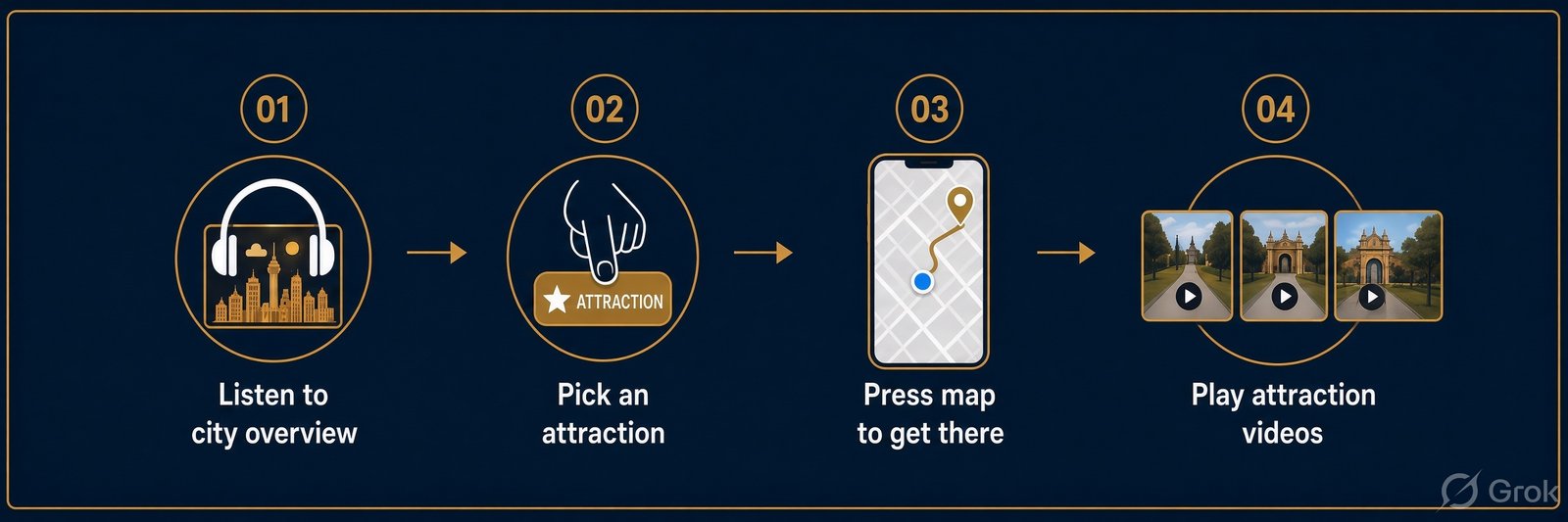
How to tour Valencia
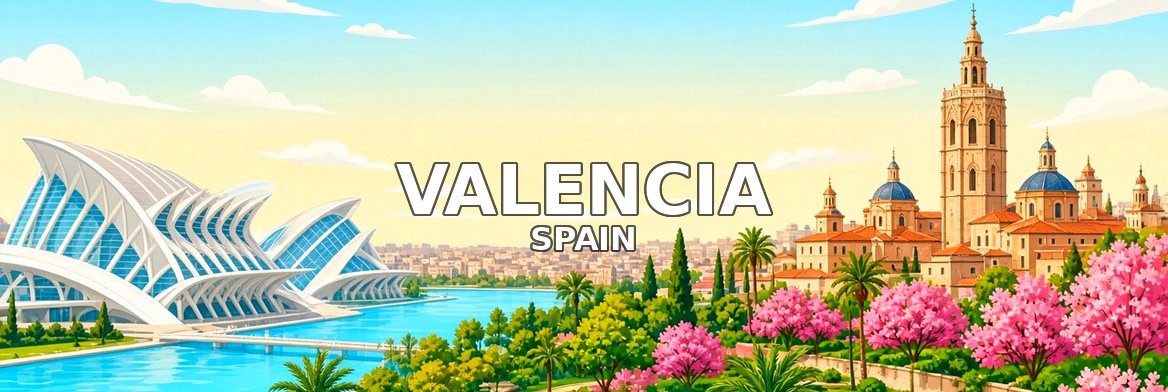
Valencia is Spain’s third largest city, on the Mediterranean coast in the east of the country. It mixes a medieval old town with bold modern architecture, and it is the home of paella.
The old town sits inside a loop of the Turia Gardens, a long green park laid out in a former riverbed. The cathedral, the Silk Exchange and the Central Market are close together in the centre, and the City of Arts and Sciences lies at the eastern end of the gardens.
On this Valencia walking tour you visit the City of Arts and Sciences, the Central Market, the cathedral and its Miguelete Tower, the Silk Exchange, the Turia Gardens, the Oceanografic, the Plaza de la Virgen, the Serranos Towers and the Bioparc, and finish in the Albufera Natural Park.
1. Valencia walking tour: City of Arts and Sciences
Southeast end of the Turia Gardens · start here · 2–3 hoursOn this Valencia walking tour, the City of Arts and Sciences stands in the old bed of the river Turia, which was drained and rerouted after the great flood of 1957. It was designed by Santiago Calatrava, with the Oceanogràfic roofs by Félix Candela, and it opened in stages from 1998. L’Hemisfèric, shaped like a giant eye, opened first in 1998 as an IMAX cinema and planetarium.
The Príncipe Felipe Science Museum runs along the water like a white skeleton. The Palau de les Arts Reina Sofía is the city’s opera house. L’Umbracle, opened in 2001, is a landscaped walk under white arches planted with Valencian species, and the Assut de l’Or Bridge crosses the gardens on a single tall pylon. The outdoor walks are free; the buildings need tickets.
Walk this order on the Valencia walking tour. A city in the riverbed → L’Hemisfèric → the Science Museum → the Palau de les Arts → L’Umbracle and the Assut de l’Or Bridge → bus or taxi to the Central Market.
2. Central Market
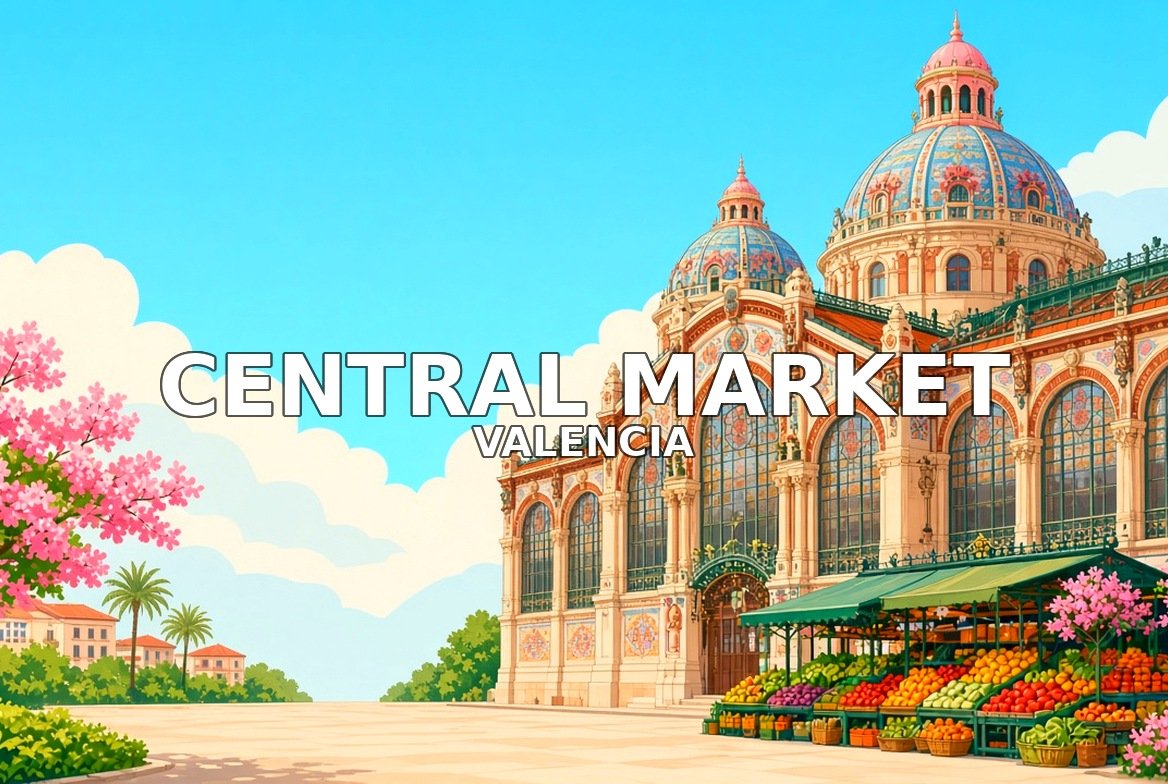
From stop 1 · bus or taxi, about 15 minutes, or 45 minutes on foot through the Turia Gardens · 45–60 minutesAlong this Valencia walking tour, the Central Market, the Mercat Central, was designed by Alexandre Soler i March and Francesc Guàrdia i Vidal and built from 1914 to 1928 in the Valencian Art Nouveau style. It covers more than 8,000 square metres and is one of the largest fresh food markets in Europe. Iron, glass and ceramic tiles decorate its domes and walls, and a weathervane parrot turns on top of the main dome. Inside, hundreds of stalls sell fruit and vegetables from the huerta, the market gardens around the city, as well as ham, cheese, fish and the rice used for paella. The market opens in the mornings, Monday to Saturday.
Walk this order on the Valencia walking tour. The Modernista market → the domes, tiles and glass → inside the great hall → fruit of the huerta → ham, fish and rice → 5 minutes east to the cathedral.
3. Valencia Cathedral and Miguelete Tower
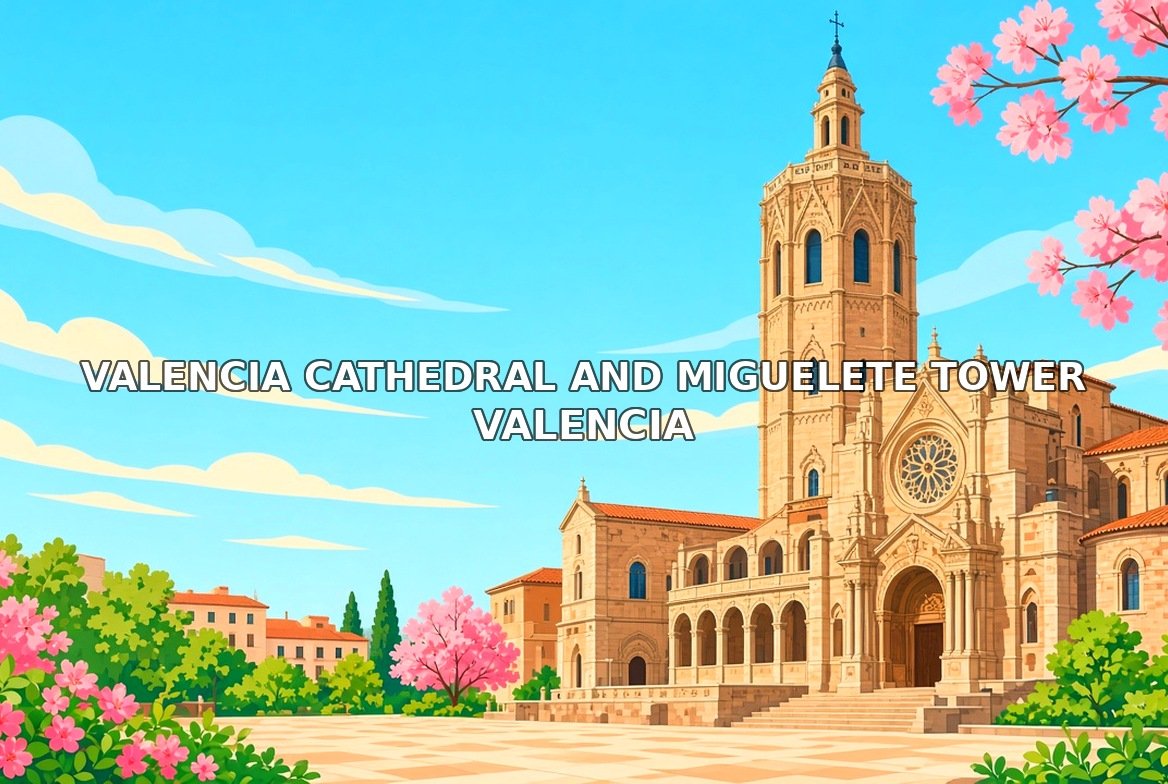
From stop 2 · 5 minutes on foot · 60–90 minutesOn this Valencia walking tour, Valencia Cathedral, La Seu, was begun in 1262 on the site of the city’s main mosque and is mostly Valencian Gothic, with Romanesque, Renaissance and Baroque additions. Each of its three doors shows a different age: the Romanesque Palau Door, the Gothic Apostles’ Door and the Baroque Iron Door of 1703 facing Plaza de la Reina. The octagonal bell tower, the Micalet or Miguelete, was built from 1381 to 1429 and is about 51 metres high; 207 steps lead to the top. In the former chapter house, now the Chapel of the Holy Chalice, is an agate cup venerated as the Holy Grail. The cathedral and the tower each need a ticket.
Walk this order on the Valencia walking tour. La Seu from Plaza de la Reina → the Micalet → the three doors → inside the cathedral → the Chapel of the Holy Chalice → 5 minutes west to the Lonja de la Seda.
4. Lonja de la Seda
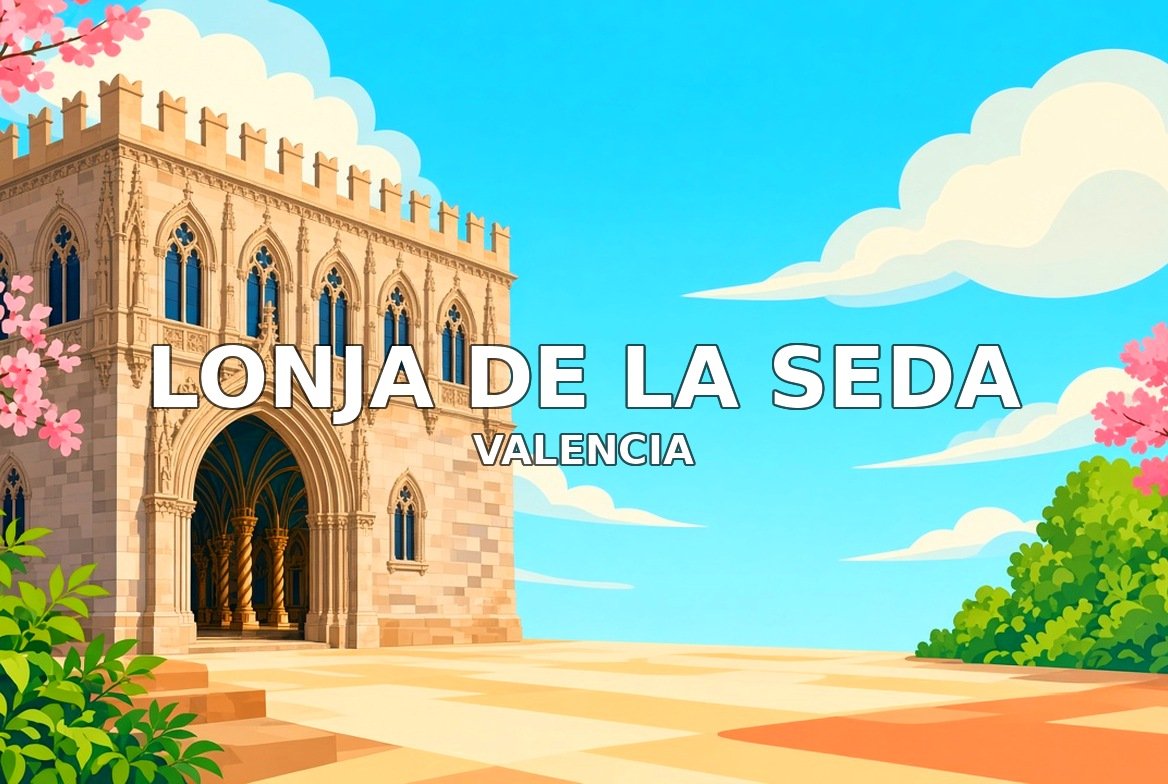
From stop 3 · 5 minutes on foot · 45 minutesAlong this Valencia walking tour, the Lonja de la Seda, the Silk Exchange, was built between 1482 and 1533 as the city’s trading house, and it has been a UNESCO World Heritage Site since 1996. Its architect Pere Compte built the main Trading Hall in only fifteen years, from 1483 to 1498. Inside, slender twisted columns rise like palm trees to the Gothic vault. The facades are full of carved gargoyles, some of them surprisingly rude. A tower with a spiral staircase once held a prison for merchants who defaulted. The Renaissance Consulate of the Sea, finished by 1548, and a courtyard of orange trees complete the building. The Lonja needs a small ticket.
Walk this order on the Valencia walking tour. The Silk Exchange → the gargoyles and carvings → the Hall of Columns → the tower → the Consulate of the Sea and the courtyard → 10 minutes north to the Turia Gardens.
5. Turia Gardens
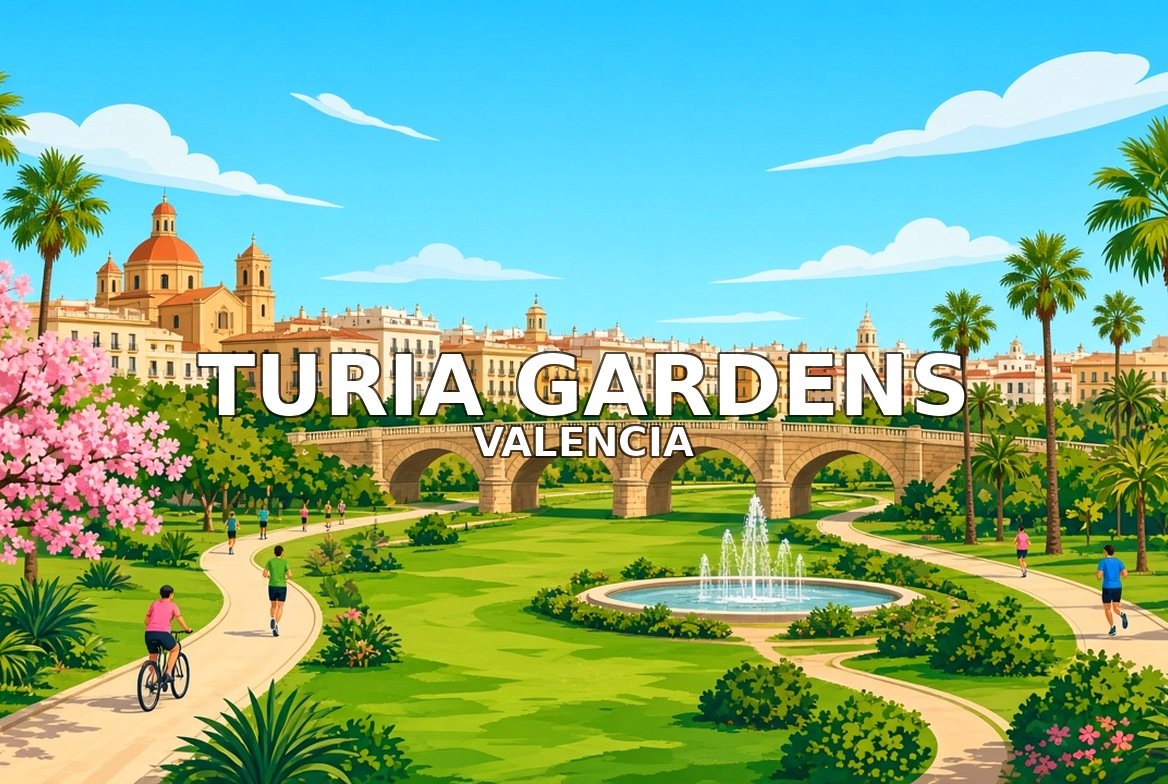
From stop 4 · 10 minutes on foot to the riverbed · 1–2 hoursOn this Valencia walking tour, after the great flood of October 1957 the river Turia was diverted south of the city, and the old riverbed was turned into a park instead of a motorway.
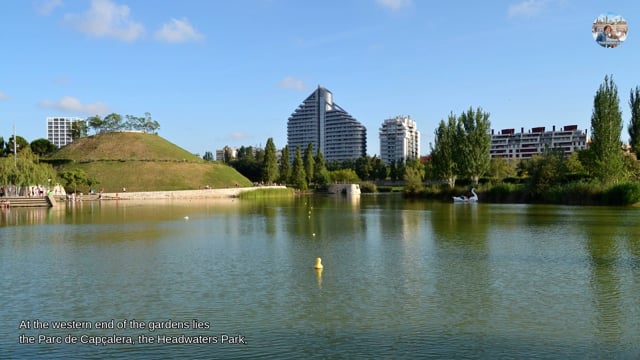
The Turia Gardens opened in 1986 and now run for about 8.5 kilometres through the city, crossed by old stone bridges and modern ones by Santiago Calatrava. Gulliver Park, near the City of Arts and Sciences, is a giant playground shaped like Gulliver tied down by the Lilliputians. The Palau de la Música concert hall stands among orange trees and palms. At the western end, the Parc de Capçalera, the Headwaters Park, has a lake and leads to the Bioparc. The gardens are free and open all day.
Walk this order on the Valencia walking tour. A river turned garden → Gulliver Park → bridges and flowers → the Palau de la Música → the Headwaters Park → back east along the gardens to the Oceanogràfic.
6. Oceanogràfic
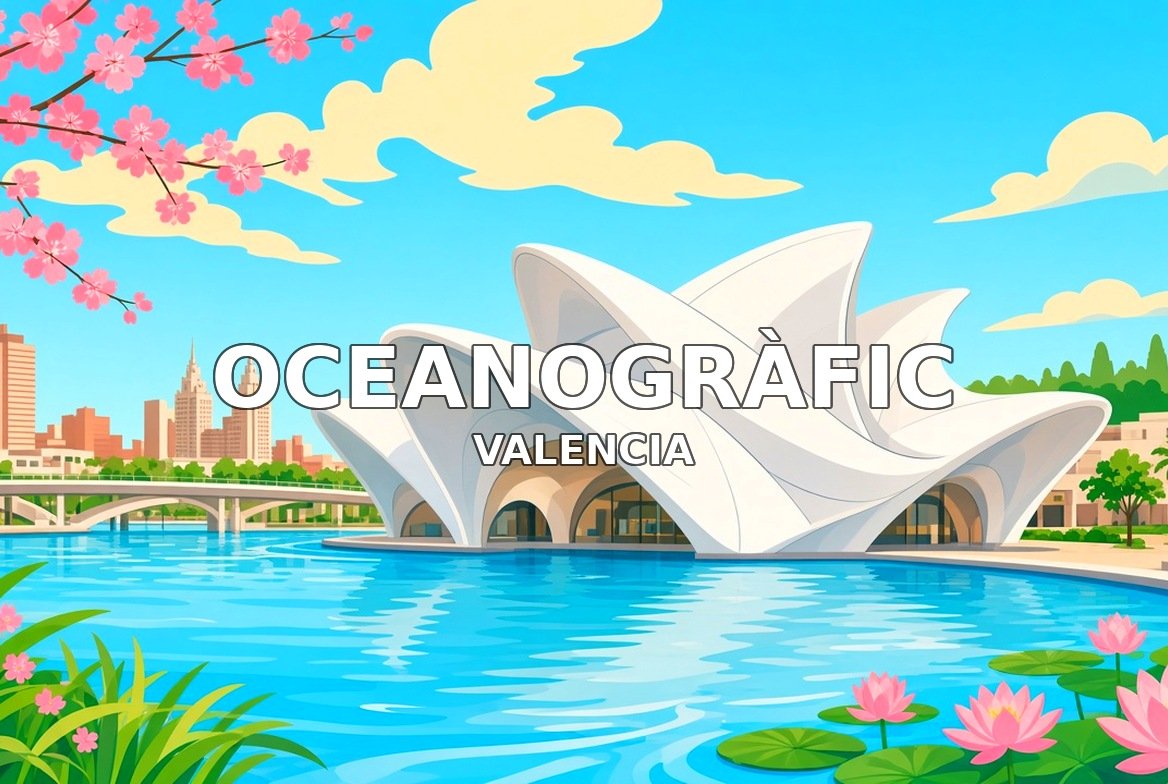
From stop 5 · 15 minutes on foot from Gulliver Park, or bus · 3 hoursAlong this Valencia walking tour, the Oceanogràfic opened in 2003 as part of the City of Arts and Sciences and is the largest aquarium complex in Europe. Its curved white roofs were designed by Félix Candela. It holds about 42 million litres of water and some 45,000 animals from 500 species. The ocean tank, with sharks and rays, is crossed by an underwater tunnel. Other areas show tropical seas and jellyfish, the wetlands, the Arctic with beluga whales and the Antarctic with penguins, the islands with sea lions, and a dolphinarium. The Oceanogràfic needs a ticket.
Walk this order on the Valencia walking tour. Europe’s largest aquarium → the ocean tunnel → tropical seas and jellyfish → the wetlands and polar seas → the dolphins and the islands → bus back to the old town and Plaza de la Virgen.
7. Plaza de la Virgen
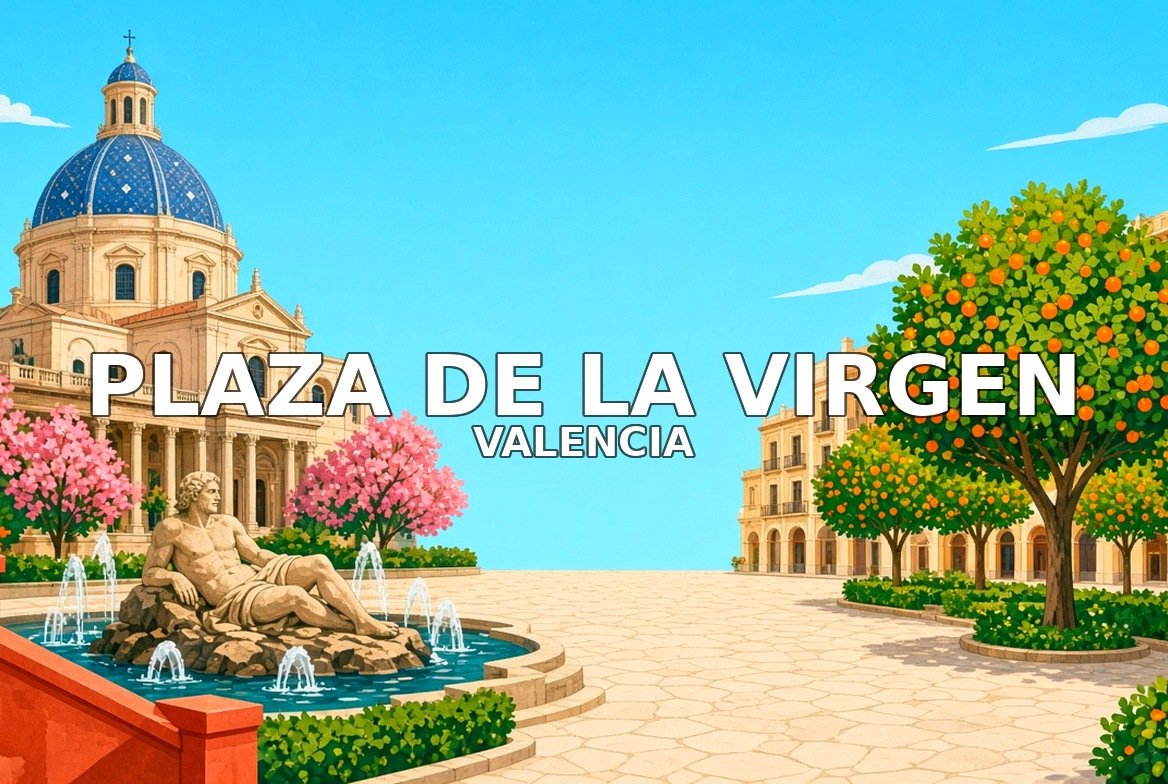
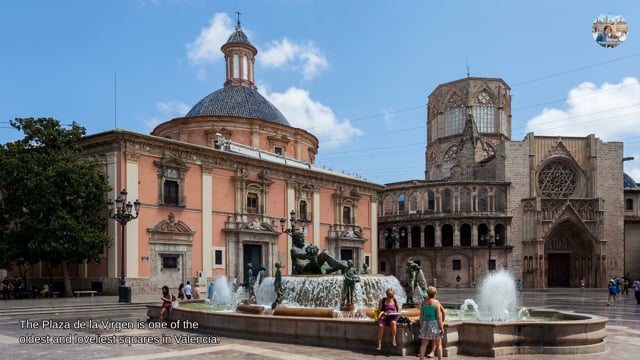
From stop 6 · bus to the old town, about 20 minutes · 30–45 minutesOn this Valencia walking tour, Plaza de la Virgen stands on the site of the forum of Roman Valentia, founded in 138 BC, and it is the oldest square in the city. In the middle, the Turia Fountain shows the river as a reclining bronze figure surrounded by women who stand for the irrigation canals of the huerta.
Every Thursday at noon, the Water Tribunal meets outside the cathedral’s Apostles’ Door to settle disputes over irrigation water, as it has for centuries; UNESCO added it to its list of Intangible Cultural Heritage in 2009. On one side rises the Basilica of Our Lady of the Forsaken, the patron of Valencia, with an oval dome painted by Antonio Palomino in 1701. Around the corner is the Gothic Palau de la Generalitat, the seat of the Valencian government. The square is free.
Walk this order on the Valencia walking tour. The oldest square → the Turia Fountain → the Water Tribunal at the Apostles’ Door → the Basilica of the Virgin → the Palau de la Generalitat → 5 minutes north to the Torres de Serranos.
8. Torres de Serranos
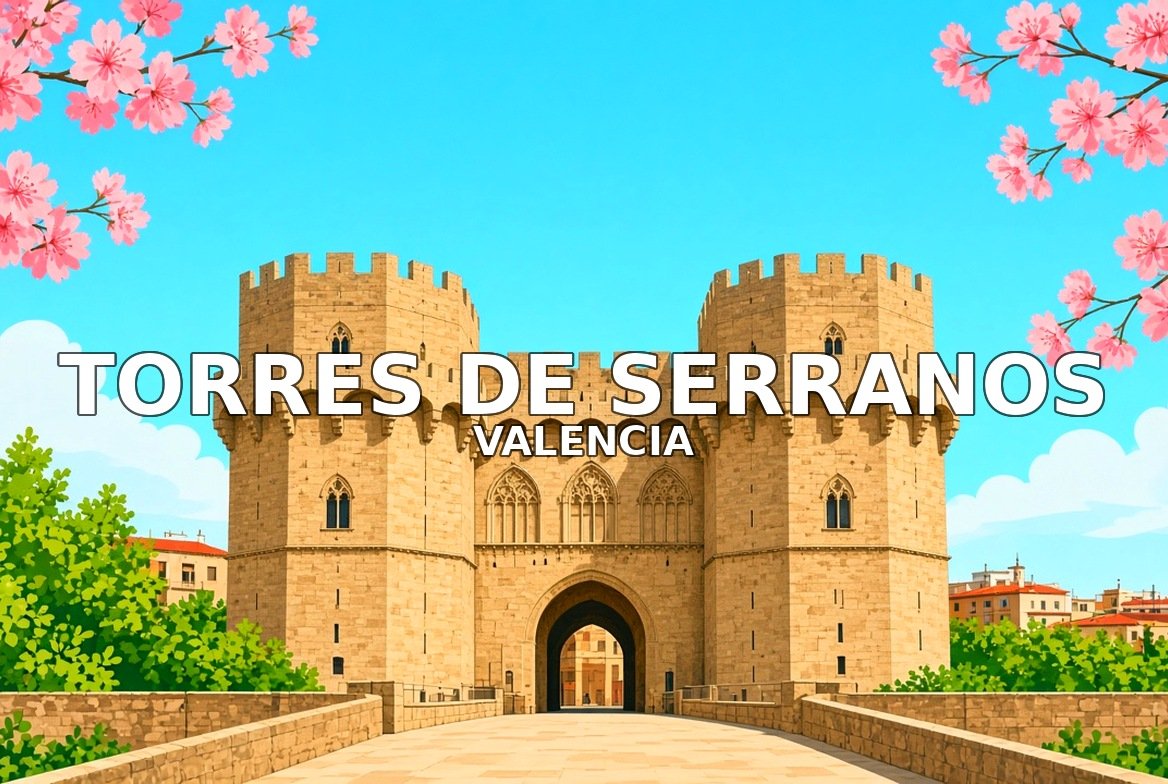
From stop 7 · 5 minutes on foot · 30–45 minutesAlong this Valencia walking tour, the Torres de Serranos were built between 1392 and 1398 by Pere Balaguer as the main gate in the city wall, facing the road to the north and the river. When the walls were pulled down in 1865 the gate survived because it was being used as a prison. During the Spanish Civil War, paintings from the Prado Museum were stored inside for safety.
Steep stairs lead to the top for a view over the old town and the Turia Gardens. Each year, on the last Sunday of February, La Crida, the official call that opens the Fallas festival, is made from the towers. The second surviving gate, the Torres de Quart, still carries marks of the French cannon fire of 1808. Both gates need a small ticket to climb.
Walk this order. Gateway to the city → the outer face → the city side → climbing the towers → La Crida and the Torres de Quart → metro or bus west to the Bioparc.
9. Bioparc Valencia
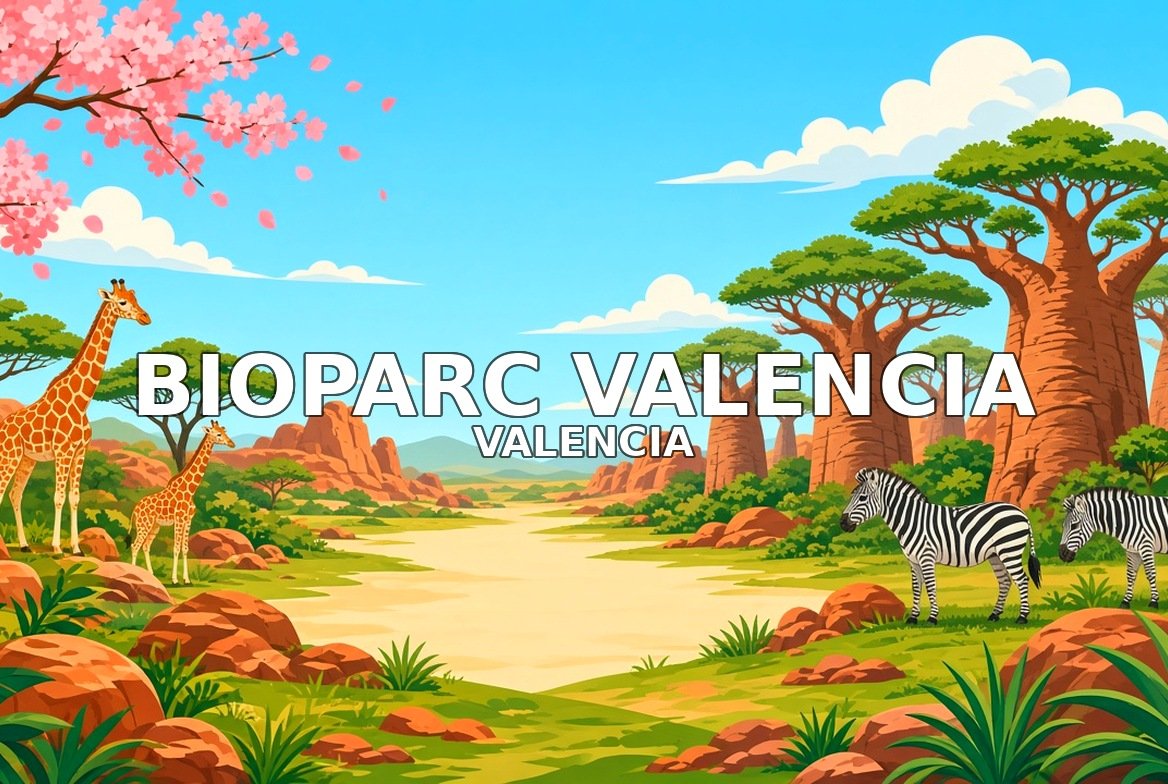
From stop 8 · metro to Nou d’Octubre, then 10 minutes on foot, or bus · 2–3 hoursOn this Valencia walking tour, Bioparc Valencia opened in 2008 at the western end of the Turia Gardens. It is a 10 hectare zoo devoted to African wildlife and built on the idea of “zoo immersion”: instead of cages and railings, rivers, ponds and rocks separate visitors from the animals. The savanna has giraffes, rhinos and elephants, alongside predators of the plains. The equatorial Africa area recreates the rainforest, and the Madagascar area has lemurs that move freely around the paths. Bioparc needs a ticket.
Walk this order. Africa in Valencia → the savanna → predators of the plains → equatorial Africa → Madagascar → bus south to L’Albufera.
10. L’Albufera Natural Park
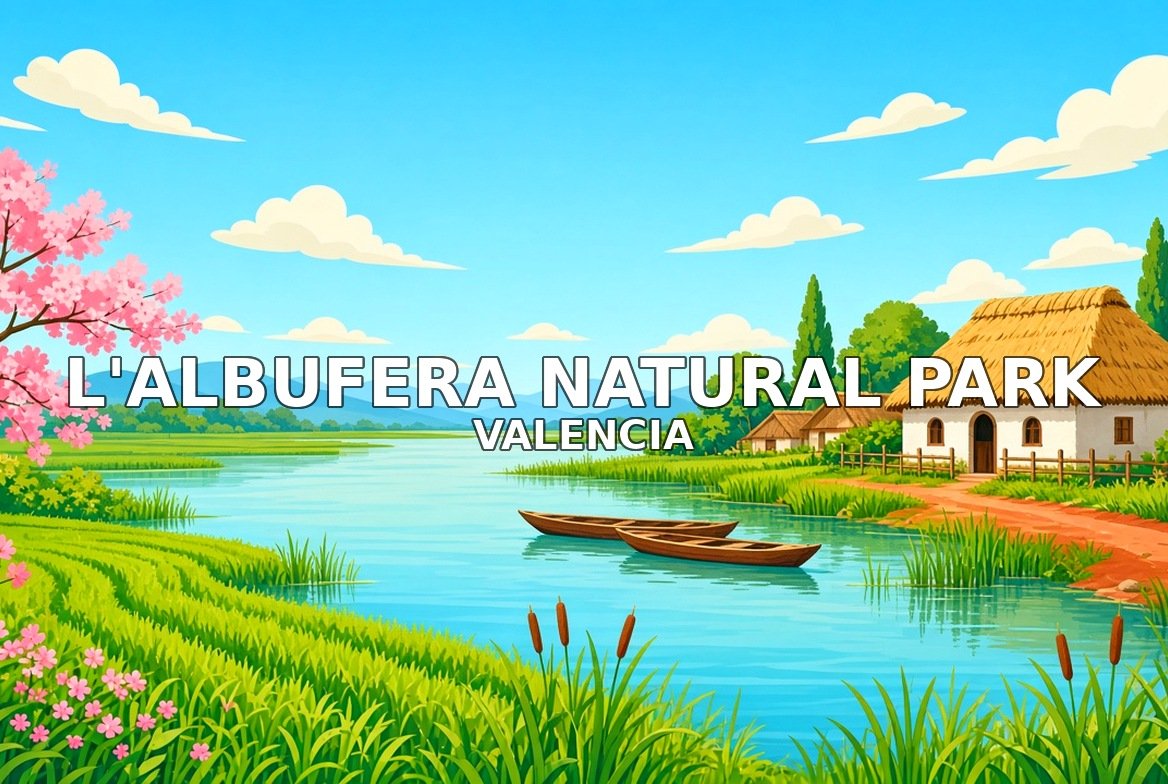
From stop 9 · bus 25 from the city to El Saler and El Palmar, about 40 minutes · half a dayAlong this Valencia walking tour, L’Albufera is a large freshwater lagoon about 11 kilometres south of Valencia, separated from the sea by a strip of dunes and pine forest. It has been a natural park since 1986 and a Ramsar wetland of international importance since 1990. Around the lagoon lie the rice fields that grow the rice for paella. El Palmar is a small village of fishermen and rice growers, known for its restaurants. Traditional flat bottomed boats take visitors out on the water, among herons, egrets and other water birds. The sunset over the lagoon is one of the best known views in the region. The park is free; boat trips are paid.
Walk this order. The lagoon → the rice fields → El Palmar → on the water → birds and sunsets → bus 25 back to the city.