
London Walking Tour: 50 Free Video Stops

How to take this London walking tour
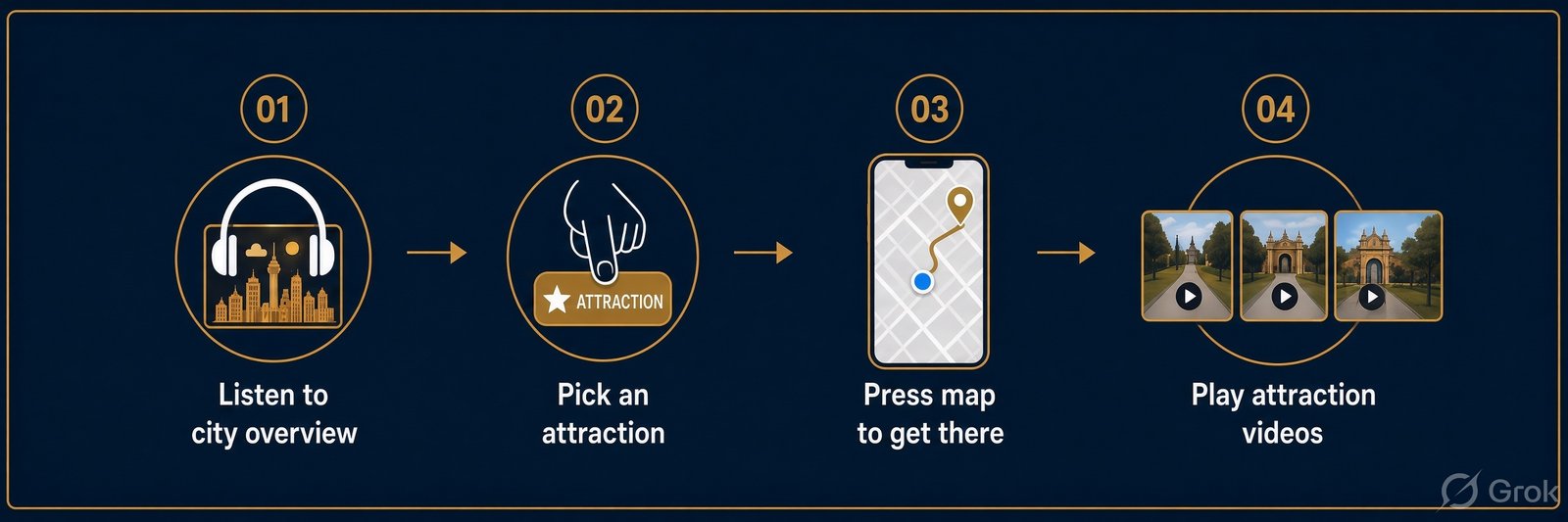
This London walking tour starts in London, the capital of the United Kingdom, a city of nearly nine million people on the River Thames. The Romans founded Londinium here around AD 47, and over two thousand years it grew into the seat of kings, Parliament and a worldwide empire.
Pick your stops from the list below, press Map for directions from where you are, and visit freecitytours.org for more free city walks. For a second route, try the Paris city page.
1. London walking tour: Natural History Museum
South Kensington · start here
On this London walking tour, the Natural History Museum opened in 1881 in Alfred Waterhouse’s Romanesque cathedral of nature, its terracotta facade covered with carved animals and plants. Inside, Hintze Hall is crowned by Hope, the skeleton of a blue whale suspended from the roof. The Dinosaurs Gallery holds fossils from the age of the giants, and the Earth Galleries explore volcanoes, earthquakes and the planet itself. Entry is free.
Walk this order. Cromwell Road Facade → Hintze Hall Blue Whale → Dinosaurs Gallery → Earth Galleries → Exhibition Road Exit.

2. Buckingham Palace
St James’s · Victoria Memorial and The Mall
Along this London walking tour, Buckingham Palace has been the London home of the monarch since Queen Victoria moved in in 1837. In front of it stands the white marble Victoria Memorial at the end of The Mall, the ceremonial avenue to Trafalgar Square. The Changing of the Guard takes place in the forecourt behind the black and gold gates, and Canada Gate opens into Green Park.
Walk this order. Victoria Memorial → East Front Facade → Forecourt Gates → Canada Gate The Mall View → Birdcage Walk toward Westminster.

3. Westminster Abbey
Westminster · coronation church since 1066
On this London walking tour, Westminster Abbey has crowned English and British monarchs since William the Conqueror in 1066. The present Gothic church was begun by Henry III in 1245. Inside lie kings, queens, scientists and writers: Poets’ Corner honours Chaucer, Shakespeare and Dickens, and the Henry VII Lady Chapel has one of the finest fan vaulted ceilings in Europe. The quiet cloisters were once the heart of the monastery.
Walk this order. Great West Door → Nave → Poets’ Corner → Henry VII Lady Chapel → Cloisters Exit.

4. Houses of Parliament
Westminster · Big Ben and the Thames
Along this London walking tour, the Palace of Westminster, home of the House of Commons and the House of Lords, was rebuilt in Gothic Revival style after a fire in 1834. Its clock tower, the Elizabeth Tower, holds the great bell known as Big Ben. Westminster Hall, from 1097, survived the fire and is the oldest part. The Victoria Tower rises at the southern end, and the best view of the whole river front is from Westminster Bridge.
Walk this order. Elizabeth Tower Big Ben → New Palace Yard Westminster Hall → Riverside Facade → Victoria Tower → Westminster Bridge View.

5. London Eye
South Bank · views over Westminster
On this London walking tour, the London Eye opened on the South Bank in 2000 and was for years the tallest observation wheel in the world, at 135 metres. Its 32 glass capsules turn slowly for about half an hour, rising above the Thames for views to the Houses of Parliament, Westminster Abbey and, on clear days, far beyond the city.
Walk this order. Ticket Plaza and Wheel Base → Capsule Boarding → Thames View East → Palace and Abbey Skyline → South Bank Walk.

6. Tate Modern
Bankside · modern and contemporary art
Along this London walking tour, Tate Modern opened in 2000 inside the former Bankside Power Station, designed by Giles Gilbert Scott. The vast Turbine Hall hosts giant installations, and the Blavatnik Building added a twisting brick tower with a free viewing level over the river. The collection galleries show modern and contemporary art from Picasso to the present. Outside, the Millennium Bridge crosses the Thames to St Paul’s.
Walk this order. Turbine Hall → Blavatnik Building → Collection Galleries → Viewing Level → Millennium Bridge.

7. St Paul’s Cathedral
The City · Wren’s great dome
On this London walking tour, St Paul’s Cathedral was designed by Sir Christopher Wren after the Great Fire of 1666 destroyed the medieval church, and completed in 1710. Its dome is one of the largest in the world. Climb to the Whispering Gallery, where a whisper carries around the dome, and descend to the crypt, where Wren, Nelson and Wellington are buried.
Walk this order. West Steps and Facade → Nave and Dome → Whispering Gallery → Crypt → Churchyard toward the Tower.

8. Tower of London
Tower Hill · fortress and Crown Jewels
Along this London walking tour, the Tower of London was begun by William the Conqueror after 1066, and its White Tower is one of the finest Norman keeps in Europe. Over the centuries it served as royal palace, prison and place of execution, guarded by the Yeoman Warders known as Beefeaters. The Crown Jewels are kept here, and Traitors’ Gate recalls the prisoners brought in from the river. Tower Bridge stands just beside it.
Walk this order. Byward Tower Approach → White Tower → Crown Jewels → Traitors’ Gate and Tower Green → Riverside toward Tower Bridge.

9. The Shard
London Bridge · the tallest building in the UK
On this London walking tour, the Shard, designed by Renzo Piano and completed in 2012, is the tallest building in the United Kingdom at 310 metres. Its glass shards rise above London Bridge station. Fast lifts carry visitors to the viewing galleries on the 69th and 72nd floors, with views up to 60 kilometres across the city, from the Tower and St Paul’s in the west to Canary Wharf in the east.
Walk this order. Base Plaza → Lifts to the Top → Skydeck West View → Skydeck East View → London Bridge Exit.

10. British Museum
Bloomsbury · two million years of history
Along this London walking tour, the British Museum, founded in 1753, was the first national public museum in the world, and entry is still free. Norman Foster’s glass roofed Great Court surrounds the old Reading Room. Highlights include the Rosetta Stone, the key to Egyptian hieroglyphs, the Parthenon sculptures from Athens, and the Enlightenment Gallery in the King’s Library.
Walk this order. Great Court → Rosetta Stone → Parthenon Galleries → Enlightenment Gallery → Bloomsbury Exit.

London Walking Tour Details Overview
This London walking tour is free and self-guided, and Clarissa narrates the free video stops. Move at your own pace and skip any sight you already know.
Start at the Natural History Museum and follow the route past Buckingham Palace, Westminster Abbey, the Houses of Parliament and the London Eye. Each stop on this London walking tour has a map link and short videos, and the route finishes at the British Museum.
Before you set off on this London walking tour, check opening hours and book popular attractions such as the London Eye and the Tower of London ahead. Wear comfortable shoes, since the route covers a lot of ground.
Many stops are close enough to walk between, and the Underground covers longer distances. Take a break beside the Thames or in St James’s Park, then carry on with this London walking tour.
Whether you have one afternoon or a full weekend, a London walking tour gives you a clear plan. Enjoy every stop on your London walking tour, and visit freecitytours.org for more free city walks. For official visitor information, see the official London tourism site.
A London walking tour rewards a little planning. Many of the best sights are free to enter, including the British Museum and the National Gallery, so this London walking tour can be enjoyed on a modest budget and leaves more room for the London Eye or a river cruise.
Getting around London is simple with contactless payment on the Underground, buses and most trains. Walking is often the quickest way to link the central stops, and each stop is a short walk or one bus ride away. Use the map links to plan each leg of this London walking tour.
Weather in London changes quickly, so pack a light waterproof and comfortable shoes. Spring and early summer are often the most pleasant months for a long London walking tour, with parks in bloom and longer evenings for river views. Winter brings shorter days, but the lights along the Thames can be lovely after dark.
Take breaks where you can. St James’s Park, Hyde Park and the South Bank all offer benches, cafés and views, so you can rest between sights without leaving the route. Let the videos set the pace, and enjoy each stop on your London walking tour at a relaxed speed.
London Overview Detail
This London walking tour is more than a list of stops. Use this detail to plan your day, from the best neighbourhood routes to the timing, transport, etiquette and accessibility tips that make your visit easier. Everything here works alongside the stop videos above, so you can keep the route in order and adjust it to your own pace.
Best neighbourhood routes for your London walking tour
On this London walking tour, the royal and political heart lies in Westminster, with Buckingham Palace, Westminster Abbey and the Houses of Parliament. The South Bank brings the London Eye and Tate Modern, the City has St Paul’s Cathedral and the Tower of London, and across the river The Shard rises above London Bridge. The great museums of South Kensington and Bloomsbury are free to enter.
On this walk you start at the Natural History Museum, pass Buckingham Palace, Westminster Abbey and the Houses of Parliament, ride the London Eye, cross to Tate Modern and St Paul’s Cathedral, explore the Tower of London, look out from The Shard, and finish at the British Museum.
The Great Fire of 1666 and the Blitz of the Second World War both reshaped the city, yet medieval towers, Georgian squares and glass skyscrapers still stand side by side. For a longer wander, Covent Garden, just north of the Strand, is full of street performers, independent shops and cafés, while Borough Market and Bankside, near London Bridge, offer food stalls, small galleries and riverside paths.
Stay flexible in the middle of the route. St James’s Park offers a calm lake view toward Buckingham Palace, and the South Bank makes a relaxed break before the Tower. Walk the stops in the order listed, and use the map link at each stop to check the next leg of this London walking tour.
Best times of day, seasons and transport for a London walking tour
Early mornings are usually the calmest time to walk, especially around Westminster Abbey and along the Thames, while late afternoon light suits the South Bank and the river views from Tate Modern and The Shard. Many free museums are busiest on weekends and during school holidays, so a weekday visit is often more relaxed on a London walking tour.
Spring and early summer are often the most pleasant seasons for a London walking tour, with parks in bloom and long evenings in June and July. Winter brings shorter days and early dusk, but the lights along the Thames and the festive displays in central London make evening walks memorable. Pack a light waterproof whatever the season, because the weather can change quickly.
Pay with a contactless card or phone on buses, the Underground and most London trains, and check the Transport for London journey planner for live times. Not every Underground station has step-free access, so check the planner before you travel. Walking between central sights is often quicker than the Tube, and river boats on the Thames offer a relaxed link between Westminster, the South Bank and the Tower.
Sunset times change a lot through the year, so check the time before you plan an evening river walk, and bring a layer for the cooler hours after dusk. Many outdoor sights look best in clear weather, so keep a flexible day in case of rain.
Public holidays and special events can change opening hours, so check each official website before you set out on any day. Many London museums also run late openings on certain evenings, which can be a calm time to visit popular galleries.
Etiquette, safety and food stops on a London walking tour
A few habits go a long way on any London walking tour. Stand on the right of escalators so people can pass on the left, queue patiently at popular sights, and keep your voice low inside churches and museums. At Westminster Abbey and St Paul’s Cathedral, dress respectfully and follow the posted photography rules.
During this London walking tour, watch your bag and phone on crowded trains, in the queues for the London Eye and around Covent Garden, where pickpockets can work the crowds. For emergencies, call 999, or 112 from a mobile phone. Keep photos of your passport on your phone and leave the originals in your hotel safe during the day.
Food is part of every London walking tour. Borough Market near London Bridge is a classic stop for street food and produce, and a traditional pub lunch or Sunday roast gives a taste of local life. Many pubs take orders at the bar, and a service charge is often included in restaurant bills, so check the receipt before you add a tip.
Plan a break at a museum café, a pub or a large station, since public toilets can be hard to find in central London. Carry a refillable bottle, and sit down for a few minutes between stops so you keep your energy up on a long day. Keep your pace relaxed, and let the videos guide the order.
Free sights, accessibility and planning for a London walking tour
Many highlights on this London walking tour cost nothing to enter. The British Museum, the National Gallery, the Natural History Museum, Tate Modern and the Science Museum offer free general admission, while Trafalgar Square, St James’s Park and Hyde Park are open to walk through. Special exhibitions and guided tours may charge, so check each official site before you go.
Accessibility on a London walking tour depends on the route and the ground. Many streets are uneven or cobbled, and some older buildings have steps. Not all Underground stations have lifts or level access, so check the step-free information on the transport operator’s website. Many museums and attractions publish access guides, so check their accessibility pages before you visit.
Book timed tickets for busy sights such as the London Eye and the Tower of London, check opening hours, and leave room in the afternoon for lunch. For more free city walks, visit freecitytours.org, or compare this London walking tour with the Paris city page.
Give yourself a clear finish. The British Museum is a good closing stop because it is free and close to Covent Garden, and the Tube and buses are a short walk away. End the day with a walk along the Thames or a relaxed dinner, and save the rest of the city for another visit.
London Walking Tour Overview Detail
This London walking tour links 10 sights and 50 short video stops narrated by Clarissa. The notes below group those stops into walkable routes and add the timing, transport, etiquette and free-entry details that make the day easier. For official events and visitor information, also check Visit London, the official visitor guide to London.
Best routes for your London walking tour using the 50 stops
Route 1, museums to Westminster (stops 1 to 4). Start at the Natural History Museum in South Kensington with the Cromwell Road facade, the blue whale in Hintze Hall, the Dinosaurs gallery and the Earth galleries, then leave by Exhibition Road. Walk through Hyde Park and Green Park to Buckingham Palace for the Victoria Memorial, the East Front, the forecourt gates and Canada Gate, then follow Birdcage Walk to Westminster. Westminster Abbey’s videos cover the Great West Door, the nave, Poets’ Corner, the Henry VII Lady Chapel and the cloisters, and the Houses of Parliament stop finishes at Elizabeth Tower and Westminster Bridge.
Route 2, the South Bank (stops 5 and 6). Cross Westminster Bridge to the London Eye for the wheel base, boarding, the views east and back toward Parliament, then follow the riverside walk along the South Bank. It is one of the best stretches of any London walking tour, with street performers, book stalls and river views. At Tate Modern, the videos cover the Turbine Hall, the Blavatnik Building, the collection galleries and the free viewing level, and end on the Millennium Bridge.
Route 3, the City and the Tower (stops 7 to 9). Cross the Millennium Bridge to St Paul’s Cathedral for the west steps, the nave and dome, the Whispering Gallery and the crypt. Walk east to the Tower of London for the Byward Tower, the White Tower, the Crown Jewels and Traitors’ Gate, and leave along the river toward Tower Bridge. Cross the bridge and walk the south bank to The Shard, where the videos cover the base plaza, the lifts and the views from the top.
Route 4, Bloomsbury (stop 10). Save the British Museum for a separate morning, when the Great Court is calm. The videos cover the Rosetta Stone, the Parthenon galleries and the Enlightenment Gallery before you leave into Bloomsbury’s squares. If you only have one day, Routes 1 and 2 make the best free walking tour London offers on foot, from the museums to the river.
For photos, the best free viewpoints on this London walking tour are Westminster Bridge for Elizabeth Tower, the Millennium Bridge looking up at St Paul’s, the Tate Modern viewing level and the riverside by City Hall, opposite the Tower of London and Tower Bridge. Early morning is the best time at Buckingham Palace and in the Great Court of the British Museum.
A three-day London walking tour works well as Route 1 on day one, Route 2 that evening or the next morning, Route 3 on day two, and the British Museum on day three, with time left for Covent Garden or a West End show. If it rains, move the museums forward and save the South Bank and the bridges for a dry spell.
Best times and transport for a London walking tour
Start early at the museums and Buckingham Palace, and check the official Changing the Guard schedule if you want to see it, because it does not run every day. Westminster Abbey is open for worship only on Sundays, not for sightseeing, and St Paul’s Cathedral opens for sightseeing from Monday to Saturday, so plan Route 1 and Route 3 for weekdays or Saturdays. Late afternoon and dusk are lovely on the South Bank and from the top of The Shard.
London weather changes quickly, so carry a light waterproof whatever the forecast. Late spring and early autumn are often the best seasons for a London walking tour, with long days and fewer crowds than in high summer. Winter days are short, but the river lights look great after dark.
Tap a contactless bank card or an Oyster card on the Tube, buses and most trains; daily fares are capped, so you never pay more than the daily limit. Children under 11 travel free with a paying adult. Uber Boat by Thames Clippers runs river services between Westminster, the South Bank and Tower piers, which suits the river stops. On escalators, stand on the right and walk on the left. Many central stops are closer than they look on the Tube map, so walking is often the quickest way to link this London walking tour.
From Heathrow, the Piccadilly line runs direct to South Kensington, the station for the Natural History Museum and the first stop of this London walking tour; the Elizabeth line is faster into central London if you are staying further east. From Gatwick or St Pancras, start with Route 3 or the British Museum instead and walk the stops in a different order; every stop has its own map link, so the route is flexible.
Etiquette, food and safety on your London walking tour
Queue patiently, keep to the left on busy pavements where signs ask you to, and move to the side when you stop to check a map. Inside Westminster Abbey and St Paul’s Cathedral, speak quietly and follow the photography rules at each door. In pubs you order and pay at the bar and no tip is expected; in restaurants, check the bill, because a service charge of around 12.5% is often added already.
Good food stops sit right on the route. Borough Market, next to London Bridge and The Shard, is a classic London lunch with street-food stalls; Leadenhall Market is a short walk from the Tower; and the South Bank has cafés with river views. A picnic in St James’s Park or Hyde Park is a cheap break on a long London walking tour, and the city has a growing network of free public drinking fountains for refilling a bottle.
Keep your phone in your hand only when you need it, especially near the kerb, where phone thefts by passing cyclists and scooters happen. Watch your bag in crowds at Westminster, the London Eye and the Tower, and walk past the cup-and-ball gambling games on Westminster Bridge. Use licensed black cabs or booked minicabs at night.
Free days, discounts and accessibility on a London walking tour
London is the easiest city for a budget walk, because several stops on this London walking tour are free every day. The Natural History Museum, Tate Modern and the British Museum have free general entry, and only some special exhibitions charge. The Tate Modern viewing level is free, Changing the Guard is free to watch from the street, and you can watch debates in the House of Commons and the House of Lords from the public galleries free of charge on sitting days.
Westminster Abbey and St Paul’s Cathedral charge for sightseeing, but anyone can attend a service, such as Evensong, free of charge. The Tower of London, the London Eye and The Shard are paid; book online for the best prices. UK residents can arrange a free tour of Parliament through their MP, while other visitors can book paid tours on most Saturdays and on many weekdays when Parliament is in recess. Buckingham Palace State Rooms usually open only in summer, with paid tickets.
For discounts, compare a sightseeing pass with single tickets if you plan several paid entries. If you arrive by National Rail, look for 2-for-1 attraction offers with a valid rail ticket, and check each attraction’s website for family and online prices.
For accessibility, buses all have ramps and spaces for wheelchairs, the Elizabeth line is step-free, and TfL publishes a step-free Tube guide for the rest of the network. The big free museums have step-free entrances, and the London Eye capsules are wheelchair accessible. The Tower of London has cobbles and steep stairs in its older buildings, so check the access guide first. For the flattest London walking tour, follow Route 2 along the South Bank.
After this London walking tour, carry on with more free walks nearby: the Paris walking tour, which is an easy train ride away, the Edinburgh walking tour, the Dublin walking tour and the Amsterdam walking tour. You can browse every city on the Free City Tours home page.
London walking tour FAQ
Is this London walking tour really free?
Yes. All 50 video stops on this London walking tour are free to watch, and three of the ten sights, the Natural History Museum, Tate Modern and the British Museum, have free general entry. Westminster Abbey, St Paul’s, the Tower, the London Eye and The Shard charge for entry, so this is a free walking tour London visitors can shape to any budget.
How long does the London walking tour take?
Allow two or three days. Routes 1 and 2 fill one day, the City and the Tower fill another, and the British Museum makes a good half day of its own.
Where does the London walking tour start?
It starts at the Natural History Museum on Cromwell Road, a short walk from South Kensington station. You can join at any stop, because each one has its own map link and five short videos.
Is the London walking tour suitable for children and wheelchair users?
Yes. Children love the dinosaurs, the London Eye and the Tower, and under-11s travel free on public transport with an adult. Wheelchair users should follow the step-free Route 2 along the South Bank and use buses or the Elizabeth line between stops.
Do I need an app or mobile data for the London walking tour?
You don’t need an app. Open this page in your phone’s browser and play the videos as you walk. The videos stream, so use mobile data or free Wi-Fi in museums and cafés.
