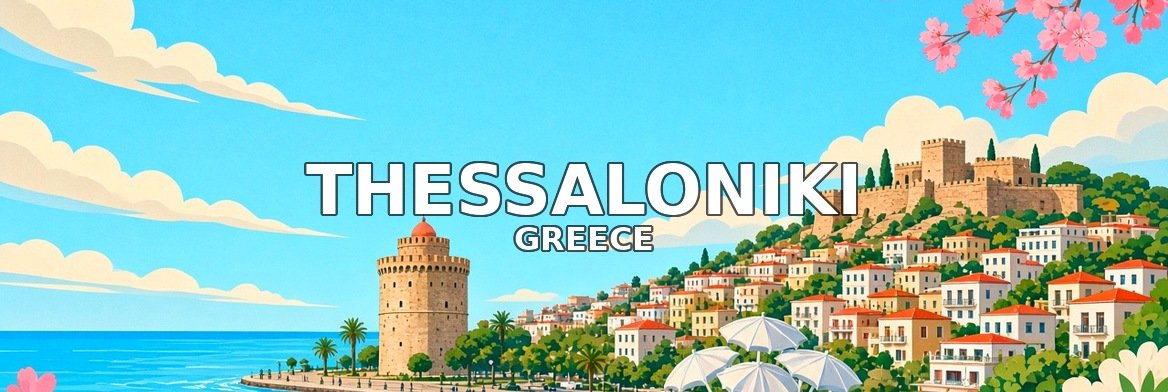
Thessaloniki is Greece’s second city, a busy port on the Thermaic Gulf in the north of the country. Founded more than two thousand three hundred years ago, it has been Roman, Byzantine and Ottoman, and each era left its mark.
The centre is compact and runs along the seafront. The White Tower and the promenade lie on the water, Aristotelous Square and the markets sit just inland, the Roman monuments are a short walk east, and the old Upper Town climbs the hill to the north.
On this walk you start at the White Tower, cross Aristotelous Square, climb to Ano Poli, see the Arch of Galerius and the Rotunda, visit the Church of Hagia Sophia, eat in the Ladadika district, explore the Museum of Byzantine Culture, stroll the waterfront promenade, look out from the Heptapyrgion, and finish at the Modiano Market.
1. Thessaloniki walking tour: White Tower
On the seafront at Nikis Avenue · start here · 45–60 minutes
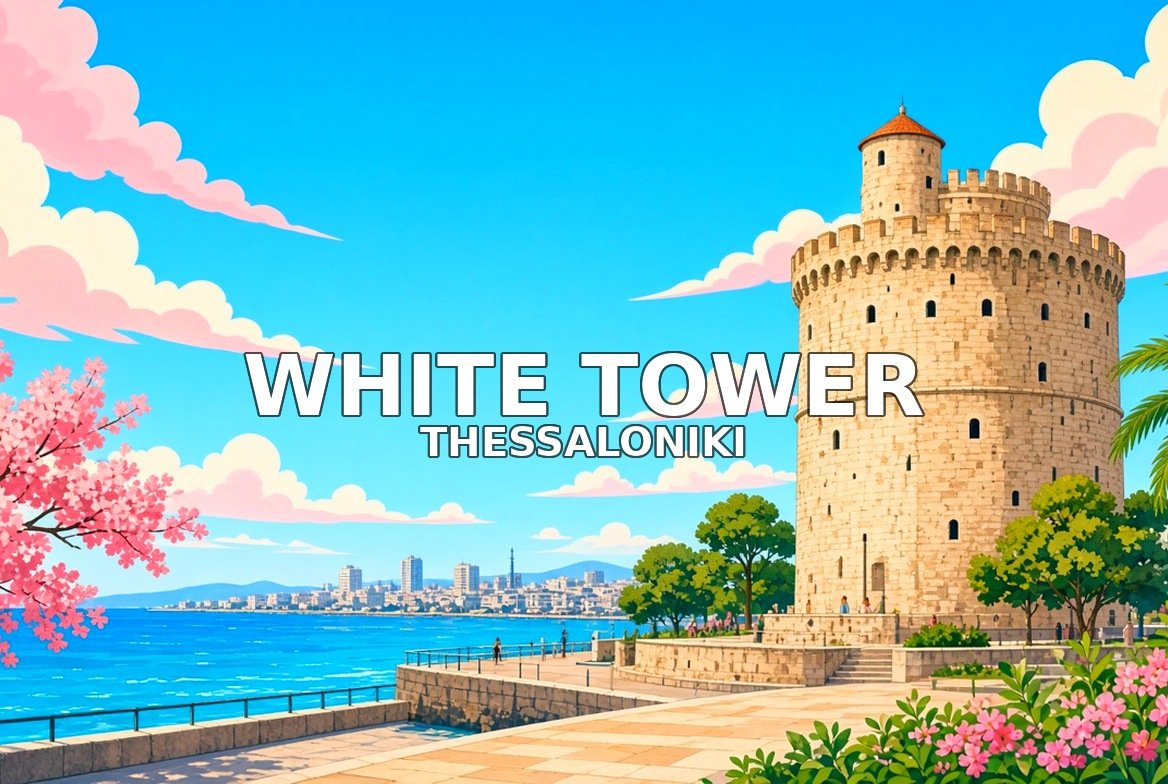
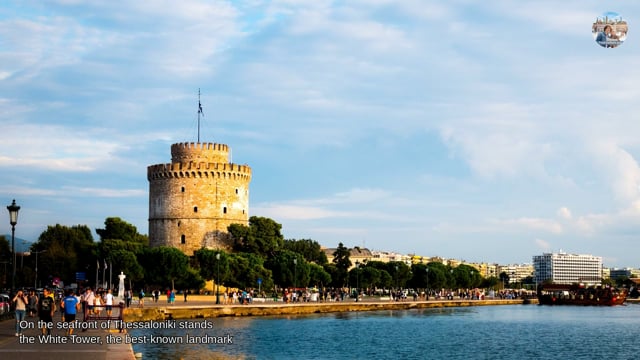
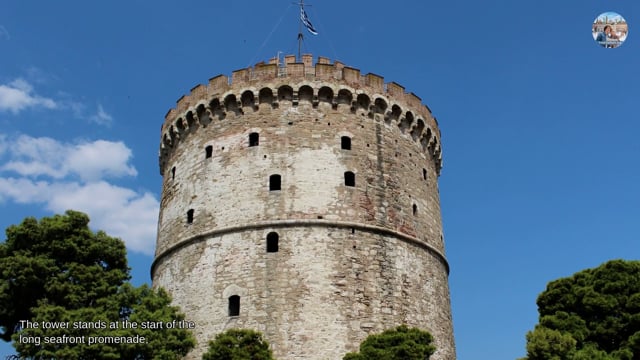
The first stop on this Thessaloniki walking tour, the White Tower, is the symbol of the city. The Ottomans built it some time after Sultan Murad II took the city in 1430, probably on the site of an older Byzantine tower, and it guarded the eastern end of the sea walls. The round drum is 34 metres high and 23 metres across, with six floors and a turret on top. In the Ottoman period it was a fortress and a prison, and after the massacre of the rebel Janissaries held there in 1826 it was called the Tower of Blood. It was whitewashed in 1890, and after the city became Greek in 1912 the name White Tower stuck, even though the stone is now its natural buff colour. Inside is a museum on the history of the city, and a ramp winds up to a viewing platform over the bay. The seafront around it is free; the tower needs a ticket.
Walk this order. The tower from the seafront → the Tower of Blood story → the museum floors inside → the view from the top → the seafront at dusk → 15 minutes west along Nikis Avenue to Aristotelous Square.
03 · Tour · videos inside this sight
The Symbol of Thessaloniki
The Tower of Blood
Inside the Tower
The View from the Top
Day and Night on the Seafront
Advertisement
Ad slot
2. Thessaloniki walking tour: Aristotelous Square
From stop 1 · 15 minutes west along the seafront · 30–45 minutes
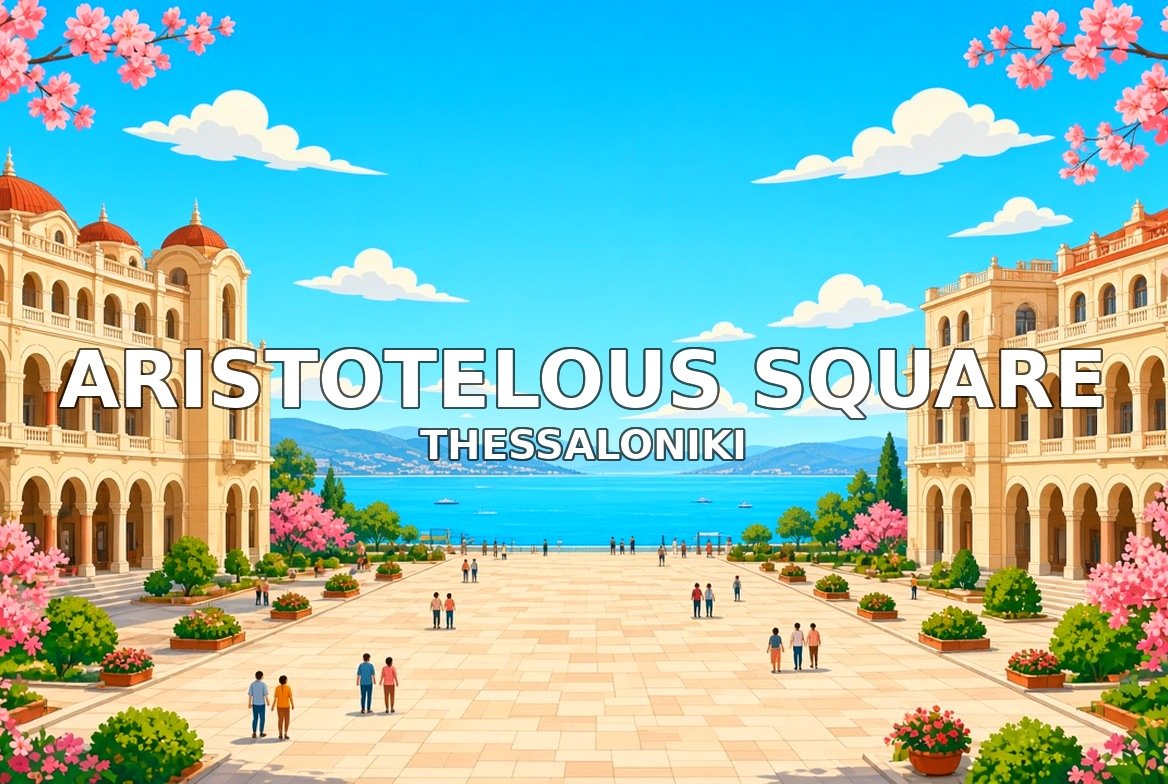
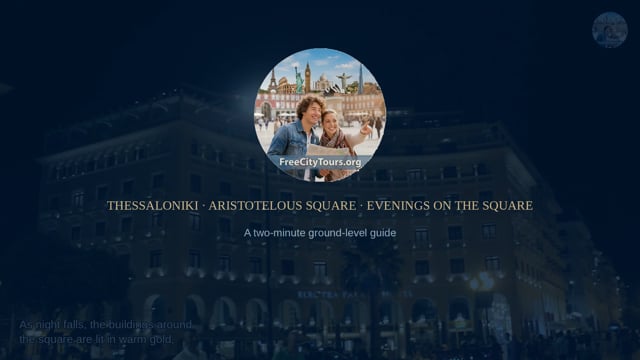
On your Thessaloniki walking tour, Aristotelous Square is the main square of the city, open to the sea on Nikis Avenue. It was born out of the Great Fire of 1917, which destroyed about two thirds of the city. The French architect Ernest Hébrard planned it in 1918 as the start of a grand axis running uphill towards the Roman Forum and the Byzantine walls, but most of the buildings around it only went up in the 1950s, in a simpler form than his drawings. The twelve buildings that frame the square have been listed since 1950, among them the Electra Palace Hotel. Arcades with cafés line both sides, the markets begin just behind, and the square is the city’s stage for rallies, concerts and Christmas. Free and open all day.
Walk this order. The square from the seafront → the buildings rebuilt after the fire → the Electra Palace and the sea view → the arcades and the markets behind → the square in the evening → bus or taxi up to the Upper Town, or about 30 minutes uphill on foot.
03 · Tour · videos inside this sight
The Heart of the City
Rebuilt After the Fire
The Electra Palace and the Sea
Arcades and Markets
Evenings on the Square
Advertisement
Ad slot
3. Thessaloniki walking tour: Ano Poli
From stop 2 · about 30 minutes uphill on foot, or a short bus or taxi ride · 60–90 minutes
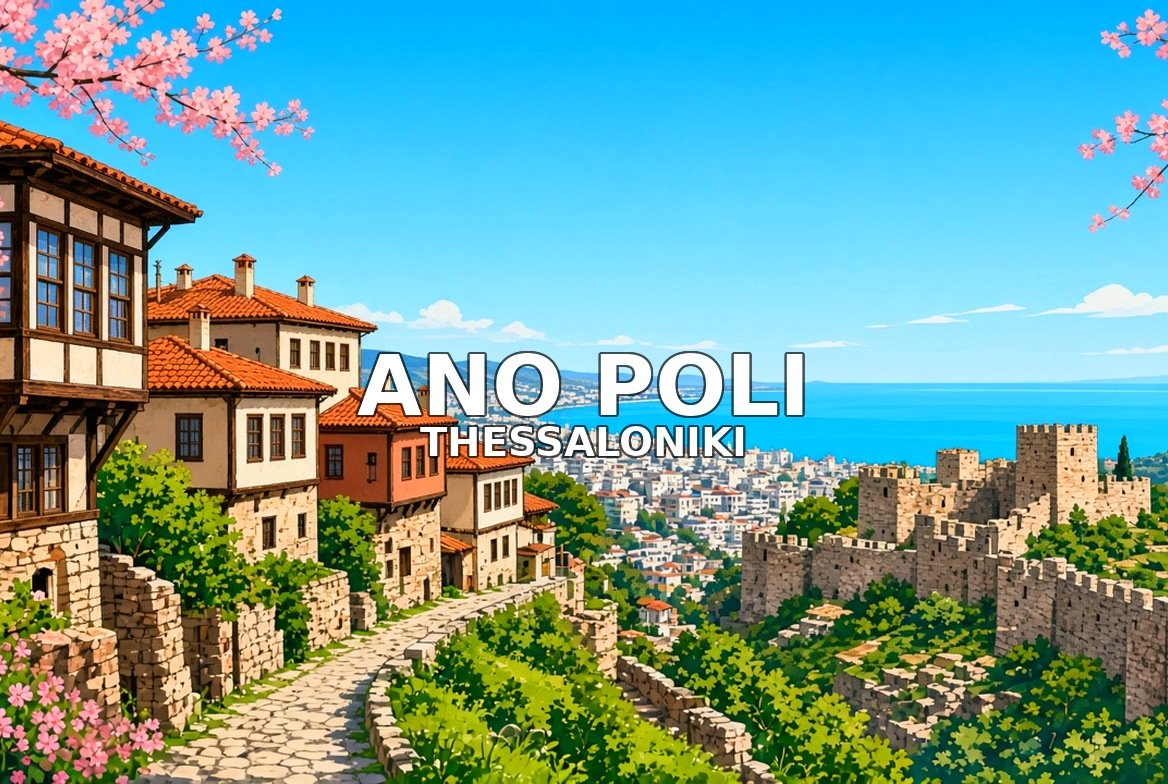
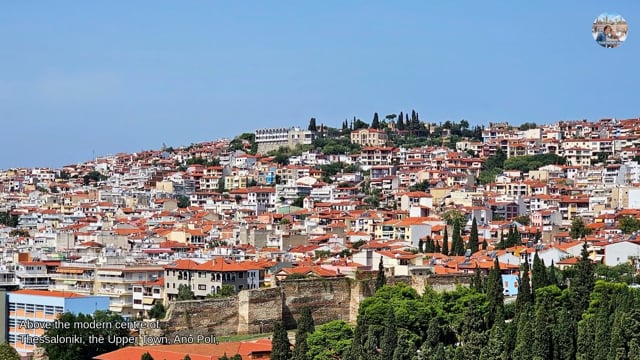
This stop on the Thessaloniki walking tour is Ano Poli, the Upper Town, the old town on the slopes below the acropolis. It escaped the Great Fire of 1917, so it keeps the narrow stone lanes, small squares and timber framed houses of the Ottoman city, when this was the main Turkish quarter. The Byzantine walls, built from the late 4th century onward and part of a UNESCO World Heritage Site since 1988, still run around the district. The Byzantine Bath, from the late Byzantine period, is a rare surviving Byzantine bathhouse. Around Tsinari the neighbourhood still feels like a village, and from the walls the whole city and gulf lie below you; on clear days you can see Mount Olympus about 80 kilometres away. Free to wander.
Walk this order. Into the Upper Town → along the Byzantine walls → the Byzantine Bath → Tsinari and its lanes → the views over the city → walk down about 20 minutes to the Arch of Galerius.
03 · Tour · videos inside this sight
The Upper Town
The Byzantine Walls
The Byzantine Bath
Tsinari and Village Life
Views over the City
Advertisement
Ad slot
4. Thessaloniki walking tour: Arch of Galerius and Rotunda
From stop 3 · about 20 minutes downhill to Egnatia Street · 45–60 minutes
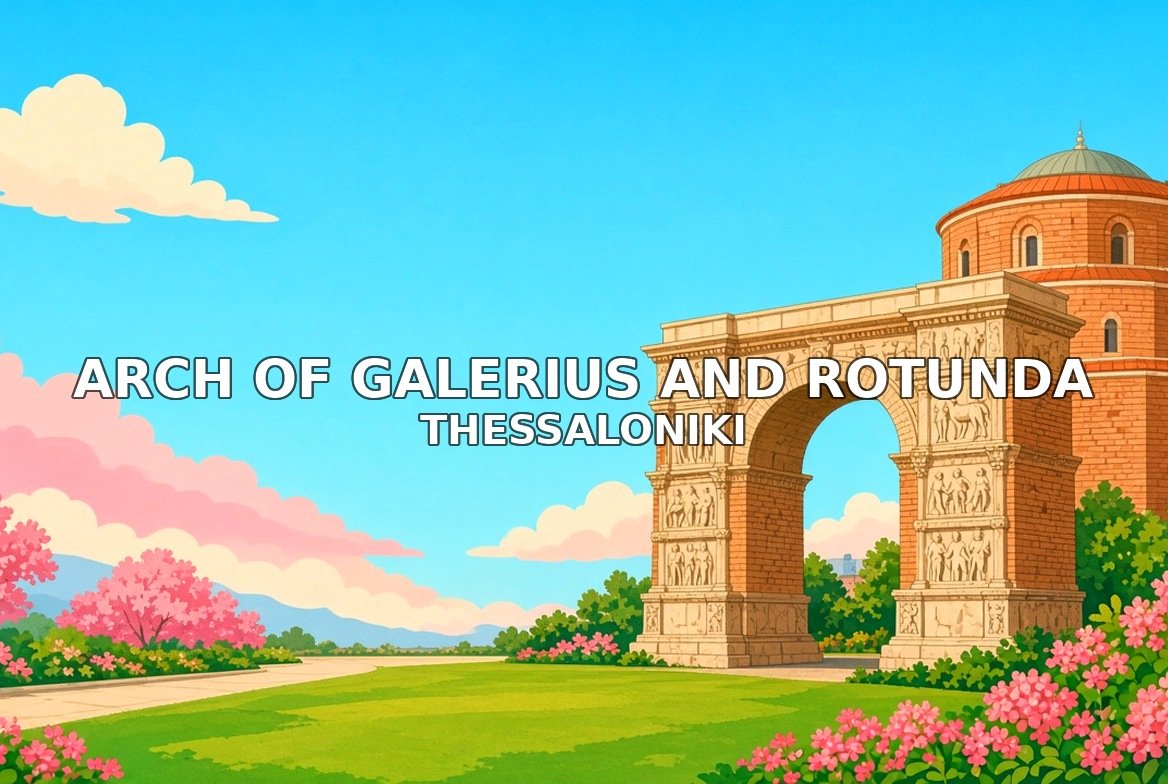
On this Thessaloniki walking tour you reach the arch and the Rotunda, which the Roman emperor Galerius built in the early 4th century as part of an imperial quarter linked to his palace. The Arch of Galerius, known locally as Kamara, stands on Egnatia Street. It was built in 298 and 299 and dedicated in 303 to celebrate his victory over the Persian Sassanids, and its marble panels show scenes of the campaign. About two thirds of it survive. A short walk north, the Rotunda is a massive round building 24.5 metres across. It was turned into a church in the late 4th century, became a mosque in 1590, when the minaret was added, and is a church again today; it is the oldest of the city’s churches. Fragments of its early Christian mosaics still shine in the dome. Both are part of the UNESCO World Heritage Site. The arch is free; the Rotunda needs a ticket.
Walk this order. The Arch of Galerius → the stories carved in its marble → the Rotunda → inside the Rotunda → the mosaics of the dome → 7 minutes south west to Hagia Sophia.
03 · Tour · videos inside this sight
The Arch of Galerius
Stories in Stone
The Rotunda
Inside the Rotunda
The Mosaics of the Dome
Advertisement
Ad slot
5. Thessaloniki walking tour: Church of Hagia Sophia
From stop 4 · 7 minutes south west · 30–45 minutes
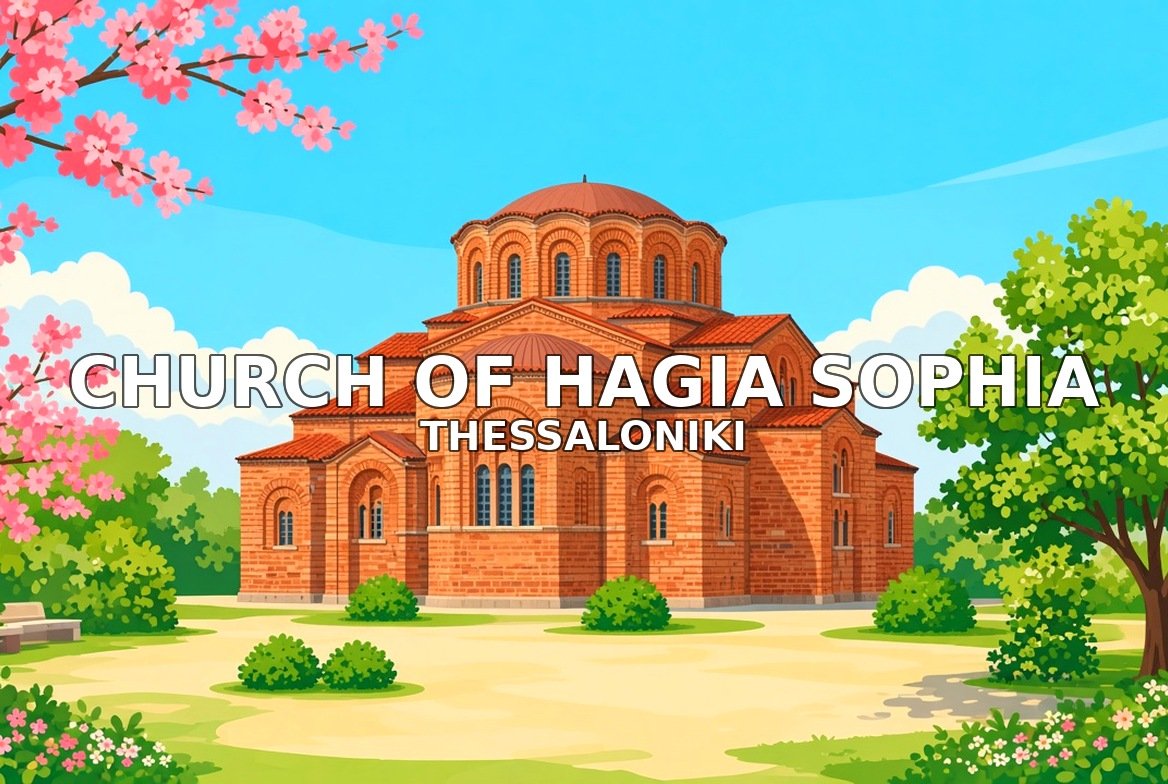
Next on the Thessaloniki walking tour, Hagia Sophia, the Church of the Holy Wisdom, is one of the oldest churches still standing in the city. A church stood here from the 3rd century; after it collapsed in 620, the present domed building was put up later in the 7th century, modelled on Hagia Sophia in Constantinople. It served as the cathedral under the crusaders from 1205 to 1224, became a mosque after the Ottoman conquest of 1430 and was turned back into a church in 1912. Look up at the mosaics: the Virgin with the Christ Child in the apse and the Ascension in the dome. It is part of the UNESCO World Heritage Site. Free entry; it is a working church, so dress modestly.
Walk this order. The church and its garden → church, mosque and church again → inside the church → the capitals and frescoes → the mosaics → 15 minutes west to Ladadika.
03 · Tour · videos inside this sight
The Holy Wisdom
Church, Mosque and Church Again
Inside the Church
Capitals and Frescoes
The Mosaics
Advertisement
Ad slot
6. Thessaloniki walking tour: Ladadika District
From stop 5 · 15 minutes west towards the port · 45–60 minutes, longer for dinner
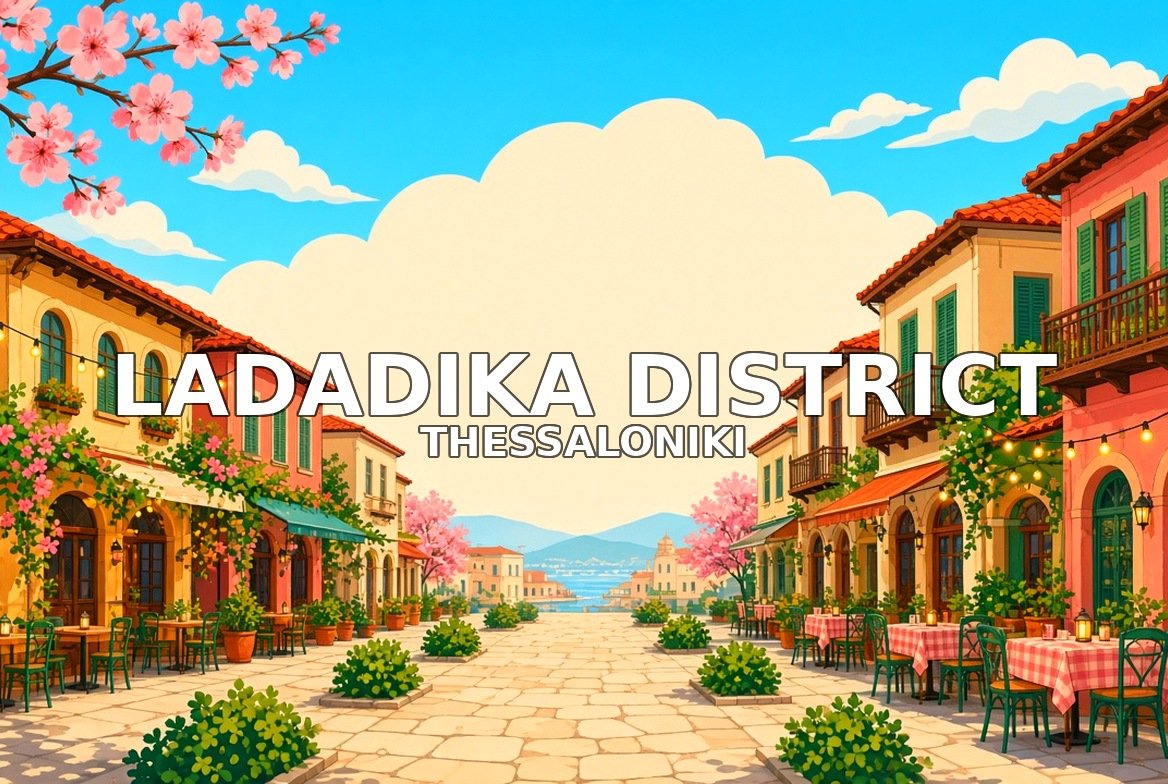
Ladadika, the stop by the port on this Thessaloniki walking tour, was for centuries one of the main market areas of the city. Its name comes from the olive oil shops that filled its streets. The 19th century warehouses and shops were listed as a heritage site in 1985, and after years of decline the district was restored from the 1980s and 1990s. Today the old oil stores hold tavernas, ouzeri and bars on pedestrian lanes and small squares, and it is the place to try meze in the evening. Nearby Freedom Square, Eleftherias, takes its name from the Young Turk Revolution that began there in 1908. Beyond it, the old port’s warehouses on Pier A now house cultural venues, including the Thessaloniki Cinema Museum. Free to wander.
Walk this order. The old oil shops → tavernas and meze → Freedom Square → the old harbour → the warehouses of culture on the pier → bus or taxi east along the seafront to the Museum of Byzantine Culture, or about 35 minutes on foot.
03 · Tour · videos inside this sight
The Oil Shops
Tavernas and Meze
Freedom Square
The Old Harbour
Warehouses of Culture
Advertisement
Ad slot
7. Thessaloniki walking tour: Museum of Byzantine Culture
From stop 6 · about 35 minutes on foot along the seafront, or bus or taxi · 90 minutes–2 hours
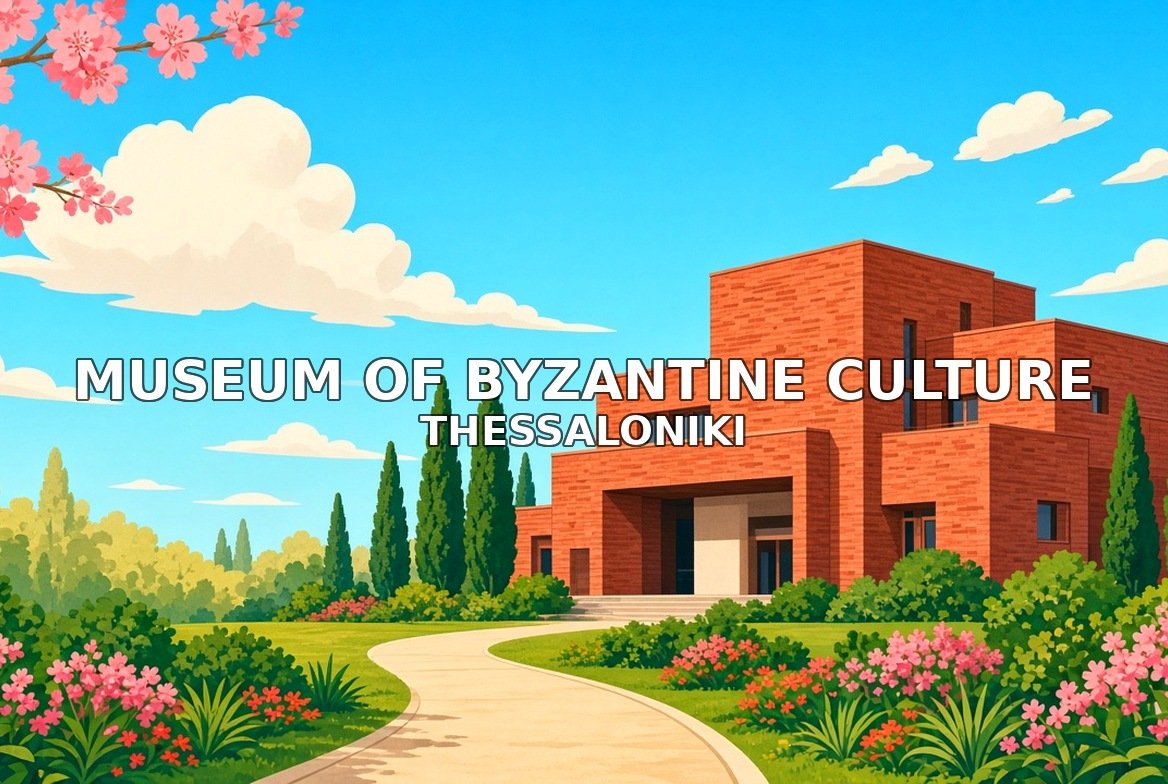
The museum stop of this Thessaloniki walking tour, the Museum of Byzantine Culture, opened in 1994 in a brick building designed by the architect Kyriakos Krokos, who won a national competition for it. It tells the story of Byzantine and post-Byzantine life, mainly in Macedonia, through early Christian churches and tombs, mosaics, wall paintings, sculpture, coins, jewellery and everyday objects. The rooms move from the early Christian city and its painted tombs to icons and the treasures of the later Byzantine centuries. In 2005 it won the Council of Europe Museum Prize. The museum needs a ticket.
Walk this order. The brick museum building → the early Christian city → from the Elysian Fields to Paradise → the icons → the treasures of later Byzantium → 5 minutes south to the waterfront.
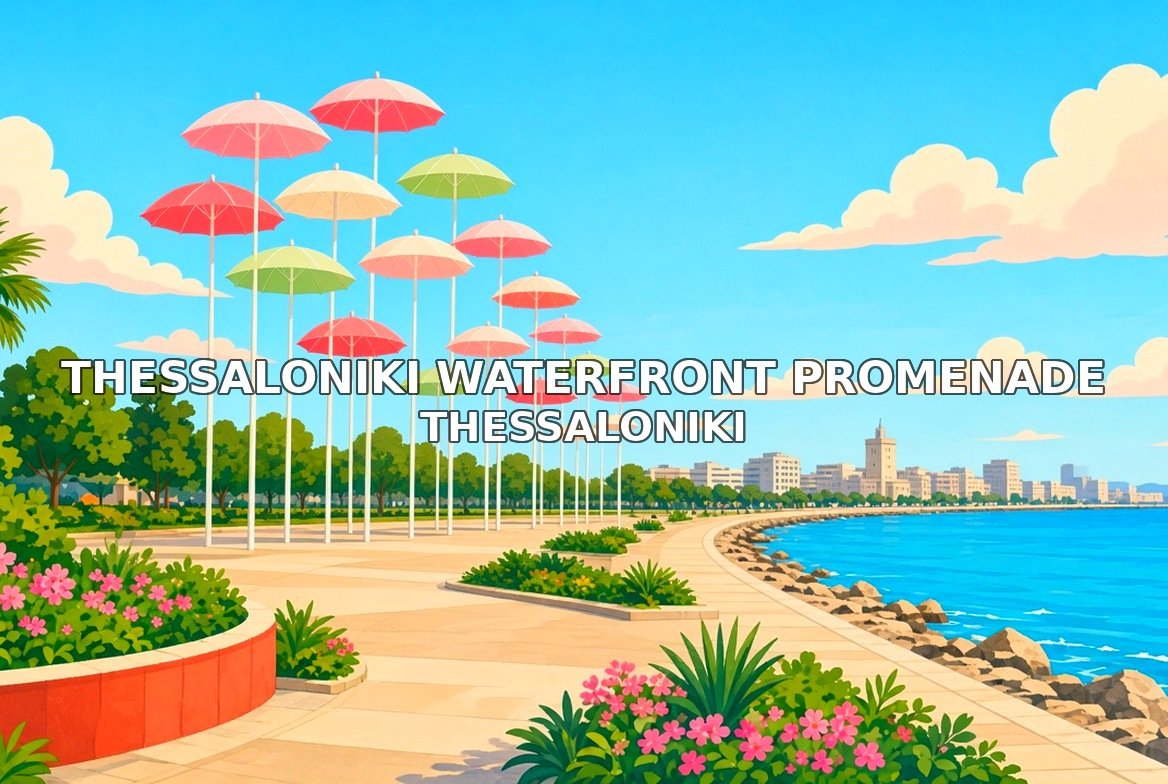
On the Thessaloniki walking tour, the seafront promenade runs for kilometres around the bay. Its New Waterfront, east of the White Tower, was redesigned by the architects Prodromos Nikiforidis and Bernard Cuomo after an international competition in 2000; the first part opened in 2008 and the whole 3.5 kilometre stretch was finished in 2014, with 13 themed garden rooms along the shore. The bronze equestrian statue of Alexander the Great, by Evangelos Moustakas, dates from 1973. Nearby stands the Royal Theatre, finished in 1940 and now a stage of the National Theatre of Northern Greece. Further east, the giant Umbrellas sculpture by George Zongolopoulos, about 13 metres tall, has been a city landmark since 1997. Free and open all day; best at sunset.
Walk this order. Along the bay → the New Waterfront gardens → Alexander the Great → the Royal Theatre → sunset on the seafront → taxi or bus up to the Heptapyrgion at the top of the Upper Town.
03 · Tour · videos inside this sight
Along the Bay
The New Waterfront
Alexander the Great
The Royal Theatre
Sunset on the Seafront
Advertisement
Ad slot
9. Heptapyrgion
From stop 8 · about 20 minutes by taxi or bus up to the acropolis · 45–60 minutes
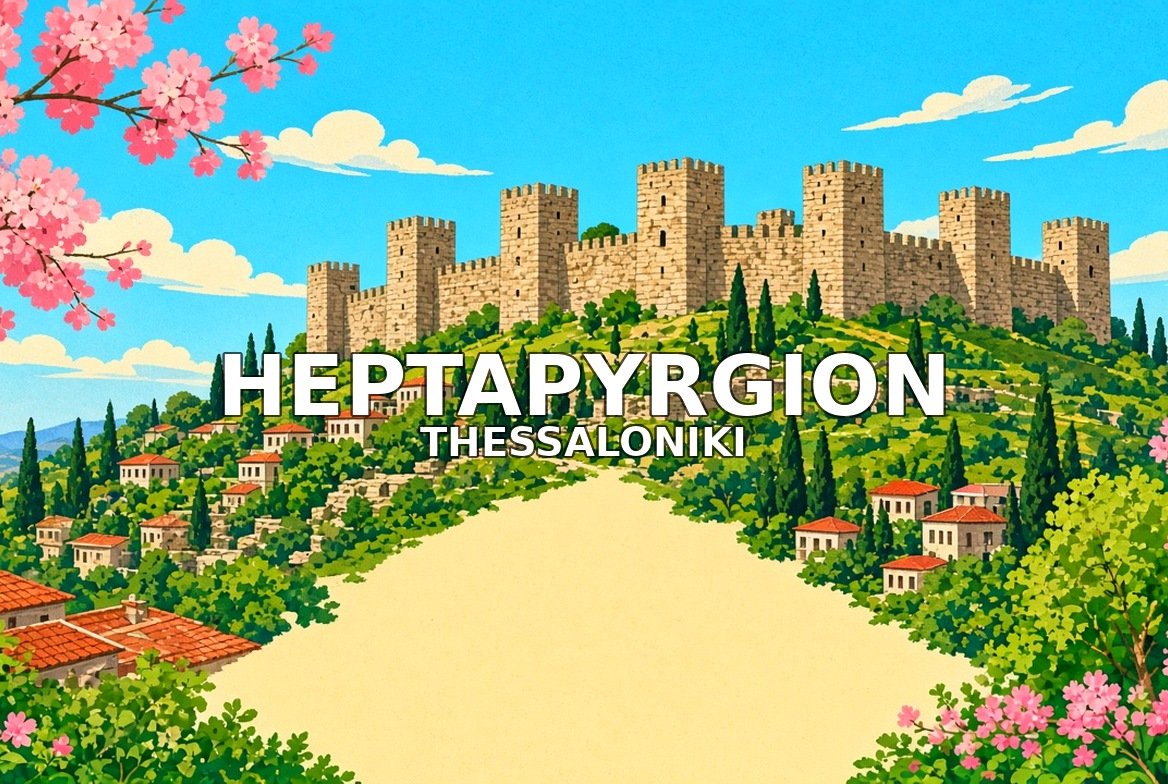
High above the rest of the Thessaloniki walking tour, the Heptapyrgion, also called Yedi Kule, is the fortress at the top of the acropolis. Its name means Fortress of Seven Towers, but it has ten. The northern towers probably date from the late Roman walls of the late 4th century, and the southern half was likely added in the 12th century. An inscription over the gate records works in 1431 by Çavuş Bey, the first Ottoman governor, right after the conquest. In the 1890s the fortress became a prison, notorious in rebetiko songs and used for political prisoners in the 20th century, and it stayed a prison until 1989. Restoration began in 1990, and from its towers you look over the walls and the whole city. Free entry; check opening hours before you go.
Walk this order. The fortress of seven towers → the Byzantine walls → the Ottoman gate → the Yedi Kule prison → the towers and views → taxi or bus down to Modiano Market in the centre.
03 · Tour · videos inside this sight
Fortress of Seven Towers
Byzantine Walls
The Ottoman Gate
Yedi Kule Prison
Towers and Views
Advertisement
Ad slot
10. Modiano Market
From stop 9 · about 20 minutes by taxi or bus down to the centre · 45–60 minutes
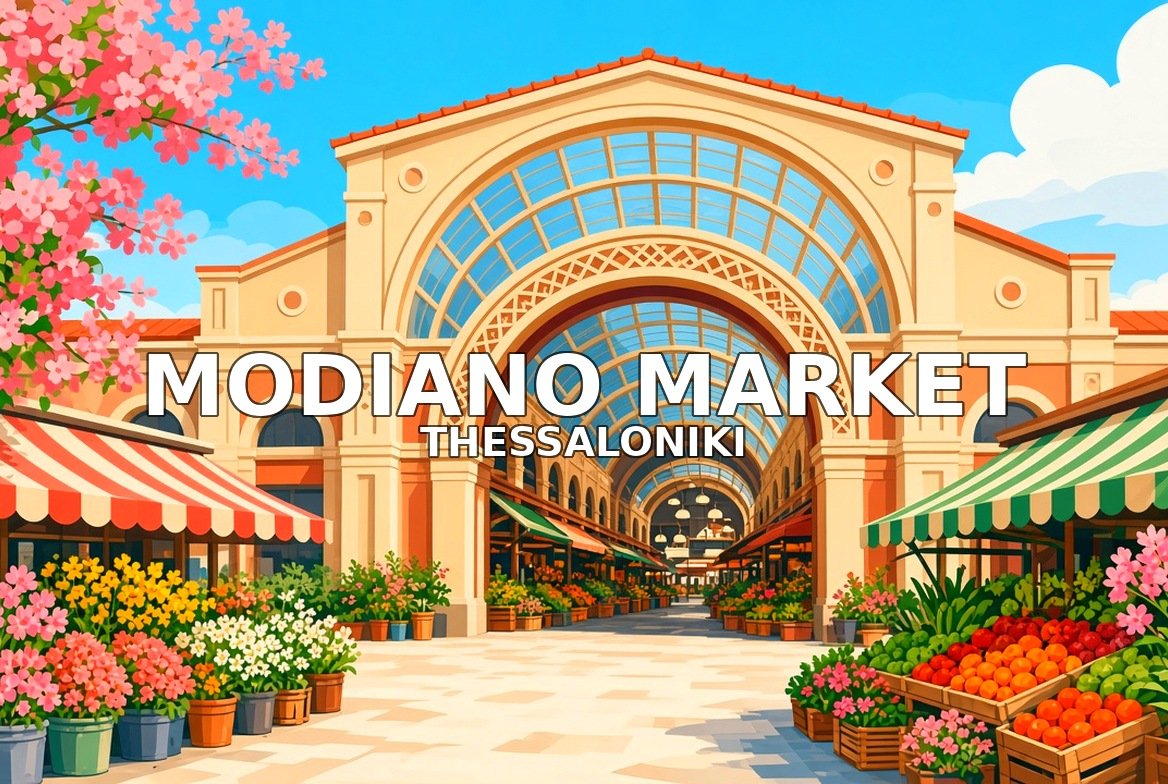
The last stop on this Thessaloniki walking tour, Modiano Market, is the covered market of the city, built between 1922 and 1925 after the Great Fire on the site of the old Talmud Tora synagogue. It is named after its architect, Eli Modiano, of the city’s Italian Jewish Modiano family. Restored, it reopened in December 2022 with food stalls, tavernas and bars under its glass roof. Around it lies the old market district. Kapani, officially Agora Vlali, is the oldest open market in the city and goes back to the 15th century; its lanes sell fruit, fish, olives, spices and sweets. A short walk away, the Bezesteni is a 15th century Ottoman covered market with six lead covered domes that still has shops today, near the flower market. Free to wander; most stalls close in the late afternoon and on Sundays.
Walk this order. Modiano Market → its tavernas and music → Kapani Market → fruit, fish and spices → the Bezesteni and the flower market → 5 minutes south back to Aristotelous Square.
03 · Tour · videos inside this sight
A Market for the City
Tavernas and Music
Kapani Market
Fruit, Fish and Spices
Bezesteni and the Flower Market
Thessaloniki Walking Tour Overview Detail
This Thessaloniki walking tour links 10 sights and 50 short video stops narrated by Clarissa, from the White Tower on the seafront to the fortress at the top of the old town. The notes below turn those stops into practical day plans, with walking order, timing, transport, etiquette and the free sights worth knowing before you go. For official visitor information and events, also check thessaloniki.travel, the official travel guide of the Thessaloniki Tourism Organisation.
Best routes for your Thessaloniki walking tour using the 50 stops
Route 1, the seafront (stops 1, 2 and 8). Start at the White Tower, the symbol of the city, built by the Ottomans after 1430 and once known as the Tower of Blood. Its museum tells the story of Thessaloniki, and the ramp inside leads to a viewing platform over the bay. Walk east along the New Waterfront, finished in 2014, to the statue of Alexander the Great, the Royal Theatre and the Umbrellas sculpture. Then turn back west along Nikis Avenue to Aristotelous Square, laid out after the Great Fire of 1917 by the French architect Ernest Hébrard.
Route 2, Roman and Byzantine Thessaloniki (stops 4, 5 and 7). From Aristotelous Square, walk up to Egnatia Street for the Arch of Galerius, dedicated in 303, with its carved marble panels, and the massive Rotunda just north of it, church, mosque and church again. A few minutes away, Hagia Sophia, built in the 7th century on the model of its namesake in Constantinople, keeps its mosaics of the Ascension and the Virgin and Child. Continue east to the Museum of Byzantine Culture, opened in 1994, for icons, mosaics and painted tombs.
Route 3, the Upper Town (stops 3 and 9). Ano Poli escaped the fire of 1917, so it keeps the stone lanes, small squares and timber-framed houses of the Ottoman city. Climb from the centre or take a short bus or taxi ride, then follow the Byzantine walls, part of a UNESCO World Heritage Site since 1988, past the Byzantine Bath and the village-like streets around Tsinari. At the top stands the Heptapyrgion, the Fortress of Seven Towers, which actually has ten and was a prison until 1989.
Route 4, markets and meze (stops 6 and 10). Finish in the old commercial heart near the port. Modiano Market, built between 1922 and 1925 and reopened in 2022 after restoration, fills its glass-roofed hall with stalls, tavernas and bars, and the lanes of Kapani next door sell fruit, fish, olives and spices. In the evening, walk to Ladadika, the former olive oil quarter, where restored 19th-century warehouses now hold tavernas and ouzeri.
If you only have one day, Routes 1 and 2 give the best Thessaloniki walking tour on foot, because the seafront and the Roman and Byzantine monuments sit within a short walk of each other. A two-day Thessaloniki walking tour works well as Routes 1 and 2 on day one and the Upper Town, Modiano and Ladadika on day two.
For photos, the best free viewpoints on this Thessaloniki walking tour are the walls of Ano Poli, where the whole city and the gulf lie below and, on clear days, Mount Olympus rises about 80 kilometres away, the Umbrellas on the New Waterfront at sunset, and the view along Aristotelous Square to the sea. The White Tower's platform is the best paid view over the bay.
Best times and transport for a Thessaloniki walking tour
Spring and autumn are the most comfortable seasons for a long Thessaloniki walking tour. Summers are hot and humid, so save the climb to Ano Poli for the morning or the evening, and spend the middle of the day in the museums. Winters are mild but can bring the cold northern Vardaris wind, so pack a warm layer. Late October is a lively time, with the city's patron saint's day and national holiday parades.
The seafront promenade is at its best at sunset, when locals come out to walk, cycle and sit on the steps by the water. Check the opening times of the White Tower, the Rotunda, the Museum of Byzantine Culture and the Heptapyrgion on official sources before your Thessaloniki walking tour, since smaller monuments can have shorter hours in winter.
The centre is compact and flat between the sea and Egnatia Street, so walking is the easiest way to get around. City buses connect the centre with Ano Poli and the Heptapyrgion, and the city's metro line, opened in late 2024, runs under the centre. Taxis are plentiful and reasonably priced for the climb to the Upper Town.
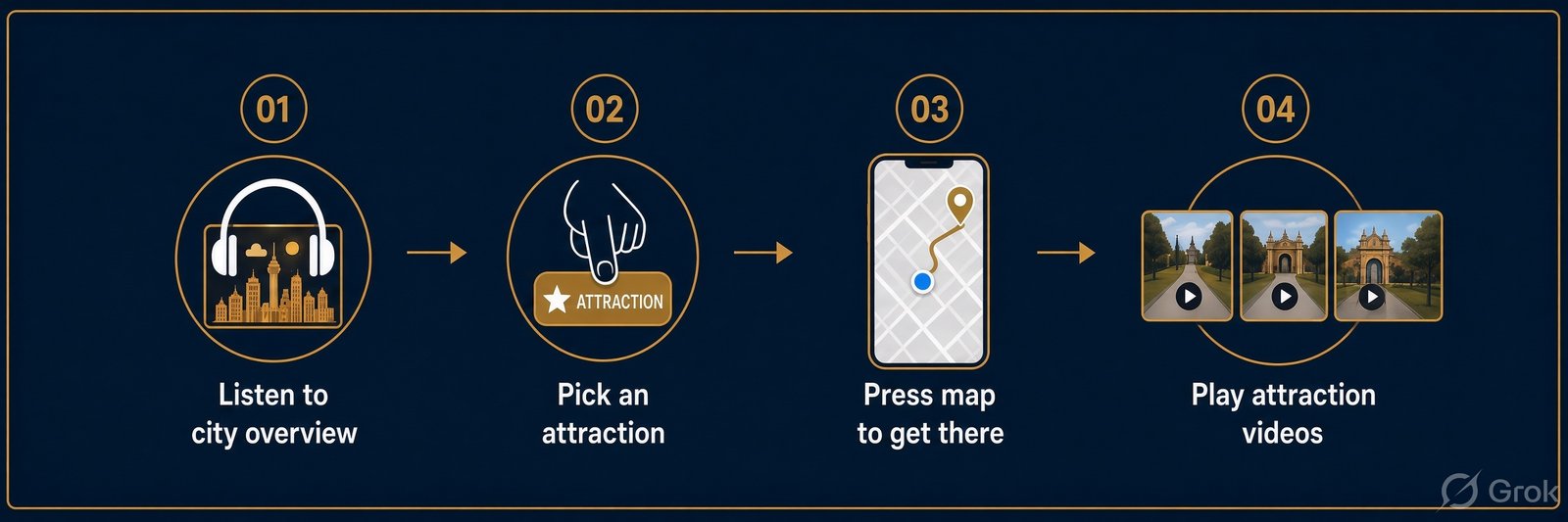
Use the Map button at each stop to check walking time. A good plan is to ride up to the Heptapyrgion and walk downhill through Ano Poli, so the steepest part of your Thessaloniki walking tour is the easy way down.
Etiquette, food and safety on your Thessaloniki walking tour
Hagia Sophia and the other churches are places of worship, so dress modestly, with shoulders and knees covered, keep your voice low and avoid visiting during services. Ask before photographing people in the markets. A simple “Kaliméra” for good morning or “Efcharistó” for thank you is always welcome.
Thessaloniki is known as one of the food capitals of Greece. Start the day with bougatsa, a flaky pastry filled with cream or cheese, or a koulouri, the sesame bread ring sold on street corners. For lunch or dinner, share meze with tsipouro or ouzo in Ladadika or around Modiano and Kapani. Leave room for the city's cream-filled trigona pastries. Rounding up the bill or leaving a small tip is usual for good service on a Thessaloniki walking tour.
Thessaloniki is a safe city, but watch your bag in crowded markets and on busy buses. Cross with care on the main avenues, where traffic is fast, and look out for scooters and bikes on the seafront path.
Wear comfortable shoes, because the lanes of Ano Poli are steep and some are cobbled. Carry water and a hat in summer, and drink often while you climb, since there is little shade on the walls.
Free sights, tickets and accessibility on a Thessaloniki walking tour
Many stops cost nothing at all. The seafront promenade, Aristotelous Square, Ano Poli and its walls, the Arch of Galerius, Ladadika, Modiano Market and Kapani are free to walk, and Hagia Sophia is free to enter as a working church. The page notes that the Heptapyrgion is free to enter too. The White Tower, the Rotunda and the Museum of Byzantine Culture need tickets. That is why this free walking tour Thessaloniki visitors can start at any hour works well: the 50 videos are free, and you only pay for what you choose to enter.
Two more sights sit right on the route between the Rotunda and Ano Poli. The Basilica of Saint Demetrius, the city's patron saint, was rebuilt after the fire of 1917 and is part of the same UNESCO World Heritage Site, with early Christian mosaics and a crypt below. Nearby, the excavated Roman Forum lies below street level, and you can see much of it from the railings around the site, a good free extra on a long Thessaloniki walking tour.
Greek state museums and monuments sometimes offer reduced or free entry for young visitors and on certain days, but the rules change. Always confirm current prices, free days and opening hours on official sources before your Thessaloniki walking tour.
For accessibility, the seafront promenade is long, flat and smooth, which makes it the easiest stop for wheelchair users and strollers, and Aristotelous Square and the area around the Arch of Galerius are level too. Ano Poli and the Heptapyrgion are steep, with uneven paving and steps, so take a taxi to the top if walking uphill is hard.
Yes. All 50 video stops on this Thessaloniki walking tour are free to watch, and the seafront, Aristotelous Square, Ano Poli, the Arch of Galerius, Ladadika and the markets are free to walk. You only pay for the sights you choose to enter, such as the White Tower, the Rotunda or the Museum of Byzantine Culture. It is a genuine free walking tour Thessaloniki visitors can follow at their own pace.
How long does the Thessaloniki walking tour take?
Allow two days to see everything properly: one for the seafront and the Roman and Byzantine monuments, and one for Ano Poli, the Heptapyrgion, Modiano Market and an evening in Ladadika. With one day, follow Routes 1 and 2.
Where does the Thessaloniki walking tour start?
It starts at the White Tower on the seafront, with The Symbol of Thessaloniki video. You can join at any stop, because each one has its own Map button and five short videos.
Is the Thessaloniki walking tour suitable for children and wheelchair users?
Yes, with some planning. Children enjoy the White Tower, the seafront and the markets. Wheelchair users will find the waterfront promenade and Aristotelous Square the easiest stops, while Ano Poli and the Heptapyrgion are steep and best reached by taxi.
Do I need an app or mobile data for the Thessaloniki walking tour?
You don't need an app. Open this page in your phone's browser and play the videos as you walk. The videos stream, so use mobile data or café Wi-Fi, or watch them at your hotel the night before.