Florence Walking Tour Overview Detail
This Florence walking tour links 10 sights and 50 short video stops narrated by Clarissa, from the Duomo and the Baptistery to Piazza della Signoria, the Uffizi, Ponte Vecchio, Michelangelo’s David, Santa Croce, the Pitti Palace and Piazzale Michelangelo. The notes below group the stops into walkable routes and add the timing, transport, etiquette and ticket details that make the city of the Renaissance easier to enjoy. For official events and visitor information, also check Feel Florence, the official tourism website of the City of Florence.
Best routes for your Florence walking tour using the 50 stops
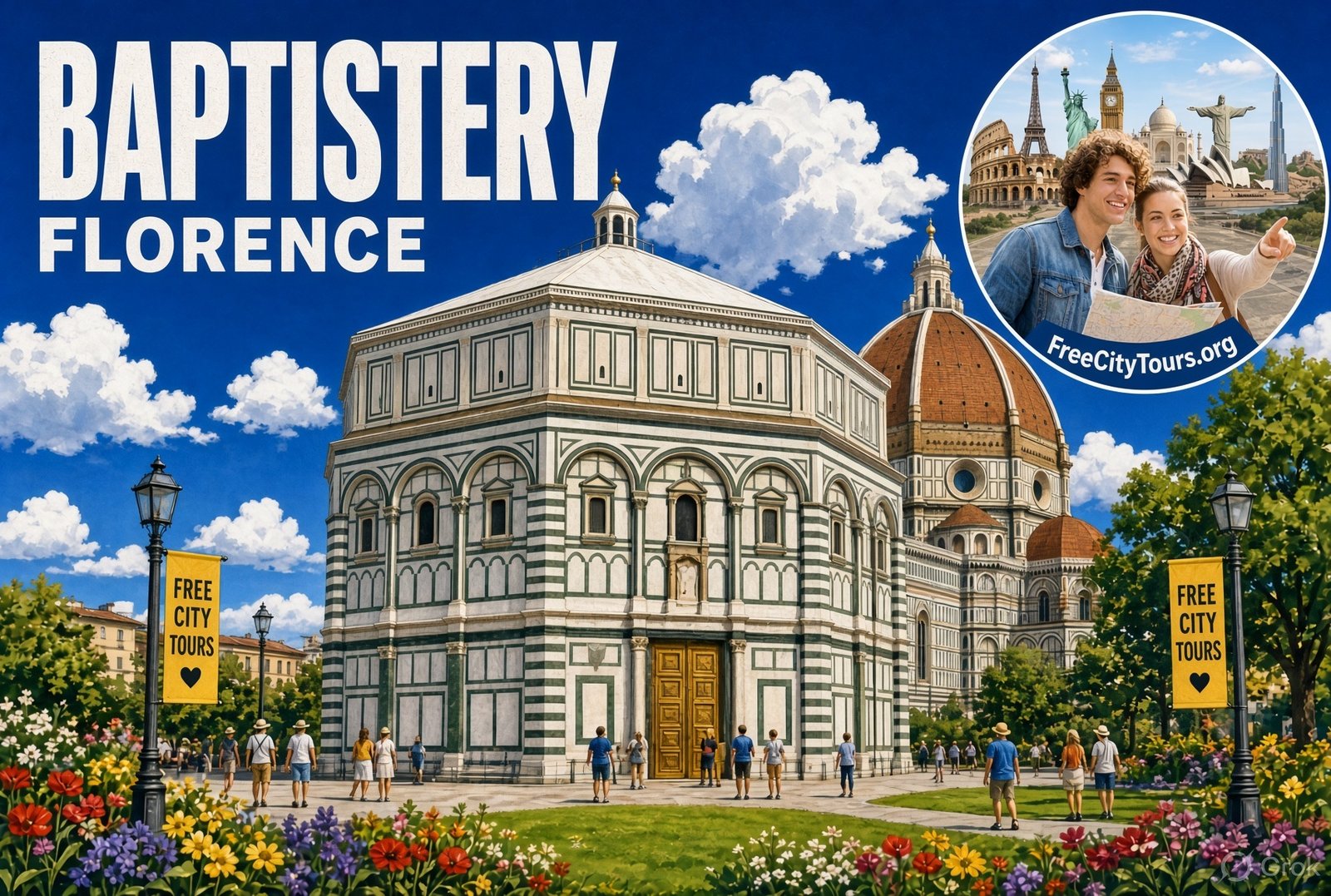
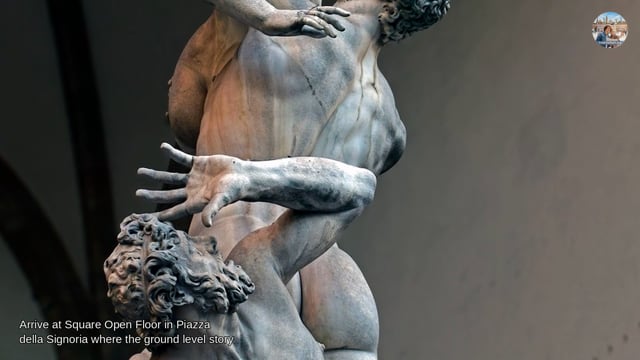
Route 1, the Duomo and the civic heart (stops 1 to 4). Start early at Piazza del Duomo, where the videos cover the cathedral’s marble west facade, the nave, the base of the dome climb and Brunelleschi’s cupola from outside. Cross to the Baptistery of St John for the Gates of Paradise, the octagon and the golden mosaic dome. Walk down Via dei Calzaiuoli to Piazza della Signoria for the Neptune Fountain, the Loggia dei Lanzi and the copy of David, and step into Palazzo Vecchio for the Michelozzo courtyard, the Salone dei Cinquecento and the Map Room.
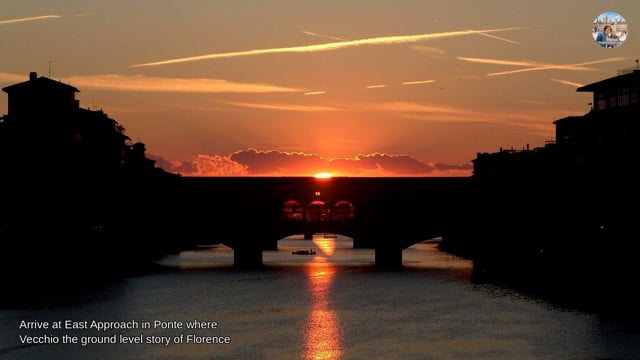
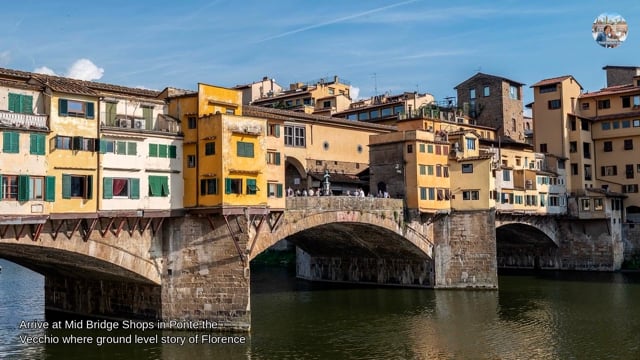
Route 2, the Uffizi and the river (stops 5 and 6). From Palazzo Vecchio it is a few steps into the courtyard of the Uffizi, where the videos cover the corridor, the approach to the Botticelli rooms, the Tribune and the windows over the Arno. Walk on to Ponte Vecchio, with its goldsmiths’ shops and the Vasari Corridor running overhead, and cross into the Oltrarno. This short stretch is the most famous part of any Florence walking tour, so walk it early or late.
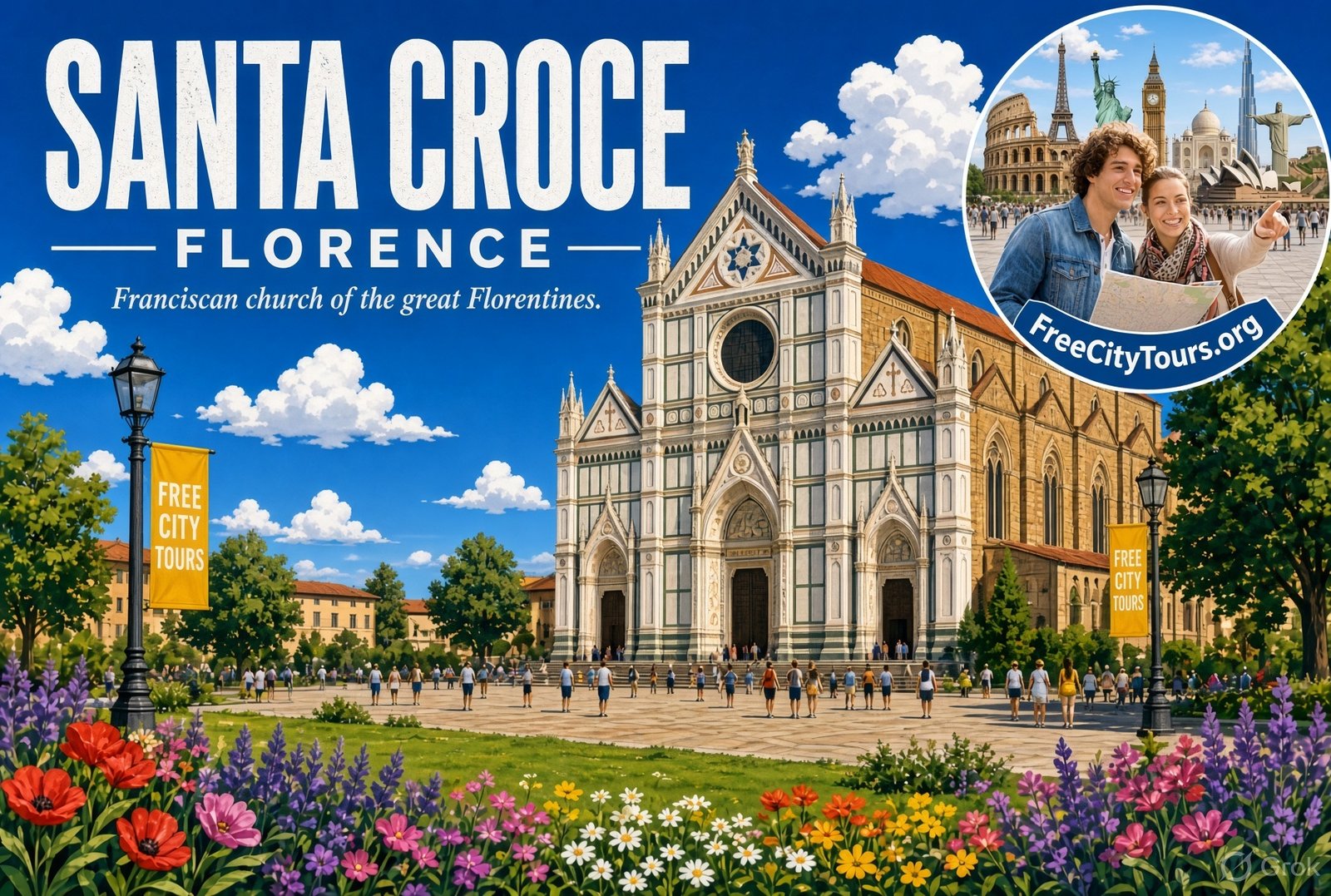
Route 3, David and Santa Croce (stops 7 and 8). Book a timed slot at the Accademia Gallery to see Michelangelo’s David, passing the unfinished Prisoners on the way to the Tribune, and look into the musical instruments wing. Then walk across the centro storico to the Basilica of Santa Croce, the great Franciscan church, for its marble facade, the tombs of Michelangelo and Galileo, the Pazzi Chapel and the cloisters.
Route 4, the Oltrarno (stops 9 and 10). Cross the river to Palazzo Pitti for the palace courtyard, the galleries and the Boboli Gardens, with the amphitheatre and the Neptune fountain. Then walk or ride up to Piazzale Michelangelo for the great view over the domes, towers and bridges, ideally at sunset. If you only have one day, Routes 1 and 2 make the best free walking tour Florence offers on foot, from the Duomo to Ponte Vecchio.
Between the stops, Florence rewards a wander. The Mercato Centrale near San Lorenzo is full of food stalls, the Oltrarno streets around Santo Spirito are home to artisans’ workshops, and the small church of San Miniato al Monte, a short climb above Piazzale Michelangelo, has one of the finest Romanesque facades in Tuscany and a quieter view over the city.
For photos, the best free viewpoints on this Florence walking tour are Piazzale Michelangelo, the Ponte Santa Trinita looking at Ponte Vecchio, the terrace of San Miniato al Monte and the corner of Piazza del Duomo where the dome and Giotto’s bell tower line up. For a view from above, the dome and the bell tower climbs are ticketed.
A three-day Florence walking tour works well as Routes 1 and 2 on day one, Route 3 on day two and Route 4 on day three, finishing at Piazzale Michelangelo for sunset. If it rains, move the Uffizi, the Accademia and the Pitti galleries forward, and save the Boboli Gardens and the viewpoints for a dry spell.
Best times and transport for a Florence walking tour
Spring and autumn are the best seasons for a Florence walking tour, with mild weather and soft light on the stone. Summer is hot and very busy, especially from June to August, so start early and rest in the middle of the day. Winter is cooler and quieter, with shorter queues at the museums, and the Christmas lights make the centro storico lovely after dark.
Start early at the Duomo and Ponte Vecchio, before the day trippers arrive, and book timed tickets for the Uffizi, the Accademia, the dome climb and Palazzo Pitti well ahead. Many state museums close on Mondays, so check each official website for opening times before you plan each day of your Florence walking tour.
The historic centre is compact and largely pedestrianised, so most of this route is easiest on foot. Buses and the tram link the station, the airport and the edges of the centre, and bus routes climb to Piazzale Michelangelo if you don’t want to walk up. From Florence Airport, the T2 tram runs to the city centre near Santa Maria Novella station. Cars need permits to enter the restricted traffic zone, so leave a hire car outside the centre.
If you have an extra day, regional trains from Santa Maria Novella reach Pisa, Lucca and Arezzo in about an hour or a little more, and buses run to Siena and into the Chianti hills. Fiesole, on the hill above the city, is a short bus ride away, with a Roman theatre, quiet lanes and one of the best views back over the domes and the valley of the Arno.
Florence is an easy day trip from Bologna, Pisa or Siena, but staying overnight lets you see the city early and late, when it is calmest. Every stop on this Florence walking tour has its own map link, so you can start wherever your hotel or train is.
Etiquette, food and safety on your Florence walking tour
In churches, including the Duomo and Santa Croce, cover your shoulders and knees and speak quietly; staff may refuse entry to visitors in very short shorts or sleeveless tops. Don’t sit and eat on church steps or in the doorways of historic buildings, because the city discourages it and can fine people. A simple “buongiorno” and “grazie” go a long way in shops and cafés.
Food is a highlight of any Florence walking tour. Try a schiacciata sandwich, ribollita soup, lampredotto from a street stall, a bistecca alla fiorentina to share and gelato from a proper gelateria. The Mercato Centrale is good for a casual lunch, and the Oltrarno has some of the best trattorias. Restaurants often add a cover charge, the coperto, so tipping is not expected, though rounding up is welcome.
Florence is generally safe, but pickpockets work the crowds around the Duomo, Ponte Vecchio, the station and on buses. Keep your bag zipped and in front, and be wary of anyone who tries to tie a bracelet on your wrist or asks you to sign a petition. Watch out for scooters and cyclists in the narrow streets. In an emergency, dial 112.
Tickets, free sights and accessibility on a Florence walking tour
Several stops on this Florence walking tour need tickets. The Uffizi, the Accademia, Palazzo Vecchio, Santa Croce and the Pitti Palace with the Boboli Gardens all charge for entry, and the Baptistery, the dome and the bell tower are covered by the cathedral’s combined passes. Book online for timed entry, because queues are long without a booking. Check each official website for current prices, opening times and any free days.
Plenty is free. The cathedral itself is free to enter, and Piazza del Duomo, Piazza della Signoria with the Loggia dei Lanzi, Ponte Vecchio, Piazzale Michelangelo and San Miniato al Monte cost nothing to visit. Italy’s state museums have run free entry days in the past, so check whether one falls during your Florence walking tour.
For accessibility, the centro storico is mostly flat but paved with uneven stone slabs, and the pavements are narrow and busy. The Uffizi, the Accademia and the Pitti Palace have lifts and accessible routes, while the dome and bell tower climbs are only by stairs. The Boboli Gardens and the climb to Piazzale Michelangelo are steep, so a bus or taxi helps. Check each venue’s accessibility page before you visit.
After this Florence walking tour, carry on with more free walks in Italy: the Rome walking tour, the Bologna walking tour, a short train ride north, the Venice walking tour and the Milan walking tour. You can browse every city on the Free City Tours home page.
Florence walking tour FAQ
Is this Florence walking tour really free?
Yes. All 50 video stops on this Florence walking tour are free to watch, and the cathedral, Piazza della Signoria, Ponte Vecchio and Piazzale Michelangelo are free to visit. The Uffizi, the Accademia, the dome climb and the Pitti Palace charge, so this is a free walking tour Florence visitors can shape to any budget.
How long does the Florence walking tour take?
Allow two or three days. The Duomo, Piazza della Signoria, the Uffizi and Ponte Vecchio fill one day, the Accademia and Santa Croce another, and the Oltrarno with Piazzale Michelangelo makes a relaxed third day.
Where does the Florence walking tour start?
It starts at the Duomo on Piazza del Duomo, about ten minutes’ walk from Santa Maria Novella station. You can join at any stop, because each one has its own map link and five short videos.
Is the Florence walking tour suitable for children and wheelchair users?
Yes. Children enjoy the dome climb, the Boboli Gardens and gelato on Ponte Vecchio. Wheelchair users will find the main museums accessible, but should expect uneven paving and use a taxi or bus for Piazzale Michelangelo.
Do I need an app or mobile data for the Florence walking tour?
You don’t need an app. Open this page in your phone’s browser and play the videos as you walk. The videos stream, so use mobile data or free Wi-Fi in cafés and museums.