Nice Walking Tour: 50 Free Video Stops

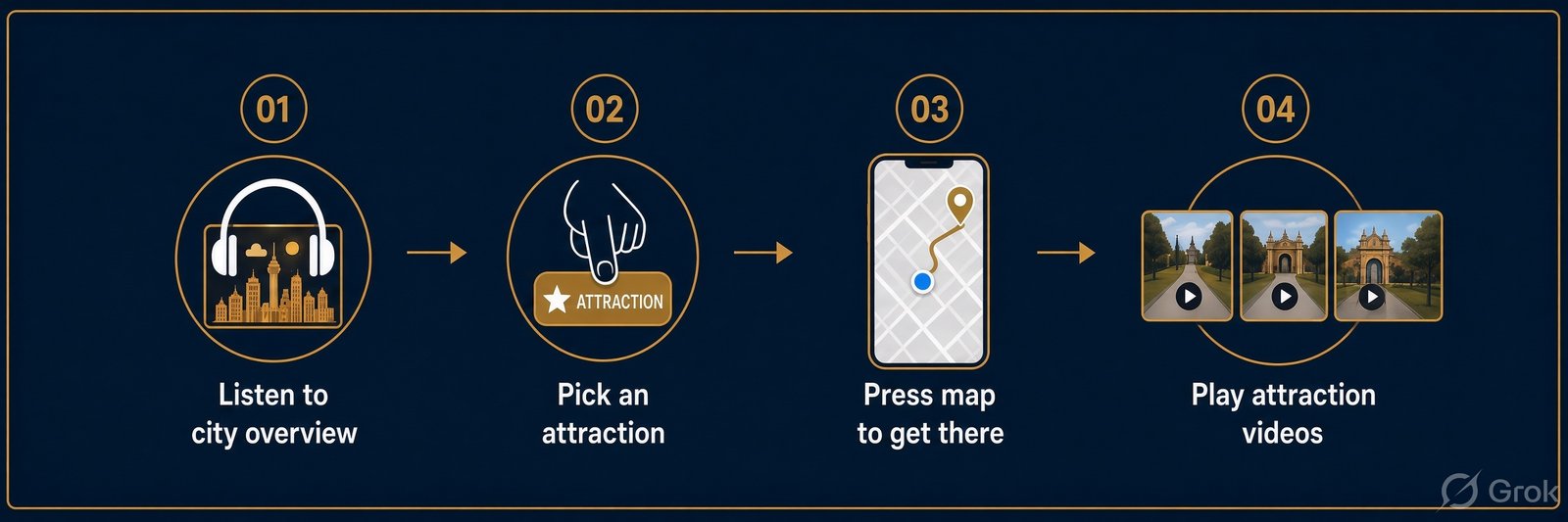
How to tour Nice
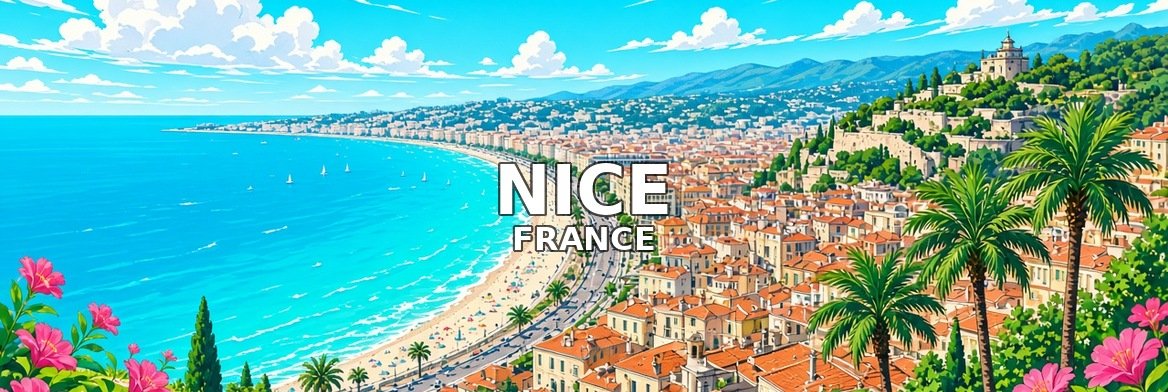
Nice is the capital of the French Riviera, on the Bay of Angels between the Alps and the Mediterranean. Italian until eighteen sixty, it mixes French elegance with Italian colour, and it enjoys some three hundred days of sunshine a year.
The city is easy to walk. The Promenade des Anglais runs along the sea, the Old Town and the Cours Saleya sit at its eastern end below Castle Hill, the port lies beyond the hill, and the Matisse Museum and the Russian Cathedral are a short ride inland.
On this Nice walking tour you follow the Promenade des Anglais, explore the Old Town, climb the Colline du Chateau, visit Nice Cathedral and the Cours Saleya market, see the Musee Matisse and the Russian Orthodox Cathedral, stroll the Port of Nice and Parc Phoenix, and finish in Villefranche sur Mer.
1. Nice walking tour: Promenade des Anglais
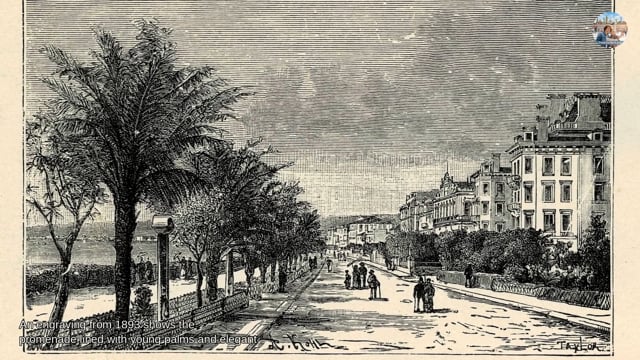
Hotel Negresco · start here · 60–90 minutesOn this Nice walking tour, the Promenade des Anglais runs for about 7 kilometres along the Baie des Anges, from the airport in the west to the Quai des États-Unis below the old town. It began in 1822–1824 as a modest path paid for by the English who spent their winters in Nice, with the Reverend Lewis Way among its backers, and the city later widened it into the grand seafront avenue of today.
The blue chairs along the railing and the pebble beach below are the classic picture. Belle Époque palaces line the city side, led by the Hotel Negresco, opened in 1912, with its pink dome designed by Édouard-Jean Niermans, and the Art Deco front of the Palais de la Méditerranée. Locals simply call it “La Prom”; it is busiest with walkers, cyclists and skaters at sunset and on Sundays. Free and open all day.
Walk this order on the Nice walking tour. The Baie des Anges view → the seafront walk → the blue chairs and the pebble beach → the Belle Époque palaces and the Negresco → the story of the Promenade → 15 minutes east along the Quai des États-Unis into the old town.

2. Vieux Nice
From stop 1 · 15 minutes on foot · 60–90 minutesAlong this Nice walking tour, Vieux Nice, the old town, is packed between the Colline du Château to the east, the sea to the south and the covered Paillon river to the west, where Place Masséna now stands. Its tall ochre and red houses and narrow lanes keep the Baroque look of the time when Nice belonged to the House of Savoy, and locals still call it the “babazouk”.
Try socca, the thin chickpea pancake of Nice, at one of the squares. The Palais Lascaris on Rue Droite, built in the 17th century for the Lascaris-Vintimille family, has a painted Genoese Baroque staircase and fresco ceilings, and today holds a museum of about 500 old musical instruments. Near its edges stand the Opera of Nice and the old Palais Communal. The lanes are free to walk; the bars and restaurants fill up at night.
Walk this order on the Nice walking tour. The rooftops of Vieux Nice → the narrow lanes → the squares and a socca stop → the Palais Lascaris → the Opera and the Palais Communal → 10 minutes east to the lift or the steps up the Colline du Château.


3. Colline du Château
From stop 2 · 10 minutes on foot, by the steps or the lift · 60–90 minutesOn this Nice walking tour, the Colline du Château is a limestone rock about 93 metres high between the old town and the port. For seven centuries it carried the castle of Nice and the town’s first cathedral, until French troops took it in 1705 and Louis XIV had the fortifications razed in 1706. Today it is a free public park. The Bellanda Tower stands on the site of an old corner tower above the sea, and the lift from the waterfront arrives next to it.
The artificial waterfall was built in 1885 on the ruins of the keep, as the overflow of the town’s first water supply. Near the top you pass the excavated foundations of the medieval cathedral and mosaics on the terraces, and the summit gives the best view over the Baie des Anges and the port. The Château cemetery on the northern slope is the resting place of Gaston Leroux, author of The Phantom of the Opera.
Walk this order on the Nice walking tour. The Bellanda Tower → the castle waterfall → the cathedral ruins and the mosaics → the summit panorama → the Château cemetery → back down the steps into the old town to Place Rossetti.


4. Nice Cathedral
From stop 3 · 10 minutes on foot · 20–30 minutesAlong this Nice walking tour, Nice Cathedral, the Cathédrale Sainte-Réparate, stands on Place Rossetti in the heart of the old town. It became the seat of the bishops of Nice in 1590, and the present Baroque church was built between 1650 and 1699 to plans by Jean-André Guibert, modelled on Santa Susanna in Rome. Its dome is covered in glazed coloured tiles in the Genoese style, and the bell tower was added between 1731 and 1757.
Inside are ten side chapels, an ornate choir and an organ above the entrance. The cathedral is dedicated to the Virgin Mary and to Saint Reparata, a young martyr from Caesarea in Palestine. Legend says her body was laid in a boat that angels guided across the sea to Nice, which is why the bay is called the Baie des Anges. Free entry; dress respectfully and keep quiet during services.
Walk this order on the Nice walking tour. The facade on Place Rossetti → the nave and the dome → the choir and the organ → the side chapels → the legend of Saint Reparata → 3 minutes south to the Cours Saleya.


5. Cours Saleya
From stop 4 · 3 minutes on foot · 45–60 minutesOn this Nice walking tour, the Cours Saleya is the main pedestrian street of the old town, running parallel to the Quai des États-Unis. Once the fashionable promenade of Nice, it has held the town’s market for flowers, fruit and vegetables since the 1860s. The flower and produce stalls are there every morning except Monday, when an antiques and flea market takes over, and in the evening the café and restaurant terraces fill the square.
On the Cours stands the Chapelle de la Miséricorde, built from 1747 to 1770 by the Turin architect Bernardo Vittone and seen as the masterpiece of Baroque Nice. At the eastern end, on Place Charles-Félix, the building where Henri Matisse lived and painted from 1921 to 1938 looks down on the market. Free to walk; come before noon for the market.
Walk this order on the Nice walking tour. The flower market → the fruit and vegetable stalls → the antiques, cafés and evenings → the Chapelle de la Miséricorde → the old Cours and Matisse’s house → about 30 minutes north by bus to Cimiez.


6. Musée Matisse
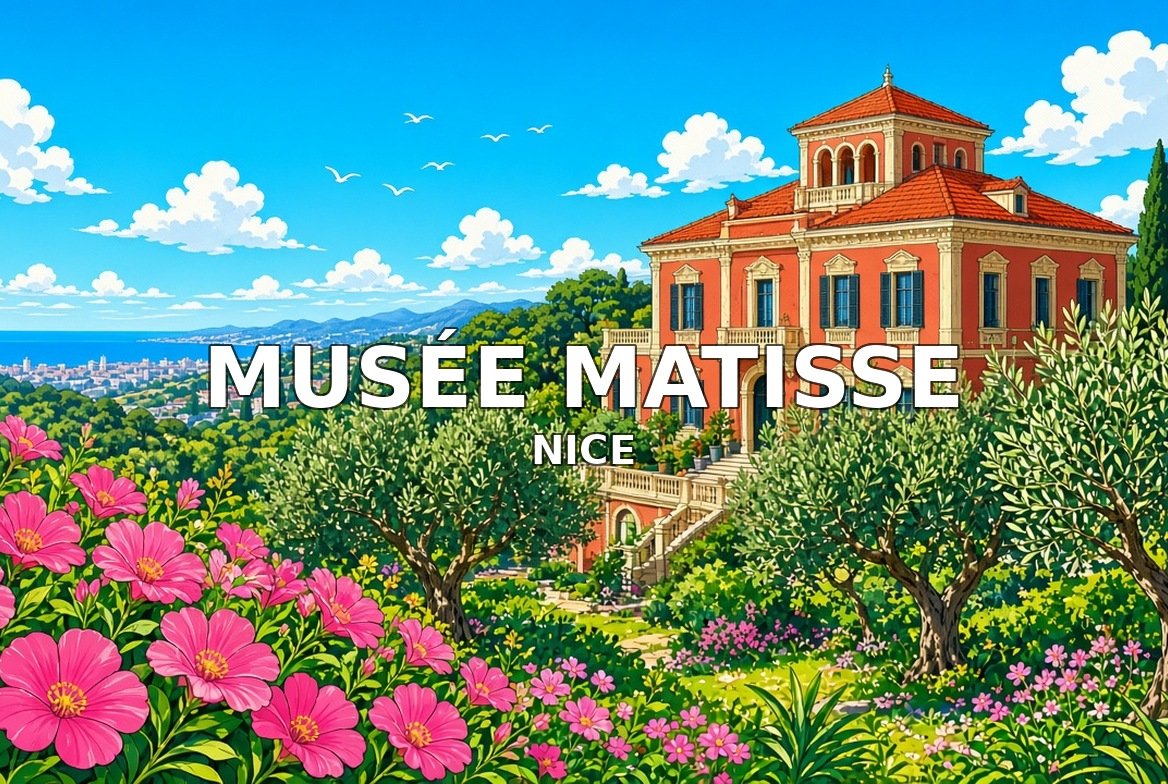
From stop 5 · about 30 minutes by bus up to Cimiez · 90–120 minutesAlong this Nice walking tour, the Musée Matisse sits on the hill of Cimiez in the Villa des Arènes, a red Genoese villa built between 1670 and 1685, among olive groves. It opened in 1963 and traces the whole career of Henri Matisse, who lived and worked in Nice from 1917 until his death in 1954. Thanks to gifts from the painter and his family, it holds 68 paintings and paper cut-outs, 236 drawings, 218 prints and 57 sculptures.
Next to the park lie the ruins of Cemenelum, the Roman capital of the province of the Maritime Alps, with an arena and baths. Across the avenue stands the Excelsior Régina, the grand hotel built for Queen Victoria’s winter stays, where Matisse lived from 1938 until his death. A short walk away is the Cimiez Monastery, used by Franciscan friars since 1546, with paintings by Louis Bréa in its church and a rose garden. Matisse and Raoul Dufy are buried in the cemetery beside it. The park, gardens and cemetery are free; the museum charges entry.
Walk this order on the Nice walking tour. The Villa des Arènes → Matisse in Nice → from the early work to Fauvism → Roman Cemenelum and the Regina → the Cimiez Monastery and Matisse’s grave → about 30 minutes by bus or downhill on foot to the Russian Cathedral.
7. Russian Orthodox Cathedral
From stop 6 · about 30 minutes by bus or on foot · 30–45 minutesOn this Nice walking tour, the St Nicholas Orthodox Cathedral stands at the end of the Avenue Nicolas II, about 10 minutes’ walk from Nice-Ville station. In 1865 the Tsarevich Nicholas Alexandrovich, son and heir of Tsar Alexander II, died young in the Villa Bermond, which his father had rented. The Tsar bought the estate and built a memorial chapel where the villa had stood.
In 1903 work began nearby on the cathedral, designed by Mikhail Preobrazhensky in the style of 16th century Moscow churches, and it was opened in 1912. Its five onion domes, the highest rising to 52 metres, are covered in green glazed tiles above walls of brick, marble and majolica. Inside, the iconostasis and icons glow with gold. Entry fee; shoulders and knees covered, and quiet inside.
Walk this order on the Nice walking tour. The Avenue Nicolas II and the park → the five onion domes → the brick, marble and majolica → the iconostasis and the interior → the story of the Tsarevich and the cathedral → about 25 minutes by tram 2 east to Port Lympia.




8. Port of Nice
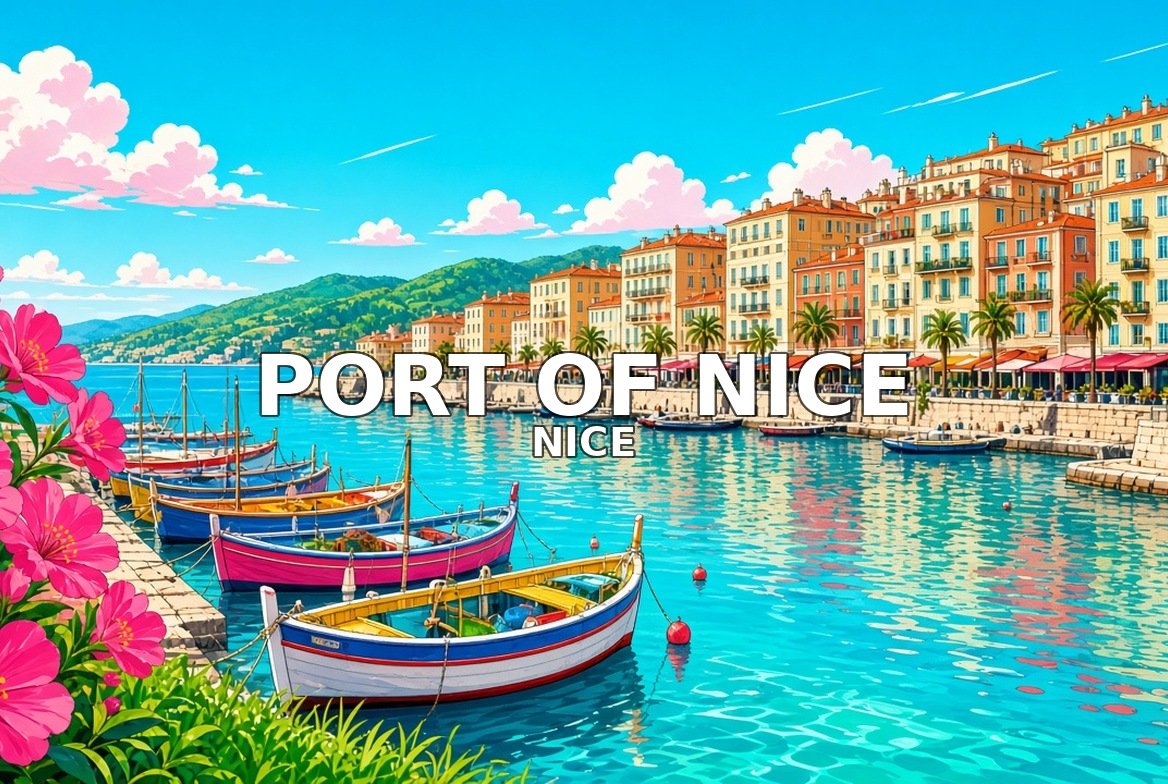
From stop 7 · about 25 minutes by tram 2 to Port Lympia · 45–60 minutesAlong this Nice walking tour, Port Lympia, the port of Nice, lies on the far side of the Colline du Château. King Charles Emmanuel III of Sardinia ordered it in 1748, and its building went on for more than a century and a half. Today it has more than 500 berths: the inner basin is for the traditional pointu fishing boats and yachts, while ferries leave for Corsica, the nearest island to mainland France.
At the head of the port, Place Île-de-Beauté is crowned by Notre-Dame du Port, built from 1840 to 1853 by Joseph Vernier, whose white columned front was added in 1896. On the south side, the coastal road turns the corner of the Colline du Château at Rauba-Capeu, Niçois for “hat thief”, a nod to the wind there, with the lighthouse on the outer jetty. Rue Cassini links the port to Place Garibaldi. Free and open all day.
Walk this order on the Nice walking tour. The Port Lympia basin → the pointus, ferries and cargo → Notre-Dame du Port → Rauba-Capeu and the lighthouse → the old port and Place Garibaldi → about 30 minutes by tram 2 west toward the airport for Parc Phoenix.
9. Parc Phoenix
From stop 8 · about 30 minutes by tram 2 toward the airport · 90–120 minutesOn this Nice walking tour, Parc Phoenix is a botanical and zoological park of 7 hectares on the Promenade des Anglais near the airport, opened in 1990. It is named after the Canary Island date palm, Phoenix canariensis, the most common palm on the Riviera. Its centrepiece, the Green Diamond, is one of the largest greenhouses in Europe: 7,000 square metres under glass, 25 metres high, with seven climates side by side, including tropical rainforest, orchids and Chilean flamingos.
Outside, about 2,500 plant species surround a large lake where pelicans, swans, geese and ducks swim. Spectacled caimans live in the Louisiana garden, and there are otters and aquariums as well. Beside the lake stands the Museum of Asian Arts, opened in 1998 in a white marble and glass building by the Japanese architect Kenzo Tange. Entry fee for the park.
Walk this order on the Nice walking tour. The Green Diamond greenhouse → the lake and gardens → the ducks, geese and flamingos → the caimans, otters and aquariums → the Museum of Asian Arts → tram 2 back to the centre, then a short train ride east to Villefranche-sur-Mer.




10. Villefranche-sur-Mer
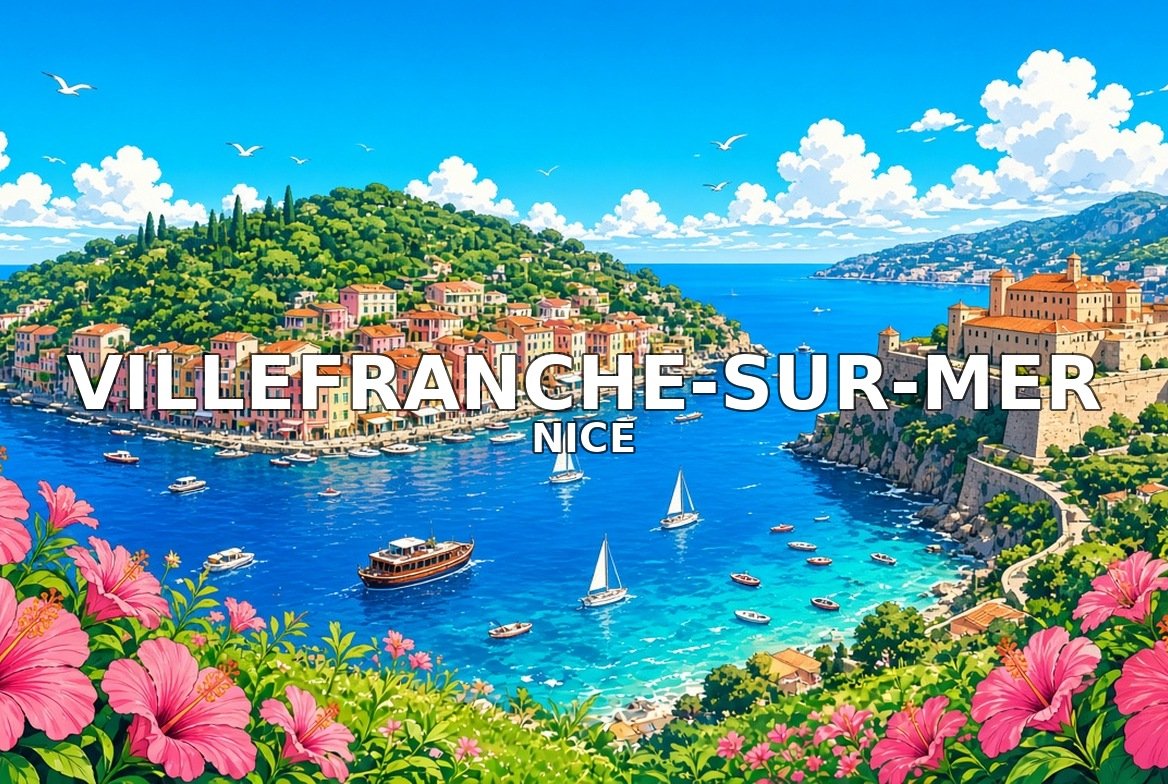
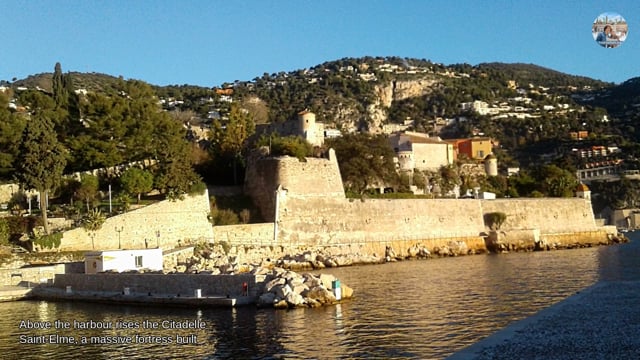
From stop 9 · tram 2 to the centre, then about 7 minutes by train from Nice-Ville · 2–3 hoursAlong this Nice walking tour, Villefranche-sur-Mer lies just east of Nice on one of the deepest natural harbours of the Mediterranean, up to 98 metres deep between Cap de Nice and Cap Ferrat. After the Franco-Ottoman siege of Nice in 1543, Duke Emmanuel Philibert of Savoy built the Citadelle Saint-Elme in the 1550s to guard the bay; today it houses the town hall, museums and sculptures by Antoniucci Volti.
On the waterfront, the fishermen’s Chapelle Saint-Pierre was painted inside and out by Jean Cocteau in 1957. Behind the harbour, the Rue Obscure is a covered street 130 metres long dating from 1260, and the Baroque church of Saint-Michel was built in the 1750s. Cruise ships and warships, including those of the US Sixth Fleet, still anchor in the roadstead. The town is free to walk; the Cocteau chapel charges a small fee.
Walk this order on the Nice walking tour. The bay of Villefranche → the harbour and the fishermen → the Citadelle Saint-Elme → the Rue Obscure and Saint-Michel → the warships in the roadstead → end of the tour; trains and buses go back to Nice in about 10 minutes.