
Fez Walking Tour: 50 Free Video Stops

Free City ToursFez walking tour · freecitytours.org
How to tour Fez
Fez is the old capital of the medina. Borj Nord sits on the hill above it. Bab Bou Jeloud is the blue gate. The two madrasas and Al Qarawiyyin sit inside the lanes.
Chouara Tannery is the open dye pits. Place Seffarine is the square of the coppersmiths. Bab Rcif is the south gate. The Marinid Tombs close the walk on the hill.
On this walk you start at the fortress, enter by the blue gate, and follow the main street through the schools and the university. The tannery and the square come next. The tombs are the end.
1. Fez walking tour: Borj Nord
Above the medina · start here · 20–30 minutes
Borj Nord is the fortress on the hill north of the old city, with the view over the roofs. Free to walk around.
Walk this order. The Road Up and the Fortress Walls → Battlements and the Weapons Museum → The View Over Fes el Bali → Looking Toward Fes el Jdid → Down Toward Bab Bou Jeloud.

03 · Tour · videos inside this sight

The Road Up and the Fortress Walls

Battlements and the Weapons Museum

The View Over Fes el Bali

Looking Toward Fes el Jdid

Down Toward Bab Bou Jeloud
2. Bab Bou Jeloud
From stop 1 · a short walk · 15–25 minutes
Bab Bou Jeloud is the blue gate into the medina. Free. The blue side faces out.
Walk this order. The Square Outside the Blue Gate → Blue Tiles and the Outer Face → Passing Through the Arch → The Medina Side and First Lanes → On Toward Medersa Bou Inania.

03 · Tour · videos inside this sight

The Square Outside the Blue Gate

Blue Tiles and the Outer Face

Passing Through the Arch

The Medina Side and First Lanes

On Toward Medersa Bou Inania
3. Medersa Bou Inania
From stop 2 · 3 minutes · 30–45 minutes
Medersa Bou Inania is the Marinid school near the gate, with the carved wood and tile. Ticketed.
Walk this order. The Carved Entrance on Talaa Kebira → Courtyard, Fountain and Zellij → Cedar Wood and Stucco Walls → Prayer Hall and the Mihrab → Upper Gallery and Back to the Street.

03 · Tour · videos inside this sight

The Carved Entrance on Talaa Kebira

Courtyard, Fountain and Zellij

Cedar Wood and Stucco Walls

Prayer Hall and the Mihrab

Upper Gallery and Back to the Street
4. Talaa Kebira
From stop 3 · along the street · 30–45 minutes
Talaa Kebira is the main street of the medina, with shops and the covered stretch. Free to walk. Watch the traffic.
Walk this order. The Upper Slope from the Gate → Shops, Goods and Daily Trade → The Covered Stretch of the Street → Talaa Seghira and Side Lanes → Down Toward Al Attarine.

03 · Tour · videos inside this sight

The Upper Slope from the Gate

Shops, Goods and Daily Trade

The Covered Stretch of the Street

Talaa Seghira and Side Lanes

Down Toward Al Attarine
5. Al Attarine Madrasa
From stop 4 · off the street · 20–30 minutes
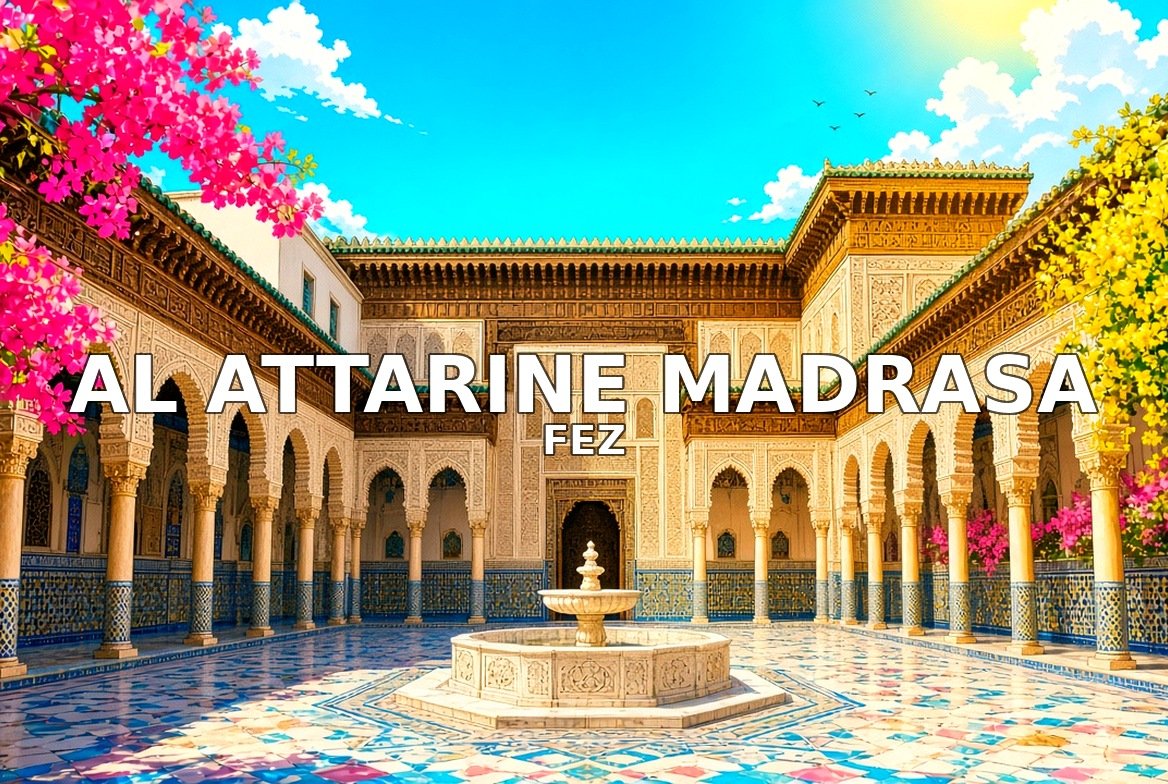
Al Attarine Madrasa is the smaller school near the spice market. Ticketed.
Walk this order. The Lane off the Spice Market → The Courtyard Jewel → Marble, Zellij and Fine Detail → Student Cells and Upper Views → On Toward Al Qarawiyyin.
03 · Tour · videos inside this sight

The Lane off the Spice Market

The Courtyard Jewel

Marble, Zellij and Fine Detail

Student Cells and Upper Views

On Toward Al Qarawiyyin
6. Al Qarawiyyin
From stop 5 · a short walk · 30–45 minutes
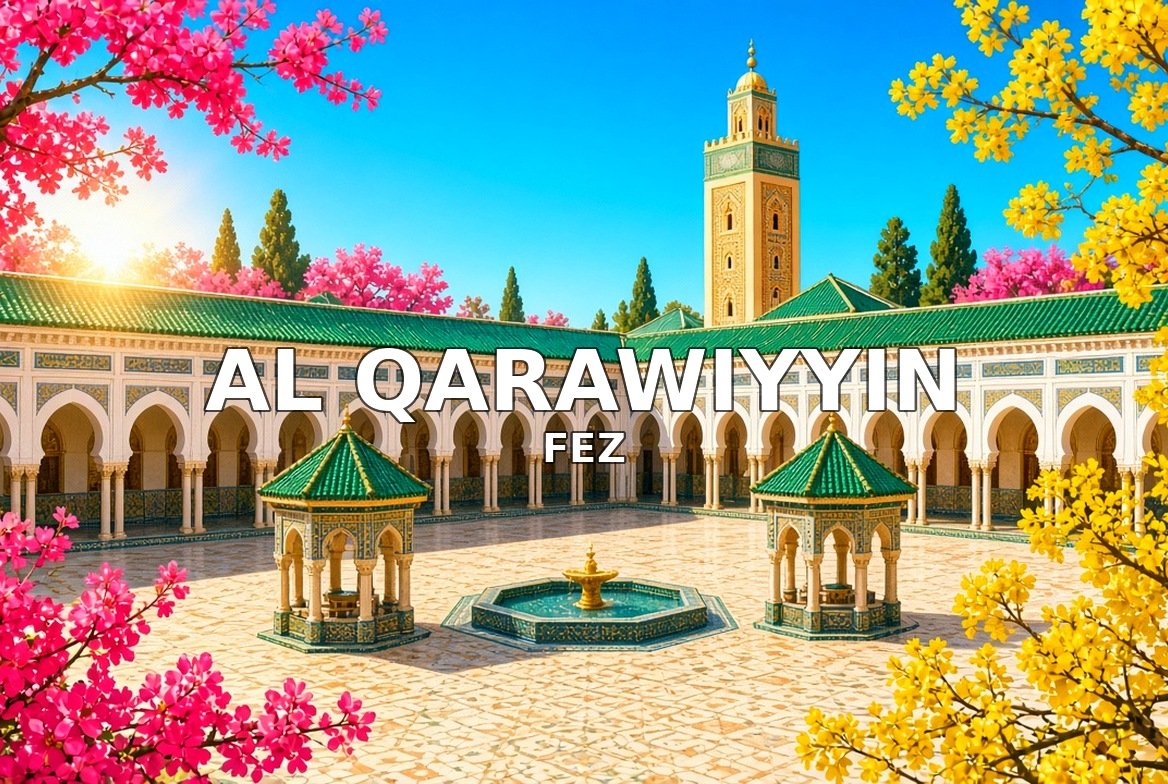
Al Qarawiyyin is the old university and mosque in the heart of the medina. The Qarawiyyin is closed to non-Muslims, so you view its courtyard from the doorway. Dress modestly.
Walk this order. Approach Through the Medina Lanes → Gates and the Mosque Walls → The Courtyard When Open → University, Library and Learning → On Toward Chouara Tannery.
03 · Tour · videos inside this sight

Approach Through the Medina Lanes

Gates and the Mosque Walls

The Courtyard When Open

University, Library and Learning

On Toward Chouara Tannery
7. Chouara Tannery
From stop 6 · a short walk · 20–30 minutes
Chouara Tannery is the open dye pits. The view is from the terraces. Free to look. The smell is strong.
Walk this order. Lanes Into the Leather Quarter → The Terrace Overlook → Dye Pits and Colour → Hides, Labour and Tradition → On Toward Place Seffarine.

03 · Tour · videos inside this sight

Lanes Into the Leather Quarter

The Terrace Overlook

Dye Pits and Colour

Hides, Labour and Tradition

On Toward Place Seffarine
8. Place Seffarine
From stop 7 · 5 minutes · 15–25 minutes
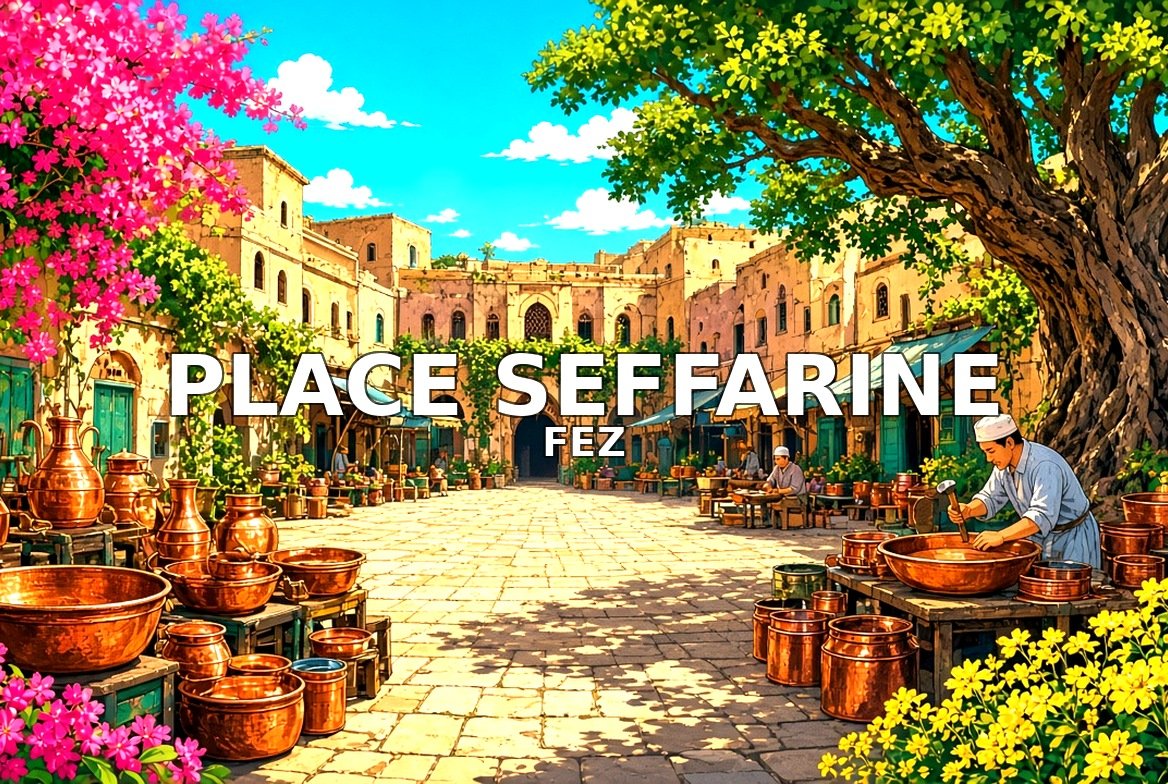
Place Seffarine is the square of the coppersmiths, with the fountain and the noise of the hammers. Free.
Walk this order. Entering the Coppersmiths’ Square → Fountain and Open Space → Workshops and the Sound of Hammers → Vessels, Trays and Daily Metal → On Toward Bab Rcif.
03 · Tour · videos inside this sight

Entering the Coppersmiths’ Square

Fountain and Open Space

Workshops and the Sound of Hammers

Vessels, Trays and Daily Metal

On Toward Bab Rcif
9. Bab Rcif
From stop 8 · a short walk · 15–20 minutes
Bab Rcif is the gate on the south side of the medina. Free.
Walk this order. Lanes Toward the South Gate → The Gate and Its Arch → Outside Toward the Open Streets → River Edge and Neighbourhood Life → The Climb Ahead to the Tombs.
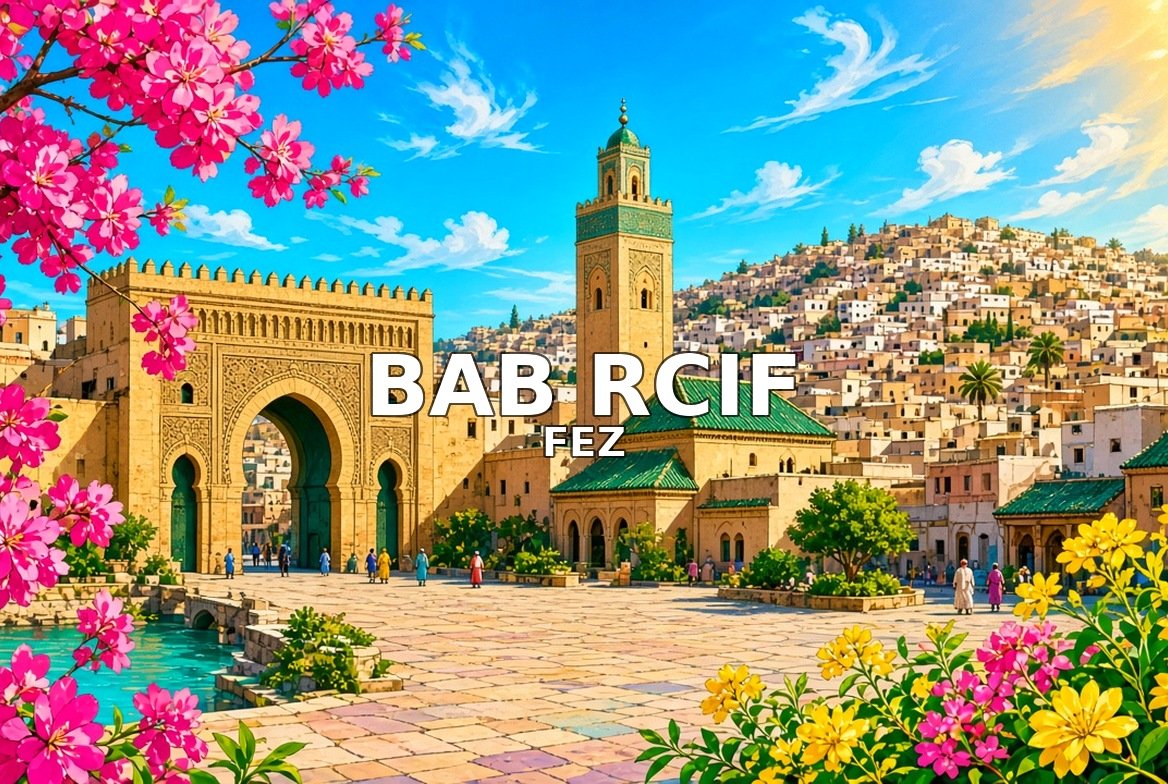
03 · Tour · videos inside this sight

Lanes Toward the South Gate

The Gate and Its Arch

Outside Toward the Open Streets

River Edge and Neighbourhood Life

The Climb Ahead to the Tombs
10. Marinid Tombs
From stop 9 · a climb · 20–30 minutes
The Marinid Tombs sit on the hill above the medina, with the view back over the city. Free. This is the end of the tour.
Walk this order. The Path Up the Ridge → Ruins of the Necropolis → The View Back Over the Medina → Light, Wind and Quiet → End of the Fez Walking Tour.

03 · Tour · videos inside this sight

The Path Up the Ridge

Ruins of the Necropolis

The View Back Over the Medina

Light, Wind and Quiet

End of the Fez Walking Tour