Tallinn Walking Tour: 50 Free Video Stops

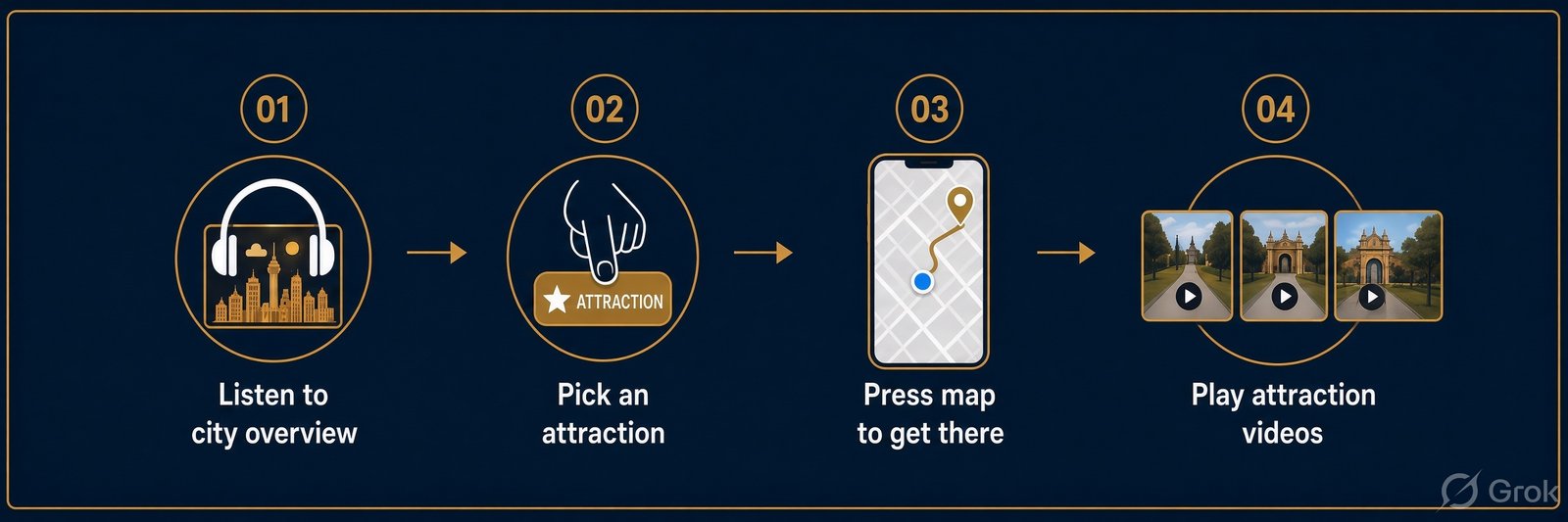
How to tour Tallinn
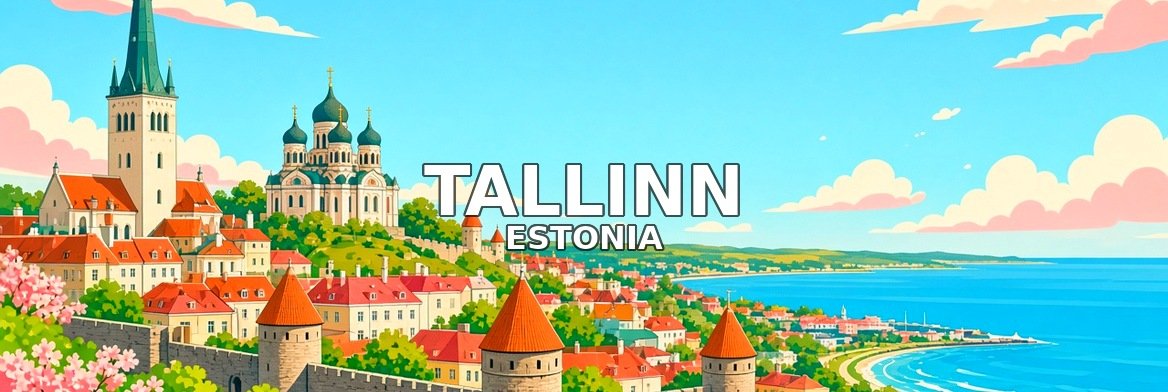
Tallinn is the capital of Estonia, on the southern shore of the Gulf of Finland. A Danish fortress stood on Toompea hill from 1219, and in the Middle Ages the town, then called Reval, grew rich as a member of the Hanseatic League. Later ruled by Sweden and by Russia, it became the capital of independent Estonia in 1918 and again in 1991.
The heart of the city is the Old Town, a UNESCO World Heritage Site with its town walls, towers and Gothic spires, divided into the upper town on Toompea and the lower town of the merchants. Around it lie Kadriorg with its palace and park, the old harbour districts with the Seaplane Harbour and the Rotermann Quarter, and Telliskivi, a former factory area now full of studios and cafés.
On this Tallinn walking tour you start in the Old Town, climb Toompea to the Alexander Nevsky Cathedral, visit Kadriorg, the TV Tower and the Seaplane Harbour, see Saint Olaf’s Church and Kiek in de Kök, explore Telliskivi Creative City and the Estonian Open Air Museum, and finish in the Rotermann Quarter.
1. Tallinn walking tour: Old Town
Start here
On this Tallinn walking tour, Tallinn’s Old Town is one of the best preserved medieval towns in northern Europe and a UNESCO World Heritage Site. You enter through the Viru Gate, where two towers survive from the town wall, and walk the cobbled streets of the lower town, once home to Hanseatic merchants and craftsmen. At its heart is Town Hall Square with the Gothic Town Hall, finished in 1404, and the Town Council Pharmacy, one of the oldest pharmacies in Europe still working. Nearly two kilometres of the wall and over twenty towers still stand.
Walk this order on the Tallinn walking tour. Viru Gate and the Medieval Walls → The Hanseatic Merchants → Viru Street and the Merchant Houses → Katariina Passage and the Craft Workshops → Fat Margaret and the Towers.

2. Toompea Castle and Alexander Nevsky Cathedral
From stop 1
Along this Tallinn walking tour, Toompea is the limestone hill above the lower town, the seat of power since the thirteenth century. Toompea Castle, with its tall Hermann tower flying the Estonian flag, now houses the Estonian Parliament in a pink Baroque palace. Opposite stands the Alexander Nevsky Cathedral, an Orthodox church with onion domes built in 1900, when Estonia was part of the Russian Empire. From the viewing platforms of Kohtuotsa and Patkuli you look down over the red roofs and spires of the Old Town to the sea.
Walk this order on the Tallinn walking tour. Toompea Hill and Tall Hermann → Toompea Castle and the Parliament → The Alexander Nevsky Cathedral → Icons and Bells → The Viewing Platforms and the Dome Church.

3. Kadriorg Palace and Park
From stop 2
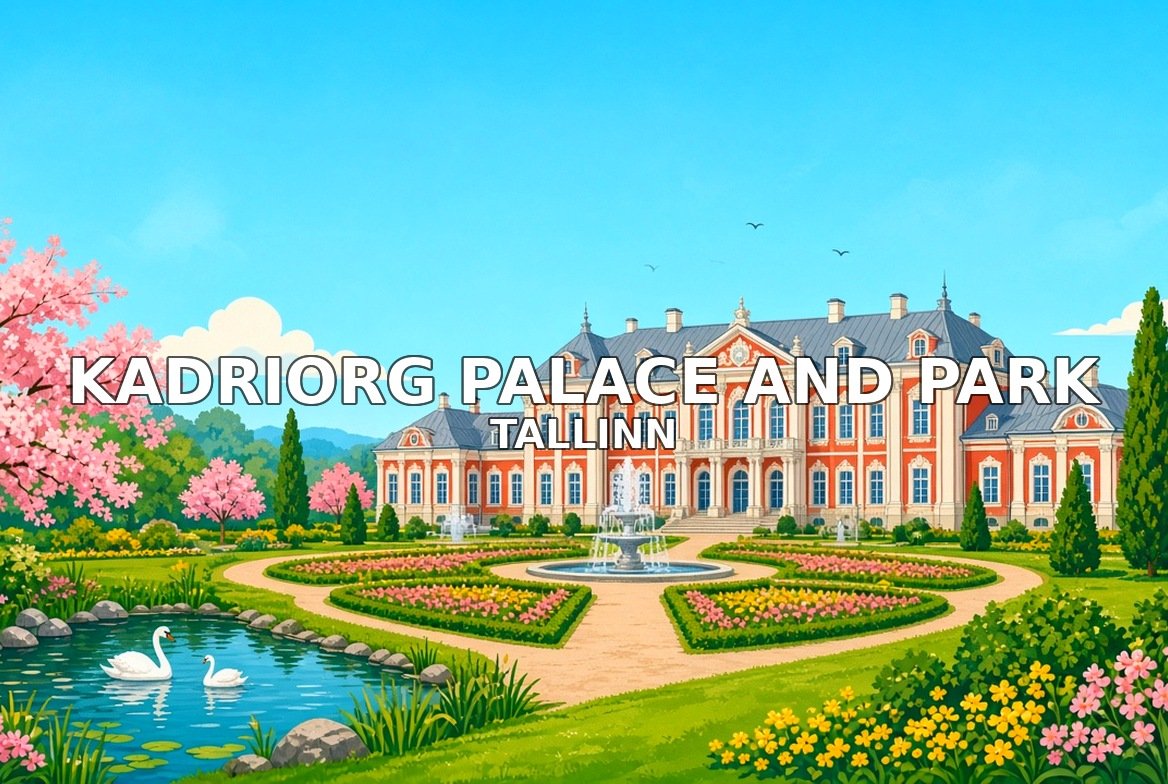
On this Tallinn walking tour, Kadriorg Palace was built for Peter the Great after the Great Northern War and named after his wife Catherine. Designed by Niccolò Michetti and begun in 1718, it is a Baroque palace with a richly decorated great hall, and today it houses the Kadriorg Art Museum of foreign art. Around it lies Kadriorg Park, with a swan pond, flower gardens and the presidential palace. In the park also stands KUMU, the Art Museum of Estonia, opened in 2006.
Walk this order. Peter the Great and Catherine → The Baroque Palace and Art Museum → The Park, the Swan Pond and the Japanese Garden → Kumu and the Presidential Palace → Peter’s House and the Russalka Memorial.
4. Tallinn TV Tower
From stop 3
Along this Tallinn walking tour, the Tallinn TV Tower, in the Pirita district, is the tallest building in Estonia at about three hundred and fourteen metres. It was built for the sailing regatta of the Moscow Olympic Games in 1980. In August 1991 Soviet soldiers tried to take the tower, but Estonians held it, and it became a symbol of the return of independence. Its viewing platform at one hundred and seventy metres has a glass floor and an open air edge walk for the brave.
Walk this order. The Tower for the 1980 Olympics → Up to the Observation Deck → The Glass Floor and the Edge Walk → August 1991 → Helsinki on the Horizon.

5. Seaplane Harbour
From stop 4
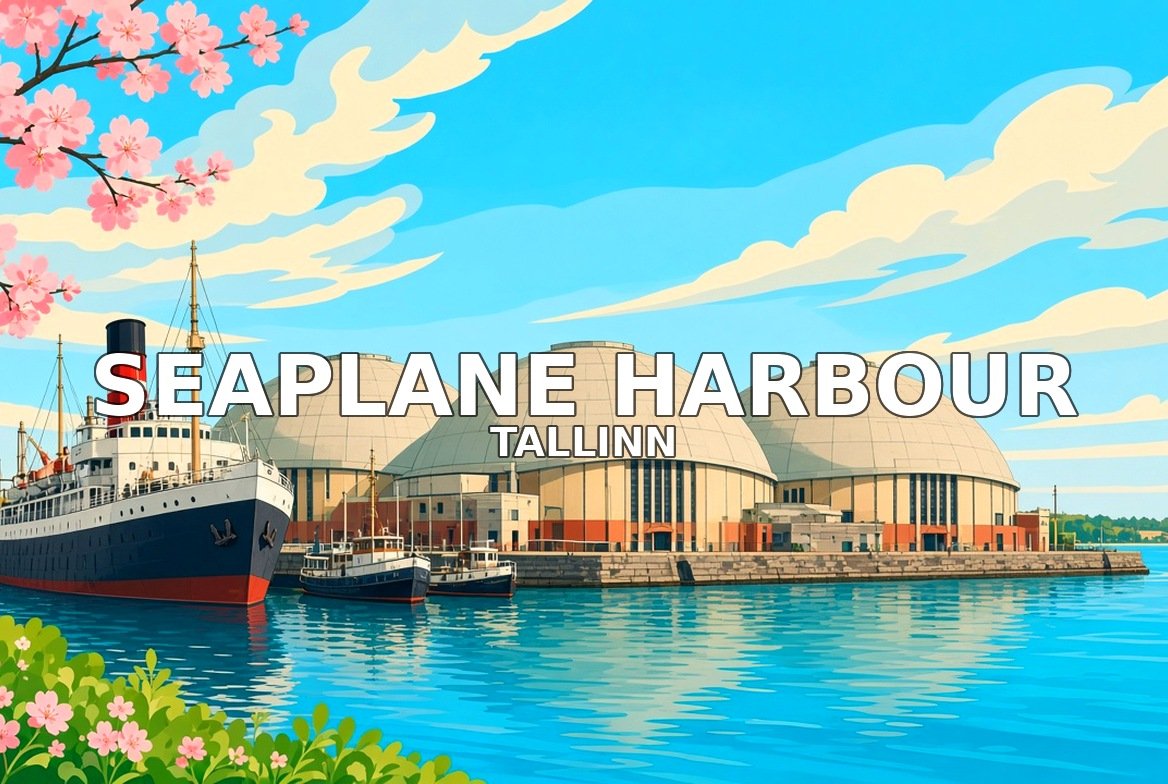
On this Tallinn walking tour, the Seaplane Harbour, Lennusadam, is Estonia’s maritime museum, housed in huge concrete seaplane hangars built in 1917 for the fleet of Peter the Great’s sea fortress. The hangars’ thin shell domes were a bold engineering feat for their time. Inside you can walk through the submarine Lembit, built in 1936, see a replica of a Short 184 seaplane and many boats. Outside, on the quay, lie the icebreaker Suur Tõll and other historic ships.
Walk this order. The Concrete Hangars → The Submarine Lembit → The Seaplane and the Aircraft → The Icebreaker Suur Toll → Ships, Sea and the Patarei Fortress.
6. St. Olaf’s Church
From stop 5
Along this Tallinn walking tour, Saint Olaf’s Church, Oleviste, rises at the northern end of the Old Town. It was first mentioned in 1267, and its spire was rebuilt several times after lightning strikes. In the sixteenth century it reached about one hundred and fifty nine metres and was said to be the tallest building in the world, serving as a landmark for sailors. Today it is about one hundred and twenty four metres tall. In summer you can climb the narrow stairs of the tower for a wide view of the Old Town and the harbour.
Walk this order. The Church of the Norwegian King → The Tallest Building in the World → The Legend of Olev → Lightning and the Fires → The Climb up the Tower.

7. Kiek in de Kök
From stop 6
On this Tallinn walking tour, Kiek in de Kök is a cannon tower built around 1475 on the edge of Toompea. The name comes from Low German and means peek into the kitchen, because guards in the tower could look into the kitchens of the houses below. Cannonballs from the Livonian War are still set in its walls. The tower is now a museum of the town’s defences, and from it you can enter the Bastion Passages, tunnels dug under the bastions in the seventeenth and eighteenth centuries.
Walk this order. The Tower that Looks into Kitchens → The Cannon Balls in the Wall → The Bastion Tunnels → Neitsitorn and the Walls → The Danish King’s Garden.

8. Telliskivi Creative City
From stop 7
Along this Tallinn walking tour, Telliskivi Creative City is a former railway factory complex next to the Balti Jaam station, turned into a creative quarter from 2009. Its old brick halls now house design shops, artists’ studios, theatres, restaurants and the photography museum Fotografiska Tallinn. The walls are covered with street art and murals. On weekends a flea market fills the yards, and next door the Balti Jaam market hall sells food, antiques and local produce.
Walk this order. From Factory to Creative Quarter → Street Art and Murals → Shops, Studios and Design → Cafes, Food and the Flea Market → Balti Jaam and the Railway.

9. Estonian Open Air Museum
From stop 8
On this Tallinn walking tour, the Estonian Open Air Museum, at Rocca al Mare on the western edge of the city, opened in 1957 among the pine woods by the sea. It shows how rural Estonians lived over the past three centuries, with some eighty buildings brought here from all over the country, among them farmsteads, windmills, a village school, a wooden chapel and a tavern. Folk dances and crafts bring the village to life, and on Midsummer Eve the museum holds one of the biggest celebrations in Tallinn.
Walk this order. The Village by the Sea → Farmsteads and Windmills → The Church and the Village Inn → Life in the Old Villages → Seasons, Crafts and Festivals.

10. Rotermann Quarter
From stop 9
Along this Tallinn walking tour, the Rotermann Quarter, between the Old Town and the harbour, grew around the factories of the Rotermann family from the nineteenth century, with a steam mill, a bakery and a salt store. Left empty in the Soviet years, it has been rebuilt since the two thousands with bold modern architecture of glass and steel woven among the old limestone buildings. Today it is a lively district of shops, restaurants, offices and apartments, and a favourite example of modern Estonian design.
Walk this order. From Factories to Fashion → The Rotermann Salt Storage → Architecture and Squares → Shops, Food and Design → Freedom Square and the Harbour Edge.
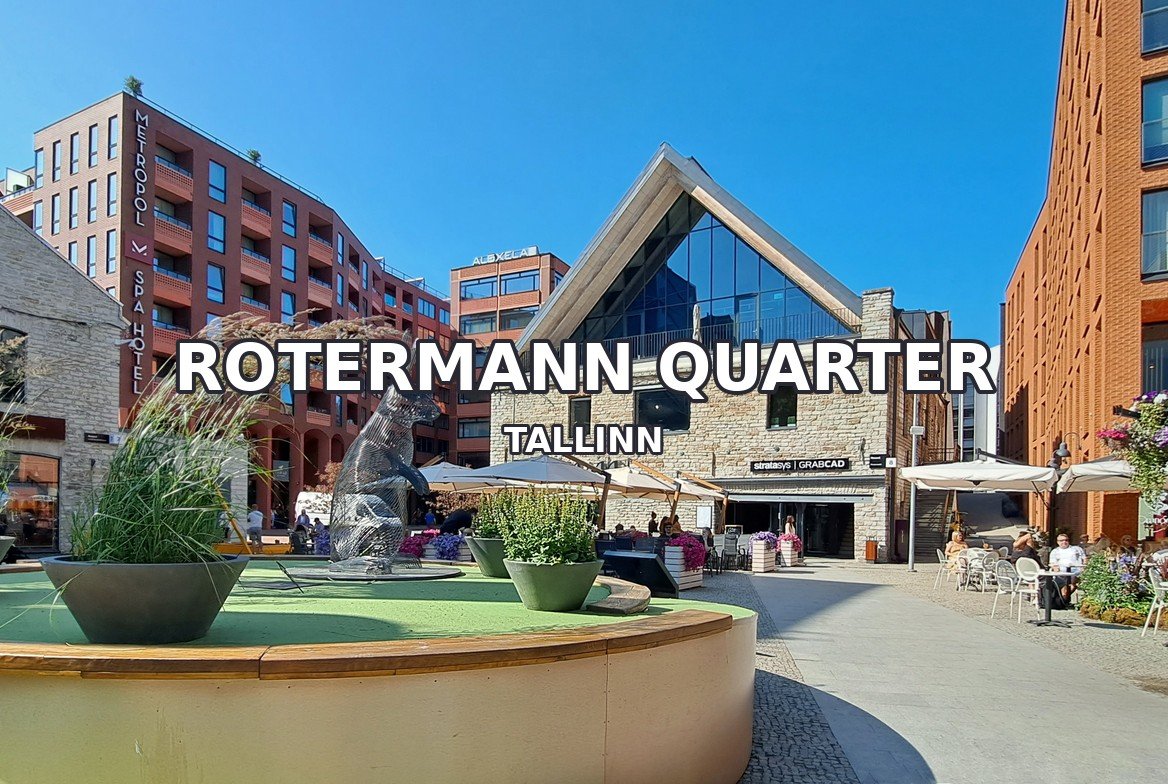
Photo credits: Telliskivi Creative City and Rotermann Quarter photos by Liilia Moroz, via Wikimedia Commons and Wikimedia Commons, CC BY-SA 4.0, cropped with title added.
Tallinn Walking Tour Overview Detail
This Tallinn walking tour links 10 sights and 50 short video stops narrated by Clarissa, from the Viru Gate and Town Hall Square in the medieval Old Town to the viewing platforms of Toompea, the Baroque palace at Kadriorg and the creative yards of Telliskivi. The Old Town is compact and the outer stops are a short tram or bus ride away, so the notes below group them into practical days, with timing, transport, etiquette and the free sights worth knowing. For official visitor information, also check Visit Tallinn, the official tourism site of the City of Tallinn.
Best routes for your Tallinn walking tour using the 50 stops
Route 1, the medieval Old Town (stops 1, 6 and 7). Enter through the Viru Gate and play the videos as you walk past the Hanseatic merchant houses on Viru Street, through the Katariina Passage with its craft workshops, and out to Fat Margaret, the round cannon tower by the sea gate. Walk to St Olaf’s Church, once said to be the tallest building in the world, and climb its tower in summer. Then cross the Old Town to Kiek in de Kök, the cannon tower whose name means peek into the kitchen, and the Bastion Passages beneath it.
Route 2, Toompea hill (stop 2). From Kiek in de Kök it is a short climb to Toompea, the upper town and seat of power since the thirteenth century. See Toompea Castle with the Tall Hermann tower and the pink Baroque palace of the Estonian Parliament, and the onion domes of the Alexander Nevsky Cathedral opposite. Finish at the Kohtuotsa and Patkuli viewing platforms, where the red roofs and spires of the lower town spread out below you. This is the most photographed corner of any Tallinn walking tour.
Route 3, Kadriorg and the coast (stops 3 and 4). Take a tram east to Kadriorg Palace, built for Peter the Great from 1718 and named after his wife Catherine. Walk through the park past the swan pond and the Japanese garden to KUMU, the Art Museum of Estonia, and the presidential palace. Continue by bus to the Tallinn TV Tower in Pirita, built for the sailing regatta of the 1980 Olympics, defended by Estonians in August 1991, and now home to a glass-floored viewing platform.
Route 4, the harbour districts (stops 5, 8 and 10). Start at the Seaplane Harbour, the maritime museum in concrete seaplane hangars from 1917, with the submarine Lembit and the icebreaker Suur Tõll. Walk inland to Telliskivi Creative City, a former railway factory turned into studios, cafes and Fotografiska Tallinn, next to the Balti Jaam market. End your Tallinn walking tour in the Rotermann Quarter, where glass and steel buildings rise among old limestone factories between the Old Town and the port.
Route 5, the open-air museum (stop 9). The Estonian Open Air Museum at Rocca al Mare is on the western edge of the city, so give it a half day of its own. Its village of farmsteads, windmills, a wooden chapel and a tavern stands among pine woods by the sea, and the museum holds one of the city’s biggest celebrations on Midsummer Eve.
For photos, the best free viewpoints on this Tallinn walking tour are the Toompea platforms, Town Hall Square in the early morning, the walls near the Viru Gate and the Kadriorg swan pond. With one day, walk Routes 1 and 2, the core free walking tour Tallinn visitors can do entirely on foot. With three days, add Route 3, Route 4 and the open-air museum.
Best times and transport for a Tallinn walking tour
Late spring and summer are the best seasons for a Tallinn walking tour, with very long days around Midsummer and open-air cafes on every square. September is quieter and still mild. Winter is cold and dark by mid-afternoon, but the Old Town looks magical under snow, and the Christmas market on Town Hall Square draws visitors from across the region. Cruise ships and Helsinki day-trippers make the Old Town busiest from late morning to mid-afternoon in summer.
Some sights are seasonal. The St Olaf’s Church tower is usually open only in the warmer months, and opening days and hours for the museums, the TV Tower and the Bastion Passages vary through the year. Many museums close on one weekday, so check each official site before you plan your routes.
The Old Town is largely pedestrian and best explored on foot, but its cobbles are steep in places, especially on the way up to Toompea. Trams run from the edge of the Old Town to Kadriorg, and buses serve Pirita, the TV Tower and Rocca al Mare. Check the current ticket and payment options on the city’s public transport pages before you travel. Taxis and ride-hailing apps are widely used and reasonably quick for the outer stops.
Ferries from Helsinki and Stockholm arrive at the Old City Harbour, a short walk from the Rotermann Quarter and the Viru Gate, so you can start your Tallinn walking tour within minutes of stepping ashore. Tallinn Airport is close to the centre, with a tram line and buses into the city.
Etiquette, food and safety on your Tallinn walking tour
The Alexander Nevsky Cathedral is a working Orthodox church, so dress modestly, speak quietly, and expect women to be asked to cover their hair; photography inside is usually not allowed. The Dome Church and St Olaf’s Church are also places of worship, so avoid walking around during services. Estonians value personal space and quiet, so keep your voice down on trams and in museums.
Try Estonian dark rye bread, smoked fish, elk or wild boar dishes in medieval-style taverns, and kama, a traditional mix of roasted grains often served with yoghurt. Look for sweet roasted almonds sold by costumed vendors in the Old Town, and the food stalls at the Balti Jaam market. Tipping is not expected, though rounding up or leaving about ten percent for good service is common in restaurants. Tap water is safe to drink.
Tallinn is a safe city, but watch your bag in the crowded Old Town in summer and avoid tourist traps that offer free drinks to lure you inside. The cobbles are uneven and can be slippery in rain or snow, so wear good shoes for every Tallinn walking tour. In winter, take warm layers, gloves and a hat, and watch for ice on steep streets.
Free sights, museums and accessibility on a Tallinn walking tour
Many sights on this Tallinn walking tour are free. Walking the Old Town streets, Town Hall Square, the Katariina Passage, the Toompea viewing platforms, Kadriorg Park, Telliskivi and the Rotermann Quarter costs nothing, and the Alexander Nevsky Cathedral is free to enter. You pay for the St Olaf’s tower climb, the Kadriorg Art Museum, KUMU, the TV Tower, the Seaplane Harbour, Kiek in de Kök and the Bastion Passages, and the Estonian Open Air Museum.
Children, students and seniors usually get reduced prices at museums, and some museums are free on certain days. If you plan to visit several paid sights, compare the official Tallinn Card with single tickets. Prices and rules change, so check the official sites before your Tallinn walking tour.
Accessibility in the Old Town takes planning, because the streets are cobbled and the climb to Toompea is steep, with steps on some routes. The lower town around Town Hall Square is the flattest part. KUMU, the Seaplane Harbour and the Rotermann Quarter are modern and largely step-free, and many trams and buses have low floors. Ask each museum about accessible entrances before you go.
Tallinn is also small enough to combine with a ferry trip to Helsinki, about two hours across the Gulf of Finland, which many visitors do in a day. If you have time, plan a full day there rather than rushing between the two capitals.
After this Tallinn walking tour, carry on with more free walks around the Baltic Sea: the Helsinki walking tour, the Stockholm walking tour, the Vilnius walking tour and the Warsaw walking tour. You can browse every city on the Free City Tours home page.
Tallinn walking tour FAQ
Is this Tallinn walking tour really free?
Yes. All 50 video stops on this Tallinn walking tour are free to watch, and the Old Town, the Toompea viewing platforms, Kadriorg Park and Telliskivi are free to visit. You only pay for the towers and museums you choose to enter. It is a genuine free walking tour Tallinn visitors can follow at their own pace.
How long does the Tallinn walking tour take?
Allow two to three days. The Old Town and Toompea fill one day, Kadriorg, the TV Tower and the harbour districts fill another, and the Estonian Open Air Museum needs a half day of its own.
Where does the Tallinn walking tour start?
It starts at the Viru Gate on the eastern edge of the Old Town, with the Viru Gate and the Medieval Walls video. You can join at any stop, because each one has its own Map button and five short videos.
Is the Tallinn walking tour suitable for children and wheelchair users?
Children usually love the towers, the submarine at the Seaplane Harbour and the open-air museum village. Wheelchair users should expect cobbles and a steep climb to Toompea, while the harbour museums, KUMU and the Rotermann Quarter are much easier.
Do I need an app or mobile data for the Tallinn walking tour?
You don’t need an app. Open this page in your phone’s browser and play the videos as you go. The videos stream, so use mobile data or Wi-Fi; Tallinn has good mobile coverage and many free Wi-Fi spots.
