
Cairo Walking Tour: 50 Free Video Stops

Free City ToursCairo walking tour · freecitytours.org
How to tour Cairo
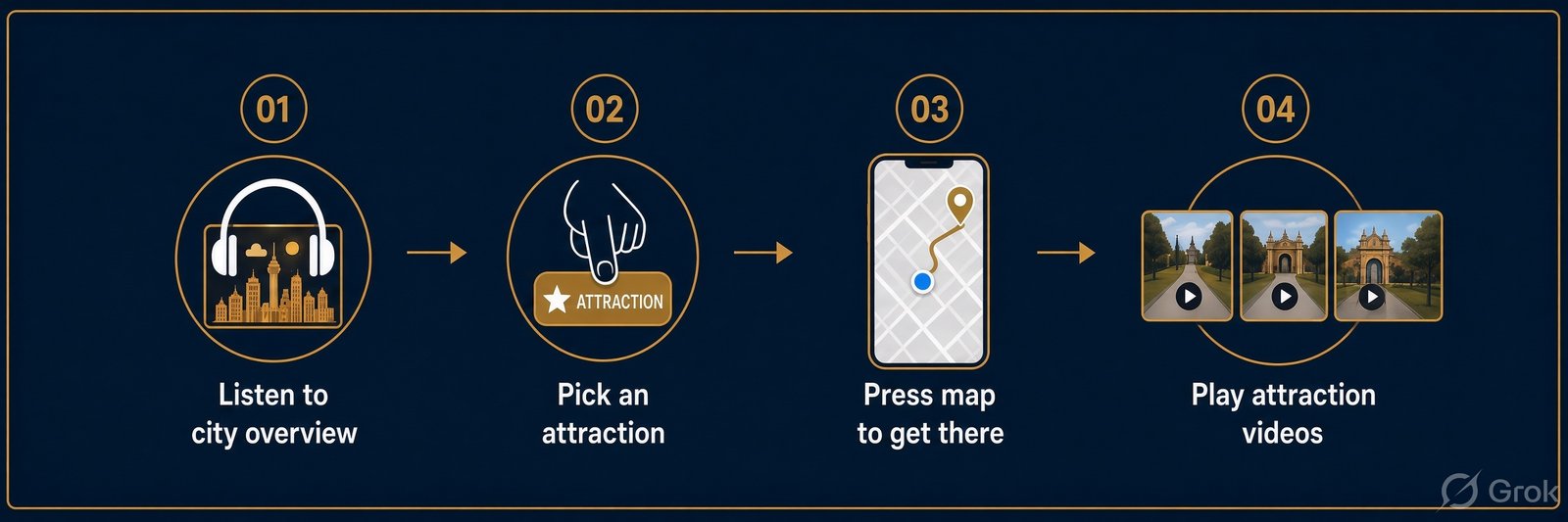
Cairo spreads from the Nile to the old walls. The Egyptian Museum faces Tahrir. The Cairo Tower stands on the island. Islamic Cairo is the bazaar and the medieval street.
Khan el Khalili and Al Azhar sit together. Al Muizz runs north past the Qalawun complex to Al Hakim and the gate of Bab al Futuh. The Citadel and the Mosque of Muhammad Ali are the hill at the end.
On this walk you start at the museum and Tahrir, cross to the tower, then ride to the bazaar. Walk Al Muizz to the north gate. The Citadel is a separate ride.
1. Cairo walking tour: Egyptian Museum
Tahrir · start here · 60–90 minutes
On this Cairo walking tour, the Egyptian Museum in Tahrir holds the old national collection, including the Tutankhamun rooms still shown here. Ticketed. Go early.
Walk this order. The Pink Palace of Antiquities → Statues of the Old Kingdom → Treasures of the Pharaohs → Mariette and the Founding of the Museum → From Tahrir to Giza.

03 · Tour · videos inside this sight

The Pink Palace of Antiquities

Statues of the Old Kingdom

Treasures of the Pharaohs

Mariette and the Founding of the Museum

From Tahrir to Giza
2. Tahrir Square
From stop 1 · a few minutes · 15–20 minutes
Along this Cairo walking tour, Tahrir Square is the wide crossing in front of the museum. Free. It is a traffic square, so stay on the pavements.
Walk this order. The Square of Liberation → The Obelisk and the Rams → The Mogamma and Omar Makram → The Revolution of 2011 → Downtown Cairo.

03 · Tour · videos inside this sight

The Square of Liberation

The Obelisk and the Rams

The Mogamma and Omar Makram

The Revolution of 2011

Downtown Cairo
3. Cairo Tower
From stop 2 · a short ride across the river · 30–45 minutes
On this Cairo walking tour, Cairo Tower stands on Gezira Island in the Nile. The viewing deck is ticketed. The park at the base is the walk.
Walk this order. Crossing the Qasr el Nil Bridge → A Lotus of Concrete → Gezira Island → The View from the Top → The Nile at Sunset.

03 · Tour · videos inside this sight

Crossing the Qasr el Nil Bridge

A Lotus of Concrete

Gezira Island

The View from the Top

The Nile at Sunset
4. Khan el Khalili
From the centre · a ride · 40–60 minutes
Along this Cairo walking tour, Khan el Khalili is the old bazaar in Islamic Cairo. Lanes of metalwork, spices and cafes. Free to walk. Agree a price before you buy.
Walk this order. The Great Bazaar → Lanterns, Brass and Spices → Fishawy Cafe → Craftsmen of the Old City → Hussein Square.

03 · Tour · videos inside this sight

The Great Bazaar

Lanterns, Brass and Spices

Fishawy Cafe

Craftsmen of the Old City

Hussein Square
5. Al Azhar Mosque
From stop 4 · 5 minutes · 20–30 minutes
On this Cairo walking tour, Al Azhar is the mosque and university at the edge of the bazaar, founded in the 10th century. Dress modestly. Remove shoes. Free.
Walk this order. A Mosque Founded in 970 → The Courtyard of Marble → Minarets from Many Ages → One of the Oldest Universities → Visiting Al Azhar.

03 · Tour · videos inside this sight

A Mosque Founded in 970

The Courtyard of Marble

Minarets from Many Ages

One of the Oldest Universities

Visiting Al Azhar
6. Al Muizz Street
From stop 5 · 5 minutes · 30–45 minutes
Along this Cairo walking tour, Al Muizz is the medieval spine of the old city, a pedestrian street of mosques and sabils. Free to walk. Evening is the best light.
Walk this order. The Great Street of the Fatimids → An Open Air Museum → Bayt al Suhaymi → The Sabil Kuttab of Abdel Rahman Katkhuda → Al Muizz by Night.

03 · Tour · videos inside this sight

The Great Street of the Fatimids

An Open Air Museum

Bayt al Suhaymi

The Sabil Kuttab of Abdel Rahman Katkhuda

Al Muizz by Night
7. Qalawun Complex
From stop 6 · on the street · 20–30 minutes
On this Cairo walking tour, the Qalawun complex is the Mamluk hospital, madrasa and mausoleum on Al Muizz. The striped portal is the mark. A ticket covers the interior.
Walk this order. Sultan Qalawun and the Mamluks → The Mausoleum → A Medieval Hospital → The Madrasa of al Nasir Muhammad → Barquq and Bayn al Qasrayn.

03 · Tour · videos inside this sight

Sultan Qalawun and the Mamluks

The Mausoleum

A Medieval Hospital

The Madrasa of al Nasir Muhammad

Barquq and Bayn al Qasrayn
8. Al Hakim Mosque
From stop 7 · 8 minutes · 20–30 minutes
Along this Cairo walking tour, the Mosque of Al Hakim stands near the north wall, with two stone minarets. The courtyard is the picture. Free when open.
Walk this order. The Mosque of the Caliph al Hakim → The Vast Courtyard → The Minarets and the Walls → A Mysterious Ruler → Restoration and Renewal.

03 · Tour · videos inside this sight

The Mosque of the Caliph al Hakim

The Vast Courtyard

The Minarets and the Walls

A Mysterious Ruler

Restoration and Renewal
9. Bab al Futuh
From stop 8 · next door · 15–20 minutes
On this Cairo walking tour, Bab al Futuh is the northern Fatimid gate, built of stone in the 11th century. Free to look at from the street.
Walk this order. The Gate of Conquests → The Walls of Badr al Jamali → Bab al Nasr → Inside the Gate Towers → The Northern Cemetery Beyond.

03 · Tour · videos inside this sight

The Gate of Conquests

The Walls of Badr al Jamali

Bab al Nasr

Inside the Gate Towers

The Northern Cemetery Beyond
10. Citadel and Mosque of Muhammad Ali
From the old city · a ride · 45–75 minutes
Along this Cairo walking tour, the Citadel sits on the spur above the city. The Mosque of Muhammad Ali, with the Ottoman domes, is the picture from the terrace. Ticketed. This is the end of the tour.
Walk this order. Saladin and the Citadel → The Mosque of Muhammad Ali → The Alabaster Interior → Views over Cairo → Farewell from the Citadel.

03 · Tour · videos inside this sight

Saladin and the Citadel

The Mosque of Muhammad Ali

The Alabaster Interior

Views over Cairo

Farewell from the Citadel