Osaka Walking Tour Overview Detail
This Osaka walking tour links 10 sights and 50 short video stops narrated by Clarissa, from Osaka Castle to the Osaka Aquarium Kaiyukan, the Tempozan Ferris Wheel, the Aqua Liner river cruise, Universal Studios Japan, the Umeda Sky Building, Shinsaibashi, Dotonbori, Kuromon Market and Sumiyoshi Taisha. The notes below group the stops into routes and short train rides, and add the timing, transport, etiquette and ticket details that make Japan’s kitchen easier to enjoy. For official events and visitor information, also check Osaka Info, the official travel guide to Osaka.
Best routes for your Osaka walking tour using the 50 stops
Osaka has been a great merchant city for centuries, a port and trading hub on Osaka Bay, crossed by rivers and canals that earned it the name of the city of water. Its people are known across Japan for their humour, their dialect and their love of food, summed up in the local word kuidaore, to eat until you drop.
Route 1, the castle and the rivers (stops 1 and 4). Start at Osaka Castle, first built from 1583 by the warlord Toyotomi Hideyoshi, with its giant stone walls, wide moats and main tower, rebuilt in 1931, which holds a museum of the castle’s history. From the castle park, board the Aqua Liner, the sightseeing water bus, for a cruise along the Okawa River and around Nakanoshima island.
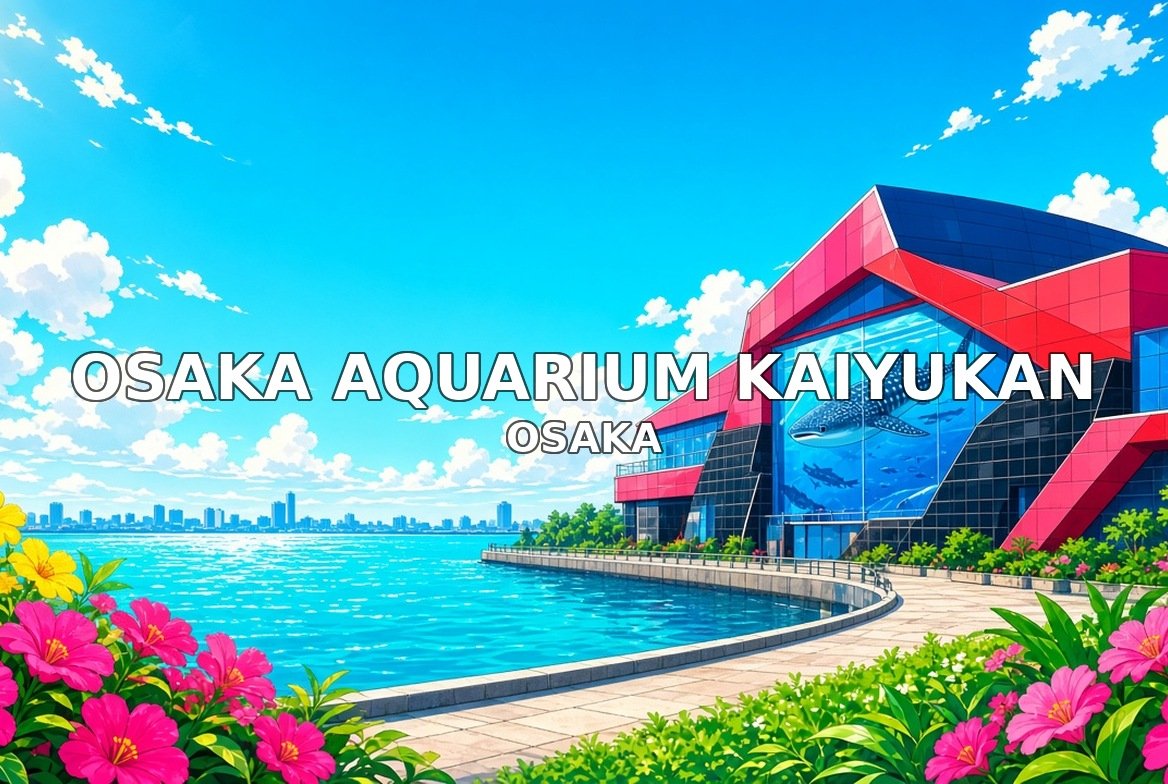
Route 2, the bay (stops 2 and 3). Ride the subway to Osakako for the Osaka Aquarium Kaiyukan, one of the largest aquariums in the world, whose tanks follow the Pacific Ring of Fire around a huge central tank with a whale shark. Next door, the Tempozan Ferris Wheel gives views over the bay and the city, and its lights change colour at night to show the next day’s weather.
Route 3, Universal and Umeda (stops 5 and 6). Spend a full day at Universal Studios Japan, opened in 2001 by the bay, with Super Nintendo World and the Wizarding World of Harry Potter. On another evening, go to Umeda for the Umeda Sky Building, whose twin towers are joined at the top by the Floating Garden Observatory, reached by escalators across the open air.
Route 4, Minami (stops 7 to 9). Walk the Shinsaibashi-suji covered shopping arcade south to Dotonbori, the canal street of neon signs, the Glico Running Man and street food, then continue to Kuromon Market, the kitchen of Osaka, for seafood, beef and snacks cooked on the spot. This is the liveliest part of any Osaka walking tour, best in the late afternoon and evening.
Route 5, the shrine (stop 10). Take the Nankai line south to Sumiyoshi Taisha, one of the oldest Shinto shrines in Japan, dedicated to the gods of the sea, with its steep red arched bridge and halls in an ancient style. It is a peaceful farewell to Osaka. If you only have one day, Routes 1 and 4 make the best free walking tour Osaka offers on foot.
Between the stops, Osaka rewards a wander. Shinsekai, around the Tsutenkaku Tower, has a retro, old-Osaka atmosphere and the best kushikatsu, and Shitennoji, one of Japan’s oldest Buddhist temples, is nearby. Nakanoshima has riverside parks, a rose garden and the red-brick Osaka City Central Public Hall.
A three-day Osaka walking tour works well as Route 1 and Route 4 on day one, Route 2 and Umeda on day two and Universal Studios Japan on day three, with Sumiyoshi Taisha on a quiet morning. Buy Universal tickets and any timed-entry passes before you travel, because popular dates sell out.
For photos, the best viewpoints on this Osaka walking tour are the castle tower above its walls, the Floating Garden Observatory at sunset, the Glico sign and the canal at night, the bay from the Tempozan Ferris Wheel and the red bridge at Sumiyoshi Taisha. Cherry blossom season at the castle park is especially beautiful.
Best times and transport for an Osaka walking tour
Spring, from late March to May, with cherry blossoms around Osaka Castle, and autumn, from October to November, with clear days and red leaves, are the best seasons for an Osaka walking tour. Summer is hot and humid, with a rainy season in June and July and occasional typhoons, while winter is cool and mostly dry. Japanese holidays such as Golden Week in early May bring big crowds.
Start early at Osaka Castle and Universal Studios Japan, and plan Dotonbori and Umeda for the evening, when the lights come on. Some attractions close one day a week or for maintenance. Check each official website for opening times before you plan each day of your Osaka walking tour.
Osaka’s subway and trains are fast, clean and easy to use, with signs in English. Buy a rechargeable IC card, such as ICOCA, and tap it at the gates; it also works in many shops and vending machines. Day passes that include free entry to some attractions are available for visitors. From Kansai International Airport, the JR Haruka express and the Nankai Rapi:t train run to the city.
For day trips, Kyoto has temples, shrines and old wooden streets, Nara has the giant Buddha of Todaiji and the deer of Nara Park, and Kobe is famous for its harbour, its Chinatown and its beef. Himeji Castle, the finest original castle in Japan and a UNESCO World Heritage Site, is about an hour west by fast train. Koyasan, the sacred mountain of temples, makes a peaceful overnight trip.
Yumeshima, the artificial island in Osaka Bay that hosted Expo 2025, is being developed further, so check what is open there before you go.
Kyoto, Nara and Kobe are all within an hour by train, so Osaka is a great base for day trips. Every stop on this Osaka walking tour has its own map link, so you can start wherever your hotel is.
Etiquette, food and safety on your Osaka walking tour
Osaka is friendly and relaxed, but Japanese manners still matter. Say “konnichiwa” (hello) and “arigatō” (thank you), queue in line for trains, stand on the right on escalators, as Osakans do, unlike in Tokyo, and keep phone calls quiet on public transport. At shrines, bow at the gate and wash your hands at the water basin before you approach the hall.
Food is the highlight of any Osaka walking tour. Try takoyaki, octopus balls, okonomiyaki, a savoury pancake cooked on a hot plate, kushikatsu, deep-fried skewers, where dipping twice in the shared sauce is not allowed, and fresh seafood and wagyu at Kuromon Market. Many stalls ask you to eat where you buy rather than walking with food. Prices are in Japanese yen, and tipping is not expected.
Osaka is very safe, but keep an eye on your belongings in the crowds of Dotonbori and on busy trains. Some bars in nightlife areas charge a cover fee, so check prices before you sit down. In summer, drink plenty of water and rest in the shade, because the heat can be intense. In an emergency, dial 110 for the police or 119 for fire and ambulance.
Tickets, free sights and accessibility on an Osaka walking tour
Several stops on this Osaka walking tour need tickets. The Osaka Castle main tower, the Aquarium Kaiyukan, the Tempozan Ferris Wheel, the Aqua Liner, Universal Studios Japan and the Umeda Sky Building observatory charge, and Universal Studios Japan uses date-based tickets that should be bought in advance. Check each official website for current prices and opening times.
Plenty is free. The Osaka Castle park, its walls and moats, the Shinsaibashi arcade, Dotonbori, Kuromon Market, the grounds of Sumiyoshi Taisha, Nakanoshima and the streets of Shinsekai cost nothing to explore.
For accessibility, Osaka is well equipped, with lifts at most stations, tactile paving and accessible toilets. The castle tower has a lift, though the grounds have slopes and gravel, and the aquarium, Universal Studios Japan and the Umeda Sky Building are largely accessible. The arched bridge at Sumiyoshi Taisha is very steep, but there is a way around it. Check each venue’s accessibility information before your Osaka walking tour.
After this Osaka walking tour, carry on with more free walks: the Kyoto walking tour next door, the Tokyo walking tour, the Fukuoka walking tour and the Seoul walking tour. You can browse every city on the Free City Tours home page.
Osaka walking tour FAQ
Is this Osaka walking tour really free?
Yes. All 50 video stops on this Osaka walking tour are free to watch, and the castle park, Shinsaibashi, Dotonbori, Kuromon Market and Sumiyoshi Taisha are free to visit. The castle tower, the aquarium and Universal Studios Japan charge, so this is a free walking tour Osaka visitors can shape to any budget.
How long does the Osaka walking tour take?
Allow three days. The castle, the river cruise and Minami fill one day, the bay and Umeda another, and Universal Studios Japan needs a full day of its own.
Where does the Osaka walking tour start?
It starts at Osaka Castle, a short walk from Osakajokoen or Tanimachi 4-chome stations. You can join at any stop, because each one has its own map link and five short videos.
Is the Osaka walking tour suitable for children and wheelchair users?
Yes. Children love the aquarium, the Ferris wheel and Universal Studios Japan. Wheelchair users will find stations and the main attractions accessible, with lifts at the castle and the observatory.
Do I need an app or mobile data for the Osaka walking tour?
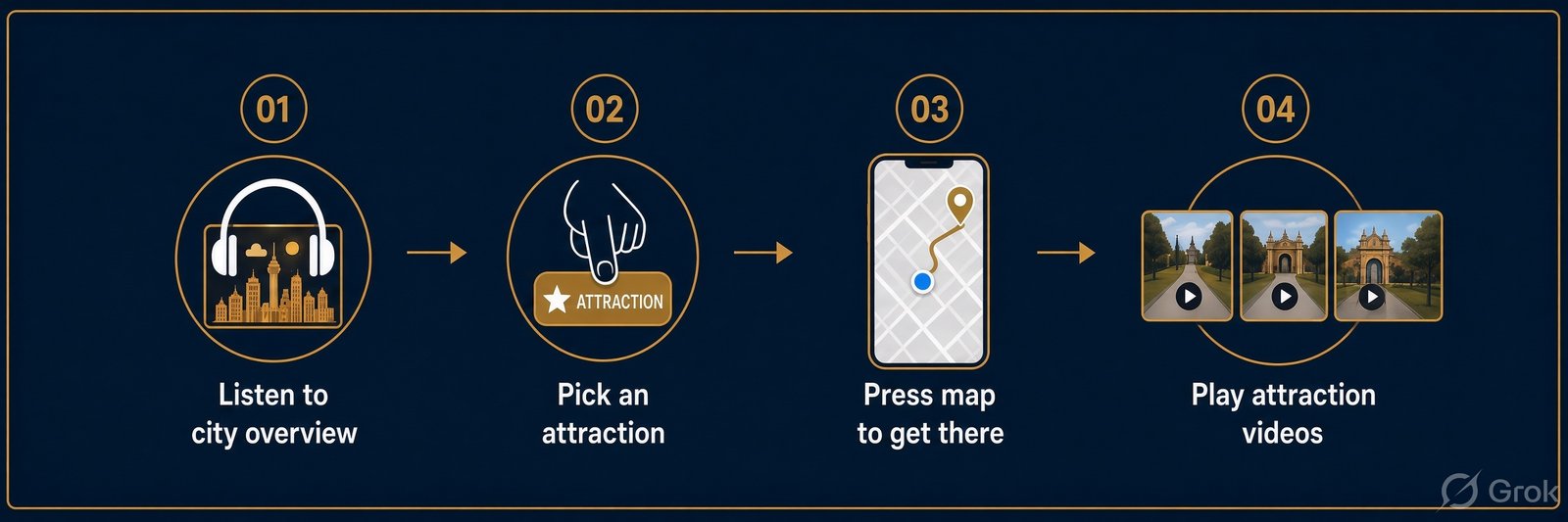
You don’t need an app. Open this page in your phone’s browser and play the videos as you walk. The videos stream, so use mobile data, a pocket Wi-Fi or free Wi-Fi in stations and cafés.