Istanbul walking tour banner: Istanbul, Türkiye
IstanbulTurkey

Istanbul Walking Tour: 50 Free Video Stops

Free City Tours logo
Free City ToursIstanbul walking tour · freecitytours.org

How to tour Istanbul

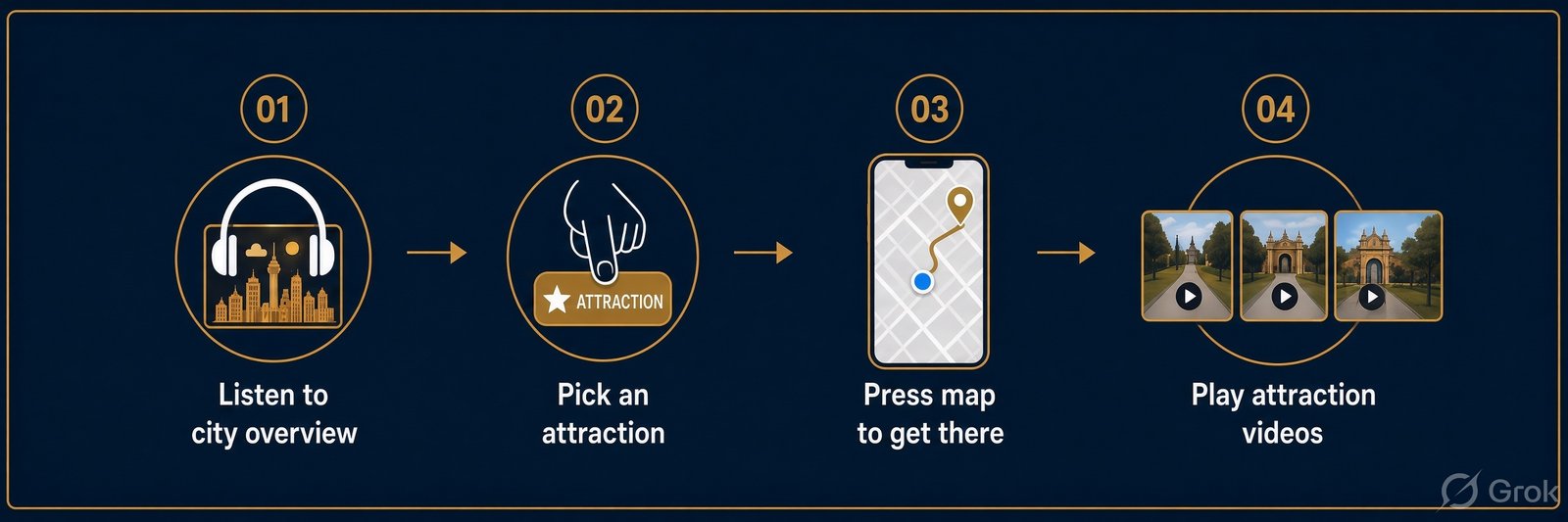
How to take the Istanbul walking tour: listen to the overview, pick an attraction, press Map, play the videos

Istanbul sits where Europe meets Asia. Hagia Sophia and the Blue Mosque face each other across Sultanahmet Square. The Basilica Cistern lies underground nearby. Topkapı Palace crowns the tip of the old city.

The Grand Bazaar and Spice Bazaar fill the market streets. Galata Tower rises on the north side of the Golden Horn. The Bosphorus, Dolmabahçe Palace, and Ortaköy Mosque close the walk along the water.

On this Istanbul walking tour you start at Hagia Sophia, move through the old city and markets, and end by the Bosphorus.

1. Istanbul walking tour: Hagia Sophia

Sultanahmet, tram T1 to Sultanahmet · start here · 60 minutes
Map

On this Istanbul walking tour, Hagia Sophia, the Church of the Holy Wisdom, was built in just five years, from 532 to 537, for the Byzantine emperor Justinian I by the architects Anthemius of Tralles and Isidore of Miletus. Its great dome, about 31 metres across and 55 metres above the floor, seems to float on a ring of windows. For more than 900 years it was the main church of the Byzantine Empire. After Sultan Mehmed II conquered the city in 1453 it became a mosque, and the minarets were added.

It was a museum from 1935 and has been a mosque again since 2020. It is part of the Historic Areas of Istanbul UNESCO World Heritage Site. Foreign visitors need a ticket and see the interior from the upper gallery; it closes to visitors at prayer times, and shoulders, knees and, for women, hair must be covered. Walk this order on the Istanbul walking tour. The outer court → the narthex → the central dome → the view from the upper gallery → across the square to the Blue Mosque, 3 minutes.
Istanbul walking tour: Hagia Sophia
03 · Tour · videos inside this sight
Istanbul walking tour (video): Hagia Sophia – Outer Court Approach
Outer Court Approach
Istanbul walking tour (video): Hagia Sophia – Narthex Entry
Narthex Entry
Istanbul walking tour (video): Hagia Sophia – Central Dome Interior
Central Dome Interior
Istanbul walking tour (video): Hagia Sophia – Upper Gallery View
Upper Gallery View
Istanbul walking tour (video): Hagia Sophia – Exit Toward Blue Mosque Plaza
Exit Toward Blue Mosque Plaza
Advertisement
Ad slot

2. Blue Mosque

From stop 1 · 3 minutes across Sultanahmet Square · 30–45 minutes
Map

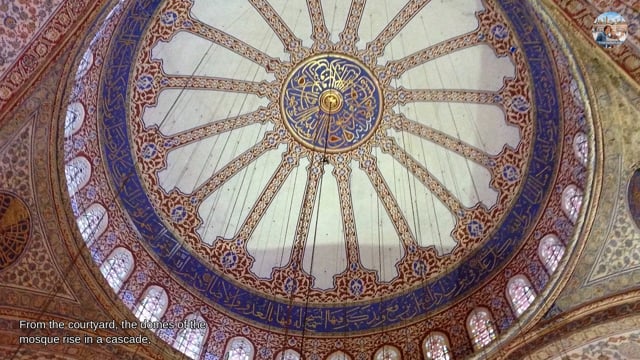
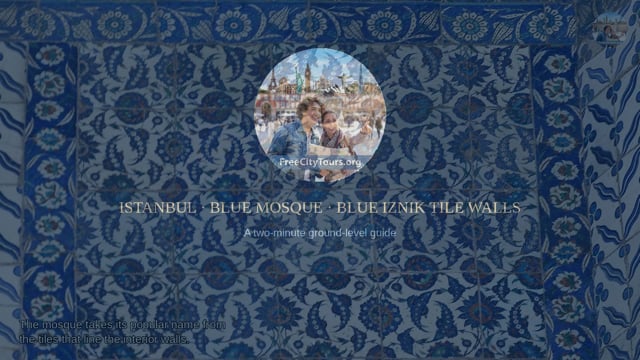
Along this Istanbul walking tour, the Sultan Ahmed Mosque, known as the Blue Mosque, was built from 1609 to 1616 for Sultan Ahmed I by the architect Sedefkâr Mehmed Ağa, a pupil of the great Sinan. It is famous for its six minarets and for the cascade of domes and half domes that rise over the prayer hall. Inside, more than 20,000 hand made İznik tiles in blue, green and white cover the walls and give the mosque its nickname. The large courtyard has a central ablution fountain.

On its west side lies the old Hippodrome of Constantinople, with the Egyptian obelisk raised there in 390 and the bronze Serpent Column. Entry is free; it closes to visitors at prayer times, and the same dress code applies as at Hagia Sophia. Walk this order on the Istanbul walking tour. The courtyard and the ablution fountain → the prayer hall and its carpets → the cascade of domes → the blue İznik tiles → out to the Hippodrome, then 5 minutes north to the Basilica Cistern.
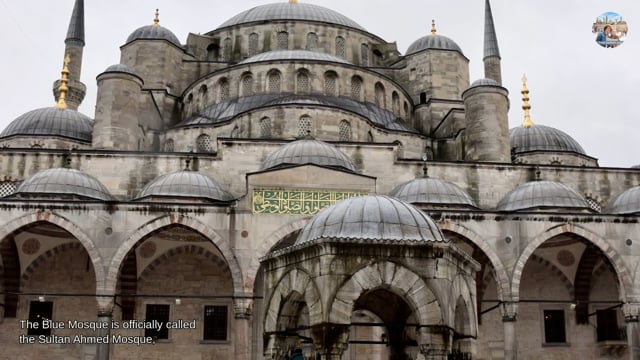

Istanbul walking tour: Blue Mosque
03 · Tour · videos inside this sight
Istanbul walking tour (video): Blue Mosque – Courtyard and Ablution Fountain
Courtyard and Ablution Fountain
Istanbul walking tour (video): Blue Mosque – Prayer Hall Carpets
Prayer Hall Carpets
Istanbul walking tour (video): Blue Mosque – Cascade of Domes
Cascade of Domes
Istanbul walking tour (video): Blue Mosque – Blue Iznik Tile Walls
Blue Iznik Tile Walls
Istanbul walking tour (video): Blue Mosque – Exit Toward Hippodrome
Exit Toward Hippodrome
Advertisement
Ad slot

3. Basilica Cistern

From stop 2 · 5 minutes north · 30–45 minutes
Map

On this Istanbul walking tour, the Basilica Cistern is a vast underground water reservoir built in the 6th century under Emperor Justinian I to store water for the Great Palace and the city. Its roof rests on 336 marble columns in 12 rows, many of them reused from older buildings, and the hall is about 138 metres long and 65 metres wide. Walkways lead over the shallow water between the lit columns.

In the far corner, two columns stand on carved heads of Medusa, one placed sideways and one upside down. The cistern needs a ticket; queues are shortest early in the morning. Walk this order on the Istanbul walking tour. Down the entrance stairs → the forest of columns → the Medusa heads → back along the reflections path → 7 minutes north east past Hagia Sophia to the Imperial Gate of Topkapı Palace.
Istanbul walking tour: Basilica Cistern
03 · Tour · videos inside this sight
Istanbul walking tour (video): Basilica Cistern – Entrance Stairs Down
Entrance Stairs Down
Istanbul walking tour (video): Basilica Cistern – Column Forest Walkways
Column Forest Walkways
Istanbul walking tour (video): Basilica Cistern – Medusa Heads
Medusa Heads
Istanbul walking tour (video): Basilica Cistern – Water Reflections Path
Water Reflections Path
Istanbul walking tour (video): Basilica Cistern – Exit Toward Topkapı
Exit Toward Topkapı
Advertisement
Ad slot

4. Topkapı Palace

From stop 3 · 7 minutes north east · 2–3 hours
Map

Along this Istanbul walking tour, Topkapı Palace was the home and seat of government of the Ottoman sultans for almost 400 years. Mehmed II began it in the years after the conquest of 1453 on the tip of the old city, where the Bosphorus, the Golden Horn and the Sea of Marmara meet. It is not one building but a chain of courtyards and pavilions. The Imperial Gate opens into the First Court, around the Byzantine church of Hagia Irene; the inner courts hold the council chamber, the treasury with its jewelled daggers and diamonds, the kitchens, and the Harem.

The sultans moved to Dolmabahçe Palace in 1856, and Topkapı became a museum in 1924. From the terraces at the far end you look out over the Bosphorus to Asia. The First Court is free; the palace needs a ticket, and the Harem has its own. Walk this order on the Istanbul walking tour. The Imperial Gate → the First Court → the palace courtyards → the terraces over the Bosphorus → tram T1 from Gülhane to Beyazıt-Kapalıçarşı for the Grand Bazaar, about 15 minutes.

Istanbul walking tour: Topkapı Palace
03 · Tour · videos inside this sight
Istanbul walking tour (video): Topkapı Palace – Imperial Gate Approach
Imperial Gate Approach
Istanbul walking tour (video): Topkapı Palace – First Court
First Court
Istanbul walking tour (video): Topkapı Palace – Palace Courtyards
Palace Courtyards
Istanbul walking tour (video): Topkapı Palace – Bosphorus Terrace Views
Bosphorus Terrace Views
Istanbul walking tour (video): Topkapı Palace – Exit Toward Grand Bazaar
Exit Toward Grand Bazaar
Advertisement
Ad slot

5. Grand Bazaar

From stop 4 · about 15 minutes by tram T1 or 20 minutes on foot · 60–90 minutes
Map

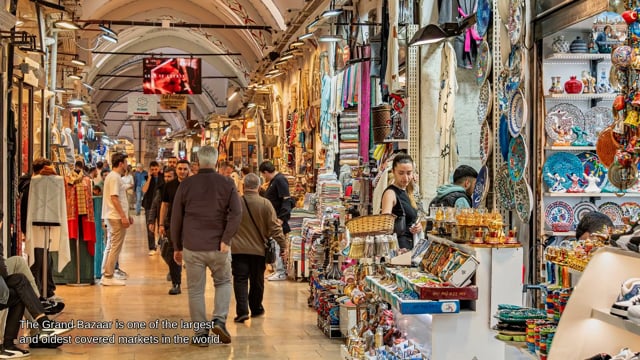
On this Istanbul walking tour, the Grand Bazaar, the Kapalıçarşı, is one of the largest and oldest covered markets in the world. It grew from a domed hall built under Mehmed II soon after 1453 into a city of its own, with about 60 covered streets and some 4,000 shops under painted vaults. Kalpakçılar Caddesi, the main street, is lined with jewellers and gold dealers, and the side lanes hold carpets, lamps, leather, ceramics and textiles.

Old caravanserais called hans open off the streets into quiet inner courtyards where craftsmen still work. Bargaining is expected. Free entry; closed on Sundays. Walk this order on the Istanbul walking tour. In through the Beyazıt Gate → down Kalpakçılar Caddesi → the jewellery and craft lanes → a pause in an inner courtyard → 15 minutes downhill through the market streets to Eminönü and the Spice Bazaar.
Istanbul walking tour: Grand Bazaar
03 · Tour · videos inside this sight
Istanbul walking tour (video): Grand Bazaar – Beyazit Gate Entry
Beyazit Gate Entry
Istanbul walking tour (video): Grand Bazaar – Kalpakçılar Main Street
Kalpakçılar Main Street
Istanbul walking tour (video): Grand Bazaar – Jewelry and Craft Lanes
Jewelry and Craft Lanes
Istanbul walking tour (video): Grand Bazaar – Inner Courtyard Pause
Inner Courtyard Pause
Istanbul walking tour (video): Grand Bazaar – Exit Toward Eminönü
Exit Toward Eminönü
Advertisement
Ad slot

6. Spice Bazaar

From stop 5 · 15 minutes downhill to Eminönü · 45 minutes
Map

Along this Istanbul walking tour, the Spice Bazaar, also called the Egyptian Bazaar (Mısır Çarşısı), was built in the 1660s as part of the New Mosque complex at Eminönü, and its rent helped pay for the mosque. The L-shaped hall has arched, vaulted streets lined with stalls of spices, dried fruit, nuts, Turkish delight, tea, coffee and dried herbs. Next to it, the New Mosque (Yeni Cami), finished in 1665, faces the Golden Horn and the Galata Bridge.

Around the outside, more stalls run towards the waterfront and the ferry piers. Free entry. Walk this order on the Istanbul walking tour. From the New Mosque → into the main arched hall → the spice stalls → the stalls on the waterfront side → over the Galata Bridge to Karaköy and up to the Galata Tower, about 20 minutes.
Istanbul walking tour: Spice Bazaar
03 · Tour · videos inside this sight
Istanbul walking tour (video): Spice Bazaar – New Mosque Approach
New Mosque Approach
Istanbul walking tour (video): Spice Bazaar – Main Arched Hall
Main Arched Hall
Istanbul walking tour (video): Spice Bazaar – Spice Stall Colours
Spice Stall Colours
Istanbul walking tour (video): Spice Bazaar – Waterfront Edge Stalls
Waterfront Edge Stalls
Istanbul walking tour (video): Spice Bazaar – Exit Toward Galata Bridge
Exit Toward Galata Bridge
Advertisement
Ad slot

7. Galata Tower

From stop 6 · about 20 minutes over the Galata Bridge and uphill · 45–60 minutes
Map

On this Istanbul walking tour, the Galata Tower rises over the old Genoese quarter on the north side of the Golden Horn. The Genoese built it in 1348 as part of the walls of their colony, and at about 67 metres it was long the tallest building in the city. Over the centuries it served as a watchtower, a prison and a fire lookout.

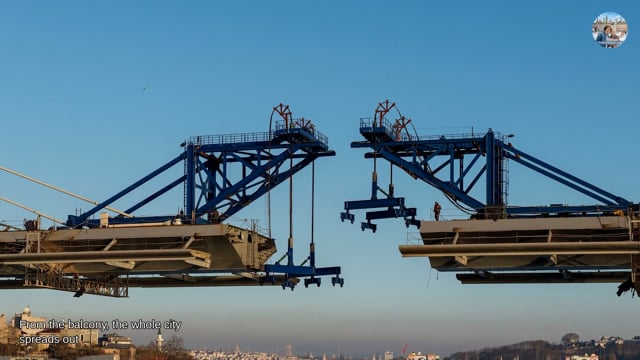
A lift and stairs lead to the gallery that runs around the top, with a panorama over the Golden Horn, the old city’s domes and minarets and the Bosphorus. The tower needs a ticket and queues can be long around sunset; the steep lanes around it are full of cafés. Walk this order on the Istanbul walking tour. Up from Karaköy → the tower from its square → the upper gallery → the Golden Horn panorama → down to the Bosphorus shore at Karaköy, 10 minutes.
Istanbul walking tour: Galata Tower
03 · Tour · videos inside this sight
Istanbul walking tour (video): Galata Tower – Karaköy Street Approach
Karaköy Street Approach
Istanbul walking tour (video): Galata Tower – Tower Base Exterior
Tower Base Exterior
Istanbul walking tour (video): Galata Tower – Upper Gallery Deck
Upper Gallery Deck
Istanbul walking tour (video): Galata Tower – Golden Horn Panorama
Golden Horn Panorama
Istanbul walking tour (video): Galata Tower – Exit Toward Bosphorus Shore
Exit Toward Bosphorus Shore
Advertisement
Ad slot

8. Bosphorus Strait

From stop 7 · 10 minutes down to the shore · 60–90 minutes, or a ferry ride
Map

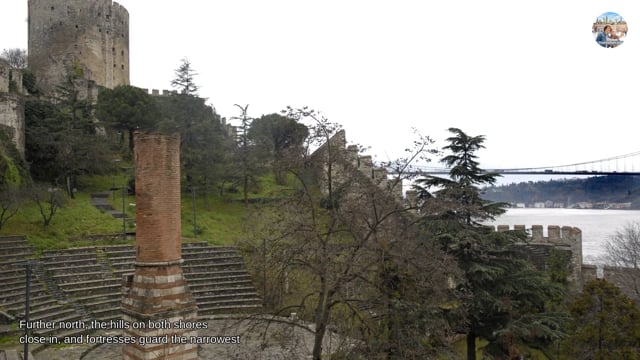
Along this Istanbul walking tour, the Bosphorus is the strait, about 31 kilometres long, that joins the Black Sea to the Sea of Marmara and divides Istanbul between Europe and Asia. From the waterfront at Karaköy and Kabataş you can watch ferries, fishing boats and huge cargo ships pass, with the Asian shore and the Maiden’s Tower opposite. Public ferries cross to Üsküdar and Kadıköy for the price of a transit card fare, and longer Bosphorus cruises run up the strait past wooden mansions, palaces and the fortress of Rumeli Hisarı, built in 1452 before the conquest.

The Bosphorus Bridge, opened in 1973, was the first bridge between the two continents. The shore is free. Walk this order. The waterfront promenade → a ferry or the view to the Asian shore → the shoreline fortresses → the bridge views → continue along the shore to Dolmabahçe Palace, about 20 minutes on foot or one tram T1 stop to Kabataş.
Istanbul walking tour: Bosphorus Strait
03 · Tour · videos inside this sight
Istanbul walking tour (video): Bosphorus Strait – Waterfront Promenade
Waterfront Promenade
Istanbul walking tour (video): Bosphorus Strait – Ferry and Asia Shore View
Ferry and Asia Shore View
Istanbul walking tour (video): Bosphorus Strait – Shoreline Fortress Glimpse
Shoreline Fortress Glimpse
Istanbul walking tour (video): Bosphorus Strait – Bridge Span Views
Bridge Span Views
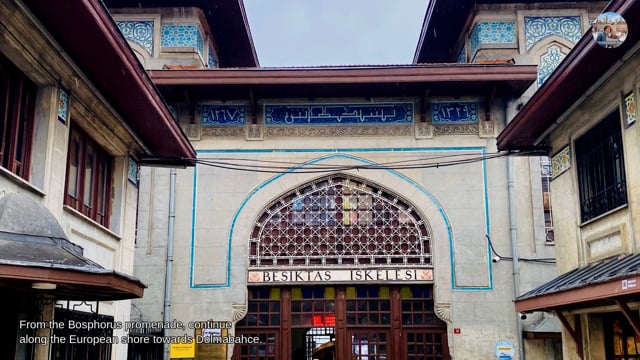
Istanbul walking tour (video): Bosphorus Strait – Continue Toward Dolmabahçe
Continue Toward Dolmabahçe
Advertisement
Ad slot

9. Dolmabahçe Palace

From stop 8 · about 20 minutes along the shore, or tram T1 to Kabataş · 90 minutes
Map

On this Istanbul walking tour, Dolmabahçe Palace was built from 1843 to 1856 for Sultan Abdülmecid I by the architects of the Balyan family, on land reclaimed from the Bosphorus; its name means filled garden. It replaced Topkapı as the main residence of the sultans and mixes Ottoman forms with European Baroque and Neoclassical style, with a seafront about 600 metres long, gilded ceilings and huge crystal chandeliers in the Ceremonial Hall.

Mustafa Kemal Atatürk, founder of the Turkish Republic, died here on 10 November 1938, and the palace clocks were stopped at 9:05, the time of his death. The clock tower by the entrance dates from the 1890s. The palace is visited on guided tours with a ticket and is closed on Mondays. Walk this order. The seaside gates → the ceremonial façade → the palace gardens → the clock tower grounds → about 30 minutes along the shore road, or a short bus ride, to Ortaköy.


Istanbul walking tour: Dolmabahçe Palace
03 · Tour · videos inside this sight
Istanbul walking tour (video): Dolmabahçe Palace – Seaside Gates
Seaside Gates
Istanbul walking tour (video): Dolmabahçe Palace – Ceremonial Facade
Ceremonial Facade
Istanbul walking tour (video): Dolmabahçe Palace – Palace Gardens
Palace Gardens
Istanbul walking tour (video): Dolmabahçe Palace – Clock Tower Grounds
Clock Tower Grounds
Istanbul walking tour (video): Dolmabahçe Palace – Exit Toward Ortaköy
Exit Toward Ortaköy
Advertisement
Ad slot

10. Ortaköy Mosque

From stop 9 · about 30 minutes along the shore, or a short bus ride · 45 minutes
Map

Along this Istanbul walking tour, the Ortaköy Mosque, officially the Büyük Mecidiye Mosque, stands on a quay jutting into the Bosphorus. It was built from 1854 to 1856 for Sultan Abdülmecid I by the Balyan family, the architects of Dolmabahçe, in an ornate neo-Baroque style with tall windows that fill it with light reflected from the water. Behind it, the Bosphorus Bridge crosses to Asia, one of the classic views of Istanbul.

The little square next to it is lined with cafés and stalls selling kumpir, baked potatoes with fillings, and waffles, and is busy with locals on weekends. Entry is free; it closes to visitors at prayer times. Walk this order. The waterfront square → the mosque on the quay → the bridge behind it → the façade up close → a quiet moment on the waterfront → end of the tour; buses run back along the shore to Kabataş for tram T1.
Istanbul walking tour: Ortaköy Mosque
03 · Tour · videos inside this sight
Istanbul walking tour (video): Ortaköy Mosque – Waterfront Square
Waterfront Square
Istanbul walking tour (video): Ortaköy Mosque – Mosque on the Quay
Mosque on the Quay
Istanbul walking tour (video): Ortaköy Mosque – Bosphorus Bridge Backdrop
Bosphorus Bridge Backdrop
Istanbul walking tour (video): Ortaköy Mosque – Facade Detail Close
Facade Detail Close
Istanbul walking tour (video): Ortaköy Mosque – Quiet Waterfront Close
Quiet Waterfront Close

Istanbul Walking Tour Overview Detail

This Istanbul walking tour links 10 sights and 50 short video stops narrated by Clarissa, from Hagia Sophia and the Blue Mosque on Sultanahmet Square to the covered streets of the Grand Bazaar, the Galata Tower and the palaces and mosques along the Bosphorus. The old city is compact, and trams, ferries and your own feet join the rest, so the notes below group the stops into practical days, with timing, dress codes, transport and the free sights worth knowing. For official visitor information, also check GoTürkiye, the official travel guide of Türkiye.

Best routes for your Istanbul walking tour using the 50 stops

Route 1, Sultanahmet (stops 1 to 4). Start at Hagia Sophia, built from 532 to 537 for the emperor Justinian, and play the videos about its great floating dome and its long history as church, mosque, museum and mosque again. Cross the square to the Sultan Ahmed Mosque, the Blue Mosque, with its six minarets and thousands of İznik tiles. Go underground at the Basilica Cistern, with its forest of marble columns and the Medusa heads, then walk up to Topkapı Palace, the Ottoman sultans’ home for almost four hundred years, with its courtyards, treasury and terraces over the water.

Between the two great mosques, take a few minutes in the old Hippodrome, the long square where Byzantine chariot races were held. Three monuments still stand on its central line: the Egyptian Obelisk of Theodosius, the bronze Serpent Column brought from Delphi and the Walled Obelisk, with the German Fountain at the northern end.

Route 2, the bazaars (stops 5 and 6). Walk west along the tram line to the Grand Bazaar, one of the largest and oldest covered markets in the world, with about 60 streets of jewellers, carpets, lamps and leather under painted vaults. Then follow the busy lanes downhill to Eminönü for the Spice Bazaar, an L-shaped hall of spices, dried fruit, tea and Turkish delight, next to the New Mosque. This part of the Istanbul walking tour is busiest at midday.

Route 3, across the Golden Horn (stop 7). Cross the Galata Bridge, where anglers line the railings, and climb the steep streets of Karaköy and Galata to the Galata Tower, built by the Genoese in 1348. From the gallery at the top, the old city, the Golden Horn and the Bosphorus spread out below you. Afterwards, walk up to İstiklal Avenue or down to the Karaköy waterfront for dinner.

Route 4, the Bosphorus (stops 8 to 10). From the waterfront at Karaköy or Kabataş, watch the ferries and cargo ships on the Bosphorus, the strait that divides Europe from Asia, with the Maiden’s Tower opposite. Walk along the shore to Dolmabahçe Palace, built for Sultan Abdülmecid I in the 19th century, with a seafront of about 600 metres and huge crystal chandeliers. End your Istanbul walking tour at the Ortaköy Mosque on its quay, with the Bosphorus Bridge behind it at sunset.

For photos, the best viewpoints on this Istanbul walking tour are the gallery of the Galata Tower, the Galata Bridge at sunset looking back at the mosques of the old city, the gardens between Hagia Sophia and the Blue Mosque, and the Ortaköy quay with the bridge behind. A public ferry to the Asian side is one of the cheapest and best sightseeing trips in the city.

With one day, walk Routes 1 and 2, the core free walking tour Istanbul visitors can do on foot in the old city. With three days, add Galata, the Bosphorus palaces and a ferry crossing to Üsküdar or Kadıköy on the Asian shore.

Best times and transport for an Istanbul walking tour

Spring and autumn are the best seasons for an Istanbul walking tour, with mild days and tulips in the parks in April. Summer is hot and crowded, so start early and enjoy the evenings by the water. Winter is cool, damp and sometimes snowy, but the queues are shorter. During Ramadan, the city stays lively after sunset, and some opening hours change.

Mosques close to visitors during the five daily prayers, and Friday midday prayers are the longest, so plan the Blue Mosque and the Ortaköy Mosque around them. Topkapı, Dolmabahçe and the Basilica Cistern each close one day a week, the Grand Bazaar closes on Sundays, and Hagia Sophia has special visiting arrangements for foreign visitors. Check each official site before you go, and book palace tickets online where possible.

The T1 tram runs from Kabataş along the Bosphorus shore, over the Galata Bridge and up to Sultanahmet and the Grand Bazaar, linking most of the stops on this route. Ferries cross between Eminönü, Karaköy, Kabataş, Üsküdar and Kadıköy, and the funicular and metro help with the hills. Buy an Istanbulkart transport card or use the payment options listed by the city’s transport operator before you travel.

From Istanbul Airport, the metro and airport buses run into the city, and taxis are widely available. If you arrive at Sabiha Gökçen Airport on the Asian side, allow extra time to cross the Bosphorus. If you are staying near Taksim or Karaköy, start with the Galata Tower and the Bosphorus and walk the stops in reverse; every stop has its own Map button.

Etiquette, food and safety on your Istanbul walking tour

Dress modestly for mosques. Cover your shoulders and knees, and women should cover their hair; scarves are often available at the entrance. Remove your shoes before you enter the prayer hall, speak quietly, do not walk in front of people praying, and keep to the visitor areas. At the Blue Mosque and Hagia Sophia, follow the signs and the staff’s instructions.

Istanbul is a superb food city. Try simit, the sesame bread ring, for breakfast, a fish sandwich by the Galata Bridge, köfte, kebabs, meze and baklava, and finish with Turkish tea or coffee. The Spice Bazaar is the place for Turkish delight and spices. Tipping is customary, usually around ten percent in restaurants. Most visitors drink bottled water rather than tap water.

Istanbul is generally safe, but pickpockets work the crowded trams, the bazaars and Sultanahmet Square, so keep your bag closed. In the bazaars, bargain politely and agree a price before you buy. Be wary of friendly strangers who invite you for a drink or lead you to a carpet shop, and use only official ticket offices. The hills and cobbles are steep, so wear sturdy shoes.

Istanbul was founded as Byzantion, refounded by Constantine as Constantinople in 330 and taken by the Ottoman sultan Mehmed II in 1453. That long history explains why Byzantine churches, Roman cisterns and Ottoman mosques stand side by side in Sultanahmet, and why the Historic Areas of Istanbul are a UNESCO World Heritage Site.

Free sights, museums and accessibility on an Istanbul walking tour

Several sights on this Istanbul walking tour are free. The Blue Mosque and the Ortaköy Mosque are free to enter outside prayer times, and Sultanahmet Square, the Hippodrome, the Grand Bazaar, the Spice Bazaar, the Galata Bridge and the Bosphorus waterfront cost nothing to walk. You pay for Hagia Sophia, the Basilica Cistern, Topkapı Palace and its Harem, the Galata Tower and Dolmabahçe Palace.

Some state museums offer museum passes or reduced prices for certain visitors, and children often enter free. Prices and rules change frequently, so check the official sites before your Istanbul walking tour and buy tickets only from official desks or websites.

Accessibility in Istanbul takes planning. The old city is hilly, many pavements are narrow or broken, and mosques, palaces and cisterns often have steps. The T1 tram is low-floor, and the Sultanahmet area has some level paths between Hagia Sophia and the Blue Mosque. The climb to the Galata Tower is steep, though the tower has a lift. Ask each site about step-free access before you go.

After this Istanbul walking tour, carry on with more free walks: the Athens walking tour, the Rhodes walking tour, the Tbilisi walking tour and the Cairo walking tour. You can browse every city on the Free City Tours home page.

Istanbul walking tour FAQ

Is this Istanbul walking tour really free?

Yes. All 50 video stops on this Istanbul walking tour are free to watch, and the Blue Mosque, the bazaars, Sultanahmet Square, the Galata Bridge and the Bosphorus shore are free to visit. You only pay for the palaces, Hagia Sophia, the cistern and the tower. It is a genuine free walking tour Istanbul visitors can follow at their own pace.

How long does the Istanbul walking tour take?

Allow three days. Sultanahmet and the bazaars fill one long day, Galata and the Bosphorus palaces fill another, and a third day leaves time for a ferry to the Asian side and slower visits to Topkapı.

Where does the Istanbul walking tour start?

It starts at Hagia Sophia on Sultanahmet Square, close to the Sultanahmet tram stop. You can join at any stop, because each one has its own Map button and five short videos.

Is the Istanbul walking tour suitable for children and wheelchair users?

Children usually enjoy the cistern, the bazaars, the tower and the ferries. Wheelchair users should expect hills, cobbles and steps, though the T1 tram is low-floor and the Galata Tower has a lift.

Do I need an app or mobile data for the Istanbul walking tour?

You don’t need an app. Open this page in your phone’s browser and play the videos as you go. The videos stream, so use mobile data or Wi-Fi, or watch them before you go underground at the cistern, where signal can be weak.