Athens Walking Tour Overview Detail
This Athens walking tour links 10 sights and 50 short video stops narrated by Clarissa, from the Acropolis and the Parthenon to the Acropolis Museum, Plaka, the Ancient Agora, Monastiraki, the Temple of Olympian Zeus, the Panathenaic Stadium, Syntagma Square, the National Archaeological Museum and Mount Lycabettus. The notes below group the stops into walkable routes and add the timing, transport, etiquette and ticket details that make the Greek capital easier to enjoy. For official events and visitor information, also check This is Athens, the official guide to Athens.
Best routes for your Athens walking tour using the 50 stops
Route 1, the Acropolis (stops 1 and 2). Start as early as you can at the Acropolis, entering through the Propylaea past the Temple of Athena Nike to the Parthenon and the Erechtheion with its Caryatid porch. Walk down the south slope to the Acropolis Museum, where glass floors show the excavations below, the archaic sculptures and the original Caryatids stand inside, and the top floor lays out the Parthenon frieze with the rock in view through the windows.
Route 2, the old town (stops 3 to 5). From the museum, climb into Plaka, the old neighbourhood under the rock, and lose yourself in the whitewashed lanes of Anafiotika, the neoclassical shop streets and the Lysicrates Monument. Walk down to the Ancient Agora for the Stoa of Attalos and the Temple of Hephaestus, the best-preserved temple of its age in Greece, then step out into Monastiraki for the square, the Tzistarakis Mosque, the flea market lanes and Hadrian’s Library.
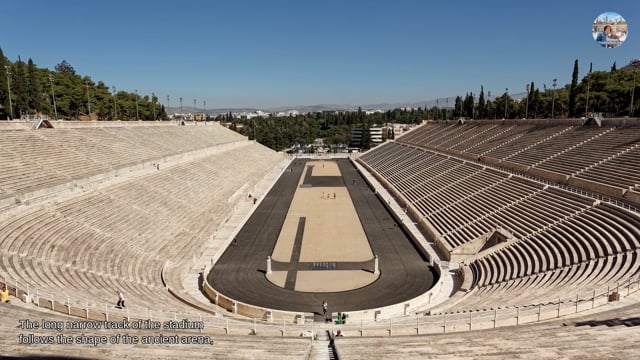
Route 3, classical giants and modern Athens (stops 6 to 8). Walk to Hadrian’s Arch and the Temple of Olympian Zeus, with its standing Corinthian columns, then on to the Panathenaic Stadium, the marble horseshoe rebuilt for the first modern Olympic Games in 1896. Cross the National Garden to Syntagma Square for the Hellenic Parliament, the Tomb of the Unknown Soldier and the changing of the Evzone guard.
Route 4, the museum and the hill (stops 9 and 10). Take the metro to the National Archaeological Museum for the Mycenaean gold, the kouroi and the great bronze of Zeus or Poseidon, then head to Kolonaki and climb Mount Lycabettus on foot or by funicular for the sunset view over the Acropolis and the sea. If you only have one day, Routes 1 and 2 make the best free walking tour Athens offers on foot, from the Parthenon to Monastiraki.
Between the stops, Athens rewards a wander. Psyrri, next to Monastiraki, is full of street art, tavernas and bars, the Varvakios central market on Athinas Street is a noisy, colourful place to see local life, and the pedestrian Dionysiou Areopagitou, the wide walkway below the Acropolis, links the main sites in the shade of pine and olive trees.
For photos, the best free viewpoints on this Athens walking tour are Mount Lycabettus at sunset, the Areopagus rock just below the Acropolis entrance, Filopappou Hill opposite the Parthenon and the rooftop bars around Monastiraki. Early morning light on the Parthenon is the most beautiful of the day.
A three-day Athens walking tour works well as Routes 1 and 2 on day one, Route 3 on day two and Route 4 with a slower afternoon in Kolonaki on day three. In summer, do the outdoor sites first thing in the morning and keep the museums for the hottest hours.
Best times and transport for an Athens walking tour
Spring and autumn are the best seasons for an Athens walking tour, with warm, sunny days and fewer crowds. July and August are very hot, often above 35°C, and the Acropolis may close in the middle of the day during heatwaves, so check before you go. Winter is mild and quiet, with shorter opening hours at the archaeological sites and occasional rain.
Arrive at the Acropolis when it opens, or late in the afternoon, and book a timed entry slot online in advance. The changing of the guard at the Tomb of the Unknown Soldier happens every hour, with a larger ceremony on Sunday mornings. The Monastiraki flea market is busiest on Sundays. Check each official website for current opening times before you plan each day of your Athens walking tour.
The centre of Athens is compact, and most of the main sights are linked by pedestrian streets, so walking is the best way to get around. The metro is quick for the longer hops to the National Archaeological Museum and Kolonaki, and buses and trams cover the rest. Buy tickets at machines or with the official ticket app, or tap a contactless card where readers accept it, and keep your ticket until you leave the station. From the airport, metro line 3 and express buses run into the city.
With an extra day, the Temple of Poseidon at Cape Sounion, about 70 kilometres south along the coast, is famous for its sunsets, and the ancient theatre of Epidaurus and the citadel of Mycenae make a longer day trip into the Peloponnese. The islands of Aegina, Hydra and Poros are an easy ferry ride from Piraeus, so a short island hop fits into even a brief stay.
Piraeus, the port for the islands, is linked to the centre by metro line 1 and the tram, so it is easy to start or end your trip with a ferry. Every stop on this Athens walking tour has its own map link, so you can start wherever your hotel is.
Etiquette, food and safety on your Athens walking tour
Greeks are warm and welcoming, and a simple “kaliméra” (good morning) or “efcharistó” (thank you) is appreciated. Cover your shoulders and knees to enter churches, and speak quietly inside. On the Acropolis and at the other ancient sites, stay on the paths, don’t touch or climb on the marble, and don’t take away stones. Drones are not allowed over the archaeological sites without a permit.
Food is a highlight of any Athens walking tour. Try souvlaki and gyros from a street grill, a Greek salad with feta, moussaka, fresh fish, and loukoumades, small honey doughnuts, and cool down with an iced coffee such as a freddo espresso. Psyrri, Plaka and Koukaki have tavernas for every budget. Tipping is welcome but not compulsory; rounding up or leaving five to ten percent is usual for good service.
Athens is generally safe, but pickpockets work the metro, especially line 1 and the airport line, and the crowds at Monastiraki and the flea market. Keep your bag closed and in front. The marble paths on the Acropolis are polished and slippery, so wear shoes with good grip. Carry water and a hat in summer, because shade is scarce at the ancient sites. In an emergency, dial 112.
Tickets, free sights and accessibility on an Athens walking tour
Several stops on this Athens walking tour charge an entry fee: the Acropolis, the Acropolis Museum, the Ancient Agora, Hadrian’s Library, the Temple of Olympian Zeus, the Panathenaic Stadium and the National Archaeological Museum. A combined ticket covers the Acropolis and several other archaeological sites and can save money if you plan to visit them all. Check the official ticket website for current prices, free days and opening times.
Plenty is free. Plaka, Anafiotika, Monastiraki and the flea market, Syntagma Square with the changing of the guard, the National Garden and the walk up Mount Lycabettus cost nothing, and the funicular to the top is a cheap ride when it is running. The pedestrian walkway around the Acropolis, Filopappou Hill and the Areopagus rock are free viewpoints too.
For accessibility, Athens is hilly and many pavements are uneven, but things have improved. The Acropolis has a lift for visitors with limited mobility, and paved paths on the summit, though the surface is still uneven. The Acropolis Museum and the National Archaeological Museum are fully accessible, and most metro stations have lifts. Plaka and Anafiotika have steep, narrow lanes and steps. Check each venue’s accessibility information before your Athens walking tour.
After this Athens walking tour, carry on with more free walks: the Thessaloniki walking tour in northern Greece, the Rhodes walking tour on the island of Rhodes, the Istanbul walking tour and the Rome walking tour. You can browse every city on the Free City Tours home page.
Athens walking tour FAQ
Is this Athens walking tour really free?
Yes. All 50 video stops on this Athens walking tour are free to watch, and Plaka, Monastiraki, Syntagma Square, the changing of the guard and Mount Lycabettus are free to visit. The Acropolis, the museums and the other ancient sites charge, so this is a free walking tour Athens visitors can shape to any budget.
How long does the Athens walking tour take?
Allow two or three days. The Acropolis, the museum, Plaka, the Agora and Monastiraki fill one day, the Olympian Zeus, the stadium and Syntagma another, and the National Archaeological Museum with Lycabettus at sunset makes a good third.
Where does the Athens walking tour start?
It starts at the Acropolis, a short walk from Acropoli metro station. You can join at any stop, because each one has its own map link and five short videos.
Is the Athens walking tour suitable for children and wheelchair users?
Yes. Children enjoy the Evzone guards, the Panathenaic Stadium and the Acropolis Museum’s glass floors. Wheelchair users can use the Acropolis lift and the accessible museums, but should expect uneven paths and steep lanes in Plaka.
Do I need an app or mobile data for the Athens walking tour?
You don’t need an app. Open this page in your phone’s browser and play the videos as you walk. The videos stream, so use mobile data or free Wi-Fi in cafés and museums.