Venice Walking Tour Overview Detail
This Venice walking tour links 10 sights and 50 short video stops narrated by Clarissa, from St Mark’s Basilica and St Mark’s Square to the Doge’s Palace, the Grand Canal, the Rialto Bridge, the Bridge of Sighs, the Campanile, the Peggy Guggenheim Collection and the lagoon islands of Murano and Burano. The notes below group the stops into walkable routes and boat hops, and add the timing, transport, etiquette and ticket details that make the city on the water easier to enjoy. For official events and visitor information, also check Venezia Unica, the official city tourism portal of Venice.
Best routes for your Venice walking tour using the 50 stops
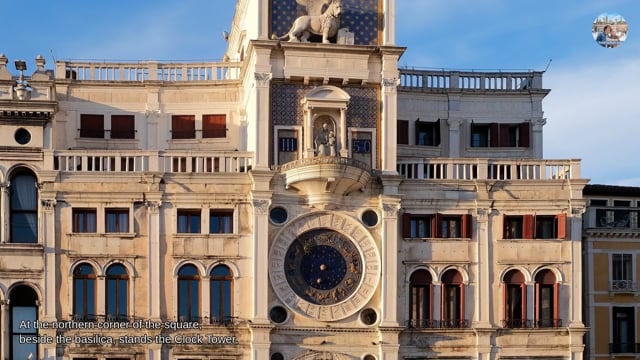
Route 1, San Marco (stops 1 to 3, 6 and 7). Start early at St Mark’s Basilica for the west facade, the narthex mosaics, the golden domes and the horses on the loggia. Step out into St Mark’s Square for the Procuratie arcades, Caffè Florian, the Clock Tower and the two columns of the Piazzetta. Visit the Doge’s Palace for the Porta della Carta, the Giants’ Staircase, the Golden Staircase and Tintoretto’s Paradise in the Great Council Hall, and cross the Bridge of Sighs inside. Finish this part of the Venice walking tour by riding the lift up the Campanile for the view over the roofs and the lagoon.
Route 2, the Grand Canal and Rialto (stops 4 and 5). Board vaporetto line 1, which stops at every station along the Grand Canal, and watch the palaces go by: Santa Maria della Salute at the mouth, the wooden Accademia Bridge and the Gothic Ca’ d’Oro. Get off at Rialto for the bridge itself, the shops on its arch, the view from the top and the Rialto Market, which is best in the morning.
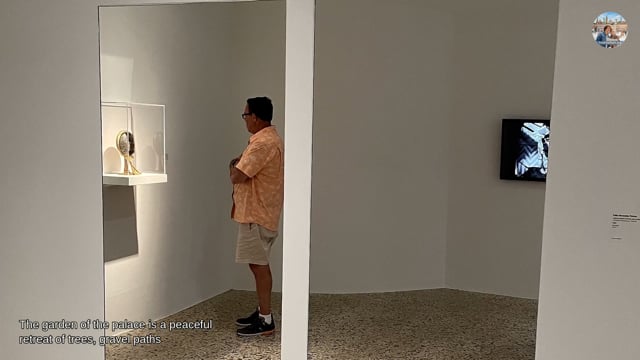
Route 3, Dorsoduro (stop 8). Walk or take the vaporetto to the Peggy Guggenheim Collection in the Palazzo Venier dei Leoni, with its modern art galleries, the sculpture garden and the terrace on the Grand Canal. Dorsoduro is one of the quieter parts of the city, with the Zattere waterfront for a sunny walk afterwards.
Route 4, the lagoon islands (stops 9 and 10). From Fondamente Nove, take a vaporetto to Murano to watch glassblowers at the furnaces, visit the Glass Museum and the mosaic floor of Santa Maria e Donato, then continue to Burano for the painted houses, the Lace Museum and the leaning bell tower of San Martino. If you only have one day, Routes 1 and 2 make the best free walking tour Venice offers, from St Mark’s to the Rialto.
Between the stops, Venice is at its best when you get a little lost. Cannaregio, around the old Jewish Ghetto, and Castello, east of San Marco, are where Venetians live, with washing lines, small squares and neighbourhood bars. Signs on the walls point the way back to Rialto and San Marco, so you can wander without worrying.
For photos, the best free viewpoints on this Venice walking tour are the Accademia Bridge looking toward Santa Maria della Salute, the Ponte della Paglia for the Bridge of Sighs, the top of the Rialto Bridge and the Riva degli Schiavoni at sunset, looking across to San Giorgio Maggiore. Early morning in St Mark’s Square, before the crowds, is unforgettable.
A three-day Venice walking tour works well as Route 1 on day one, Routes 2 and 3 on day two, and the islands on day three. Staying overnight lets you see San Marco and the Rialto early and late, when the day visitors have gone.
Best times and transport for a Venice walking tour
Spring and autumn are often the best seasons for a Venice walking tour, with mild weather and fewer crowds than in summer, when the city is hot and busy. Carnival in February brings masks and costumes, and the Biennale, the great art and architecture exhibition, runs through much of the year. From autumn to early spring, high tides called acqua alta can flood low parts of the city, including St Mark’s Square, though the MOSE flood barriers now protect the city from most high tides.
Start early at St Mark’s Basilica and the Doge’s Palace, and book timed entry for both if you can. The Rialto Market is a morning affair, and its fish market is closed on Sundays and Mondays. Venice charges an access fee to day visitors on certain peak days, while overnight guests are exempt but must be registered through their hotel. Check the city’s official website before you plan each day of your Venice walking tour.
There are no cars in Venice, so you walk or take the boat. The ACTV vaporetto water buses cover the Grand Canal, the lagoon and the islands, and a travel card for one or more days is better value than single tickets if you plan several rides. Validate your ticket before boarding. A traghetto, a public gondola ferry, crosses the Grand Canal at a few points for a small fare. From Marco Polo Airport, the Alilaguna boats and the airport buses to Piazzale Roma run into the city.
Walking is the best way to link most stops, though the lanes are narrow and bridges have steps, so pack light. Every stop on this Venice walking tour has its own map link, which helps in a city where phone maps can be confusing.
Etiquette, food and safety on your Venice walking tour
Venice has rules to protect the city, and fines are possible. Don’t sit and eat on bridges or in St Mark’s Square, don’t swim in the canals and don’t feed the pigeons. Keep to the right in narrow lanes and don’t stop on bridges, so people can pass. Dress modestly to enter St Mark’s Basilica and other churches, with shoulders and knees covered, and leave large bags in the official left-luggage area.
Food is a highlight of any Venice walking tour. Do as Venetians do and stop at a bacaro, a small wine bar, for cicchetti, small snacks on bread, with an ombra, a glass of wine. Try sarde in saor, sweet and sour sardines, black squid-ink risotto and fritto misto, and buy fruit at the Rialto Market. Away from San Marco, prices drop and quality rises. Restaurants often add a cover charge, so tipping is not expected.
Venice is a safe city, but pickpockets work the crowds at the Rialto, St Mark’s Square and on busy vaporetti. Keep your bag closed and in front. Agree the price of a gondola ride before you step in; official rates are set by the gondoliers’ association. In an emergency, dial 112.
Tickets, free sights and accessibility on a Venice walking tour
Several stops on this Venice walking tour need tickets. St Mark’s Basilica charges for entry, with extra tickets for the museum and the loggia, and the Doge’s Palace, the Campanile, the Peggy Guggenheim Collection, the Murano Glass Museum and the Burano Lace Museum all charge. The Doge’s Palace ticket includes the walk through the Bridge of Sighs. The Peggy Guggenheim Collection is closed on Tuesdays. Check each official website for current prices and opening times.
Plenty is free. St Mark’s Square, the Piazzetta, the Rialto Bridge, the Rialto Market, the view of the Bridge of Sighs from the Ponte della Paglia and the painted streets of Burano cost nothing to see, and you can watch glassblowing in some Murano furnaces for free. Simply walking the lanes and campi is one of the best things to do in Venice.
For accessibility, Venice is challenging, because most bridges have steps. The vaporetto boats are accessible for wheelchairs and are the best way to move around, and the city publishes a barrier-free map that shows the areas you can reach without bridges from each stop. St Mark’s Square and the Riva degli Schiavoni are flat. During acqua alta, raised walkways are set up on the main routes. Check access at each venue before your Venice walking tour.
After this Venice walking tour, carry on with more free walks in Italy: the Verona walking tour, an hour away by train, the Milan walking tour, the Bologna walking tour and the Florence walking tour. You can browse every city on the Free City Tours home page.
Venice walking tour FAQ
Is this Venice walking tour really free?
Yes. All 50 video stops on this Venice walking tour are free to watch, and St Mark’s Square, the Rialto Bridge, the market and the streets of Burano are free to explore. The Basilica, the Doge’s Palace, the Campanile, the museums and the boats charge, so this is a free walking tour Venice visitors can shape to any budget.
How long does the Venice walking tour take?
Allow two or three days. San Marco and the Campanile fill one day, the Grand Canal, the Rialto and the Peggy Guggenheim another, and Murano and Burano make a good half day by boat.
Where does the Venice walking tour start?
It starts at St Mark’s Basilica on St Mark’s Square, about half an hour’s walk or a vaporetto ride from the railway station. You can join at any stop, because each one has its own map link and five short videos.
Is the Venice walking tour suitable for children and wheelchair users?
Yes, with planning. Children love the boats, the glassblowers of Murano and the coloured houses of Burano. Wheelchair users should use the accessible vaporetti and the city’s barrier-free map, because most bridges have steps.
Do I need an app or mobile data for the Venice walking tour?
You don’t need an app for the videos. Open this page in your phone’s browser and play them as you walk. The videos stream, so use mobile data or free Wi-Fi in cafés and museums, and use the map links, because the lanes are a maze.