Munich Christmas Market Guide: The Best Markets and How to Visit Them
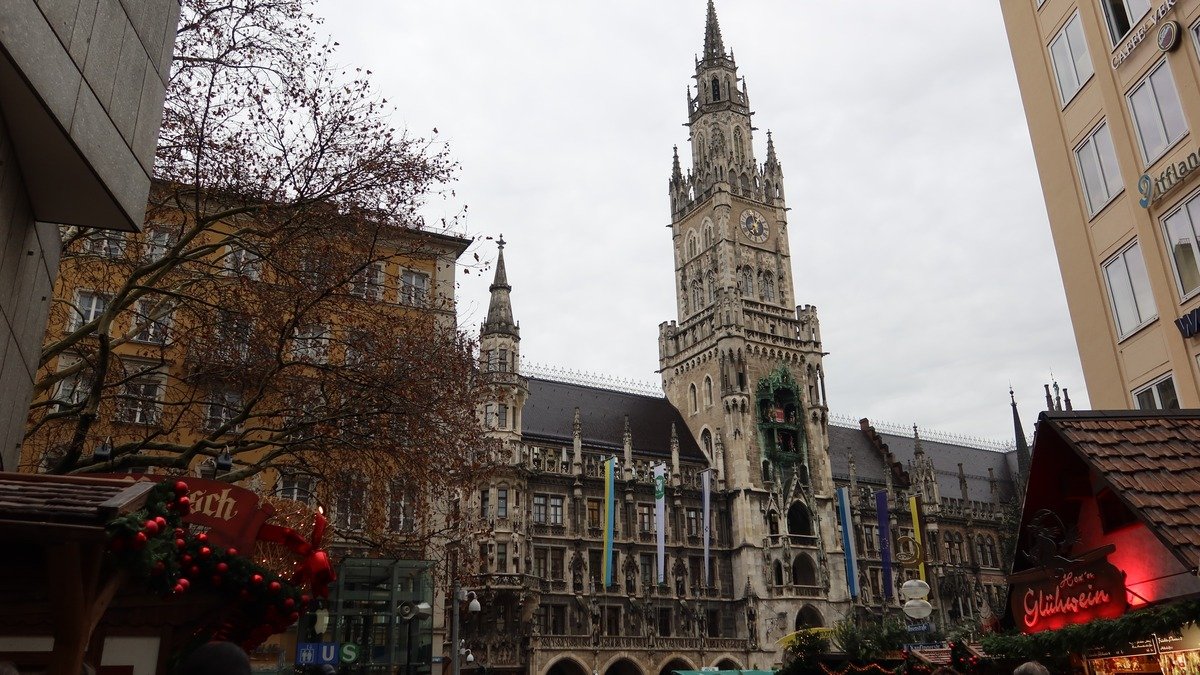
Munich does Christmas on a grand scale. The city has one famous central market, a handful of distinctive ones that each feel different, and a long tail of neighbourhood markets that locals treat as their own. This guide helps you decide which ones are worth your time, how they differ, and how to fit the best of them into a single day on foot. Everything below was checked against official sources on 19 November 2026.
If you only have a short break, the short version is this: spend your first hour on Marienplatz, then add one market that matches your mood (crafts, medieval atmosphere, or a walk in the park), and leave the rest.
Munich’s Christkindlmarkt tradition
The word Christkindlmarkt simply means “Christ Child market”, and in Munich it is the name of the big market around the Marienplatz. The city’s own tourist office describes it as the original among Munich’s Christmas markets, and says its roots go back to the Nikolaimärkte (St Nicholas markets) of the 14th century. It has had its permanent home on and around the main square since 1972. It is run by the city itself, through the Munich department for labour and economic affairs, rather than by a private promoter.
In 2026 the market has 138 stalls. They are not all on the square itself: they spread from Marienplatz to the Alter Peter church, along the pedestrian zone of Kaufingerstraße and Neuhauser Straße, into Weinstraße and Sendlinger Straße, and onto the Rindermarkt. It is a market you wander through rather than one you see all at once.
One planning detail catches visitors out every year. The Christkindlmarkt is closed on Sunday 22 November, the Protestant memorial day known as Totensonntag, and several of the other markets are closed that day too. After that it opens every day until Christmas Eve.
The goods on sale lean traditional. Expect hand-painted glass pictures, wool slippers, honey, straw stars, tree decorations and a very large nativity-scene market (more on that below).
The main markets at a glance
This is a quick orientation. The exact opening and closing dates for each market are on our 2026 season calendar for Munich, and daily clock times are on our guide to opening times and holiday exceptions, so we won’t repeat them here.
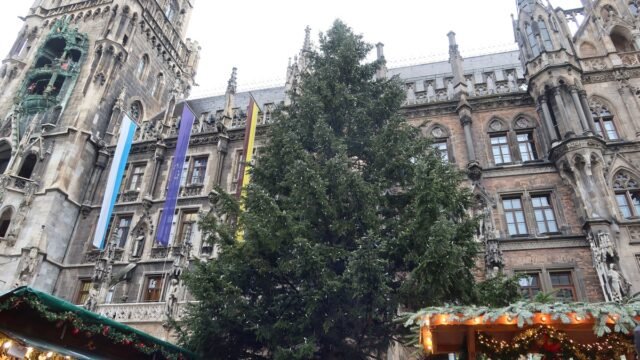
- Marienplatz Christkindlmarkt – the classic. The market stands in front of the neo-Gothic Neues Rathaus, with a 22-metre Christmas tree donated by the Bavarian municipality of Sauerlach this year. Our place guide to the Marienplatz market covers it in detail.
- Kripperlmarkt – the nativity-scene market in front of the Alter Peter, part of the same city-run market. You will find whole nativity scenes, individual figures and everything for the stable, from tiny lanterns to the gifts of the Three Kings. Munich’s tourist office calls it probably Germany’s largest nativity-scene market.
- Christmas Village in the Kaiserhof of the Residenz – a courtyard market inside the city palace, entered from Residenzstraße by Odeonsplatz. It has more than 50 stalls of crafts and food, a free “fairytale forest” for children and, importantly, free entry.
- Münchner Adventsspektakel (medieval market) on Wittelsbacherplatz – wooden huts, costumed traders, craftspeople at work, flammkuchen and hot mead. It is the market for people who like their Christmas with a bit of theatre.
- Christkindlmarkt at Sendlinger Tor – a small, long-running market at one of the city’s remaining medieval gates.
- Pink Christmas on Stephansplatz – a small LGBTIQ* market in the Glockenbachviertel, close to Sendlinger Tor, with a stage programme and free entry.
- Winter at the Viktualienmarkt – not a separate market but Munich’s famous food market in festive mode, with lights and mulled wine, and a nativity scene by the beer garden.
- Christmas market at the Chinese Tower – in the English Garden, around the wooden pagoda. A market of small huts with crafts, a historic carousel, a children’s railway, carriage rides at weekends and ice-stock (Bavarian curling) lanes you can reserve.
- Tollwood Winter Festival on Theresienwiese – the “alternative” Christmas market. See the box below, because it works very differently from the others.
- District markets – Haidhausen (Weißenburger Platz), Schwabing (Münchner Freiheit), Neuhausen (Rotkreuzplatz), the Märchenbazar at Olympiapark and more. The tourist office describes the Haidhausen market as one that “some consider the most beautiful in Munich”.
What about Nymphenburg and Tollwood?
Tollwood is a different kind of event. It is a festival on the Oktoberfest grounds, with big heated tents, circus and dance productions, concerts, and a “Market of Ideas” of fair-trade crafts and organic food. Tollwood says that more than 90 per cent of its events are free of charge, but the theatre productions in the big tent are ticketed, so check tollwood.de before you go. The 2026 winter festival runs from 24 November to 23 December, with a New Year’s Eve party on 31 December. It is a good evening out, but it is not a traditional street Christkindlmarkt.
Nymphenburg Palace is often listed in older guides as having a Christmas market in its forecourt. When we checked on 19 November 2026, we could not find one listed for 2026 on the palace’s own events page or in the Munich tourist office’s market list. The tourist office does list a small market at nearby Blutenburg Castle (3 to 6 December) and the Neuhauser market at Rotkreuzplatz, which is on the way back into town. If a Nymphenburg market matters to your plans, check the palace’s website for news close to your date. The palace itself remains well worth a visit in winter (see the one-day plan below).
Which market should you visit?
The markets overlap, so choose by what you want from the evening rather than trying to tick them all off.
- First visit, want the postcard: Marienplatz and the Rindermarkt, ideally at dusk when the lights come on. Add the Kripperlmarkt, which takes ten minutes and is unlike anything most visitors have seen.
- Want crafts and a calmer pace: the Residenz Christmas Village. It is tucked away from the wind and the crowds, and free to enter.
- Want atmosphere and something different: the medieval market on Wittelsbacherplatz, especially after dark.
- Travelling with children: the Chinese Tower (carousel and railway), the Residenz fairytale forest, and the free Himmelswerkstatt craft workshop in the town hall for children aged six to twelve (26 November to 13 December, registration required through the Kindermuseum).
- Want to feel like a local: Haidhausen or Schwabing, or the Neuhauser market at Rotkreuzplatz. They are smaller and less touristy.
- Visiting after Christmas: the traditional markets close by 24 December, but a few things carry on. The Viktualienmarkt’s winter programme and the Feuerzangenbowle at Isartor both run into early January, and Tollwood has its New Year’s Eve party. See the dates guide for the details.
A one-day city-centre plan
This plan keeps you in the old town for most of the day, so you can do it entirely on foot. Walking times are our estimates for an easy pace.
- Late morning – Marienplatz. Arrive before 11am for the Glockenspiel in the town hall tower, which plays at 11am and noon every day (and 5pm from March to October). Then walk the market, including the Rindermarkt and the Kripperlmarkt by the Alter Peter. It is a 3-minute walk from the square to the Rindermarkt.
- Midday – Frauenkirche and Viktualienmarkt. The twin-towered Frauenkirche is a few minutes from Marienplatz, and the Viktualienmarkt is about 4 minutes the other way. This is a good place for lunch.
- Early afternoon – Residenz Christmas Village. It is about 9 minutes from Marienplatz, via the Alter Hof, where a new “Winterhof” market also opened this season. The village is open daily 11am to 9pm.
- Late afternoon – Wittelsbacherplatz. About 11 minutes on from the Residenz. Aim to arrive as the light fades, around 4pm in December, when the medieval market is at its best.
- Evening – back to Marienplatz. Walk back via Karlsplatz and the pedestrian zone (roughly 20 minutes), look at the illuminated streets, and catch the brass and choir music from the town hall balcony, which plays from 5.15pm for about half an hour from Sunday to Thursday.
Our walking route between the main markets shows the same loop with an alternative order and walking times between each stop.
Optional outings
- Chinese Tower, English Garden. About 30 to 35 minutes on foot from Marienplatz through the Hofgarten and into the park, or a short bus or tram ride. The market is open Wednesday to Sunday (plus 21 to 23 December), 11.30am to 8.30pm on weekdays and 11am to 8.30pm at weekends.
- Nymphenburg Palace. The palace is open daily 10am to 4pm in winter (closed 24, 25 and 31 December); the park is free and open 6am to 6pm in November and December. By public transport, take the U-Bahn to Rotkreuzplatz and then a tram, as the palace’s own website suggests. Allow about half an hour each way.
- Tollwood. Take the U4 or U5 to Theresienwiese.
What it costs and what is free
Entry to every traditional Munich market is free. You pay only for what you eat, drink and buy. That includes the Marienplatz market, the Residenz Christmas Village, the medieval market’s grounds, the Chinese Tower and Tollwood’s festival grounds.
- Glühwein: Munich is not a cheap place for it. A 2026 consumer survey by the voucher site Coupons.de, reported by BR24 on 10 November 2026, put a cup at the Munich Christkindlmarkt at about €7, and other 2026 press checks gave €5 to €7 depending on the stall. A 2025 survey of 24 Munich markets reported by t-online found most charging about €5 to €6, with Marienplatz at the top end, up to €7.50. Prices vary by stall and by wine, so check the price board before you order.
- Cup deposits: each stall sets its own cup and deposit. According to the city’s economic department (quoted by t-online in December 2025), most Marienplatz stalls charge a €5 deposit, which you get back when you return the cup. Ask at the stall, and keep the receipt or token if you are given one.
- Free extras: the Krampuslauf procession on Sunday 13 December (3pm to 5pm, more than 300 costumed performers through the old town) costs nothing, and neither does singing under the Christmas tree on four Wednesdays in Advent.
- If you add Nymphenburg: the palace ticket is €10 (€9 reduced), and under-18s go free. The park is free.
- Cards or cash: card acceptance varies stall by stall. Bring some euros in coins and small notes for tips, deposits and smaller stalls.
Walk the centre with our free Munich tour
If you would rather have the old town explained as you walk, our free self-guided walking tour of Munich plays on your phone, with no app to download, no sign-up and no guide to tip. It starts at Marienplatz, where a short narrated video explains the Mariensäule column, the New Town Hall facade, the Glockenspiel show, the Old Town Hall and the Fischbrunnen fountain. Later stops include the Frauenkirche, the Viktualienmarkt and the Residenz, which line up neatly with the market stops above, so you can see the sights and the stalls on the same walk.
The tour also visits the English Garden (at the Eisbach wave on the southern edge of the park, a good distance from the Chinese Tower) and Nymphenburg Palace, so you can build a longer day around it.
Food and drink: a short taste
Expect Glühwein and fruit punch, Bratwurst in a roll, roasted almonds and gingerbread. This year the city’s own market lists fish specialities at two places, on the Rindermarkt and, new this year, next to the Alte Akademie on Neuhauser Straße, plus vegan, gluten-free and lactose-free options (ask at the stall about ingredients). Beyond Marienplatz, look out for Feuerzangenbowle (a rum-soaked sugar loaf set alight over red wine) at Isartor, and hot mead at the medieval market. We cover what to order, and what to skip, in our guide to eating and drinking at the Munich markets.
Practical tips
- Crowds: Marienplatz is at its most crowded on Saturday afternoons and evenings and around the Glockenspiel at 11am and noon. For a calmer visit, go on a weekday morning or early afternoon. The Krampuslauf on 13 December can draw tens of thousands of spectators, so arrive early or avoid the route.
- Evenings: the Christmas lights in the old town switch on around dusk (about 4pm) and stay lit until 6 January. The Marienplatz market stalls close at 9pm Monday to Saturday and 8pm on Sundays, and at 2pm on Christmas Eve.
- Getting there: the U3, U6 and all S-Bahn lines stop at Marienplatz. A special Christkindltram, with mulled wine on board, runs on Fridays and weekends from 27 November to 20 December, but booking in advance is advised.
- Families: the carousel and railway at the Chinese Tower and the Residenz fairytale forest are the easiest wins with small children. Pushchairs are manageable in the pedestrian zone, though it gets crowded.
- Accessibility: the old-town markets are on flat, pedestrianised streets. The Wittelsbacherplatz market says its circuit and entrances are step-free, and the town-hall carol-singing is fully accessible. Always check with each market if you have specific needs.
- Weather: dress for cold, damp evenings. Cobbles can be slippery after rain or frost.
FAQ
Where is the main Munich Christmas market?
On Marienplatz and the surrounding streets in the old town. The city-run Christkindlmarkt is the main one. Read our guide to the Marienplatz Christkindlmarkt for the layout.
When do Munich’s Christmas markets start in 2026?
The Marienplatz Christkindlmarkt opens on Friday 20 November and runs to Thursday 24 December, closed on Sunday 22 November. Several others start the same day and a few differ. See the dates guide for each one.
What time do they close?
The Marienplatz stalls close at 9pm Monday to Saturday and 8pm on Sundays, with some stalls staying open to 10pm on the Shopping Nights on 27 November and 12 December. On Christmas Eve the market closes at 2pm. Other markets keep their own hours; see our opening-times guide.
Is Tollwood part of the Christmas market?
No. Tollwood is a separate winter festival on Theresienwiese, with an organic “Market of Ideas”, heated tents and ticketed theatre shows. Entry to the grounds is free and it runs from 24 November to 23 December 2026.
Can you visit Nymphenburg on the same day?
Yes, as a separate outing. The palace is open until 4pm in winter, so go in the morning or early afternoon, then return for the markets. We could not find a Christmas market at the palace listed for 2026, so treat it as a sightseeing trip rather than a market stop.
Start your Munich walk
Between the stalls, Munich is a wonderfully walkable city. Open our free self-guided walking tour of Munich on your phone at Marienplatz, and let the stops guide you through the old town at your own pace.