Free City Tours
Free City ToursRome walking tour · freecitytours.org
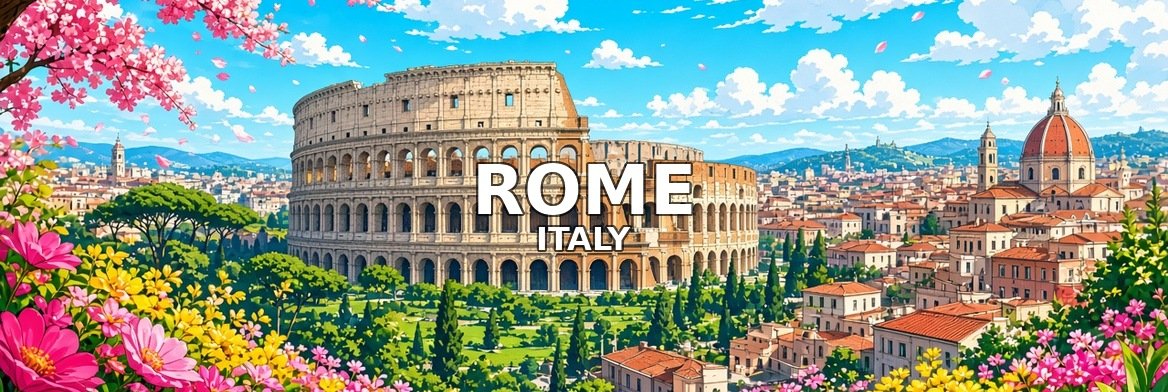
Rome walking tour banner with the Colosseum

Rome Walking Tour: 50 Free Video Stops

01 Select

Pick your next attraction

Tap a button below and lock in the attraction you want.
02 Map

Press Map to get there from where you are

A live route opens from where you stand to the attraction. You need to be in the city you are touring.
03 Tour

Use the Videos to tour the attraction you selected

Open each station video and follow the best path through the attraction itself.
This Rome walking tour starts at the Colosseum and follows the ancient centre, the baroque squares and the Vatican in one free, self-guided route. Rome is the capital of Italy, a city of ruins, fountains and Renaissance art, and it rewards a slow pace on foot. Choose your order from the stop list below, press Map for directions from where you are, and visit freecitytours.org for more free city walks. For a second route, try the Paris city page.

1. Rome walking tour: Colosseum

Ancient centre · start here · 75–120 minutes
Map
On this Rome walking tour, the Colosseum, properly the Flavian Amphitheatre, was begun by the emperor Vespasian around AD 70 and opened by his son Titus in AD 80 with a hundred days of games. It held about 50,000 spectators, seated by rank from the senators at the front to the poor at the top. Under the arena floor, the hypogeum was a maze of tunnels, cages and lifts that raised animals and gladiators into the light. After the games ended the building became a quarry, a fortress and a place of pilgrimage, and earthquakes brought down part of the outer ring. Next to it stands the Arch of Constantine, put up in AD 315 to celebrate Constantine’s victory at the Milvian Bridge. Book a timed Colosseum ticket in advance; the same ticket usually covers the Roman Forum and the Palatine Hill. Walk this order. The Flavian Amphitheatre → the arena and the hypogeum → the tiers of seats → a monument through the ages → the Arch of Constantine.
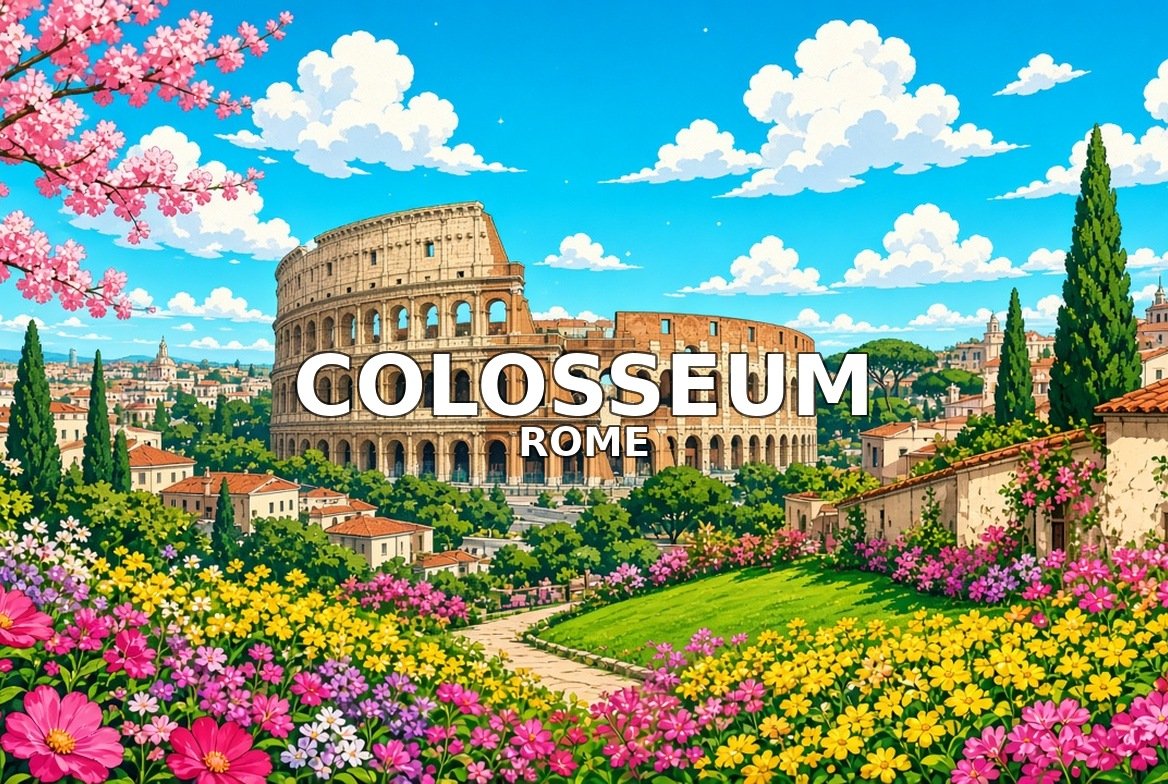
Rome walking tour: Colosseum
03 · Tour · videos inside this sight
Rome walking tour video: Colosseum
The Flavian Amphitheatre
Rome walking tour video: Colosseum
The Arena and the Hypogeum
Rome walking tour video: Colosseum
The Tiers of Seats
Rome walking tour video: Colosseum
A Monument Through the Ages
Rome walking tour video: Colosseum
The Arch of Constantine
Advertisement
Ad slot

2. Roman Forum and Palatine Hill

From stop 1 · 5 minutes · 2–3 hours
Map
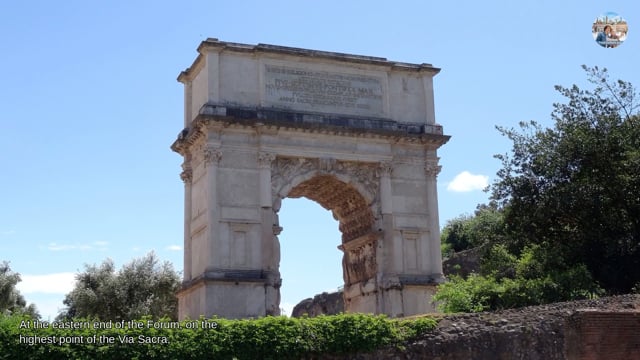
Along this Rome walking tour, the Roman Forum was the heart of ancient Rome, a valley of temples, law courts and markets where the city’s public life took place. You enter by the Arch of Titus, built in AD 81 to celebrate the capture of Jerusalem, and pass the huge vaults of the Basilica of Maxentius. Above rises the Palatine Hill, where legend says Romulus founded the city and where the emperors built their palaces; our word “palace” comes from its name. Back in the valley stand the round Temple of Vesta, where the Vestal Virgins kept the sacred fire burning, and the three tall columns of the Temple of Castor and Pollux. At the far end are the Curia, the Senate House, and the Rostra, the platform where orators addressed the crowd. Same combined ticket as the Colosseum. Walk this order. The heart of ancient Rome → the Arch of Titus and the Basilica of Maxentius → the Palatine Hill → Vesta, Castor and the temples → the Senate House and the Rostra.
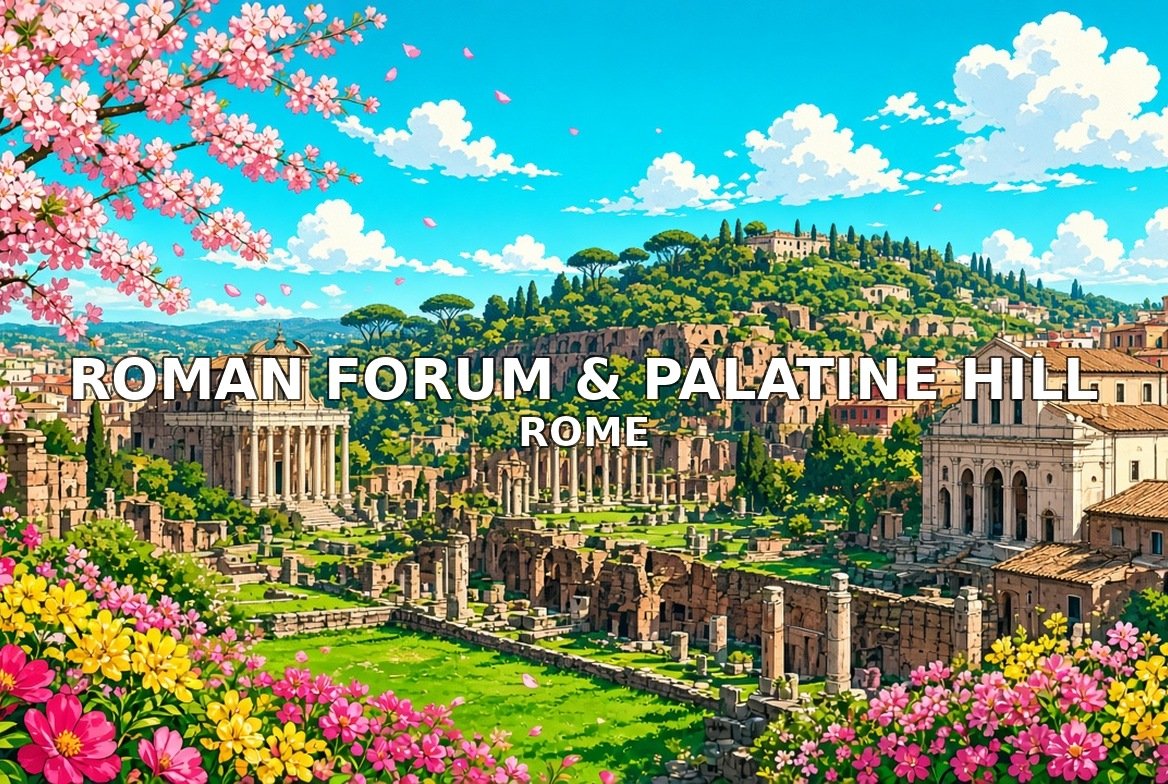
Rome walking tour: Roman Forum and Palatine Hill
03 · Tour · videos inside this sight
Rome walking tour video: Roman Forum and Palatine Hill
The Heart of Ancient Rome
Rome walking tour video: Roman Forum and Palatine Hill
The Arch of Titus and the Basilica of Maxentius
Rome walking tour video: Roman Forum and Palatine Hill
The Palatine Hill
Rome walking tour video: Roman Forum and Palatine Hill
Vesta, Castor and the Temples
Rome walking tour video: Roman Forum and Palatine Hill
The Senate House and the Rostra
Advertisement
Ad slot

3. Capitoline Museums

From stop 2 · 10 minutes · 60–90 minutes
Map
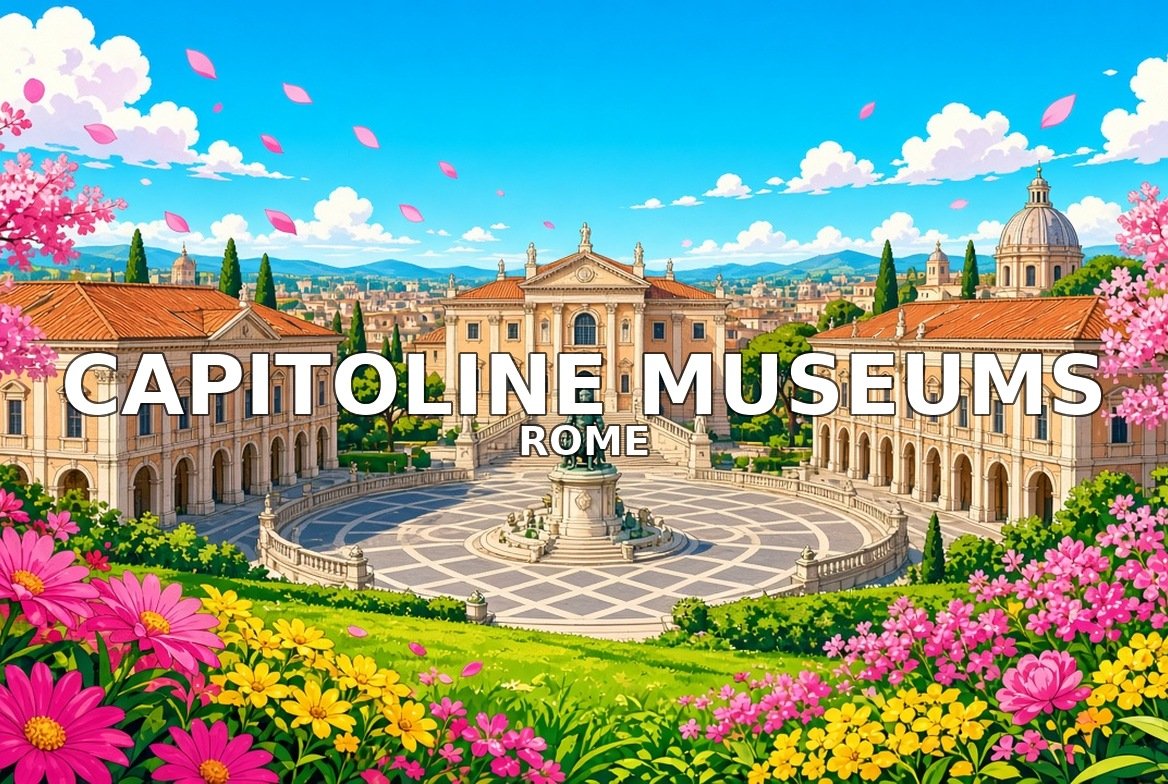
On this Rome walking tour, the Capitoline, the smallest of Rome’s seven hills, Michelangelo designed the Piazza del Campidoglio from the 1530s, with its star-patterned pavement and gentle stepped ramp, the Cordonata. In the centre rides the emperor Marcus Aurelius; the statue outside is a copy, and the 2nd-century bronze original is kept inside the museum. The Capitoline Museums, founded in 1471, are among the oldest public museums in the world. They hold the bronze Capitoline Wolf, the symbol of Rome, the Boy with a Thorn and, in the courtyard, the giant head, hand and feet of a colossal statue of Constantine. An underground passage leads to the Tabularium, the ancient record office, with a view over the Forum. Next door rises the white Vittoriano, the Altar of the Fatherland, with the Tomb of the Unknown Soldier. The piazza is free; the museums need a ticket. Walk this order. Michelangelo’s piazza → Marcus Aurelius on horseback → the she-wolf and the bronzes → giants and masterpieces → the Tabularium and the Altar of the Fatherland.
Rome walking tour: Capitoline Museums
03 · Tour · videos inside this sight
Rome walking tour video: Capitoline Museums
Michelangelo’s Piazza
Rome walking tour video: Capitoline Museums
Marcus Aurelius on Horseback
Rome walking tour video: Capitoline Museums
The She-Wolf and the Bronzes
Rome walking tour video: Capitoline Museums
Giants and Masterpieces
Rome walking tour video: Capitoline Museums
The Tabularium and the Altar of the Fatherland
Advertisement
Ad slot

4. Trevi Fountain

From stop 3 · 15 minutes · 20–40 minutes
Map
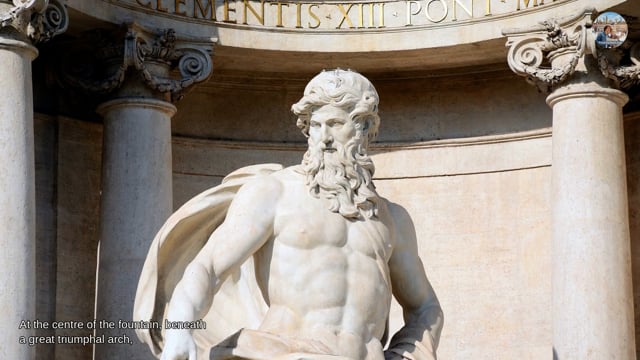
Along this Rome walking tour, the Trevi Fountain fills a small square where three streets once met, the “tre vie” that may have given it its name. Nicola Salvi designed it, and it was built between 1732 and 1762 against the back of a palace. In the centre stands Oceanus, god of the sea, on a chariot pulled by two sea horses, one wild and one calm, led by tritons. The water still arrives along the Aqua Virgo, the “Virgin Water”, an aqueduct opened by Agrippa in 19 BC; legend says a young girl showed thirsty soldiers the spring. Tradition says that if you throw a coin over your shoulder into the basin you will return to Rome; the coins are collected for charity. Anita Ekberg waded into the fountain in Fellini’s La Dolce Vita in 1960. Come early or late, because the square is packed by mid-morning, and come back after dark, when the fountain is lit. Walk this order. The fountain at the crossroads → Oceanus and the sea horses → the Virgin Water → coins and La Dolce Vita → Trevi after dark.

Rome walking tour: Trevi Fountain
03 · Tour · videos inside this sight
Rome walking tour video: Trevi Fountain
The Fountain at the Crossroads
Rome walking tour video: Trevi Fountain
Oceanus and the Sea Horses
Rome walking tour video: Trevi Fountain
The Virgin Water
Rome walking tour video: Trevi Fountain
Coins and La Dolce Vita
Rome walking tour video: Trevi Fountain
Trevi After Dark
Advertisement
Ad slot

5. Spanish Steps

From stop 4 · 10 minutes · 20–40 minutes
Map
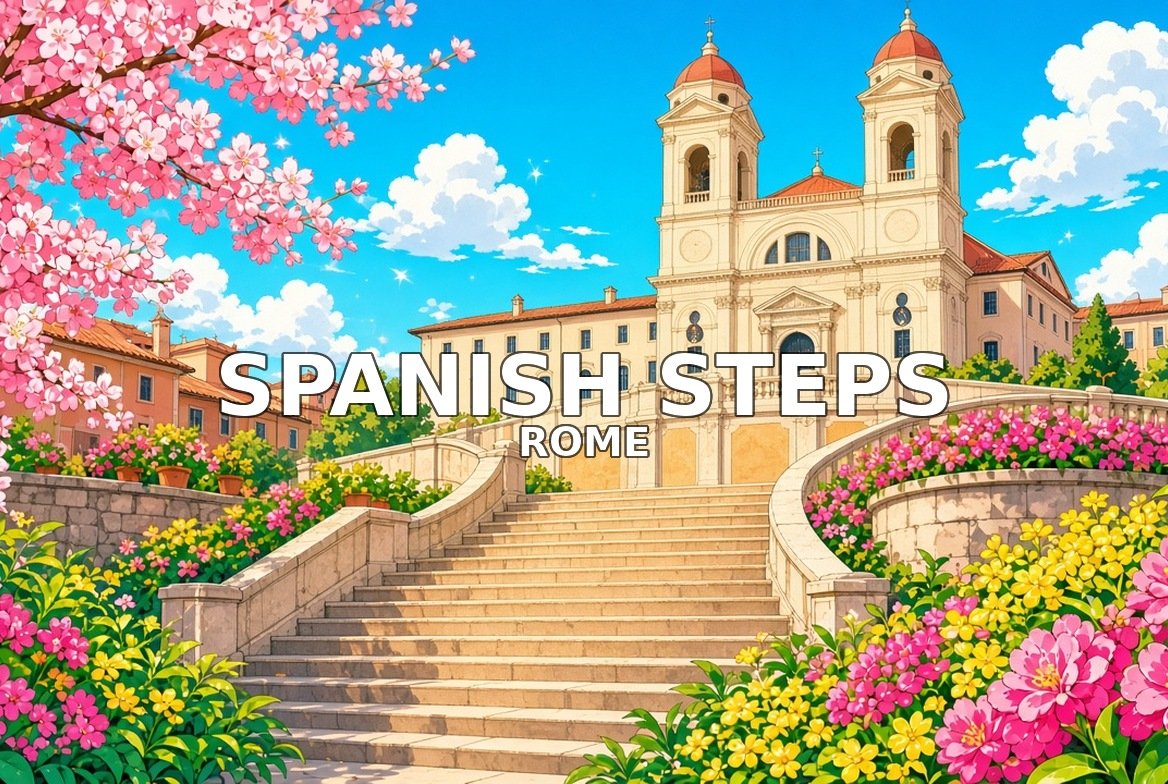
On this Rome walking tour, the Spanish Steps were built between 1723 and 1725 with French money to link the Piazza di Spagna, named after the Spanish embassy, with the French church of Trinità dei Monti at the top. The church, with its twin bell towers, was begun in the 16th century. At the foot of the 135 steps, the Barcaccia fountain, shaped like a half-sunken boat, was made by Pietro Bernini and his son Gian Lorenzo in the 1620s. The English poet John Keats died in 1821 in the house beside the steps, now the Keats-Shelley House, and Babington’s Tea Rooms have served British visitors since 1893; this was the heart of Grand Tour Rome. Today you may climb and walk the steps, but sitting on them is banned and can be fined. Walk this order. A stairway between two nations → Trinità dei Monti → the Barcaccia fountain → Keats, tea and the Grand Tour → life on the steps.
Rome walking tour: Spanish Steps
03 · Tour · videos inside this sight
Rome walking tour video: Spanish Steps
A Stairway Between Two Nations
Rome walking tour video: Spanish Steps
Trinità dei Monti
Rome walking tour video: Spanish Steps
The Barcaccia Fountain
Rome walking tour video: Spanish Steps
Keats, Tea and the Grand Tour
Rome walking tour video: Spanish Steps
Life on the Steps
Advertisement
Ad slot

6. Pantheon

From stop 5 · 15 minutes · 30–45 minutes
Map
Along this Rome walking tour, the inscription on the portico names Marcus Agrippa, who built the first temple here in 27 BC, but the building you see was raised under the emperor Hadrian and finished around AD 126. Its dome is 43 metres across, exactly as high as it is wide, and it is still the largest unreinforced concrete dome in the world; the only light comes through the open oculus, 9 metres wide, at the top. In 609 the temple was given to the Church, which is why it survived so well. Inside are the tombs of the painter Raphael and of the first kings of united Italy, Victor Emmanuel II and Umberto I. Outside, the Piazza della Rotonda has a fountain topped by an Egyptian obelisk. Entry needs a ticket; expect a short queue. Walk this order. Agrippa’s portico → the great dome → from temple to church → Raphael and the kings of Italy → Piazza della Rotonda.

Rome walking tour: Pantheon
03 · Tour · videos inside this sight
Rome walking tour video: Pantheon
Agrippa’s Portico
Rome walking tour video: Pantheon
The Great Dome
Rome walking tour video: Pantheon
From Temple to Church
Rome walking tour video: Pantheon
Raphael and the Kings of Italy
Rome walking tour video: Pantheon
Piazza della Rotonda
Advertisement
Ad slot

7. Piazza Navona

From stop 6 · 8 minutes · 30–45 minutes
Map
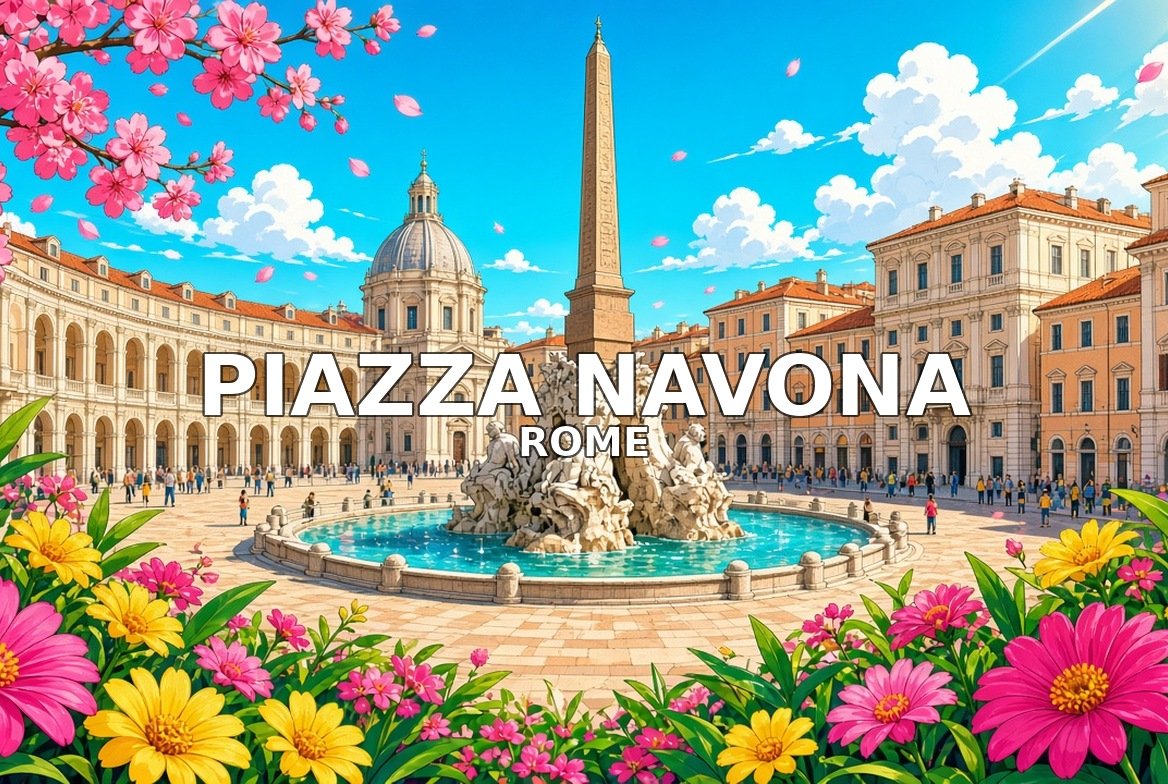
On this Rome walking tour, Piazza Navona keeps the long oval shape of the Stadium of Domitian, built in AD 86 for athletic contests; the houses stand on its old seating. In the centre, Bernini’s Fountain of the Four Rivers, finished in 1651, shows the Nile, the Ganges, the Danube and the Río de la Plata around an Egyptian obelisk. Facing it is Borromini’s church of Sant’Agnese in Agone, built where tradition says the young martyr Agnes was killed. At the south end is the Fountain of the Moor, with a figure designed by Bernini, and at the north end the Fountain of Neptune, whose statues were added in the 19th century. Painters, street performers and cafés fill the square from morning to late at night. Walk this order. The Stadium of Domitian → the Fountain of the Four Rivers → Sant’Agnese in Agone → the Moor and Neptune → life on the square.
Rome walking tour: Piazza Navona
03 · Tour · videos inside this sight
Rome walking tour video: Piazza Navona
The Stadium of Domitian
Rome walking tour video: Piazza Navona
The Fountain of the Four Rivers
Rome walking tour video: Piazza Navona
Sant’Agnese in Agone
Rome walking tour video: Piazza Navona
The Moor and Neptune
Rome walking tour video: Piazza Navona
Life on the Square
Advertisement
Ad slot

8. Trastevere

From stop 7 · 20 minutes via Ponte Sisto · 1–2 hours
Map
Along this Rome walking tour, Trastevere means “across the Tiber”, and crossing the river by the Ponte Sisto footbridge takes you into a district of cobbled lanes, ivy-covered houses and small trattorias. At its heart, Santa Maria in Trastevere is one of the oldest churches in Rome, with glittering 12th-century mosaics in its apse and on its facade. In the quieter eastern part, the church of Santa Cecilia holds Stefano Maderno’s moving marble statue of the saint, carved in 1600, and nearby the Tiber Island sits in the middle of the river. To the north, the Villa Farnesina has frescoes by Raphael, and the Janiculum hill above gives one of the best views over the city. Come in the evening, when the lanes fill with diners. Walk this order. Across the Tiber → lanes of old Trastevere → Santa Maria in Trastevere → Santa Cecilia and the Tiber Island → Villa Farnesina and the Janiculum.

Rome walking tour: Trastevere
03 · Tour · videos inside this sight
Rome walking tour video: Trastevere
Across the Tiber
Rome walking tour video: Trastevere
Lanes of Old Trastevere
Rome walking tour video: Trastevere
Santa Maria in Trastevere
Rome walking tour video: Trastevere
Santa Cecilia and the Tiber Island
Rome walking tour video: Trastevere
Villa Farnesina and the Janiculum
Advertisement
Ad slot

9. Castel Sant’Angelo

From stop 8 · 25 minutes along the Tiber · 60–90 minutes
Map
On this Rome walking tour, Castel Sant’Angelo was built as the mausoleum of the emperor Hadrian and finished in AD 139. Later it became a fortress, joined to the Vatican by a raised escape corridor, the Passetto, which the popes used in times of danger. The bronze archangel Michael on the roof recalls the legend that Pope Gregory the Great saw the angel sheathe his sword here in 590 as a sign that a plague was over. Inside, a spiral ramp climbs from the Roman tomb past prison cells to the richly painted papal apartments and the terrace of the angel, the setting of the last act of Puccini’s Tosca. In front, the Ponte Sant’Angelo crosses the Tiber between ten angels designed by Bernini. The castle needs a ticket; from the terrace you look down Via della Conciliazione to St Peter’s. Walk this order. Hadrian’s mausoleum → the archangel on the roof → fortress of the popes → inside the castle → the Bridge of Angels.

Rome walking tour: Castel Sant’Angelo
03 · Tour · videos inside this sight
Rome walking tour video: Castel Sant’Angelo
Hadrian’s Mausoleum
Rome walking tour video: Castel Sant’Angelo
The Archangel on the Roof
Rome walking tour video: Castel Sant’Angelo
Fortress of the Popes
Rome walking tour video: Castel Sant’Angelo
Inside the Castle
Rome walking tour video: Castel Sant’Angelo
The Bridge of Angels
Advertisement
Ad slot

10. Vatican and St Peter’s

From stop 9 · 10 minutes along Via della Conciliazione · half a day
Map
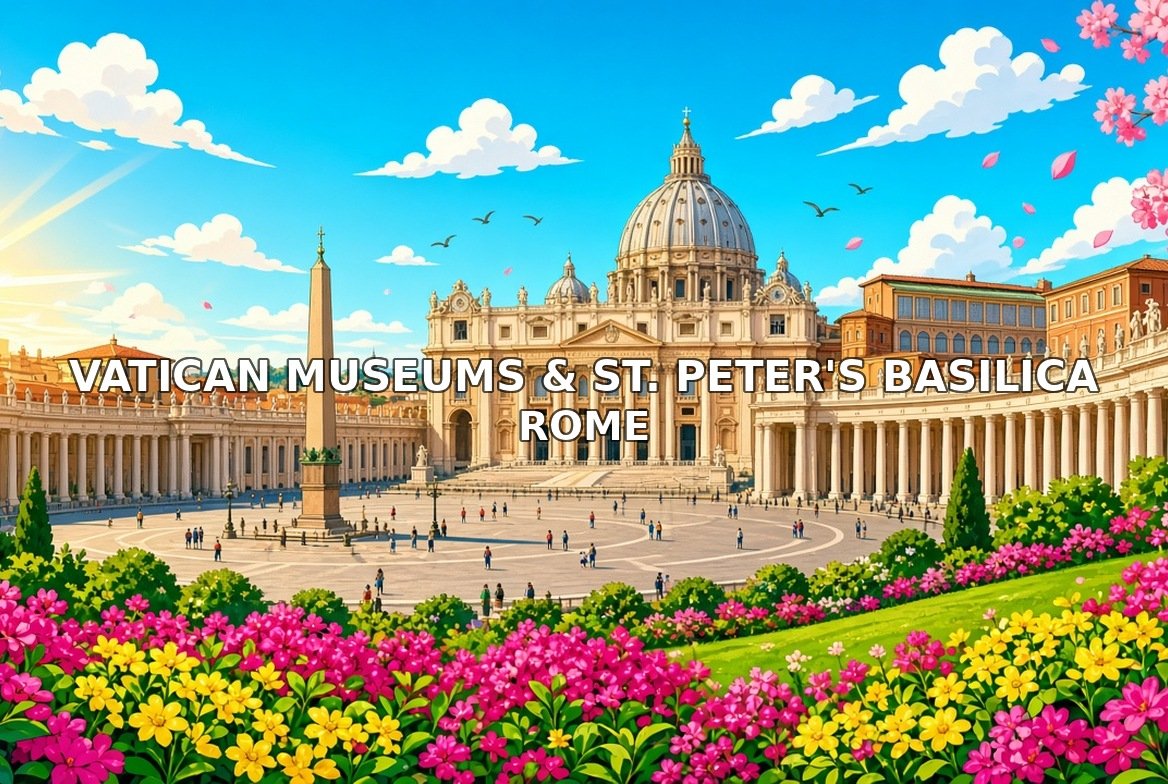
Along this Rome walking tour, Vatican City is the smallest country in the world. You arrive in Saint Peter’s Square, framed by Bernini’s great curved colonnades, built from 1656 to 1667 to embrace the faithful. Saint Peter’s Basilica was built between 1506 and 1626 over the tomb of the apostle Peter, and Michelangelo designed its dome. Inside are Michelangelo’s Pietà, carved when he was in his early twenties, and Bernini’s bronze canopy over the high altar. The Vatican Museums hold one of the world’s greatest art collections; the route ends with the Raphael Rooms and the Sistine Chapel, where Michelangelo painted the ceiling from 1508 to 1512 and later the Last Judgment. The basilica is free but has a security queue; cover shoulders and knees. The museums need a timed ticket and are closed on most Sundays. Walk this order. Saint Peter’s Square → the Basilica of Saint Peter → inside Saint Peter’s → the Vatican Museums → Raphael and the Sistine Chapel.
Rome walking tour: Vatican and St Peter’s
03 · Tour · videos inside this sight
Rome walking tour video: Vatican and St Peter’s
Saint Peter’s Square
Rome walking tour video: Vatican and St Peter’s
The Basilica of Saint Peter
Rome walking tour video: Vatican and St Peter’s
Inside Saint Peter’s
Rome walking tour video: Vatican and St Peter’s
The Vatican Museums
Rome walking tour video: Vatican and St Peter’s
Raphael and the Sistine Chapel

Rome Walking Tour Details Overview

This Rome walking tour is free and self-guided, and Clarissa narrates the free video stops. Move at your own pace and skip any station you already know. Start at the Colosseum and follow the route past the Roman Forum, the Capitoline Museums, the Trevi Fountain and the Spanish Steps. Each stop on this Rome walking tour has a map link and short videos, and the route ends at the Vatican and St Peter’s. Before you set off on this Rome walking tour, book timed tickets for the Colosseum and the Vatican Museums in advance, wear comfortable shoes, and carry water, since many stops involve long walks on cobblestones. Check opening hours and dress codes for churches before you visit. Many stops are close enough to walk between, and the metro covers longer distances. Take a café break in Trastevere or near the Pantheon, then carry on with this Rome walking tour. Whether you have one afternoon or a full weekend, a Rome walking tour gives you a clear plan. Enjoy every stop on this Rome walking tour, and visit freecitytours.org for more free city walks. For official visitor information, see the official Rome tourism site. Rome rewards slow exploring, and this Rome walking tour is built to help you see the highlights without backtracking. The stops follow a logical line from the ancient centre out to the Vatican, so the Colosseum, the Forum and the fountains flow into one another. Use the map links to check walking times, and let the videos guide you at each site on this Rome walking tour. Getting around on this Rome walking tour is straightforward on foot, and many sights in the first half of the route sit within a short walk of one another. The metro has two main lines that cross at Termini, and buses and trams fill the gaps. Plan the longer hops, such as the trip out to the Vatican, for a quieter part of the day. A Rome walking tour works best when you keep the pace relaxed. Timing makes a real difference. Early mornings are often calmer at the Trevi Fountain and the Pantheon, while late afternoons can be quieter around the Forum. Many churches close for a few hours at midday, so check opening times before each stop on your Rome walking tour and leave room for the unexpected. Whatever pace you choose on this Rome walking tour, keep time for simple wandering. Rome is at its best in the small squares and side streets between the famous stops, where bakeries, wine bars and gelato shops reveal everyday city life. Let this Rome walking tour be your guide, but feel free to linger wherever the streets call you back. Rome is also a city of seasons. Spring and autumn offer mild weather for long days on foot, while summer can be very hot, so build in shade and water breaks. Winter brings fewer crowds and a calmer atmosphere, which makes it another good time to take a Rome walking tour with the videos.
← Previous
Map Stop 1 of 10 · Colosseum
Next →

Rome Overview Detail

This Rome walking tour is more than a list of stops. Use this detail to plan your day, from the best neighbourhood routes to the timing, transport, etiquette and accessibility tips that make this Rome walking tour easier. Everything here works alongside the stop videos above, so you can keep the route in order and adjust it to your own pace.

Best neighbourhood routes for your Rome walking tour

Trastevere is a strong finish for any Rome walking tour. Cross the Tiber on foot, wander the cobbled lanes around Santa Maria in Trastevere, and choose a trattoria for dinner as the lamps come on. Near the Colosseum, the Monti district offers quieter streets, small wine bars and vintage shops, so it makes a pleasant detour before or after the ancient sites.

Between the Forum and the Pantheon, the Campo de’ Fiori and the Jewish Quarter around Via del Portico d’Ottavia give a human side to the route. The Campo market is busiest in the morning, and the Quarter has a long history that deserves a slow pace, so set aside time for both on your Rome walking tour.

Best times of day and seasons for a Rome walking tour

Early morning is the calmest time to walk, especially at the Trevi Fountain and the Pantheon, while late afternoon light suits the Forum and the Palatine. Spring and autumn are the most comfortable seasons for a Rome walking tour, with mild weather and fewer queues than in July and August. Summer heat can be intense, so plan shade, water and a midday rest in a café.

Rome’s metro has two main lines that meet at Termini, and buses and trams fill the gaps. Most stops on this Rome walking tour are a comfortable walk apart, so save public transport for longer hops such as the trip out to the Vatican. Timetables can change on Sundays and public holidays, so check before you travel.

Etiquette, safety and food stops on a Rome walking tour

A few habits go a long way on any Rome walking tour. Cover your shoulders and knees when you enter churches, keep your voice low inside, and greet shopkeepers with a simple buongiorno before you ask a question. Keep to the rules at monuments and fountains along this Rome walking tour, because sitting on the Spanish Steps can bring a fine.

During this Rome walking tour, watch your bag at Termini, on crowded buses and around the Trevi Fountain, where pickpockets work the crowds. For emergencies, dial 112, the number that works across Italy. Keep photos of your passport on your phone and leave the originals in your hotel safe during the day.

Food is part of every Rome walking tour. A slice of pizza al taglio from a bakery makes an easy, low-cost lunch, and many trattorias offer a fixed-price menu at midday. Campo de’ Fiori and the Testaccio market are good places to see local produce, and a gelato or coffee at the bar counter makes a quick stop between sights. Tap water from the public nasoni fountains is free to drink.

Free sights, accessibility and planning

Many highlights on this Rome walking tour cost nothing to see from the outside. Piazza Navona, the Spanish Steps, the Trevi Fountain and the Gianicolo viewpoint are free to visit, and St Peter’s Basilica has no entry charge, although the dome and some areas need a ticket. Check each official site before you go, because opening hours and ticket rules change.

Accessibility on a Rome walking tour depends on the ground. Many streets are cobbled, and the Forum and Palatine involve steps and uneven paths. Some metro stations have lifts and others do not, so check the transport operator’s map for step-free routes. Many museums and churches offer wheelchair access, but call ahead to confirm the details.

Book timed tickets for busy sights, check whether the Vatican Museums are closed on your planned day, and leave room in the afternoon for lunch. For more free city walks, visit freecitytours.org, or compare this Rome walking tour with the Paris city page.

Rome Walking Tour Overview Detail

This Rome walking tour links 10 sights and 50 short video stops narrated by Clarissa. The notes below group those stops into practical routes and add the timing, transport, etiquette and free-entry rules that matter on the ground. For official opening updates and events, also check Turismo Roma, the official tourism site of the City of Rome.

Best routes for your Rome walking tour using the 50 stops

Route 1, ancient Rome (stops 1 to 3). Start early at the Colosseum and play the videos in order: the Flavian Amphitheatre, the Arena and the Hypogeum, the Tiers of Seats, A Monument Through the Ages and the Arch of Constantine. Walk straight into the Roman Forum and Palatine Hill for the Arch of Titus and the Basilica of Maxentius, the Palatine, the temples of Vesta and Castor, and the Senate House and Rostra. Climb to the Capitoline Museums for Michelangelo’s piazza, the bronze Marcus Aurelius and the She-Wolf, then look back over the Forum from the Tabularium.

Route 2, fountains and squares (stops 4 to 7). This is the easiest part of the Rome walking tour on foot, because the four stops sit close together in the historic centre. Begin at the Trevi Fountain with Oceanus and the sea horses, then walk to the Spanish Steps for Trinità dei Monti, the Barcaccia fountain and the Keats and Grand Tour story. Continue to the Pantheon for Agrippa’s portico and the great dome, and finish at Piazza Navona, built over the Stadium of Domitian, with Bernini’s Fountain of the Four Rivers and Sant’Agnese in Agone.

Route 3, Trastevere at sunset (stop 8). Cross the Tiber on foot and let the five videos lead you through the old lanes to Santa Maria in Trastevere, Santa Cecilia and the Tiber Island, then up toward Villa Farnesina and the Janiculum hill for the view. Trastevere is busiest in the evening, so this stop works well as the last leg of a long Rome walking tour, with dinner nearby.

Route 4, the Vatican morning (stops 9 and 10). Start at Castel Sant’Angelo, Hadrian’s mausoleum, and cross the Bridge of Angels, then walk down Via della Conciliazione to Saint Peter’s Square. The last videos cover the Basilica of Saint Peter, its interior, the Vatican Museums and the Sistine Chapel. Book the Vatican Museums in advance and give this route a full morning. If you only have one day, Routes 1 and 2 are the core free walking tour Rome visitors can manage on foot.

For photos, the best free viewpoints on this Rome walking tour are the Capitoline terraces above the Forum, the Pincio terrace above Piazza del Popolo, the Bridge of Angels in front of Castel Sant’Angelo and the Janiculum hill above Trastevere at sunset. Saint Peter’s Square looks its best early in the morning, before the queues for the basilica build.

A three-day Rome walking tour works well as Route 1 on the first morning and Route 2 in the afternoon, Route 4 on the second morning with a slow lunch near the Vatican, and Route 3 on any evening. If it rains, swap in the Capitoline Museums and the Pantheon, which are indoors, and keep the open-air Forum and Palatine for a dry day.

Best times and transport for a Rome walking tour

Arrive at the Colosseum and the Trevi Fountain as early as you can, before tour groups build up. Late afternoon is pleasant at the Forum and on the Palatine, but check the last entry time before you go. Spring and autumn are the most comfortable seasons for a Rome walking tour; July and August are hot, so plan shade, water and a long lunch in the middle of the day.

Several stops have their own rules. Since 2 February 2026, non-residents pay a €2 ticket to enter the basin area of the Trevi Fountain; the surrounding square stays free, and after closing time at night the fountain can be seen free by everyone. The Vatican Museums are closed on most Sundays and on several religious holidays. Many churches close for a few hours around lunchtime, so visit the Pantheon and Santa Maria in Trastevere outside those hours. Book Colosseum tickets only from the official Parco archeologico del Colosseo website.

Rome has two main metro lines that cross at Termini. Line B stops at Colosseo for Route 1, Line A stops at Spagna for the Spanish Steps and at Ottaviano for the Vatican, and tram 8 runs from the centre into Trastevere. Metro gates accept contactless bank cards; for buses and trams, buy a ticket in advance from a tobacconist, a machine or the official app and validate it when you board. Most of the historic centre is quicker on foot than by bus, which is why this Rome walking tour keeps the central stops in one walkable line.

From Fiumicino airport, the Leonardo Express train runs non-stop to Termini, where you can change to Line B for the Colosseum and the start of this Rome walking tour. If you stay near the Vatican, start with Route 4 instead and walk the stops in reverse; every stop has its own map link, so the order is flexible. Keep a little cash for small cafés and markets, although cards are widely accepted.

Etiquette, food and safety on your Rome walking tour

Saint Peter’s Basilica and most churches expect shoulders and knees to be covered, so carry a light scarf or wear long trousers on the Vatican day. Speak quietly inside churches and avoid visits during Mass. Photography is not allowed in the Sistine Chapel. Sitting on the Spanish Steps is not allowed and can be fined, and wading into fountains or eating on monuments is also banned.

Toss your Trevi coin with your right hand over your left shoulder, the tradition that promises a return to Rome; the coins are collected and given to charity. Refill your bottle at the small public drinking fountains called nasoni, which run with clean drinking water all over the city. A cover charge, the coperto, often appears on restaurant bills and is normal; tipping is not expected, though rounding up is welcome. Coffee drunk standing at the bar costs less than coffee served at a table.

Watch your bag on crowded buses, in the metro and around Termini, the Trevi Fountain and the Colosseum. Ignore street sellers offering “skip-the-line” tickets near the Colosseum, and only buy from official ticket offices or websites. The streets are paved with uneven cobblestones called sampietrini, so wear supportive shoes for every Rome walking tour.

Free days, discounts and accessibility on a Rome walking tour

Many sights on this Rome walking tour are free to see from outside, including Piazza Navona, the Spanish Steps, the Trevi square, Trastevere and Saint Peter’s Square. Entry to Saint Peter’s Basilica is also free, although the dome climb is charged.

On the first Sunday of every month, Italian state museums and sites are free for everyone. That includes the Colosseum, Roman Forum and Palatine, Castel Sant’Angelo and the Pantheon. On free Sundays, the Colosseum arena, underground and upper levels stay closed, and tickets are handed out in order of arrival, so queue early. The Vatican Museums are free on the last Sunday of most months, from 9 am with last entry at 12:30 pm and no booking, which means very long queues.

Under-18s enter Italian state museums free with ID, and young EU citizens often qualify for reduced tickets. If you plan to enter several paid sights in two or three days, compare the official Roma Pass with single tickets. The Trevi Fountain basin is free for children under 6 and for people with disabilities and a companion.

Accessibility on a Rome walking tour takes planning. Cobblestones, kerbs and steps are common, and the Spanish Steps, the Capitoline climb and the Janiculum hill are steep. The Colosseum has a lift between levels, and the Vatican Museums offer accessible routes and wheelchairs on request; check each official accessibility page before you go. Not every metro station is step-free, so a taxi is often easier for the hop to the Vatican.

After this Rome walking tour, carry on with more free walks in Italy and beyond: the Florence walking tour, the Venice walking tour, the Milan walking tour and the Paris walking tour. You can browse every city on the Free City Tours home page.

Rome walking tour FAQ

Is this Rome walking tour really free?

Yes. All 50 video stops on this Rome walking tour are free to watch, and squares such as Piazza Navona, the Spanish Steps and Saint Peter’s Square are free to visit. You only pay for the sights you go inside, such as the Colosseum or the Vatican Museums, plus the €2 Trevi Fountain basin ticket for non-residents. It is the simplest free walking tour Rome visitors can follow at their own pace.

How long does the Rome walking tour take?

Plan two to three days. Ancient Rome fills a morning, the fountains and squares fill an afternoon, Trastevere suits an evening, and the Vatican needs a full morning of its own.

Where does the Rome walking tour start?

It starts at the Colosseum, next to Colosseo metro station, with the Flavian Amphitheatre video. You can join at any stop, because each one has its own map link and five short videos.

Is the Rome walking tour suitable for children and wheelchair users?

Children usually love the Colosseum, the fountains and Castel Sant’Angelo, and under-18s enter state museums free. Wheelchair users should expect cobblestones and steps; Route 2 in the centre is the flattest, and the Colosseum and the Vatican Museums both have accessible routes.

Do I need an app or mobile data for the Rome walking tour?

You don’t need an app. Open this page in your phone’s browser and play the videos as you walk. The videos stream, so use mobile data or Wi-Fi, or preview them before you go.