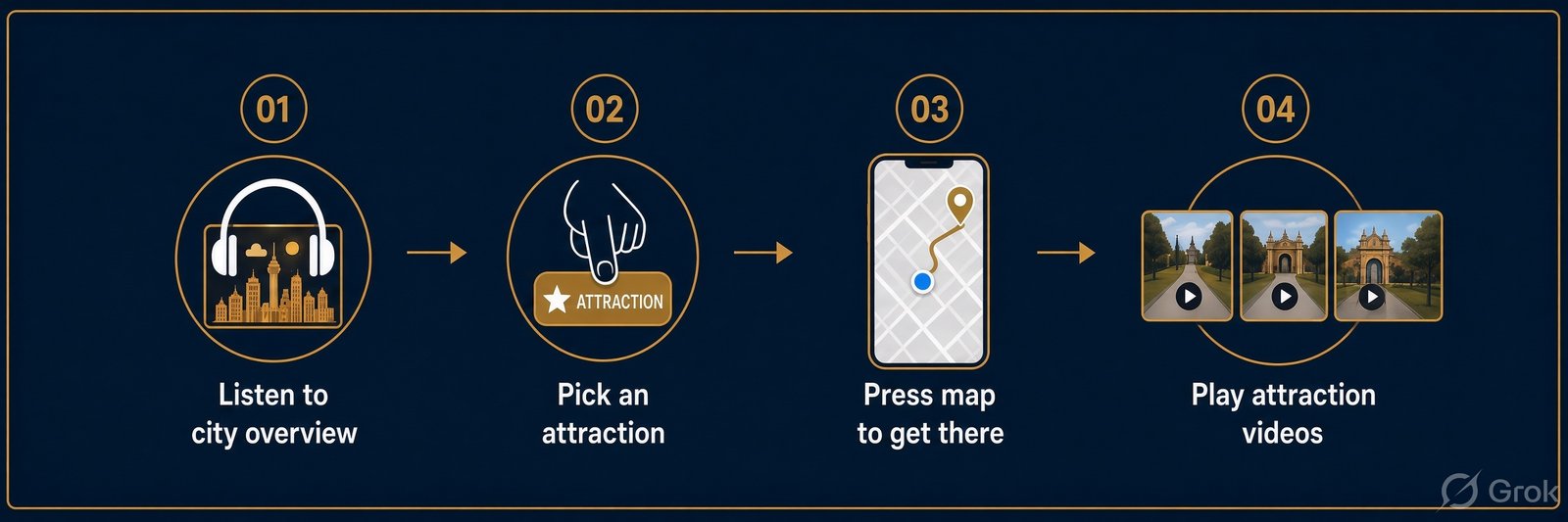
This Prague walking tour starts here. Prague, the capital of the Czech Republic, straddles the Vltava River in the heart of Europe. Its historic centre, with a thousand years of castles, churches and bridges, is a UNESCO World Heritage Site and one of the best preserved old cities on the continent.
The city is easy to walk. Prague Castle and the Lesser Town sit on the west bank, Charles Bridge crosses to the Old Town and the Jewish Quarter, the New Town and Wenceslas Square lie just to the south east, and Petřín Hill and Vyšehrad rise above the river at either end.
On this walk you visit Prague Castle and St Vitus Cathedral, cross Charles Bridge, see Old Town Square and the Astronomical Clock, explore the Jewish Quarter, walk up Wenceslas Square, pass the National Theatre and the Dancing House, and climb Vyšehrad and Petřín Hill.
1. Prague walking tour: Prague Castle
Hradčany, above the Lesser Town · start here · 2–3 hours
Prague Castle was founded around 880 and has been the seat of Bohemian kings, Holy Roman emperors and Czech presidents. It is one of the largest ancient castle complexes in the world and part of the Historic Centre of Prague UNESCO World Heritage Site. The Matthias Gate of 1614 leads in from Castle Square. Vladislav Hall in the Old Royal Palace was finished around 1502 under a late Gothic ribbed vault. The Basilica of Saint George was founded in 920. Golden Lane is a row of tiny houses built into the castle wall in the late 1500s; Franz Kafka wrote at number 22 in 1916 and 1917. The courtyards and gardens are free; the palace, basilica and Golden Lane need a castle ticket.
Walk this order. Castle Square and the Matthias Gate → Old Royal Palace and Vladislav Hall → Basilica of Saint George → Golden Lane → Royal Garden and Queen Anne’s Summer Palace → walk down through the Lesser Town to Charles Bridge.
03 · Tour · videos inside this sight
Castle Square and the Matthias Gate
Old Royal Palace and Vladislav Hall
Basilica of Saint George
Golden Lane
Royal Garden and the Summer Palace
Advertisement
Ad slot
2. Prague walking tour: Charles Bridge
From stop 1 · 25 minutes downhill through the Lesser Town · 45–60 minutes
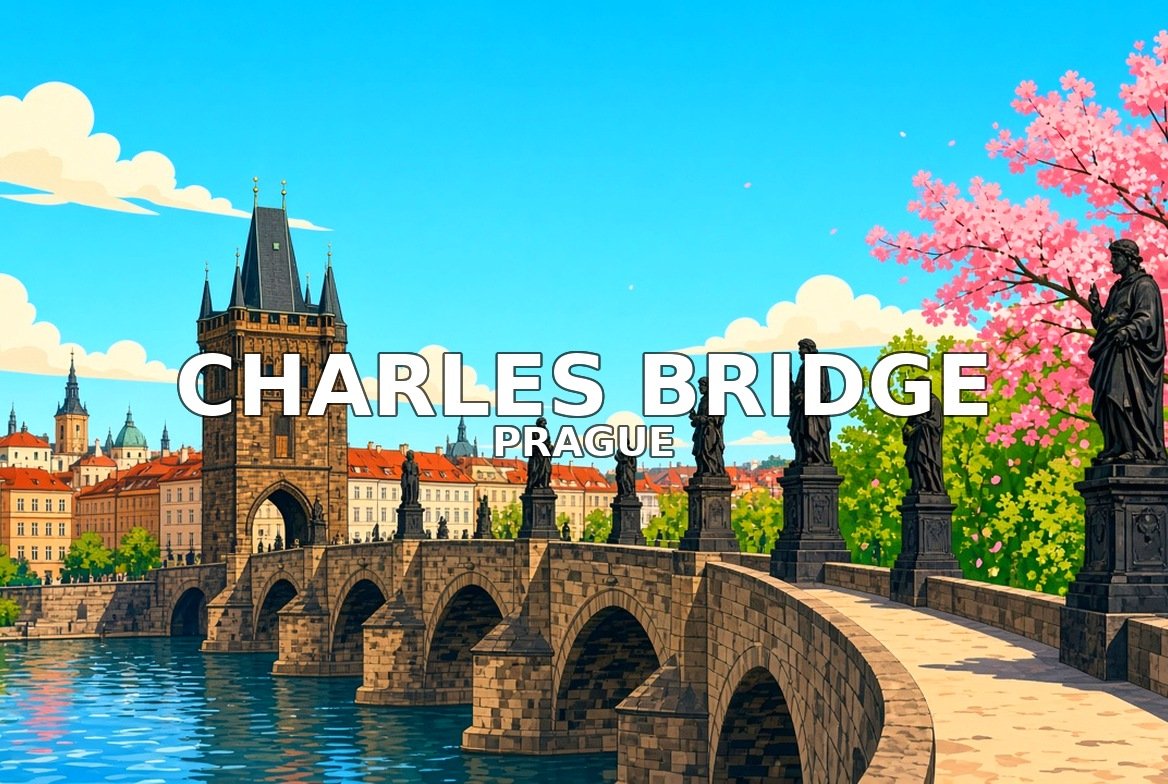
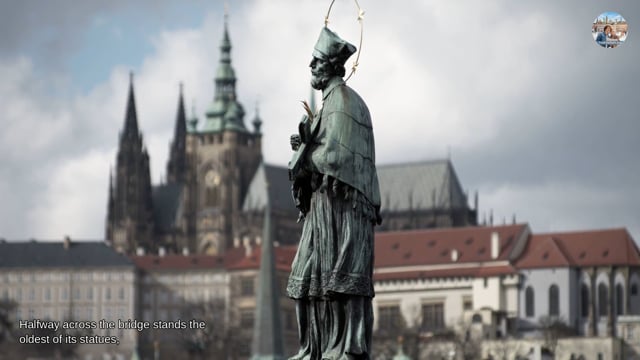
Charles Bridge was begun in 1357 under Emperor Charles IV and finished in the early 1400s. It is about 516 metres long, rests on 16 arches and was the only bridge over the Vltava in Prague until 1841. The Gothic Old Town Bridge Tower was designed by Peter Parler. About 30 statues line the parapets, most of them put up between 1683 and 1714; many are now copies. The bronze statue of Saint John of Nepomuk, from 1683, marks the saint who was thrown into the river in 1393. At the far end, the Lesser Town Bridge Towers stand on either side of a gate, and steps lead down to Kampa Island and the Čertovka stream. Free and open all day.
Walk this order. Old Town Bridge Tower → Saint John of Nepomuk → the Baroque statues → Lesser Town Bridge Towers → steps down to Kampa Island → back over the bridge and 10 minutes east to Old Town Square.
03 · Tour · videos inside this sight
Old Town Bridge Tower
Saint John of Nepomuk
The Baroque Statues
Lesser Town Bridge Towers
Kampa Island
Advertisement
Ad slot
3. Prague walking tour: Old Town Square and Astronomical Clock
From stop 2 · 10 minutes east along Karlova Street · 60–90 minutes
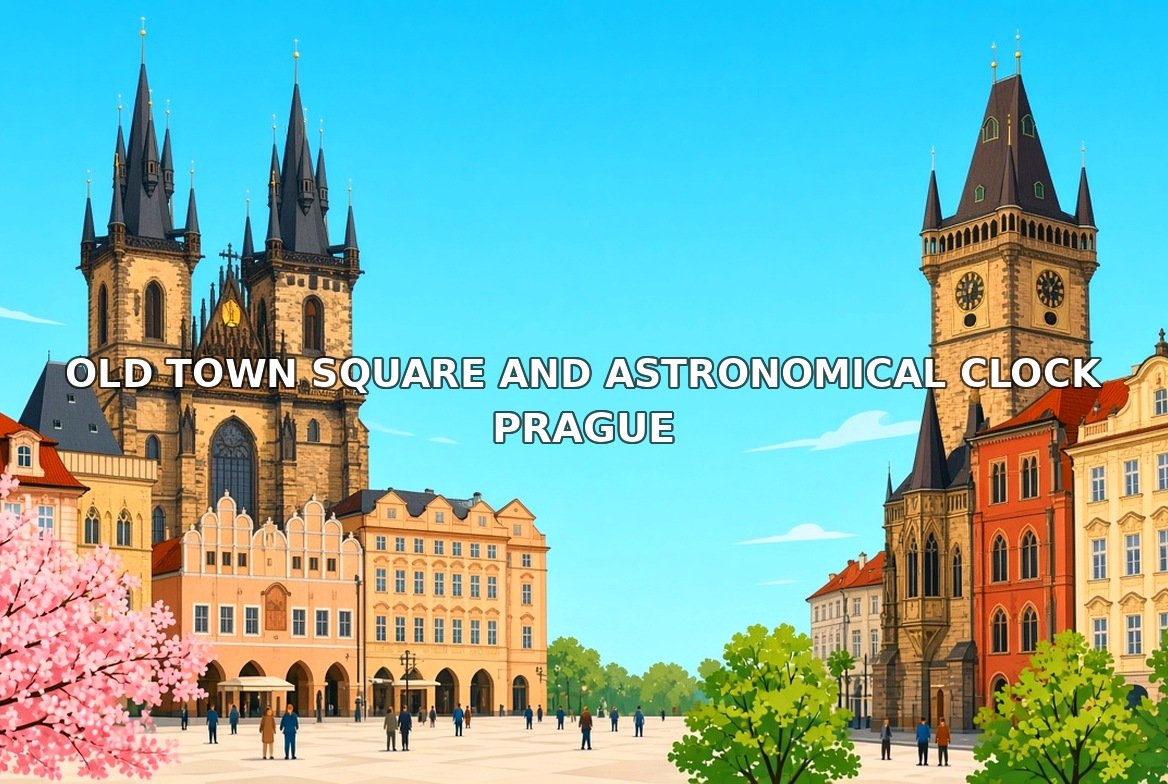
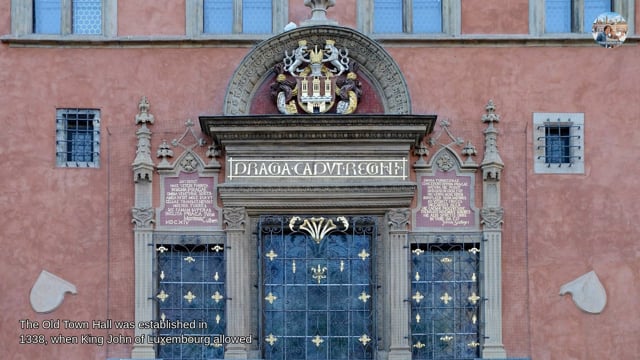
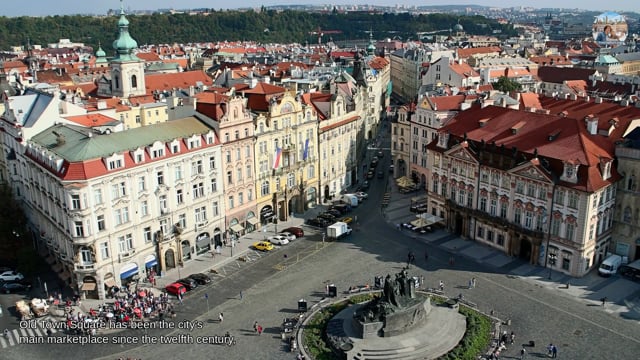
Old Town Square has been Prague’s main market place since the Middle Ages. The Astronomical Clock on the Old Town Hall was installed in 1410 and is the oldest astronomical clock in the world that still works. Every hour from 9 am to 11 pm the twelve Apostles appear in its windows. The Old Town Hall tower, about 70 metres high, has a viewing gallery. Across the square rise the twin Gothic towers of the Church of Our Lady before Týn, about 80 metres tall. The Jan Hus Memorial was unveiled in 1915, five hundred years after the reformer was burned at the stake. In the corner stand the Baroque Church of Saint Nicholas, built from 1732 to 1737, and the Rococo Kinský Palace. 27 crosses in the paving mark the execution of 27 Protestant leaders in 1621. The square is free; the tower needs a ticket.
Walk this order. The Astronomical Clock → Old Town Hall Tower → Church of Our Lady before Týn → Jan Hus Memorial → Saint Nicholas Church and Kinský Palace → tram 22 back up to the castle for Saint Vitus Cathedral.
03 · Tour · videos inside this sight
The Astronomical Clock
Old Town Hall Tower
Church of Our Lady before Týn
Jan Hus Memorial
Saint Nicholas Church and Kinský Palace
Advertisement
Ad slot
4. Prague walking tour: St. Vitus Cathedral
From stop 3 · tram 22 to Pražský hrad, or 30 minutes on foot back over the river · 60–90 minutes
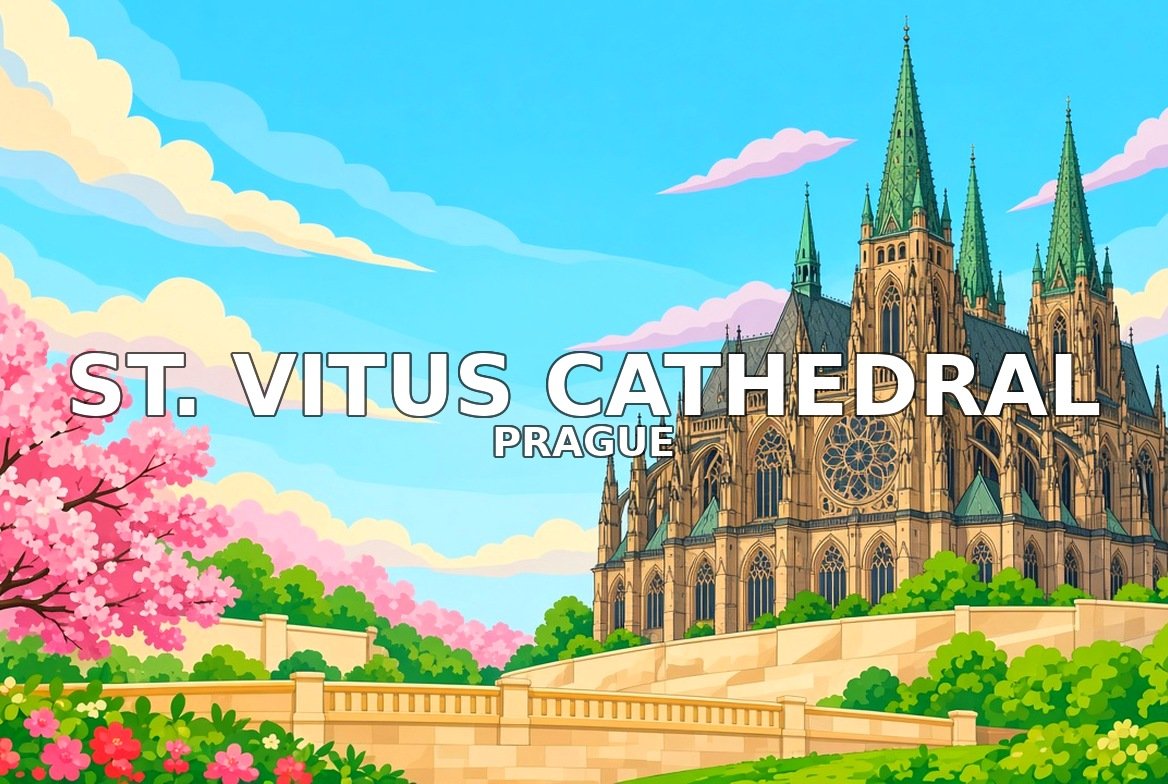
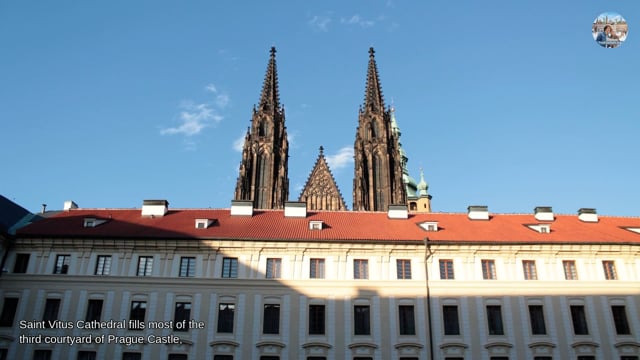
Saint Vitus Cathedral stands inside Prague Castle. Charles IV laid its foundation stone in 1344, and the architects Matthias of Arras and Peter Parler built the Gothic east end. The west front and its twin towers were only added when the cathedral was finally completed in 1929. The Golden Gate on the south side has a mosaic of the Last Judgement from 1370 and 1371, next to the Great South Tower, almost 100 metres high. Inside, a stained glass window by Alfons Mucha from 1931 shows Saints Cyril and Methodius. The Chapel of Saint Wenceslas has walls set with semi precious stones, and the Czech Crown Jewels are kept in a locked room above it. The silver Baroque tomb of Saint John of Nepomuk dates from 1736. The front of the nave is free; the rest needs a castle ticket.
Walk this order. West front and towers → Golden Gate and Great South Tower → the nave and the Mucha window → Chapel of Saint Wenceslas → Tomb of Saint John of Nepomuk → tram 22 down to the New Town for Wenceslas Square.
03 · Tour · videos inside this sight
West Front and Towers
Golden Gate and Great South Tower
Nave and the Mucha Window
Chapel of Saint Wenceslas
Tomb of Saint John of Nepomuk
Advertisement
Ad slot
5. Prague walking tour: Wenceslas Square
From stop 4 · about 30 minutes by tram 22 and on foot · 45–60 minutes
Wenceslas Square is a boulevard about 750 metres long in the New Town, laid out as a horse market by Charles IV in 1348. The Neo Renaissance National Museum, finished in 1891, closes its upper end. In front of it stands Josef Václav Myslbek’s statue of Saint Wenceslas, the patron saint of the Czech lands. Nearby, a memorial in the pavement remembers Jan Palach, the student who set himself on fire in January 1969 in protest against the Soviet led occupation. Huge crowds gathered here during the Velvet Revolution in 1989. The Lucerna Passage, built from 1907 to 1921 by the grandfather of President Václav Havel, holds David Černý’s statue of Saint Wenceslas riding an upside down horse. The Art Nouveau Hotel Evropa dates from 1903 to 1905, and the square ends at Můstek. Free.
Walk this order. National Museum → Statue of Saint Wenceslas → Jan Palach Memorial → Lucerna Passage → Hotel Evropa and Můstek → walk 15 minutes north through the Old Town to the Jewish Quarter.
03 · Tour · videos inside this sight
National Museum
Statue of Saint Wenceslas
Jan Palach Memorial
Lucerna Passage
Hotel Evropa and Můstek
Advertisement
Ad slot
6. Prague walking tour: Jewish Quarter
From stop 5 · 15 minutes north through the Old Town · 2 hours
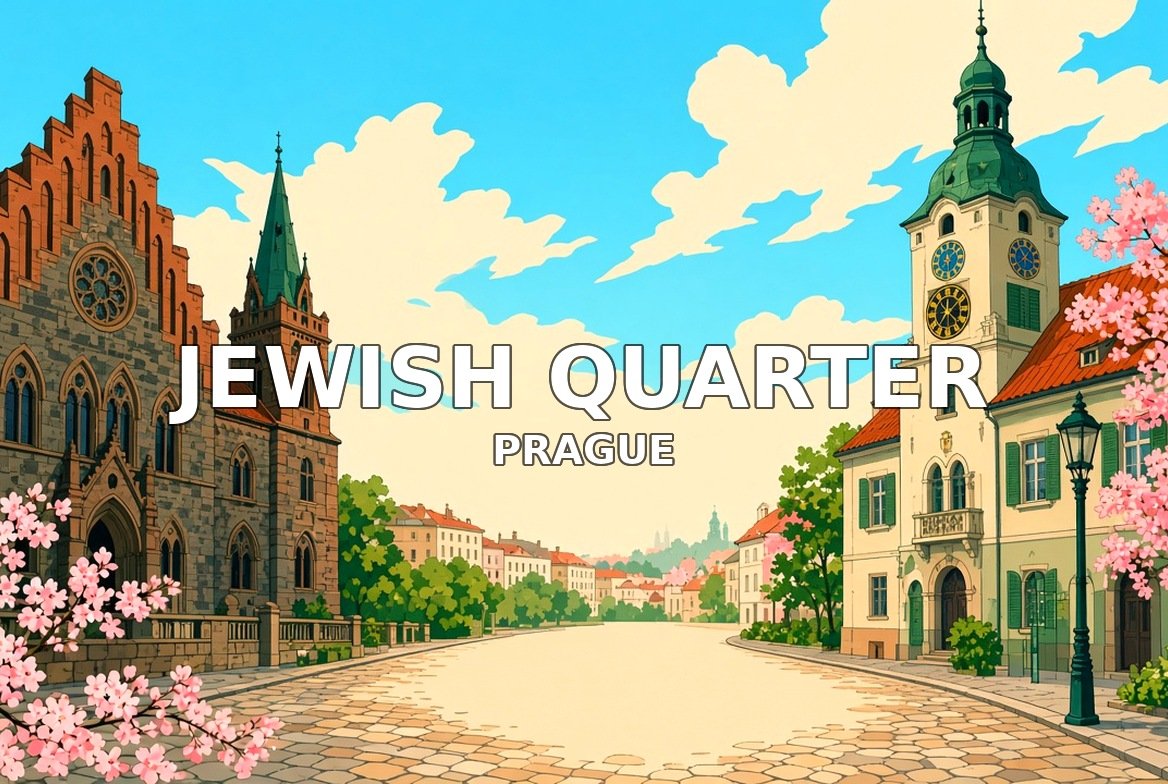
On this Prague walking tour, Josefov was the Jewish Town of Prague for centuries. The Old-New Synagogue was built around 1270 and is the oldest active synagogue in Europe. The Old Jewish Cemetery was used from the early 1400s until 1786 and holds about 12,000 gravestones, among them the grave of Rabbi Judah Loew, who died in 1609. The walls of the Pinkas Synagogue, built in 1535, carry the names of nearly 80,000 Jews from Bohemia and Moravia murdered in the Holocaust, and upstairs are drawings by children from Terezín. The Spanish Synagogue of 1868 has a richly painted Moorish style interior. The Maisel Synagogue was founded in 1592 by Mordechai Maisel, mayor of the Jewish Town. The synagogues and cemetery need Jewish Museum tickets, with a separate ticket for the Old-New Synagogue. Closed on Saturdays and Jewish holidays.
Walk this order. Old-New Synagogue → Old Jewish Cemetery → Pinkas Synagogue → Spanish Synagogue → Maisel Synagogue → walk 30 minutes south along the river, or take tram 17, to the Dancing House.
03 · Tour · videos inside this sight
Old-New Synagogue
Old Jewish Cemetery
Pinkas Synagogue
Spanish Synagogue
Maisel Synagogue
Advertisement
Ad slot
7. Prague walking tour: Dancing House
From stop 6 · 30 minutes south along the river, or tram 17 to Jiráskovo náměstí · 30–45 minutes
The Dancing House stands on the riverbank at the corner of the Jirásek Bridge. It was designed by Vlado Milunić and Frank Gehry and finished in 1996, on a plot left empty after a bombing raid in 1945. Its curved glass tower leaning against a straight one earned it the nickname Fred and Ginger, after the dancers Fred Astaire and Ginger Rogers. The wavy windows on the river front are set at different heights. On the roof, a twisted metal dome nicknamed Medusa sits above a glass bar and terrace with views over the Vltava. President Václav Havel, who lived next door, backed the project. The outside is free to see; the rooftop bar and gallery charge for entry.
Walk this order. The riverfront corner → Fred and Ginger → the wavy facade → rooftop terrace and Medusa → along the embankment and the Jirásek Bridge → walk 30 minutes south along the river to Vyšehrad.
03 · Tour · videos inside this sight
The Riverfront Corner
Fred and Ginger
The Wavy Facade
Rooftop Terrace and Medusa
Embankment and Jirásek Bridge
Advertisement
Ad slot
8. Prague walking tour: Vyšehrad Fortress
From stop 7 · 30 minutes south along the river and up to the fortress · 60–90 minutes
Vyšehrad is a fortress on a rock above the Vltava, where legend says Princess Libuše foresaw the founding of Prague. A castle stood here from the 10th century, and the brick walls and gates, such as the Tábor Gate and the Leopold Gate, were built in the 1600s. The small Rotunda of Saint Martin, from the late 11th century, is the oldest surviving building in Prague. The Basilica of Saints Peter and Paul got its twin Neo Gothic towers in 1903. In Vyšehrad Cemetery lie Antonín Dvořák, Bedřich Smetana, Alfons Mucha and Karel Čapek, and the Slavín tomb holds more than 50 famous Czechs. The ramparts give wide views over the river. The grounds are free.
Walk this order. Tábor Gate and Leopold Gate → Rotunda of Saint Martin → Basilica of Saints Peter and Paul → Vyšehrad Cemetery and the Slavín tomb → the ramparts and river view → about 25 minutes by tram to Újezd for Petřín Hill.
03 · Tour · videos inside this sight
Tábor Gate and Leopold Gate
Rotunda of Saint Martin
Basilica of Saints Peter and Paul
Cemetery and the Slavín Tomb
Ramparts and River View
Advertisement
Ad slot
9. Prague walking tour: Petřín Hill and Tower
From stop 8 · about 25 minutes by tram to Újezd, then the funicular up · 60–90 minutes
Petřín is a wooded hill on the Lesser Town side of the river. The funicular from Újezd opened in 1891 and takes normal public transport tickets. The Hunger Wall, built from 1360 to 1362 under Charles IV, runs along the slope. On the top stands the Petřín Lookout Tower, a 63.5 metre steel tower built in 1891 in the style of the Eiffel Tower, with 299 steps to the top. Nearby, the Mirror Maze was also made for the 1891 Jubilee Exhibition. The Rose Garden lies beside the Štefánik Observatory, which opened in 1928. The park is free; the tower, maze and observatory need tickets.
Walk this order. Petřín Funicular → Hunger Wall → Petřín Lookout Tower → Mirror Maze → Rose Garden and Štefánik Observatory → down the hill and over the Legion Bridge to the National Theatre.
03 · Tour · videos inside this sight
Petřín Funicular
Hunger Wall
Petřín Lookout Tower
Mirror Maze
Rose Garden and Observatory
Advertisement
Ad slot
10. Prague walking tour: National Theatre
From stop 9 · 20 minutes down Petřín and over the Legion Bridge · 45–60 minutes
The National Theatre on the Vltava embankment was paid for by public collections across the Czech lands. It opened in 1881, burned down a few weeks later and reopened in 1883; the words Národ sobě, The Nation to Itself, are written above the stage. Its golden roof and the bronze chariots on the facade make it easy to spot from the river. Inside, the auditorium has ceiling paintings by František Ženíšek and a stage curtain by Vojtěch Hynais. The glass block New Stage next door opened in 1983 and is home to Laterna Magika. Across the road, Café Slavia has been a meeting place for writers and artists since 1884, with views of the Legion Bridge, opened in 1901. The outside is free; the interior is open on guided tours or with a performance ticket.
Walk this order. Riverside facade → golden roof and chariots → auditorium and curtain → the New Stage → Café Slavia and the Legion Bridge. This is the end of the walk.
03 · Tour · videos inside this sight
Riverside Facade
Golden Roof and Chariots
Auditorium and Curtain
New Stage
Café Slavia and Legion Bridge
Prague Walking Tour Overview Detail
This Prague walking tour links 10 sights and 50 short video stops narrated by Clarissa, from Prague Castle and Charles Bridge to Old Town Square, the Jewish Quarter, Vyšehrad and the National Theatre. The notes below group the stops into walkable routes and add the timing, transport, etiquette and free-entry details that make the city of a hundred spires easier to enjoy. For official events and visitor information, also check Prague City Tourism, the official tourist information service of Prague.
Best routes for your Prague walking tour using the 50 stops
Route 1, the castle and the bridge (stops 1, 4 and 2). Start early at Prague Castle on the Hradčany hill, where the videos cover Castle Square and the Matthias Gate, Vladislav Hall in the Old Royal Palace, the Basilica of Saint George, Golden Lane and the Royal Garden. Step into Saint Vitus Cathedral for the west front, the Golden Gate, the Mucha window, the Chapel of Saint Wenceslas and the silver tomb of Saint John of Nepomuk. Then walk down through the Lesser Town to Charles Bridge and its Baroque statues, with the steps down to Kampa Island.
Route 2, the Old Town and the Jewish Quarter (stops 3 and 6). Cross Charles Bridge and follow Karlova Street to Old Town Square for the Astronomical Clock, the Old Town Hall tower, the Church of Our Lady before Týn, the Jan Hus Memorial and the Church of Saint Nicholas. Walk a few minutes north into Josefov, the old Jewish Town, for the Old-New Synagogue, the Old Jewish Cemetery and the Pinkas, Spanish and Maisel synagogues. Allow at least two hours for this part of the Prague walking tour.
Route 3, the New Town (stops 5 and 10). Walk south to Wenceslas Square for the National Museum, the statue of Saint Wenceslas, the Jan Palach Memorial, the Lucerna Passage with David Černý’s upside-down horse, and the Art Nouveau Hotel Evropa. Then walk west to the river and the National Theatre, with its golden roof, its auditorium and the New Stage, and finish with coffee at Café Slavia, looking across the Legion Bridge to the castle.
Route 4, the river and the hills (stops 7, 8 and 9). Follow the embankment south to the Dancing House, Fred and Ginger, and continue to Vyšehrad, the fortress on the rock, for the gates, the Rotunda of Saint Martin, the Basilica of Saints Peter and Paul and the cemetery where Dvořák and Mucha lie. Ride a tram back to Újezd and take the funicular up Petřín Hill for the Hunger Wall, the lookout tower, the Mirror Maze and the Rose Garden. If you only have one day, Routes 1 and 2 make the best free walking tour Prague offers on foot.
For photos, the best free viewpoints on this Prague walking tour are Charles Bridge at sunrise, the castle ramparts above the Lesser Town, the ramparts of Vyšehrad looking along the Vltava and the Legion Bridge looking up at the castle. For a view over the rooftops, climb the Old Town Hall tower or the Petřín Lookout Tower, both of which charge.
A three-day Prague walking tour works well as Route 1 on day one, Routes 2 and 3 on day two, and Route 4 on day three. Remember that the Jewish Quarter’s synagogues close on Saturdays and Jewish holidays, so plan Route 2 for another day. If it rains, move the cathedral, the castle interiors and the synagogues forward and save the bridge and the hills for a dry spell.
Best times and transport for a Prague walking tour
Spring and early autumn are often the best seasons for a Prague walking tour, with mild weather, blossom or autumn colour on Petřín, and fewer crowds than in high summer. Summer days are long and warm but busy, especially on Charles Bridge and around the Astronomical Clock. Winter is cold, with short days, but the Christmas markets on Old Town Square and Wenceslas Square make December special.
Start very early at Charles Bridge, when it is almost empty, and reach Prague Castle soon after it opens, before the tour groups. The Astronomical Clock’s procession of Apostles runs on the hour through the day, so arrive a few minutes before to find a spot. Opening times change between summer and winter, so check each official website before you plan each day of your Prague walking tour.
Prague has an excellent network of trams, metro and buses run by PID, and one ticket covers them all, including the Petřín funicular. Buy tickets in the official PID Lítačka app or from machines, and validate paper tickets when you first board; inspectors check often. Tram 22 is the classic way up to the castle. The historic centre is compact, so most of this Prague walking tour is easiest on foot, with a tram for the hills.
From Václav Havel Airport, bus 119 runs to the Nádraží Veleslavín metro station and the Airport Express bus runs to the main railway station. Use a taxi app or the official airport taxis, and avoid unofficial drivers. Every stop on this Prague walking tour has its own map link, so you can start wherever your hotel is.
Etiquette, food and safety on your Prague walking tour
Czechs can seem reserved at first but are friendly and helpful, and a simple “dobrý den” (good day) or “děkuji” (thank you) is appreciated. Inside churches and synagogues, speak quietly and dress respectfully; men may be asked to cover their heads in the synagogues and the Jewish Cemetery. Many people in the Old Town live above the shops, so keep noise down late at night. Leave around ten percent as a tip in restaurants for good service.
Food is a highlight of any Prague walking tour. Try svíčková, beef in a creamy vegetable sauce with dumplings, goulash, and fried cheese, and drink Czech beer in a traditional pub, where it is often cheaper than water. Restaurants just off Old Town Square and away from Charles Bridge usually offer better value. Check the menu prices before you order, and look out for bread or extras that are added to the bill.
Prague is generally a safe city for a walking tour, but pickpockets work the crowds on Charles Bridge, around the Astronomical Clock and on busy trams, especially tram 22. Keep your bag zipped and in front. Use the Czech koruna rather than euros, avoid street money changers, and choose to pay in koruna when a card machine or ATM offers a conversion. In an emergency, dial 112, or 158 for the police.
Free sights, tickets and accessibility on a Prague walking tour
Prague is a good city for a budget walk, because many stops on this Prague walking tour are free. Charles Bridge, Old Town Square, Wenceslas Square, the Lesser Town and the outside of the Dancing House and the National Theatre cost nothing to see. The courtyards and gardens of Prague Castle are free to walk, the front of the cathedral nave is free to enter, and the grounds of Vyšehrad and the park on Petřín Hill are free too.
Several stops charge. The castle circuit ticket covers the Old Royal Palace, the Basilica of Saint George, Golden Lane and the rest of the cathedral. The Old Town Hall tower, the Jewish Museum’s synagogues and cemetery, the Old-New Synagogue, the Petřín Lookout Tower and Mirror Maze, and the Dancing House rooftop all need tickets. The Petřín funicular has had long closures for repairs, so check that it is running. Check each official website for current prices and opening times.
For accessibility, the historic centre is beautiful but challenging, with cobbles, steep lanes and steps, especially around the castle and the Lesser Town. Many trams are low-floor, and a growing number of metro stations have lifts; PID shows step-free options in its journey planner. Charles Bridge, Old Town Square and Wenceslas Square are flat, though cobbled. Prague Castle offers an accessible route. Check each venue’s access information before your Prague walking tour.
Yes. All 50 video stops on this Prague walking tour are free to watch, and Charles Bridge, Old Town Square, Wenceslas Square, the castle courtyards and Vyšehrad are free too. The castle interiors, the Jewish Museum and the towers charge, so this is a free walking tour Prague visitors can shape to any budget.
How long does the Prague walking tour take?
Allow two or three days. The castle, the cathedral and Charles Bridge fill one day, the Old Town, the Jewish Quarter and the New Town another, and the Dancing House, Vyšehrad and Petřín Hill make a relaxed third day.
Where does the Prague walking tour start?
It starts at Prague Castle on the Hradčany hill, reached by tram 22 or a steep walk up from the Lesser Town. You can join at any stop, because each one has its own map link and five short videos.
Is the Prague walking tour suitable for children and wheelchair users?
Yes. Children love the Astronomical Clock, the castle guards, the funicular and the Mirror Maze on Petřín. Wheelchair users should expect cobbles and hills, use low-floor trams between stops, and focus on Old Town Square, Wenceslas Square and the castle’s accessible route.
Do I need an app or mobile data for the Prague walking tour?
You don’t need an app for the videos. Open this page in your phone’s browser and play them as you walk. The videos stream, so use mobile data or free Wi-Fi in cafés, and use the PID Lítačka app for transport tickets.