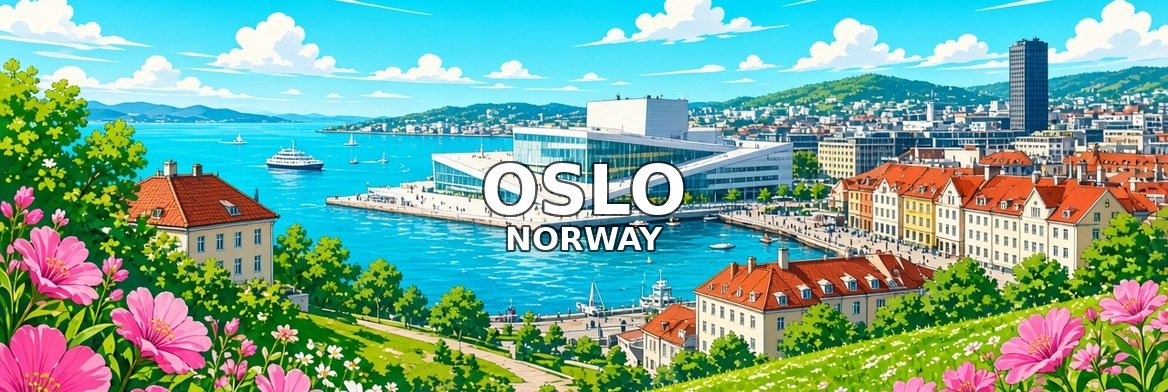
This Oslo walking tour starts here. Oslo is the capital of Norway, at the head of the Oslofjord. It was founded around 1040 and became the capital in the Middle Ages. After a great fire in 1624, King Christian IV rebuilt it beside Akershus Fortress and named it Christiania; it took back the name Oslo in 1925.
The centre runs from the fjord up to the Royal Palace. Karl Johans gate links the Central Station, the Cathedral, the Parliament and the palace; the Opera House and the new National Museum stand on the waterfront. To the west lie Frogner Park with the Vigeland sculptures and the museum peninsula of Bygdøy; to the north, the hills of Holmenkollen.
On this walk you start at the Opera House, visit the Vigeland Sculpture Park, Akershus Fortress, the Royal Palace and Frogner Park, see the National Museum, ride up to Holmenkollen, cross to Bygdøy, and finish on Karl Johans gate and at Oslo Cathedral.
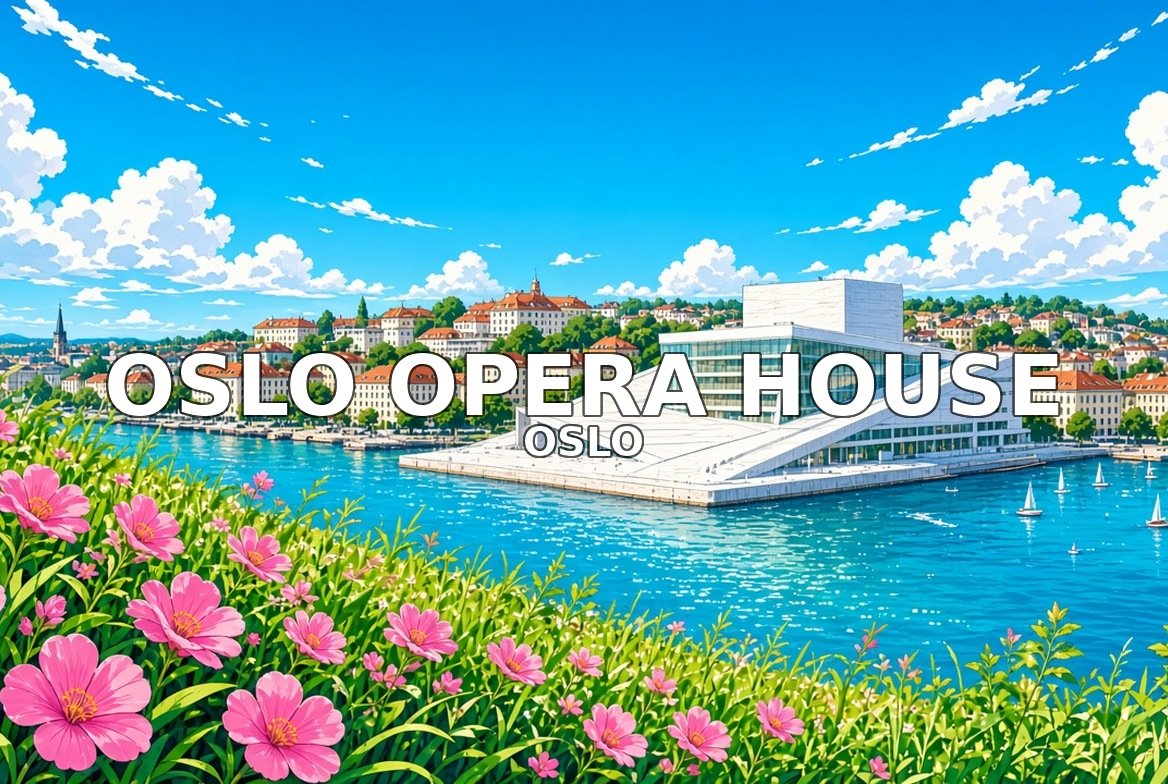
The Oslo Opera House opened in 2008 in Bjørvika, by the Central Station. Designed by the Norwegian firm Snøhetta, it rises from the fjord like a white iceberg, and its sloping roof of Italian marble is open to everyone to walk on. Inside, a wall of oak waves through the foyer, and the horseshoe-shaped main hall is lit by a great chandelier of thousands of crystals. It is the home of the Norwegian National Opera and Ballet. In the water in front floats She Lies, a glass and steel sculpture by Monica Bonvicini. The roof and foyer are free; performances need a ticket.
Walk this order. A White Iceberg on the Fjord → Walking up the Marble Roof → The Foyer and the Oak Wall → The Great Hall and its Chandelier → She Lies and the Bjørvika Waterfront.
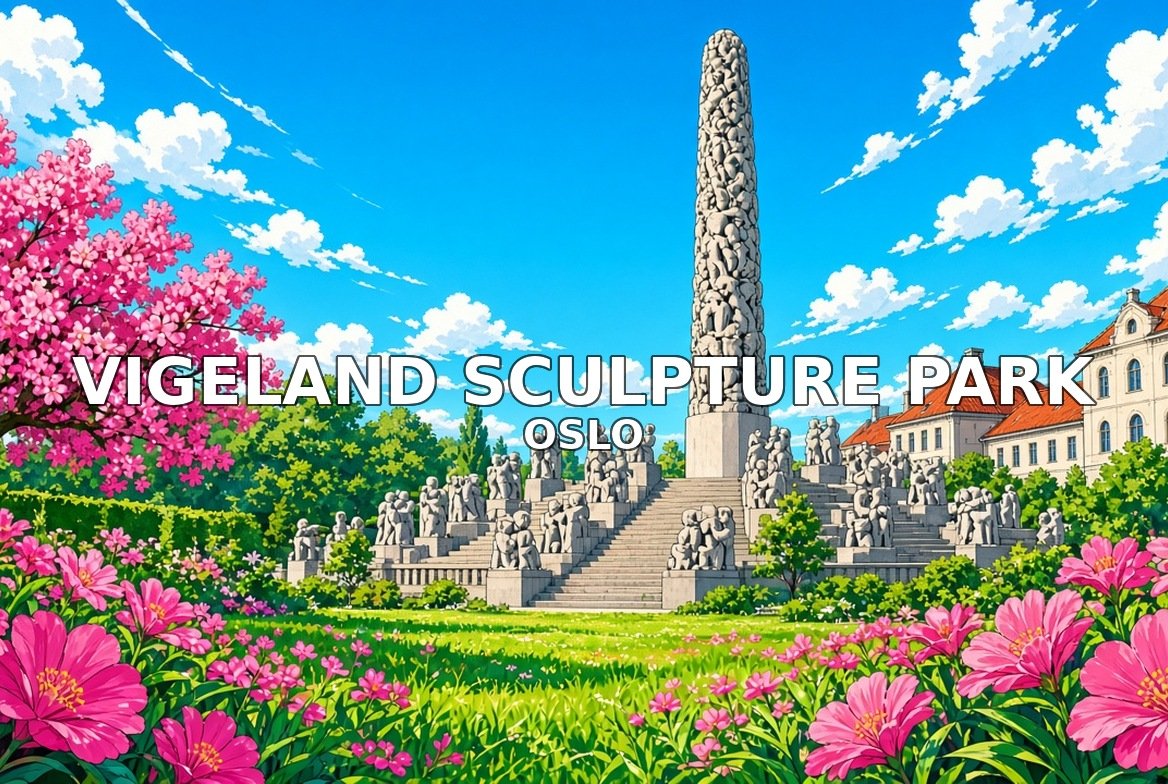
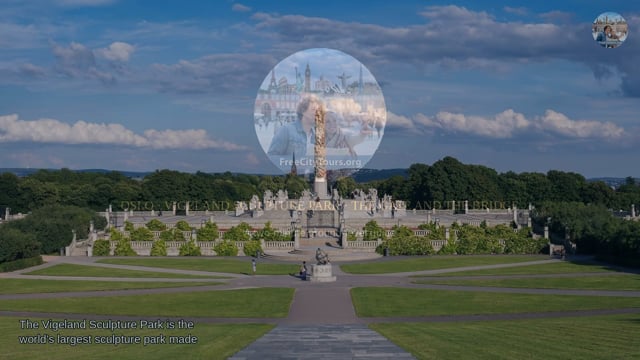
On this Oslo walking tour, the Vigeland Sculpture Park, inside Frogner Park, holds more than 200 sculptures by Gustav Vigeland in bronze, granite and iron, made mostly between the 1920s and the 1940s. You enter through iron gates and cross a bridge lined with bronze figures, among them the famous Angry Boy. Beyond are the fountain, held up by six giants, and the Monolith, a column carved from a single block of granite with 121 figures climbing towards the top. The Wheel of Life closes the line. Vigeland’s former studio nearby is now the Vigeland Museum. The park is free and open all year.
Walk this order. The Gate and the Bridge → The Bridge of Bronze Figures → The Fountain → The Monolith → The Wheel of Life and the Vigeland Museum.
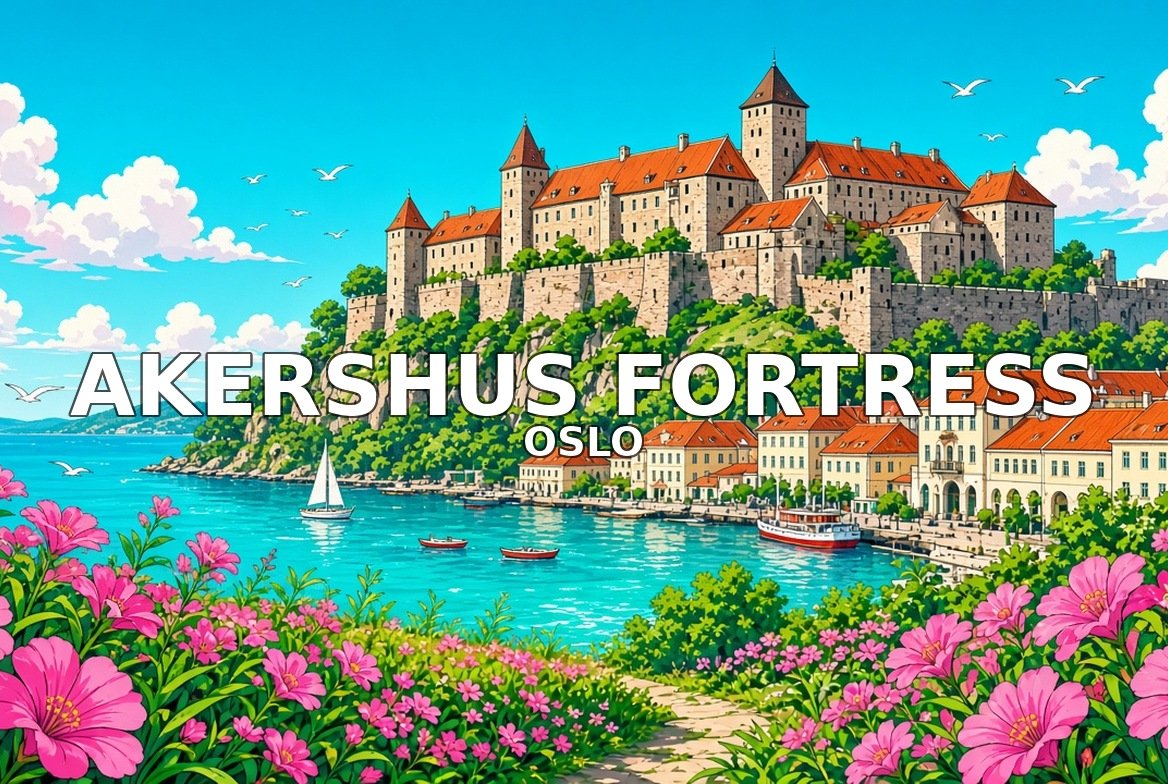
Akershus Fortress stands on a headland above Oslo harbour. King Haakon V began the castle around 1300 to guard the city, and in the 1600s King Christian IV turned it into a Renaissance palace and moved the city to its walls. You can see the castle halls, the royal mausoleum and the old dungeons. The Norwegian Resistance Museum inside the walls tells the story of the German occupation of 1940 to 1945. The ramparts give wide views over the fjord and the City Hall. The grounds are free; the castle and museum need a ticket.
Walk this order. The Fortress above the Harbour → The Castle and the Dungeon → Christian the Fourth and the Walls → The Norwegian Resistance Museum → Ramparts, Guards and Views.
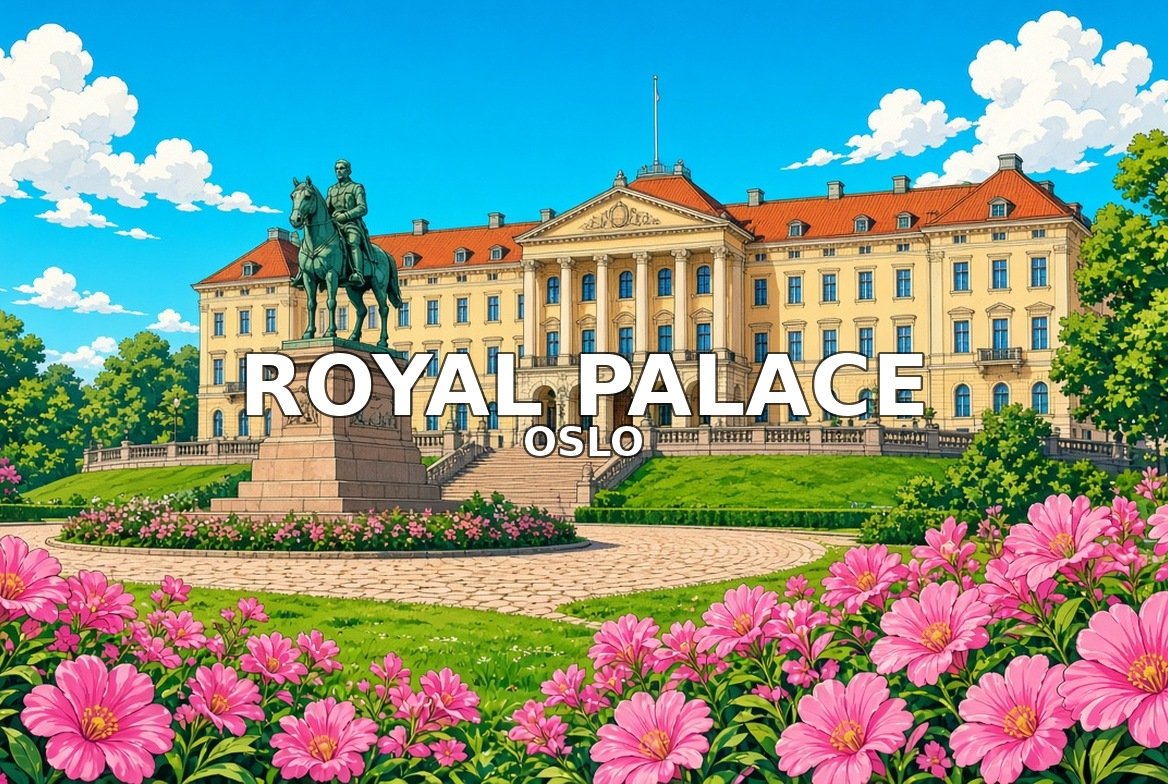
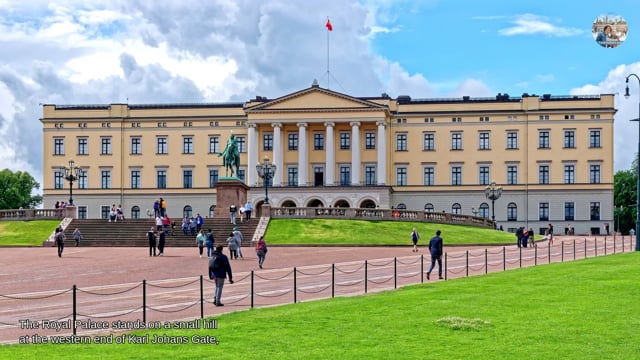
The Royal Palace stands on a hill at the top of Karl Johans gate. It was built for King Karl Johan, who ruled Sweden and Norway, and finished in 1849; his statue on horseback stands in front. It is the official home of the Norwegian king. In summer there are guided tours of the state rooms. The Palace Park around it is open to everyone, and the changing of the guard takes place every day at 13:30. The park is free; tours need a ticket.
Walk this order. The Palace on the Hill → Karl Johan and the Building of the Palace → The Palace Rooms → The Palace Park and Queen Maud → Changing of the Guard.
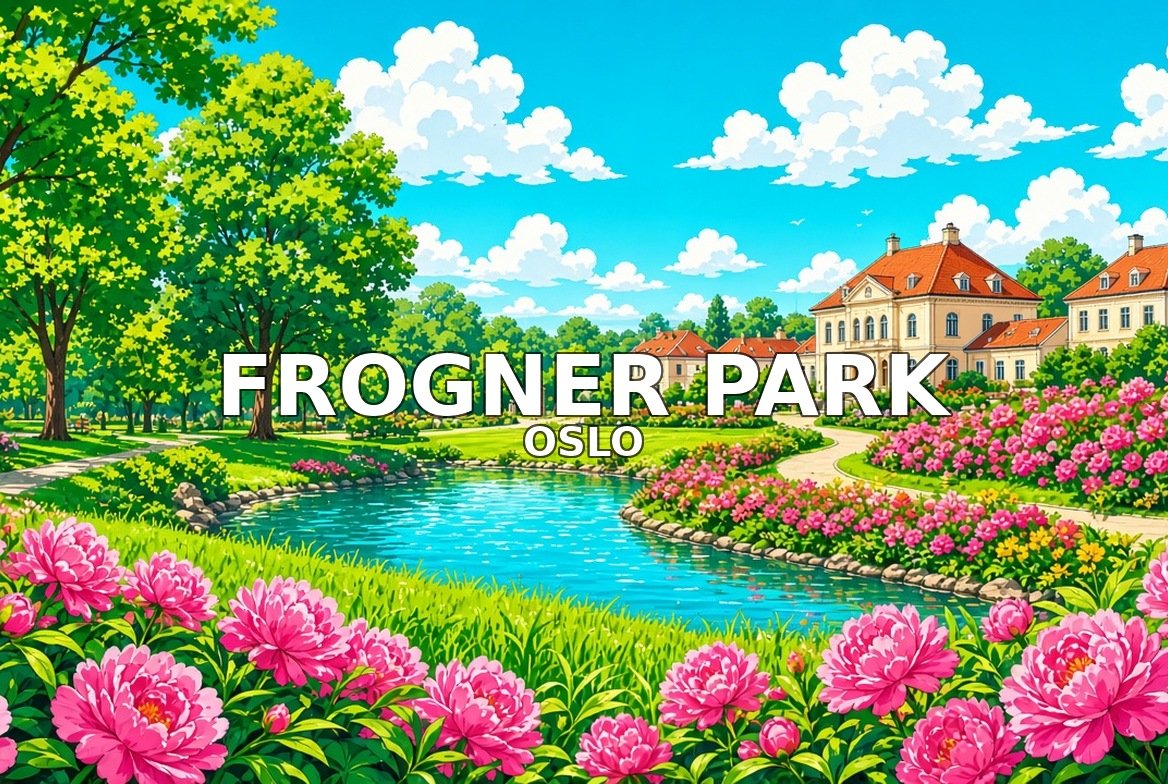
Frogner Park is the largest park in the city, west of the centre, and home to the Vigeland sculptures. Frogner Manor, an old country house, holds the Oslo Museum with the history of the city. Around it are ponds, lawns, tree-lined walks, a pavilion and cafés. In summer people come for picnics, sport and outdoor play, and in winter for walks in the snow. Free.
Walk this order. The Largest Park in Oslo → Frogner Manor and the Oslo Museum → The Pond and the Tree Walks → The Pavilion and the Cafes → Sport, Summer and Winter in the Park.
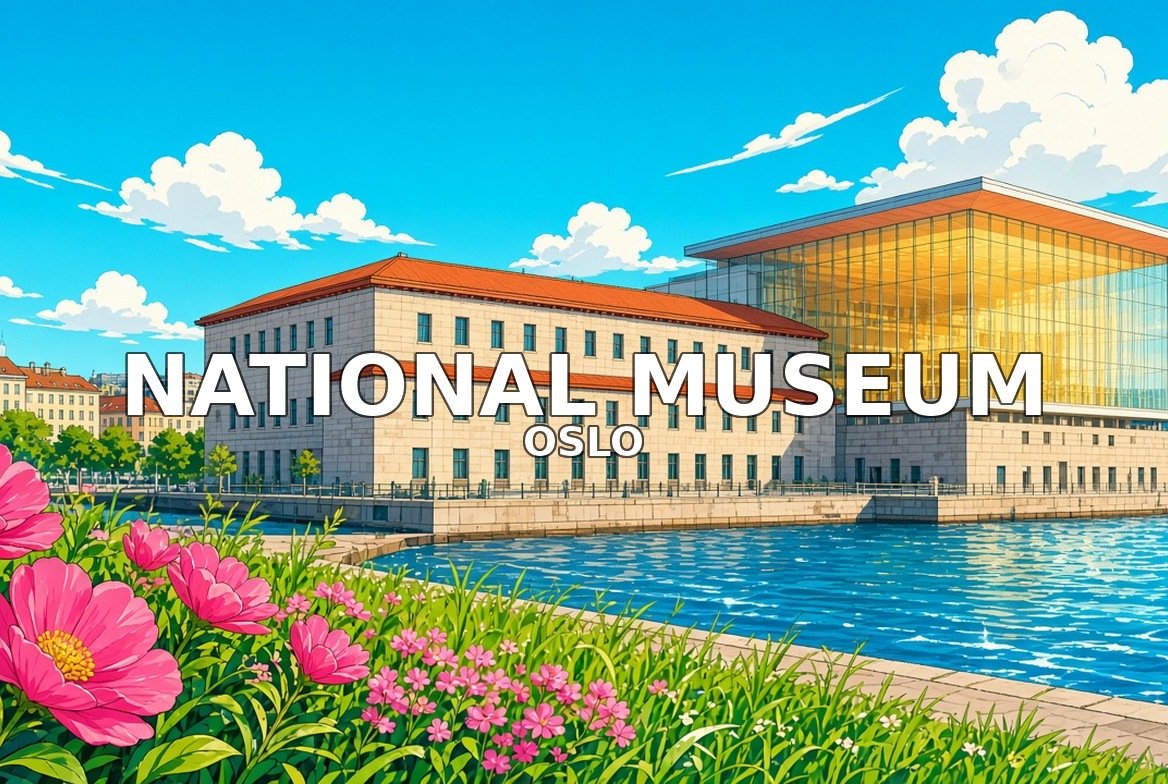
The National Museum opened in 2022 by the harbour at Vestbanen, and it is the largest art museum in the Nordic countries. It joins the old national gallery and the museums of design and architecture. Its best-known work is The Scream by Edvard Munch, with other works by Munch and the great Norwegian painters, as well as old masters, design and crafts. On the roof, the Light Hall glows at night and the terrace looks over the city. Entry needs a ticket.
Walk this order. The Largest Art Museum in the Nordic Countries → The Scream and Edvard Munch → Painters of Norway → Design, Architecture and Old Masters → The Light Hall and the Old Gallery.
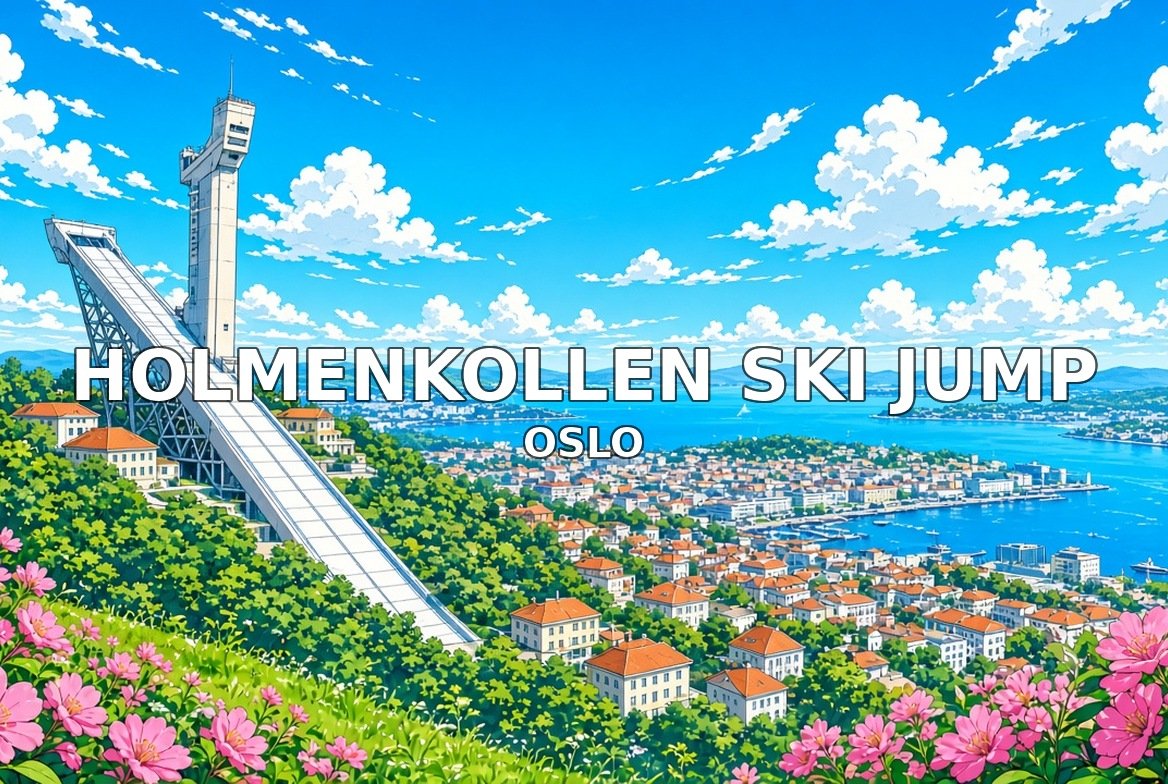
Holmenkollen is the hill above Oslo where Norway’s skiing tradition lives. The ski jump has been rebuilt many times; the present one was finished for the World Championships of 2011. At its base the Ski Museum, the oldest in the world, tells four thousand years of skiing, and a lift takes you up to the top of the jump for a view over the city and the fjord. Every March the Holmenkollen Ski Festival draws big crowds. Take metro line 1 up the hill. The museum and the top of the jump need a ticket.
Walk this order. The Hill above Oslo → The Ski Jump and the Ski Museum → The View from the Top → The Holmenkollen Festival → The Ride up on the Metro.
Bygdøy is a green peninsula west of the centre, reached by ferry from the City Hall pier in summer or by bus. It is Oslo’s museum peninsula. The Maritime Museum tells the story of Norway at sea, the Fram Museum holds the polar ship Fram, and the Kon-Tiki Museum shows Thor Heyerdahl’s raft. The Norwegian Museum of Cultural History is an open-air museum of old houses, farms and a stave church. Woods, beaches and the royal farm make it a place to relax too. The museums need tickets.
Walk this order. The Museum Peninsula → The Maritime Museum → The Fram and the Kon Tiki → The Norwegian Museum of Cultural History → Beaches, Woods and the Royal Farm.
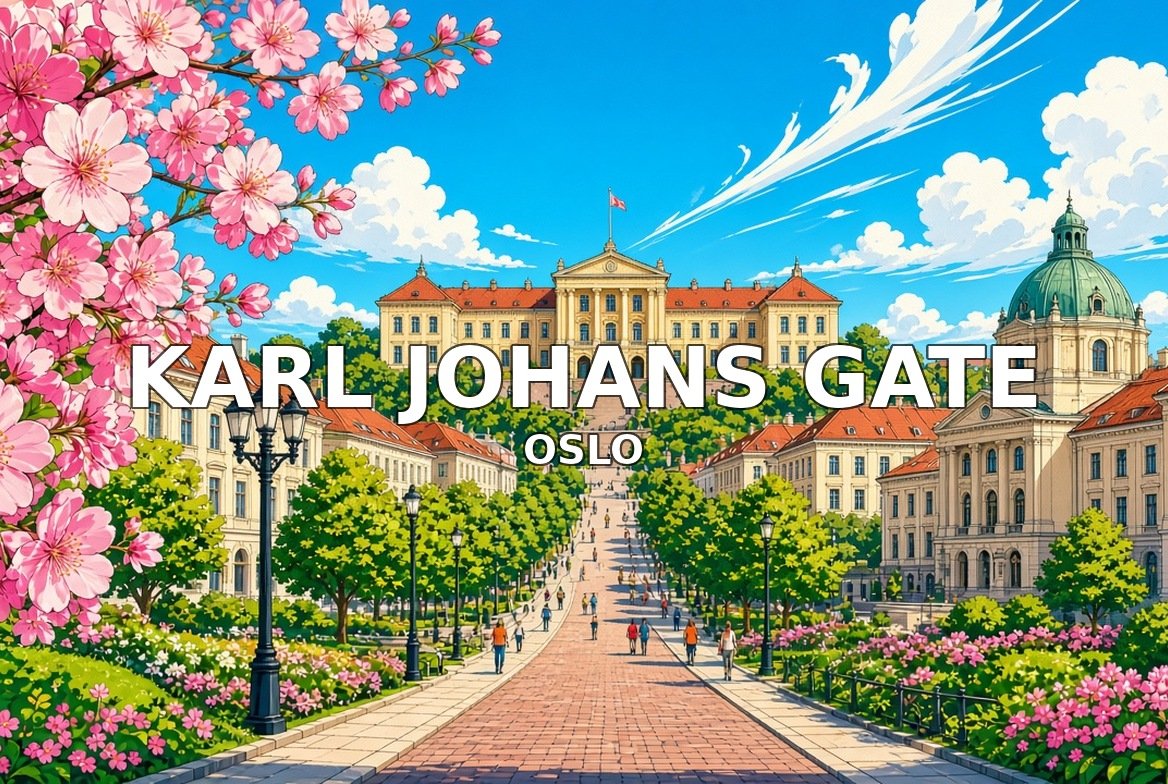
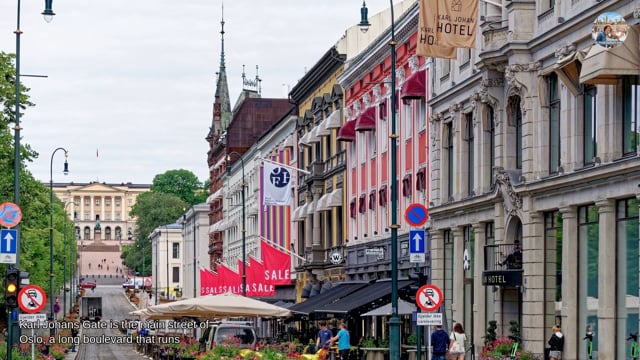
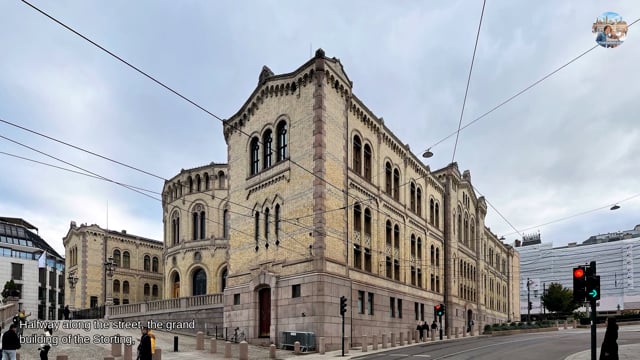
Karl Johans gate is the main street of Oslo, named after King Karl Johan. It runs from the Central Station past the Cathedral to the Royal Palace. Halfway along stand the Storting, Norway’s parliament, and the park of Studenterlunden, with the National Theatre and the old University buildings across from it. The Grand Hotel, where Nobel Peace Prize winners stay, faces the street. From here it is a short walk up to the palace. Free.
Walk this order. The Main Street of Oslo → From the Station to the Cathedral → The Parliament and the Student Grove → The National Theatre and the University → The Grand Hotel and the Walk to the Palace.
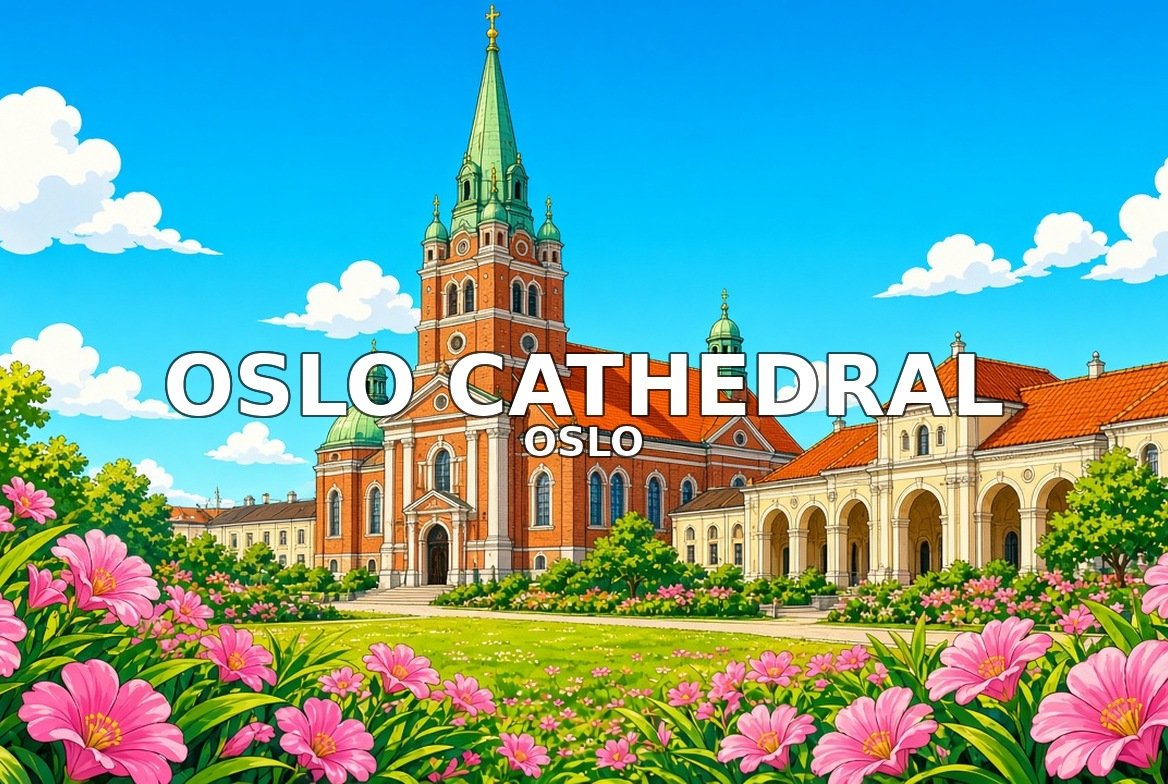
Oslo Cathedral was consecrated in 1697 and is the main church of the city and of the Church of Norway in Oslo. Its ceiling paintings were made by Hugo Lous Mohr in the 20th century, and its stained glass windows are by Emanuel Vigeland. The altar and pulpit date from the time the church was built, and the organ and bells fill the square with music. Outside lies Stortorget, the old market square, and behind the church the brick Bazaar Halls, now shops and cafés. Free.
Walk this order. The Church in the Centre of Oslo → The Ceiling Paintings → The Stained Glass and the Altar → The Organ and the Bells → The Market Square and the Bazaar Halls.
03 · Tour · videos inside this sight
The Church in the Centre of Oslo
The Ceiling Paintings
The Stained Glass and the Altar
The Organ and the Bells
The Market Square and the Bazaar Halls
Oslo Walking Tour Overview Detail
This Oslo walking tour links 10 sights and 50 short video stops narrated by Clarissa, from the marble roof of the Oslo Opera House to Vigeland Sculpture Park, Akershus Fortress, the Royal Palace, Holmenkollen and the museums of Bygdøy. The notes below group the stops into walkable routes and short rides, and add the timing, transport, etiquette and free-entry details that make the Norwegian capital easier to enjoy. For official events and visitor information, also check VisitOSLO, the official travel guide to Oslo.
Best routes for your Oslo walking tour using the 50 stops
Route 1, the harbour and the centre (stops 1, 3, 9 and 10). Start at the Oslo Opera House in Bjørvika, where the videos cover the white iceberg on the fjord, the walk up the marble roof, the oak wall in the foyer, the great hall and the She Lies sculpture in the water. Walk along the waterfront to Akershus Fortress for the castle, Christian IV and the walls, the Norwegian Resistance Museum and the ramparts. Then head inland to Oslo Cathedral and the old market square at Stortorget, and stroll up Karl Johans gate past the Storting, the student grove and the Grand Hotel.
Route 2, the palace and the parks (stops 4, 5 and 2). From the top of Karl Johans gate, climb to the Royal Palace for Karl Johan’s statue, the palace rooms, the Palace Park and the changing of the guard. Take a tram or walk about half an hour west to Frogner Park, the largest park in the city, with Frogner Manor and the Oslo Museum, the pond and the tree walks. Finish this part of the Oslo walking tour at the Vigeland Sculpture Park inside Frogner Park, with the bridge of bronze figures, the fountain, the Monolith and the Wheel of Life.
Route 3, art and the harbour west (stop 6). Walk from the City Hall area to the National Museum at Vestbanen, the largest art museum in the Nordic countries, where the videos cover The Scream and Edvard Munch, the painters of Norway, design, architecture and the old masters, and the glowing Light Hall on the roof. The harbourfront at Aker Brygge is right next door for a break by the water.
Route 4, Holmenkollen and Bygdøy (stops 7 and 8). Ride metro line 1 up to Holmenkollen for the ski jump, the Ski Museum and the view from the top of the jump over the city and the fjord. On another day, take the ferry from the City Hall pier in summer, or the bus all year, to Bygdøy, Oslo’s museum peninsula, for the Maritime Museum, the polar ship Fram, the Kon-Tiki raft and the open-air Norwegian Museum of Cultural History. If you only have one day, Routes 1 and 2 make the best free walking tour Oslo offers on foot.
For photos, the best free viewpoints on this Oslo walking tour are the top of the Opera House roof, looking over the fjord and the new Bjørvika skyline, the ramparts of Akershus Fortress, the Monolith plateau in Vigeland Park and the Palace hill looking down Karl Johans gate. On a clear day, the top of the Holmenkollen ski jump has the widest view of all.
A three-day Oslo walking tour works well as Route 1 on day one, Routes 2 and 3 on day two, and Holmenkollen in the morning with Bygdøy in the afternoon on day three. If it rains, move the National Museum, the Resistance Museum and Bygdøy’s indoor museums forward and save the parks and the Opera roof for a dry spell.
Best times and transport for an Oslo walking tour
Late spring and summer are the best seasons for an Oslo walking tour, with very long days, outdoor cafés and swimming spots along the fjord; in June it barely gets dark. Autumn brings crisp air and colour to the parks. Winter is cold and dark, with short days, but snow on Holmenkollen and the city’s Christmas markets have their own charm, and the Holmenkollen Ski Festival draws big crowds every March.
Start early at the Opera House roof, before the crowds and when the light on the fjord is soft, and save Vigeland Park for the late afternoon or a long summer evening. The Royal Palace’s guided tours of the state rooms run only in summer, and many museums keep shorter winter hours, so check each official website for opening times before you plan each day of your Oslo walking tour.
Oslo’s metro, trams, buses and many local ferries share one ticket system run by Ruter, and you can buy tickets in the Ruter app. The Oslo Pass includes public transport and free entry to many museums, which can be good value if you plan several visits. The city centre is compact, so most of Route 1 is easy on foot. From Gardermoen Airport, the Flytoget express train and the cheaper regional trains run to Oslo Central Station, right beside the Opera House.
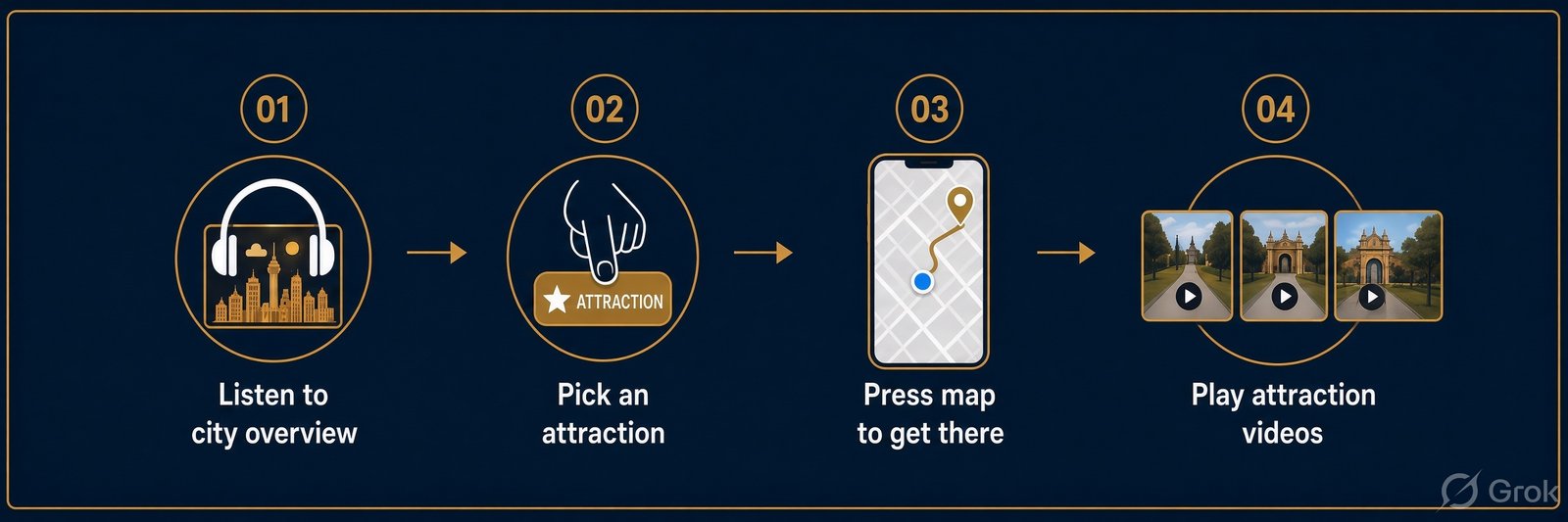
Card payments are accepted almost everywhere in Norway, and many places don’t take cash at all, so carry a card or phone that works abroad. Every stop on this Oslo walking tour has its own map link, so you can start wherever your hotel is and link the routes in any order.
Etiquette, food and safety on your Oslo walking tour
Norwegians are friendly but value personal space and quiet, especially on public transport. A simple “hei” (hello) or “takk” (thank you) is appreciated, and almost everyone speaks excellent English. Inside Oslo Cathedral, speak quietly and avoid walking around during services. On the Opera roof, stay away from the edges and the water, and don’t climb on the sculptures in Vigeland Park. Tipping is not expected in Norway, though rounding up for good service is welcome.
Food is a highlight of any Oslo walking tour, although eating out is expensive. Try fresh seafood and fish soup at the harbour, open sandwiches for lunch, cinnamon buns and Norwegian waffles with brown cheese. Mathallen, the food hall at Vulkan by the Aker river, is a good place to try local produce. Supermarkets are the cheapest option for a picnic in Frogner Park, and tap water in Oslo is excellent, so refill a bottle instead of buying water.
Oslo is a very safe city for a walking tour, but take the usual care with bags in crowds around the Central Station and Karl Johans gate, especially at night. In winter, wear shoes with good grip, because pavements and the Opera roof can be icy. Watch out for e-scooters and cyclists on the pavements and in bike lanes. In an emergency, dial 112 for the police, 113 for an ambulance or 110 for the fire service.
Free sights, tickets and accessibility on an Oslo walking tour
Oslo is pricey, but many stops on this Oslo walking tour are free. The Opera House roof and foyer, Vigeland Sculpture Park, Frogner Park, the grounds of Akershus Fortress, the Palace Park, Karl Johans gate and Oslo Cathedral cost nothing to explore. The changing of the guard at the Royal Palace is free to watch, and walking along the fjord from the Opera House to Aker Brygge is a lovely free stroll.
Several stops charge. The National Museum, the castle and the Norwegian Resistance Museum at Akershus, the Royal Palace’s summer tours, the Holmenkollen ski jump and Ski Museum, and the museums on Bygdøy all need tickets, and Opera performances are ticketed. The Viking Ship Museum on Bygdøy has been closed for rebuilding as the new Museum of the Viking Age, so check whether it has reopened. Check each official website for current prices and opening times.
For an accessible Oslo walking tour, the Opera House is one of the best sights in the city: you can walk or roll up the gentle slope of the roof, and the foyer has lifts. The waterfront, Karl Johans gate and the main paths of Vigeland Park are wide and smooth. Akershus Fortress has cobbles and slopes, and Holmenkollen is hilly, though the metro and a lift help. Most trams, buses and metro stations are accessible; check Ruter’s accessibility information before your Oslo walking tour.
Yes. All 50 video stops on this Oslo walking tour are free to watch, and the Opera House roof, Vigeland Park, Frogner Park, the fortress grounds, the Palace Park and the cathedral are free too. The museums, the ski jump and the palace tours charge, so this is a free walking tour Oslo visitors can shape to any budget.
How long does the Oslo walking tour take?
Allow two or three days. The harbour and the centre fill one day, the palace, the parks and the National Museum another, and Holmenkollen and Bygdøy make a full third day.
Where does the Oslo walking tour start?
It starts at the Oslo Opera House in Bjørvika, a few minutes’ walk from Oslo Central Station. You can join at any stop, because each one has its own map link and five short videos.
Is the Oslo walking tour suitable for children and wheelchair users?
Yes. Children love the Opera roof, the Angry Boy in Vigeland Park, the Fram ship and the view from the ski jump. Wheelchair users should start at the Opera House and the waterfront, and use the accessible trams and metro between stops.
Do I need an app or mobile data for the Oslo walking tour?
You don’t need an app for the videos. Open this page in your phone’s browser and play them as you walk. The videos stream, so use mobile data or free Wi-Fi in cafés and museums, and use the Ruter app for transport tickets.